Source Diesel Generator Automatic Transfer Switch for homes, businesses, and hospitals
Compare 30 Diesel Generator Automatic Transfer Switch options with varying rated currents, voltages, and control types. Buyers can evaluate specifications like 250A to 2500A capacity, dual output types, and certifications such as ISOCE and CCC for reliable power transfer solutions.
Key considerations
Products List


Double Power Automatic Transfer Switch for Generators and Electrical Systems
$9.00 - $11.00
MOQ: 10 Pieces

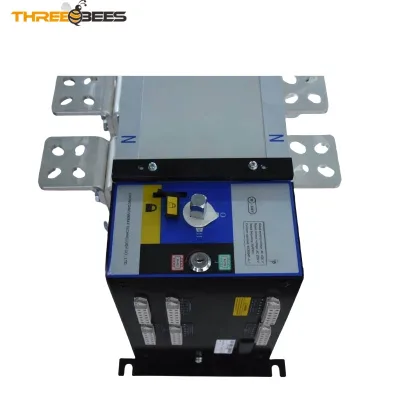


630A Dual Power Automatic Transfer Switch Cabinet for Diesel Generator Set
$150.00 - $2500.00
MOQ: 1 Pieces
Comprehensive Sourcing Guide
Strategic Sourcing Guide for Diesel Generator Automatic Transfer Switches
Understanding Technical Specifications and Core Functionality
When sourcing an automatic transfer switch (ATS) for diesel generator applications, the primary objective is to ensure seamless power transition between utility and backup sources. The core functionality of these devices revolves around detecting power failure and automatically engaging the generator to maintain continuous operation. Based on available market data, the rated current for these units varies significantly, with observed specifications ranging from 63A to 2500A. This wide spectrum indicates that buyers must carefully match the ATS capacity to the specific load requirements of their facility. For instance, a unit rated at 250A is suitable for smaller commercial loads, whereas a 2500A unit is designed for large industrial facilities.
The electrical configuration is another critical technical parameter. Most observed units support a 3-phase, 4-wire system, which is standard for industrial power distribution. The number of poles is typically 4P, ensuring comprehensive switching of all three phases and the neutral line. Voltage ratings also vary, with common specifications including 220V, 380V, 400V, 480V, and a broader range of AC150-265V for control circuits. The frequency is generally compatible with both 50Hz and 60Hz grids, offering flexibility for international deployment.
The operation mode is a decisive factor in system reliability. While many units feature electric operation for automated control, some models include a mechanical handle force transfer as a manual override. This dual capability ensures that operators can manually switch power sources in the event of a control system failure. The transition logic is often described as "Auto Grid Power to Generator Power," highlighting the device's role in prioritizing backup power during outages. Furthermore, the "Whether The Smart" attribute indicates that modern units often include intelligent controllers, such as Deepsea or Smartgen, which provide advanced monitoring and diagnostics.
Compliance, Certification, and Regulatory Standards
Navigating the regulatory landscape is essential for ensuring that the purchased ATS meets safety and performance requirements. The supply chain data highlights specific certifications and standards that buyers should verify. Commonly observed certifications include ISOCE and CCC. The CCC mark is particularly relevant for products originating from China, indicating compliance with Chinese compulsory certification standards. Additionally, the CE mark is frequently listed, suggesting adherence to European safety directives.
Standards compliance is equally critical for technical validation. The data explicitly references GB14048.11-2002 and IEC60947-6-1 as applicable standards. These standards govern the design, construction, and performance of low-voltage switchgear and controlgear assemblies. Buyers must ensure that the supplier can provide test reports or documentation proving compliance with these specific codes. The insulation class is another vital metric, with observed units rated at Class III, which implies a specific level of protection against electric shock.
Withstand voltage is a key performance indicator for electrical safety. Observed specifications list a withstand voltage of 8kV, a figure that buyers should confirm against their specific environmental and electrical stress requirements. The product origin is predominantly listed as Zhejiang, China, or specifically Zhejiang Yueqing, a region known for its electrical manufacturing hub. While the origin provides context, the buyer's focus should remain on the verifiable standards and certifications rather than the geographic location alone. It is imperative to request current certification documents from the supplier, as regulatory requirements can change, and a product listing may not reflect the most recent compliance status.
Cost Drivers and Pricing Variables
The pricing structure for automatic transfer switches is influenced by several dynamic factors, primarily driven by technical specifications and customization requirements. The observed price range in the market spans from $1 to $8,000 USD. This vast disparity is not indicative of quality variance alone but rather reflects the significant differences in rated current, voltage, and feature sets. A basic unit with a 63A rating will naturally be priced lower than a high-capacity 2500A unit with advanced smart controllers.
Customization is a major cost driver. The availability of customization options allows buyers to tailor the ATS to specific needs, such as unique wiring configurations or specialized mounting requirements. However, these customizations often incur additional costs and may extend the production timeline. The packaging type also plays a role in logistics costs; options range from standard carton boxes to strong paper cartons and plywood crates. Plywood packaging, often used for heavy-duty industrial equipment, adds to the overall cost but provides superior protection during shipping.
The minimum order quantity (MOQ) is another variable affecting the total cost of ownership. The observed MOQ range is between 1 and 20 units. For buyers requiring a single unit for a small project, the unit price might be higher due to the lack of economies of scale. Conversely, bulk orders of 20 units or more may benefit from volume discounts, though the specific discount rates are not publicly standardized. Delivery timelines, observed as "After Paid 2days" for some items, can also influence pricing, as expedited shipping or rush production often carries a premium. Buyers should evaluate the total landed cost, including shipping, insurance, and potential customs duties, rather than focusing solely on the base unit price.
Typical Applications and Operational Environments
Automatic transfer switches for diesel generators are deployed across a diverse range of sectors where power continuity is non-negotiable. The primary application is in facilities that rely on diesel generators as their backup power source. These include data centers, hospitals, manufacturing plants, and commercial buildings. The "Application" attribute explicitly lists "Generator," confirming the device's role in generator synchronization and power transfer.
The operational environment is another critical consideration. The data indicates that these units are designed for "Indoor" usage, which suggests they are not inherently weatherproof and require installation within a controlled environment. This limitation necessitates the selection of appropriate enclosures or installation sites that protect the ATS from moisture, dust, and extreme temperatures. The weight of the units, with some observed at 30.0 Kg, also influences installation logistics, requiring structural support and potentially specialized lifting equipment for larger models.
The color of the unit is often listed as "Optional," allowing buyers to match the ATS to existing facility aesthetics or safety color-coding standards. The language support for the controller is noted as "Multiple Language," which is beneficial for international projects where the operating team may speak different languages. This feature ensures that operators can effectively monitor and control the system regardless of their native tongue. The "Function" of auto transfer from grid to generator power is universal, but the specific implementation details, such as the delay time before transfer or the duration of the generator run, should be configured based on the specific needs of the application.
Supplier Evaluation and Quality Assurance
Evaluating suppliers requires a rigorous approach that goes beyond surface-level product listings. Buyers should prioritize suppliers who can provide transparent documentation regarding their manufacturing processes and quality control measures. The presence of specific product models, such as "rds2," "JKQ1-63A ATS PANEL," and "YAT40-2500," suggests a range of specialized offerings. However, the existence of a model number does not guarantee quality; it is the adherence to standards like GB14048.11-2002 and IEC60947-6-1 that validates the product's integrity.
Quality control should be a central part of the procurement strategy. Buyers must verify the insulation class, withstand voltage, and rated current through independent testing or third-party certification. The warranty period is a strong indicator of supplier confidence, with observed terms ranging from 1 to 3 years. A longer warranty period often correlates with higher manufacturing quality and better after-sales support. However, buyers should carefully read the warranty terms to understand what is covered and what exclusions apply.
The supplier's location, specifically Zhejiang, China, offers access to a mature supply chain but also requires due diligence regarding logistics and communication. Buyers should assess the supplier's ability to provide technical support, spare parts, and maintenance services. The "Delivery" time of "After Paid 2days" for some items suggests a responsive supply chain, but this may not apply to customized or high-volume orders. It is essential to establish clear communication channels and verify the supplier's track record in delivering products that meet the specified standards and performance expectations.
Long-Term Procurement and Lifecycle Management
Sourcing an automatic transfer switch is not a one-time transaction but the beginning of a long-term relationship that impacts operational reliability. The warranty periods observed, ranging from 1 to 3 years, highlight the importance of considering the total cost of ownership over the equipment's lifecycle. Buyers should factor in the potential costs of maintenance, repairs, and eventual replacement when evaluating the initial purchase price.
The "Operation" attributes, including both electric and manual options, suggest that the device is designed for long-term use with varying levels of automation. The availability of a mechanical handle force transfer ensures that the system remains operable even if the electronic controls fail, a critical feature for long-term reliability. The "Output type" being listed as "Dual" or "Multiple" indicates flexibility in power distribution, which is beneficial for future expansions or changes in load requirements.
Procurement planning should also account for the "prod_packing" and "prod_standard" to ensure safe transport and storage. The use of plywood or strong paper cartons is essential for protecting the unit during transit, but the buyer must also consider the storage conditions at the destination. The "Standard" of 504020CM for packaging dimensions provides a baseline for logistics planning, but actual dimensions may vary based on the specific model.
Finally, buyers should consider the scalability of the solution. As facilities grow, the need for higher current ratings or additional poles may arise. Selecting a supplier that offers a range of models, from 63A to 2500A, allows for a phased approach to procurement. This strategy minimizes upfront costs while ensuring that the infrastructure can support future growth. By focusing on standards, certifications, and long-term support, buyers can secure a reliable power transfer solution that meets their immediate needs and adapts to future demands.
FAQs
What certifications do diesel generator automatic transfer switches have?
Common certifications include ISOCE and CCC. Some products also meet CE standards and comply with GB14048.11-2002 and IEC60947-6-1 regulations for safety and performance validation.
Which rated currents are available for these switches?
Available rated currents range from 63A to 2500A. Specific models include 250A, 1600A, and 2500A units to match varying load requirements from small commercial to large industrial facilities.
Can I customize the Diesel Generator Automatic Transfer Switch?
Yes, customization is available for specific needs. Buyers can tailor wiring configurations or mounting requirements, though this may affect production timelines and total costs.
What is the typical warranty period for these units?
Warranty periods range from 1 to 3 years depending on the model. Longer warranties often indicate higher manufacturing quality and better after-sales support from the supplier.
How are these switches operated and controlled?
They feature electric operation with manual override capabilities using a mechanical handle. Smart controllers like Deepsea or Smartgen provide advanced monitoring and diagnostics for automated transitions.
Where are these products typically manufactured?
Most products originate from Zhejiang, China, specifically Zhejiang Yueqing. This region is a known hub for electrical manufacturing, offering access to a mature supply chain.