Source Diesel Powered Mortar Spraying Machine for Construction
Find and compare 30 Diesel Powered Mortar Spraying Machine options for plastering, cement application, and putty spraying. Evaluate specifications like hopper volume, delivery distance, and motor power to select the right equipment for your project needs; compare the available evidence and request quotations based on your requirements.
Key considerations
Products List


Powerful Diesel Power Mortar Spraying Plastering Machine Mortar Spray Machines
$680.00 - $1500.00
MOQ: 1 Pieces

Automatic Diesel Mortar Spraying Machine Sand Cement Spraying Equipment
$1000.00 - $2000.00
MOQ: 1 Pieces


Cheap 220V 15m3/H Wall Plastering Machine Automatic Mortar Spray Machine
$100.00 - $900.00
MOQ: 1 Pieces


Small Wall Gun Sprayer Cement Mortar Spraying Machine Price
$1050.00 - $1700.00
MOQ: 1 Pieces
Shandong China Coal Industrial & Mining Supplies Group Co., Ltd.


Cheap Price Small Diesel Cement Sprayer Mortar Spraying Machine for Wall
$1100.00 - $2800.00
MOQ: 1 Pieces

Building Equipment Wall Mortar Sprayer Plastering Spraying Machine with Mixing
$1100.00 - $2800.00
MOQ: 1 Pieces

Best Factory Price High Quality Plaster Mortar Spraying Machine for Sale
$2100.00 - $2900.00
MOQ: 1 Pieces

China Cement Mortar Plaster Sprayer Spray Machine for Wall with Spray Gun
$1100.00 - $2800.00
MOQ: 1 Pieces
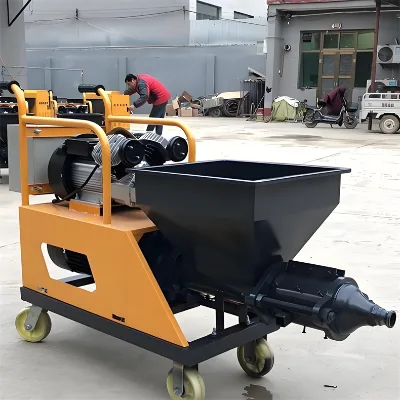


Building Construction Fire and Waterproof Spraying Cement Mortar Spraying Machine
$3500.00 - $3700.00
MOQ: 1 Pieces


Comprehensive Sourcing Guide
Diesel Powered Mortar Spraying Machine Sourcing Guide
Procuring a diesel-powered mortar spraying machine requires careful evaluation of power systems, delivery distances, and material compatibility. These machines are essential for applying cement mortar, putty, and similar construction materials efficiently across large-scale projects. Buyers must distinguish between electric and diesel variants, as the latter offers mobility in areas without grid access. The observed market includes models with varying hopper volumes, such as 30L and 60L options, which dictate batch frequency and operational continuity. Understanding these core attributes ensures the selected equipment matches the specific throughput requirements of the construction site.
The supply chain for these machines is primarily centered in China, with origins noted in Hebei, Henan, and Shandong provinces. Suppliers offer customization options, allowing buyers to tailor specifications to unique project needs. Packaging typically involves wooden boxes or cases, ensuring protection during transit. Vertical and horizontal delivery distances vary significantly, with observed ranges reaching up to 60 meters horizontally and 20 meters vertically. These metrics are critical for planning pump placement and pipe routing, directly impacting labor efficiency and material waste during the spraying process.
Product Scope and Observed Listing Signals
The product scope encompasses automatic diesel mortar spraying machines and cement sprayers designed for heavy-duty construction applications. Listings indicate models like the YG-712 and YG-E03, which feature main motor powers around 5.5kw and working pressures up to 3MPa. These specifications support the spraying of materials with particle diameters below 5mm or 4mm, ensuring smooth flow through the feeding system. The inner diameter of feeding is typically 32mm, a standard that balances flow rate with pressure retention. Buyers should verify these technical limits against their specific mortar mix designs to prevent clogging or excessive wear on internal components.
Observed listing signals reveal a diverse range of capabilities, including maximum working heights of 6000mm and widths of 10000mm for certain models. Some units, such as the KSP-511, operate on 220V electric power, highlighting the need to confirm the power source before purchase. Diesel-powered variants are distinct in their independence from electrical infrastructure, making them suitable for remote or unfinished sites. The weight of these machines can reach 400kgs, necessitating proper handling equipment for installation. Color options like yellow or green are common, aiding in site visibility and safety compliance.
Technical Specifications to Verify
Verifying technical specifications is paramount to ensuring machine compatibility with project demands. Key parameters include voltage, power supply type, and motor power. While some models use 380V electric power, diesel options provide autonomous operation. Buyers must confirm the hydraulic system rated pressure, which can be as high as 16MPa in certain sprayers, to ensure it matches the required output pressure for the mortar consistency. The climbing angle, observed at 20 degrees, indicates the machine's stability on uneven terrain, a crucial factor for outdoor construction sites. Ground clearance of 220mm also affects maneuverability in confined spaces.
Delivery distance capabilities vary by model, with horizontal distances reaching 60 meters and vertical distances up to 20 meters. These figures must be cross-referenced with the site layout to determine optimal pump placement. The capacity, noted at 3m3/H for some units, defines the maximum throughput. Additionally, the particle size limit, often below 4mm or 5mm, restricts the types of aggregates that can be used. Buyers should also check the working pressure, typically around 3MPa, to ensure it is sufficient for the desired spray distance and material viscosity. Accurate verification prevents operational bottlenecks and material inefficiencies.
Compliance and Safety Documentation
Compliance and safety documentation are critical for legal operation and worker protection on construction sites. Buyers must ensure that the machinery meets relevant local safety standards, particularly regarding electrical and hydraulic systems. For diesel-powered units, emissions compliance may be required depending on the region. The warranty period, often listed as one year, provides a baseline for manufacturer support. However, buyers should verify if this covers critical components like the main motor and hydraulic pumps. Documentation should include detailed operation manuals, maintenance schedules, and safety warnings specific to high-pressure spraying operations.
Safety features such as emergency stop mechanisms and pressure relief valves are essential. The maximum remote control distance, observed at 50 meters for some models, allows operators to maintain a safe distance from the spray zone. This reduces exposure to dust and potential hose bursts. Buyers should request certificates of conformity and test reports for pressure vessels and hydraulic systems. Ensuring that the machine’s weight and dimensions comply with transport regulations is also necessary. Proper documentation facilitates smoother customs clearance and reduces the risk of operational delays due to regulatory non-compliance.
Cost Drivers and Commercial Terms
Cost drivers for diesel-powered mortar spraying machines include power source, delivery distance capabilities, and build quality. Diesel engines add complexity and cost compared to electric models but offer greater flexibility. The hopper volume, ranging from 30L to 60L, impacts the frequency of refueling and thus operational efficiency. Packaging in wooden boxes or cases adds to the initial cost but is necessary for protection. Buyers should consider the total cost of ownership, including fuel consumption, maintenance, and spare parts availability. The observed price range of 100-9000 USD reflects significant variation in specifications and brand reputation.
Commercial terms such as MOQ, lead time, and payment conditions are vital for procurement planning. The observed MOQ of 1 allows for flexible purchasing, suitable for small to medium projects. Lead times can vary based on customization requests and production schedules. Buyers should negotiate clear terms for shipping, insurance, and risk transfer. Standard export packaging is common, but custom requirements may incur additional fees. Understanding the warranty terms and after-sales support structure is crucial. Clear commercial agreements prevent disputes and ensure that the buyer receives the expected value for their investment.
Supplier Qualification and Quality Control
Supplier qualification is essential to mitigate risks associated with machinery procurement. Buyers should verify the supplier’s manufacturing capabilities, particularly in Hebei, Henan, and Shandong provinces, where many origins are noted. Quality control processes should include factory audits and pre-shipment inspections. Suppliers offering customization should demonstrate robust engineering support to ensure modifications do not compromise machine integrity. The standard export package or custom requirements should be clearly defined in the contract. Buyers must assess the supplier’s track record in delivering reliable construction equipment.
Quality control checks should focus on critical components like the motor, hydraulic system, and feeding mechanism. Verification of particle diameter limits and working pressure ensures the machine meets specified performance criteria. Buyers should request detailed specifications and test results for key parameters. The warranty period of one year is a standard benchmark, but buyers should clarify the scope of coverage. Establishing a clear communication channel for technical support is vital. Qualifying suppliers based on transparency, reliability, and technical expertise ensures a successful procurement outcome and long-term operational success.
Long-Term Procurement Checks
Long-term procurement checks involve monitoring machine performance and supplier reliability over time. Regular maintenance is crucial for extending the lifespan of diesel-powered spraying machines. Buyers should establish a preventive maintenance schedule based on manufacturer recommendations. Tracking fuel consumption and repair costs helps in evaluating the total cost of ownership. Suppliers should provide a steady supply of spare parts, particularly for high-wear components like nozzles and seals. Building a long-term relationship with a qualified supplier ensures consistent quality and support.
Feedback from field operations should be used to refine procurement specifications for future purchases. Monitoring delivery distances and working pressures in real-world conditions validates initial technical claims. Buyers should also assess the supplier’s responsiveness to warranty claims and technical issues. Continuous improvement in machine design, such as enhanced remote control features or improved hopper efficiency, should be considered. Long-term checks also involve reviewing compliance with evolving safety and environmental regulations. Proactive management of procurement relationships and machine performance ensures sustained operational efficiency and project success.
FAQs
What power supply options are available for these machines?
Both electric and diesel power supply options are available for these machines. Some models operate on 380V electric power, while others are designed with diesel engines to provide mobility and independence from grid power sources during construction projects.
What is the maximum vertical delivery distance for this equipment?
The maximum vertical delivery distance varies by model, with observed capabilities reaching up to 20 meters. Some specific configurations are also documented to achieve a vertical delivery distance of 15 meters, ensuring effective material transport to elevated work areas.
Can the hopper volume be customized for different project needs?
Yes, customization is available for the hopper volume to suit specific project requirements. The observed product listings include models with hopper volumes of 60 liters and 30 liters, allowing buyers to select the capacity that best fits their operational scale.
What is the warranty period provided for these spraying machines?
A standard warranty period of one year is provided for these spraying machines. This coverage typically applies to the main motor and critical components, ensuring reliability and support for buyers during the initial operational phase of the equipment.
Which particle sizes can these machines effectively spray?
These machines are designed to handle particle sizes below 5 millimeters or less than 4 millimeters. This specification ensures smooth feeding and consistent spraying performance when applying mortar, cement, or putty materials on various construction surfaces.
What is the working pressure capacity of the cement mortar sprayer?
The working pressure capacity for these machines is rated at 3 megapascals. This pressure level supports efficient material delivery and ensures the sprayed mortar adheres properly to vertical and horizontal surfaces during application.
How is the product packed for safe international shipping?
The product is packed in wooden boxes or wooden cases to ensure safe transport. Some listings also mention a standard export package or custom requirements, providing robust protection against damage during long-distance shipping to international destinations.