Find Digital UV Light Meter for UV Curing, Exposure, and Inspection
Source 30 Digital UV Light Meter options from verified Chinese manufacturers. Compare models like UV340b and LS128 for UV curing, exposure monitoring, and industrial inspection applications with varying power ranges and dimensions.
Key considerations
Products List


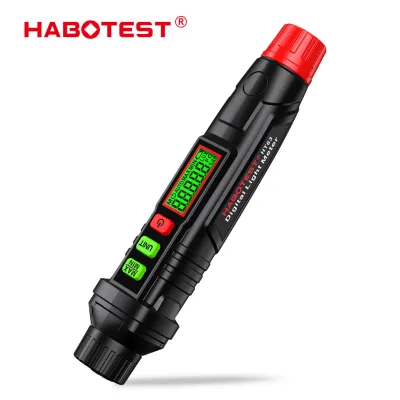


Digital Light Meter Data Logger Spectrum Meter PAR Meter Solar Radiation Meter
$50.63 - $63.40
MOQ: 50 Pieces

Comprehensive Sourcing Guide
Strategic Sourcing Guide for Digital UV Light Meters
The global demand for precision measurement tools in industrial curing, medical sterilization, and quality assurance has elevated the importance of digital UV light meters. For procurement professionals, navigating this category requires a disciplined approach that distinguishes between general observation and verified product specifications. The market offers a diverse array of devices, ranging from handheld illuminance meters to integrated UV exposure monitors. This guide synthesizes available product attributes and industry standards to provide a framework for evaluating suppliers and selecting equipment that meets rigorous operational requirements.
Technical Specifications and Model Variability
When sourcing digital UV light meters, the first step is to define the specific spectral range and measurement parameters required for the application. The product data indicates a significant variation in model designations, suggesting that buyers must not assume a single device fits all use cases. For instance, the market includes models explicitly labeled as "UV340b" and "UVA365," which implies a focus on specific ultraviolet wavelengths critical for curing processes. Conversely, other entries list models such as "UVV405" and "AMT315," indicating a broader spectrum capability or specialized sensor technology.
The physical dimensions of the unit are a critical specification for integration into existing workflows. Observed data reveals a wide range of form factors. Some units are compact, with dimensions recorded as 118x70x29mm, suitable for handheld field use. Others are larger, such as those measuring 165x50x32mm or 160x78x43mm, which may house more complex sensor arrays or battery systems. A specific model, the "AMT315," is noted to utilize an agent sensor with a mica geiger counter and a diameter of 45mm, highlighting a distinct technical architecture compared to standard photodiode-based meters.
Performance metrics also vary significantly across the catalog. While some devices are characterized by a power output standard of 0~40mW/c, others are defined by their physical housing rather than output metrics. Sampling rates are another key differentiator; high-speed applications may require a sampling rate of 2 times per second, whereas general monitoring might suffice with slower rates. The display technology is predominantly digital, ensuring clear readouts for operators, and the power source is consistently electronic, though the specific voltage requirements should be verified against local grid standards.
Compliance, Certification, and Regulatory Standards
Verification of certification status is paramount for ensuring that purchased equipment meets international safety and quality benchmarks. The available data confirms that certain models carry CE certification, a mandatory conformity mark for products sold within the European Economic Area. Additionally, ISO certification is listed for specific units, indicating adherence to quality management systems. However, buyers must exercise caution; the presence of a certification label on one model does not guarantee that every unit in a supplier's inventory holds the same status.
It is essential to distinguish between product-specific certifications and general industry standards. While the data mentions ISO and CE, it does not explicitly confirm compliance with ISO 17025 or IEC 17025 for the specific devices listed. These standards relate to the competence of testing and calibration laboratories. Therefore, procurement teams should request valid calibration certificates traceable to national standards rather than assuming the device itself is ISO 17025 compliant. The protection level of IP41 is observed on some units, indicating protection against solid objects larger than 1mm and water spray from any direction, which is suitable for general industrial environments but may require higher ratings for harsh conditions.
Cost Drivers and Pricing Dynamics
The pricing landscape for digital UV light meters is highly variable, with observed ranges spanning from $6.57 to $3,660. This broad spectrum reflects differences in sensor technology, build quality, and intended application complexity. Lower-cost units often correspond to basic illuminance meters or simpler digital displays, while the upper end of the price range likely encompasses integrated systems like the "UV-Integrator 140" or specialized meters with advanced data logging and connectivity features.
Several factors influence the final cost. The complexity of the sensor, such as the inclusion of a mica geiger counter or specific wavelength filters, drives up manufacturing costs. The packaging also plays a role; units shipped in individual color boxes or cartons may have different cost structures compared to bulk packaging. Furthermore, the inclusion of accessories, such as batteries or specific mounting hardware, can impact the total price. Buyers should analyze the total cost of ownership, including the warranty period, which is frequently listed as one year, and the availability of spare parts or calibration services.
Typical Applications and Usage Scenarios
The versatility of digital UV light meters allows them to serve multiple industries, from manufacturing to healthcare. The data explicitly links these devices to applications involving UV exposure machines and UV curing machines. In these scenarios, precise measurement of UV intensity is critical for ensuring the proper curing of adhesives, inks, and coatings. The "UV-Integrator 140" model, for example, is specifically designed for integration into these processes, providing continuous monitoring of exposure levels.
Beyond curing, these meters are utilized in environments requiring strict quality control of light sources. The "Standard Electric Energy Meter" classification for some units suggests a dual functionality or a specific use case in monitoring the electrical consumption of UV systems. The "LS128" and "LX1010B" models, categorized as photoelectric light meters, are likely employed in settings where ambient light levels must be measured alongside UV output. The "YW-552" model, with its direct connected installation and terminal power meter connection, is suited for fixed installations in industrial facilities where continuous monitoring of energy and light parameters is necessary.
Supplier Evaluation and Origin Verification
When evaluating potential suppliers, the geographic origin of the product is a key data point. The supplied facts indicate that products originate from China, with specific mentions of Qingdao, Shandong Province, and Shenzhen. These regions are known hubs for electronics manufacturing, offering a competitive advantage in terms of supply chain efficiency and cost. However, buyers must verify the specific factory capabilities rather than relying solely on the city of origin.
Supplier reliability is further assessed through warranty and after-sales service provisions. A standard one-year warranty is common, with some suppliers offering a "One Year Guarantee" as a specific after-sales service. The customization options available, such as the ability to customize the product, allow buyers to tailor devices to specific needs, but this must be confirmed on a per-order basis. The "Non-Customized" status of some models indicates that off-the-shelf solutions are also available for standard requirements.
Quality Control and Material Standards
Quality control begins with the materials used in construction. The product data identifies ABS plastic as a common material for the housing, offering a balance of durability and weight. The weight of the devices varies, with some units weighing approximately 194 grams (excluding the battery) and others listed simply as "1," likely indicating a normalized or unitless value in the dataset. The protection level of IP41 suggests a basic level of environmental resistance, but for applications involving dust or moisture, higher IP ratings should be requested.
Calibration and accuracy are the ultimate measures of quality. While the data lists specific measurement parameters such as illuminance and environment temperature, it does not provide specific error margins or accuracy percentages. Buyers must request detailed test reports that demonstrate the device's performance against known standards. The "Digital" display type ensures readability, but the underlying sensor technology must be validated to ensure consistent readings over time. The "Electronic Meter" theory and "Single-Phase" electric equipment classification for certain models indicate that electrical safety and signal continuity are integral to the design.
Long-Term Procurement Considerations
Sourcing digital UV light meters is not merely a transactional purchase but a strategic decision impacting long-term operational efficiency. The lead time and minimum order quantity (MOQ) are critical logistical factors. Observed MOQs range from 1 to 100 units, offering flexibility for both small-scale pilots and large-scale deployments. The packaging, whether in boxes, cartons, or sets per carton, affects storage and shipping logistics.
Future-proofing the procurement strategy involves considering the compatibility of the device with existing infrastructure. The "Direct Connected" installation type and "Terminal" power meter connection suggest that some models are designed for seamless integration into existing electrical systems. Buyers should also consider the availability of software updates or firmware upgrades, which can extend the useful life of the device. Finally, the warranty terms and the supplier's track record for honoring the "One Year Guarantee" are essential for mitigating the risk of equipment failure. By carefully analyzing these factors, procurement teams can ensure a reliable supply of high-quality digital UV light meters that support their operational goals.
FAQs
Which certifications are available for digital uv light meters?
Some models carry CE and ISO certifications. Buyers must verify the specific certification status for each unit, as not every listed product satisfies all standards.
What is the price range for these devices?
The observed price range spans from 6.57 to 3660 USD. Costs vary significantly based on sensor technology, build quality, and whether the unit is a basic meter or an integrated system.
Can I customize the product specifications?
Customization is available for some models. However, other entries list a Non-Customized status, so buyers must confirm the customization option for the specific model they intend to purchase.
What are the typical dimensions of the units?
Dimensions vary widely, ranging from 118x70x29mm to 165x50x32mm. Specific models like the AMT315 feature unique sensor dimensions, requiring careful selection based on physical integration needs.
Where are these products manufactured?
Products originate from China, specifically Qingdao and Shenzhen. Buyers should verify the specific factory location rather than relying solely on the general country of origin for supply chain planning.
What is the standard warranty period?
A one-year warranty is common for these devices. Some suppliers explicitly offer a One Year Guarantee as part of their after-sales service to ensure operational reliability.