Source Disposable Plastic Medical Wristband for Patient ID, Surgery, and Care
Compare 30 listings for the Disposable Plastic Medical Wristband to find options for patient identification, surgical use, and general care. Buyers can evaluate customization, sterilization methods, and pricing across suppliers from China.
Key considerations
Products List

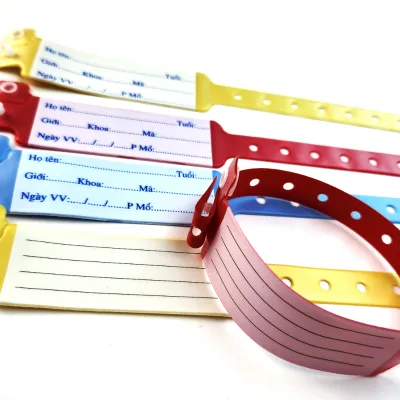


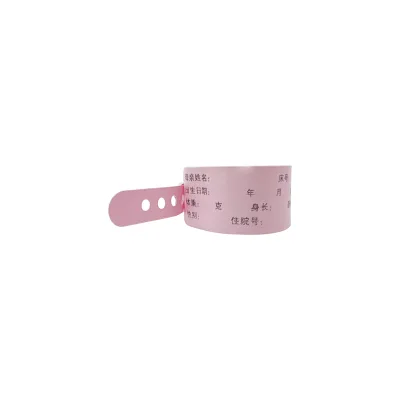

Plastic PVC Vinyl Wrist Band ID Bracelet Medical Wristband for Hospital
$0.02 - $0.04
MOQ: 100000 Pieces


Comprehensive Sourcing Guide
Strategic Sourcing Guide for Disposable Plastic Medical Wristbands
Procuring disposable plastic medical wristbands requires a disciplined approach that balances clinical utility, regulatory compliance, and supply chain reliability. These items, often categorized as patient identification bracelets or surgical supplies materials, serve as critical tools in healthcare settings for ensuring patient safety and accurate data tracking. The market offers a variety of configurations, ranging from standard vinyl bands to specialized write-on identification bands. Buyers must navigate a landscape where material composition, sterilization status, and customization options vary significantly between suppliers. This guide outlines the essential factors for evaluating potential sources, ensuring that the selected products meet the rigorous demands of medical environments while adhering to cost and quality constraints.
Technical Specifications and Material Composition
The foundation of a reliable wristband specification lies in the material and physical dimensions. The supplied data indicates that the primary material for these products is typically plastic, with vinyl being a specific and common variant cited in product listings. Vinyl offers a balance of flexibility and durability, making it suitable for the "Write on" application type where medical staff need to manually record patient details using permanent markers. The physical dimensions are critical for fit and comfort; observed specifications include sizes such as 25225mm and 16020mm, or alternatively 25425mm and 15820mm. The band width is consistently noted as 25mm, suggesting a "Wide face type" design intended to maximize the writing surface area.
Color selection is another vital technical parameter. While some listings specify a limited palette of Blue, Pink, White, Yellow, Grey, and Green, others offer an extensive range including Rose Madder, Brown, Orange, Dark Blue, Burgundy, Lavender, and Black. This variation suggests that buyers should verify the specific color availability required for their hospital's color-coding protocols, which often distinguish between patient types, allergy statuses, or care levels. The product shape is generally described as a wide face type, and the design is frequently OEM (Original Equipment Manufacturer) designed, allowing for specific branding or layout requirements. The "Write on" feature is a standard attribute, distinguishing these from pre-printed or barcode-only bands, though some listings also mention "Silk Screening" as a technique for logo printing, indicating a hybrid capability for some suppliers.
Compliance, Sterilization, and Regulatory Considerations
One of the most critical distinctions in sourcing medical wristbands is the sterilization status. The provided facts present a dichotomy: some product attributes list "Ethylene Oxide Sterilization" as a feature, while others explicitly state "Without Ethylene Oxide Sterilization." This inconsistency highlights the necessity for buyers to explicitly confirm the sterilization requirement for their specific use case. In many surgical or high-risk environments, sterile supplies are mandatory, whereas general ward identification may only require clean, non-sterile bands. Buyers must not assume a product is sterile based on the category alone; the specific listing must be verified.
Regarding certifications, the background information mentions ISO9001:2000, but this is flagged as low-confidence background data and should not be treated as a guaranteed attribute of any specific product. Instead, buyers should treat this as a verification point. When evaluating suppliers, procurement teams must request current quality management system certificates that are relevant to the region of operation, such as ISO 13485 for medical devices, rather than relying on generic or outdated standards. The product standard is listed variously as "Adult, Child," "OEM," or "Baby," which refers to the target demographic rather than a formal regulatory standard. Consequently, buyers must ensure that the materials used are biocompatible and safe for skin contact with adults, children, and infants, depending on the intended application.
Cost Drivers and Pricing Structures
Understanding the cost structure of disposable medical wristbands involves analyzing several variables beyond the unit price. The observed price range in the market is quite broad, spanning from $0.01 to $5.00 USD. This wide variance is likely driven by differences in material quality, customization complexity, order volume, and packaging specifications. The Minimum Order Quantity (MOQ) also plays a significant role in cost efficiency. The observed MOQ range is extensive, from as low as 10 pieces to as high as 100,000 pieces. Suppliers offering an MOQ of 10 pieces may cater to small clinics or trial orders, while those requiring 100,000 pieces are likely targeting large hospital networks or distributors.
Packaging is a distinct cost driver. The data shows packaging options ranging from 100 pieces per box to 5,000 pieces per carton. The "Single package size" is noted as 25x2.5x0.2 cm, and the "Single gross weight" is 0.020 kg. These metrics are essential for logistics planning. Bulk packaging, such as 5,000 or 2,500 pieces per carton, reduces the cost per unit but increases the initial capital outlay and storage requirements. Conversely, smaller pack sizes like 100 or 500 pieces per box offer flexibility for smaller facilities but may carry a higher per-unit cost. Buyers should calculate the total landed cost, including shipping and storage, rather than focusing solely on the unit price. Additionally, the availability of free samples is a common attribute, which can help in validating quality before committing to a large order, though some listings note sample lead times of 7-15 days.
Typical Applications and Usage Scenarios
The primary application for these wristbands is patient identification, as indicated by the product name "Patient ID Bracelet" and the function "Identification." The usage is explicitly listed for "Adult, Child," and in some contexts, "Baby," confirming their versatility across different patient demographics. The "Style" is defined as "Medical use," and they are categorized under "Surgical Supplies Materials," suggesting their role in operating rooms, emergency departments, and inpatient wards. The "Feature" of being "one time use" underscores their disposable nature, which is crucial for infection control and preventing cross-contamination between patients.
The "Write on" capability makes these bands particularly suitable for situations where immediate, manual data entry is required, such as triage areas or during patient intake. The ability to print logos via silk screening or OEM design allows hospitals to brand the wristbands with their own facility logos, enhancing professional appearance and aiding in internal tracking. The "Application" field lists "other," which may imply adaptability for non-patient uses, such as visitor identification or staff access control, though the primary focus remains on patient safety. The color variety supports the implementation of color-coded systems, where specific colors might denote allergies, fall risks, or isolation status, adding a layer of visual safety to the identification process.
Supplier Evaluation and Quality Assurance
Evaluating suppliers for medical wristbands requires a rigorous vetting process that goes beyond the product listing. The "Place of Origin" is consistently listed as China, specifically Jiangsu, which is a known manufacturing hub for medical supplies. While this provides a baseline for sourcing, buyers must verify the specific factory capabilities and quality control processes. The "Quality Guarantee Period" is stated as "Two Years," which is an unusually long period for a disposable item and may refer to the shelf life or the warranty on the material integrity rather than the product's functional lifespan. Buyers should clarify this metric to ensure it aligns with their inventory management needs.
Key evaluation criteria include the supplier's willingness to provide samples, their response to customization requests, and their payment terms. The data indicates that "Customization" is available and "OEM" is welcomed or accepted, suggesting flexibility in branding and design. Payment terms typically include T/T (Telegraphic Transfer), a standard method in international trade. The "Sample" attribute is listed as "Free" in some contexts, while others note a lead time of 7-15 days. A reliable supplier should be transparent about these timelines and costs. Furthermore, the "Logo Printing" options vary from "Without Logo Printing" to "Silk Screening," so buyers must confirm the specific printing method and quality before placing an order.
Long-Term Procurement and Inventory Management
Sourcing disposable medical supplies involves long-term considerations regarding inventory stability and supply chain resilience. The "prod_packing" details, such as 5,000 pieces per carton or 100 pieces per box, dictate storage requirements. Large facilities must plan for significant warehouse space to accommodate bulk orders, while smaller clinics may prefer frequent, smaller deliveries. The "Selling Units" are listed as "Single item," which can complicate bulk ordering if the supplier does not offer tiered pricing for larger quantities.
Buyers should also consider the "Feature" of the product being "one time use" in the context of waste management and environmental impact. While the product is disposable, the volume of usage can be substantial. Establishing a relationship with a supplier who can guarantee consistent quality and timely delivery is essential to avoid stockouts, which can compromise patient safety. The "Group" attribute listing "Adult" suggests that some suppliers may specialize in adult-sized bands, so buyers must ensure the supplier can meet the specific size requirements for pediatric or infant patients if needed. Finally, the "Standard" listing of "OEM" and "Adult, Child, Baby" reinforces the need for a supplier capable of producing a diverse range of sizes and styles to meet the comprehensive needs of a medical facility.
Comparative Overview of Product Attributes
To assist in the decision-making process, the following table summarizes the key attributes observed in the market for disposable plastic medical wristbands. This comparison highlights the variability in specifications that buyers must navigate.
| Attribute Category | Observed Variations | Key Verification Points for Buyers |
|---|---|---|
| Material | Plastic, Vinyl | Confirm biocompatibility and skin safety for intended age group. |
| Dimensions | 25225mm, 16020mm, 25425mm, 15820mm | Verify fit for specific patient demographics (Adult vs. Child). |
| Sterilization | Ethylene Oxide Sterilization, Without EO | Explicitly confirm if sterile or non-sterile is required. |
| Customization | OEM Designed, Silk Screening, Logo Printing | Check if branding or specific color coding is supported. |
| Packaging | 100/Box, 500/Box, 5000/CTN | Assess storage capacity and order volume flexibility. |
| MOQ | 10 pcs to 100,000 pcs | Align order quantity with budget and storage capabilities. |
| Color Options | Blue, Pink, White, Yellow, etc. to 15+ colors | Ensure availability of specific colors for hospital protocols. |
| Origin | China (Jiangsu) | Verify factory audits and quality control certifications. |
In conclusion, sourcing disposable plastic medical wristbands requires a meticulous review of technical specifications, sterilization status, and supplier capabilities. By focusing on the verified attributes provided and conducting thorough due diligence on certifications and quality guarantees, buyers can secure a reliable supply of these essential medical tools. The wide range of options available allows for tailored solutions that meet the specific operational and safety needs of diverse healthcare environments.
FAQs
What material is used for these medical wristbands?
The primary material is plastic, with vinyl being a common specific variant. This composition offers flexibility and durability suitable for write-on applications where medical staff record patient details manually using permanent markers.
Can I get free samples before placing a large order?
Free samples are available from many suppliers for quality validation. However, some listings indicate a sample lead time of 7 to 15 days, so you should confirm the specific timeline and availability with the vendor before committing.
Which sterilization options are available for these wristbands?
Options vary significantly between products, with some offering Ethylene Oxide Sterilization and others explicitly stating they are without it. You must verify the specific listing to ensure the product meets your facility's sterile or non-sterile requirements.
What are the standard dimensions for these identification bands?
Standard sizes include 252 by 25mm and 160 by 20mm, or alternatively 254 by 25mm and 158 by 20mm. The band width is consistently noted as 25mm, designed as a wide face type to maximize the writing surface area.
How does the Minimum Order Quantity affect my purchase?
MOQs range widely from 10 pieces to 100,000 pieces depending on the supplier. Lower MOQs suit small clinics or trials, while high volumes target large hospital networks, directly influencing the unit price and initial capital outlay.
Can these wristbands be customized with my hospital logo?
Yes, OEM design and logo printing via silk screening are welcomed by suppliers. This allows facilities to brand the bands with their own logos, though you must confirm the specific printing method and quality before placing an order.
What is the typical packaging configuration for bulk orders?
Packaging varies from 100 pieces per box to 5,000 pieces per carton. Bulk options like 5,000 per carton reduce unit costs but require more storage space, whereas smaller boxes offer flexibility for facilities with limited inventory capacity.