Source Disposable Plastic Yogurt Container with Lid and Spoon for Food, Household, and Storage
Compare 30 verified options for the Disposable Plastic Yogurt Container with Lid and Spoon, featuring varying weights, volumes, and certifications like FDA and LFGB. Buyers can evaluate customization, packaging, and delivery timelines to match kitchen or food service needs.
Key considerations
Products List

12oz Frozen Yogurt Ice Cream Cup with Lid Spoon/Plastic Yogurt Container
$0.45 - $0.50
MOQ: 3000 Pieces


2-in-1 Food Storage Jar with Lid and Spoon, Overnight Oats Container for Soup Lunch
$0.92 - $0.99
MOQ: 3000 Pieces


Disposable White Color 88mm PP Plastic Folding Yogurt Biodegradable Spoon
$0.02 - $0.03
MOQ: 10000 Pieces

Independent Packaging Plastic Disposable Folding Spoon for Ice Cream or Yogurt
$0.02 - $0.03
MOQ: 10000 Pieces


Custom Plastic Yogurt Cup Containerwith Print and Aluminum Foil Lid Foil Seal
$0.02 - $0.05
MOQ: 100000 Pieces

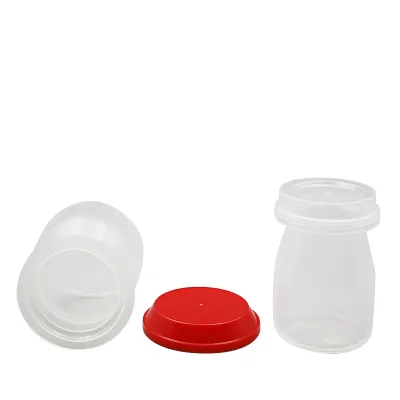
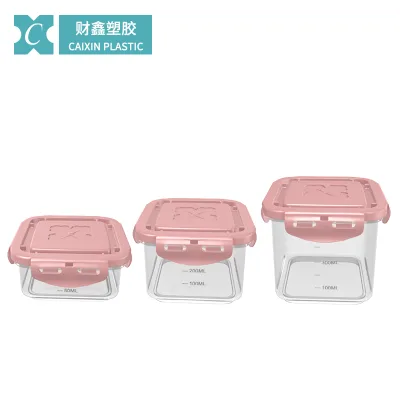

8oz Disposable Round Plastic Food Container (Salad & Ice Cream) with Lid
$0.04 - $0.04
MOQ: 5000 Pieces


Comprehensive Sourcing Guide
Strategic Sourcing Guide for Disposable Plastic Yogurt Containers with Lid and Spoon
Procuring disposable plastic yogurt containers with integrated lids and spoons requires a nuanced understanding of material science, regulatory compliance, and supply chain logistics. The market offers a diverse array of options ranging from small-volume custom orders to massive industrial runs. Buyers must navigate a landscape where product attributes vary significantly between suppliers, even when the core function remains identical. This guide synthesizes observed market data and essential procurement principles to assist buyers in making informed decisions without relying on unverified claims or speculative data.
Technical Specifications and Material Variability
The physical characteristics of disposable yogurt containers are the primary determinant of their suitability for specific applications. Observed data indicates a wide spectrum of material compositions, with polypropylene (PP) and general plastic being the most common. The choice of material directly influences the container's durability, temperature resistance, and compatibility with food products. For instance, one observed specification lists a temperature resistance range between -10 to 50 degrees Celsius, a critical parameter for products that may undergo refrigeration or mild heating during transport.
Dimensions and volume are equally variable. Market observations show containers ranging from 625ml to 12oz, with specific models measuring approximately 9.116.2cm or 9.316cm. The weight of the individual unit also fluctuates, with recorded instances of 24g, 90g, and 142g. These variations often correlate with the intended thickness and structural integrity of the product. A 24g unit is likely designed for lightweight, single-serve applications, whereas a 142g unit suggests a more robust construction capable of holding heavier or denser contents.
The packaging configuration is another technical consideration. Standard shipping units often come in cartons with specific quantities per carton (Qty/CTN), such as 50 pieces or 300 pieces. Carton dimensions vary accordingly, with observed sizes like 474736cm and 463146cm. Buyers must calculate the total volume and weight of the shipment, including Gross Weight (G.W.) and Net Weight (N.W.), which can range from 5.5/4.5kgs to 9/7.5kgs per carton. These figures are essential for logistics planning and freight cost estimation. Furthermore, the inclusion of a spoon and lid is not universal; some models are designed as standalone boxes, while others are part of a complete set. The "Type" is often listed as "Box," and the "Application" is frequently noted as "Kitchen" or "Food," indicating their primary use case.
Compliance and Certification Standards
In the food contact industry, regulatory compliance is non-negotiable. The safety of the materials used in yogurt containers is paramount, as they come into direct contact with consumable goods. The observed market data highlights several key certifications that buyers should verify. FDA (Food and Drug Administration) certification is a recurring standard, indicating compliance with United States food safety regulations. Additionally, LFGB (Lebensmittel- und Futtermittelgesetzbuch) is frequently cited, representing strict German and European food safety standards.
Other certifications observed include CE, EU, CIQ, and general compliance with EU standards. These certifications ensure that the product meets specific safety, health, and environmental protection requirements. For buyers targeting the European market, the presence of both FDA and LFGB is a strong indicator of quality, though the specific regulatory body required depends on the destination country. It is crucial to note that not every listed product possesses every certification. Buyers must treat certification claims as observations that require validation against the specific batch or supplier's current documentation.
The "prod_standard" field often contains dimensional data, such as 15126cm, which serves as a reference for the physical footprint of the product. However, when the standard is listed as "Customize," it implies that the product can be tailored to specific regulatory or dimensional needs. In such cases, the buyer must explicitly define the required standards during the ordering process to ensure the final product meets local legal requirements.
Cost Drivers and Pricing Dynamics
The pricing of disposable plastic yogurt containers is influenced by a complex interplay of factors, including material costs, order volume, and customization requirements. The observed price range in the market spans from $0.01 to $0.99 per unit. This wide disparity suggests that the lowest prices are likely associated with high-volume, standardized orders with minimal customization, while higher prices reflect smaller batches, premium materials, or added features like custom printing.
Minimum Order Quantity (MOQ) is a significant cost driver. Data shows an MOQ range from 1 unit to 200,000 units. High-volume orders, such as those with an MOQ of 100,000 pieces, typically benefit from economies of scale, resulting in a lower unit cost. Conversely, orders with lower MOQs, such as 100,000 pieces or even single units for sampling, will carry a higher per-unit price. The "MOQ" attribute is explicitly listed as 100,000PCS for certain high-volume models, indicating that these products are optimized for large-scale industrial distribution rather than boutique or trial orders.
Customization is another major cost factor. The availability of "Customization" and "Logo: Can Be Customized" suggests that adding branding or altering the design incurs additional costs. The complexity of the customization, such as the number of colors or the intricacy of the logo, will further influence the final price. Additionally, the "Printing Page" attribute, noted as "Single" in some cases, indicates the capacity for branding on one side, which may be a cost-saving measure compared to multi-sided printing.
Typical Applications and Usage Scenarios
Disposable plastic yogurt containers are versatile and serve a variety of applications beyond simple yogurt storage. The observed "Application" attributes include "Food," "Household," and "Kitchen," highlighting their broad utility. These containers are frequently used in the food service industry for serving dairy products, desserts, and salads. The "Usage" is explicitly listed as "Storage," emphasizing their role in preserving food freshness and preventing contamination.
The "Suit for" attribute, noted as "Kitchen," suggests that these containers are suitable for home use as well as commercial settings. The "Type" being "Box" indicates a specific shape and structure, often designed for easy stacking and storage. The "Spec" attribute, listed as "Small," implies that these containers are ideal for single-serving portions, which is common in the yogurt and dessert market.
For industrial applications, the "Application" attribute also lists specific volumes such as "125ml, 200ml, 250ml Brick or 200ml, 250ml Slim." This indicates that manufacturers produce containers in various shapes and sizes to accommodate different product formulations and consumer preferences. The "Color" attribute, ranging from Black, Green, Red, to Multi Colors, allows for branding and product differentiation. The "Disposable" attribute confirms that these products are designed for single-use, which is a key requirement for hygiene and convenience in the food industry.
Supplier Evaluation and Lead Time Management
Evaluating suppliers requires a careful review of their production capabilities, lead times, and reliability. The observed "Delivery" lead times range from 20 days to 30 days. This variation suggests that lead times are influenced by order volume, customization complexity, and the supplier's current production schedule. Buyers should factor in these lead times when planning their inventory and distribution schedules to avoid stockouts.
The "prod_origin" is consistently listed as "China," indicating that the majority of these products are manufactured in this region. While this provides access to competitive pricing, it also necessitates a thorough evaluation of the supplier's quality control processes and logistical capabilities. Buyers should verify the supplier's ability to meet the required "prod_standard" and "prod_model" specifications, such as SY0312-3, SY0312-2, SY6106625, or S-113.
The "prod_packing" attribute, listed as "Carton" or "Plastic Bag+ Carton," indicates the level of protection provided during shipping. Proper packaging is essential to prevent damage during transit, especially for products with lids and spoons that may be prone to separation or breakage. Buyers should ensure that the packaging meets the "Qty/CTN" requirements and that the "CTN Size" is compatible with their storage and shipping constraints.
Quality Control and Long-Term Procurement Considerations
Quality control is a critical aspect of sourcing disposable plastic containers. Buyers must implement rigorous inspection protocols to ensure that the products meet the specified "prod_standard" and "Temperature Resistance" requirements. The "Cutting Angle" attribute, listed as 45°-55°, suggests that precision in manufacturing is important for the fit and function of the lid and spoon. Deviations from these angles could lead to leakage or difficulty in opening the container.
Long-term procurement considerations involve building a sustainable relationship with suppliers who can consistently deliver high-quality products. Buyers should prioritize suppliers who offer "Customization" and have a track record of meeting certification requirements. The ability to adapt to changing market demands, such as new color trends or volume adjustments, is a valuable asset. Additionally, buyers should consider the environmental impact of the products, as the "Disposable" nature of the containers raises sustainability concerns. Exploring options for biodegradable materials or recyclable plastics can enhance the brand's reputation and align with global sustainability goals.
Comparative Analysis of Product Attributes
To facilitate decision-making, the following table summarizes key observed attributes across different product models. This comparison highlights the variability in specifications and helps buyers identify the most suitable options for their needs.
| Attribute | Model SY0312-3 | Model SY0312-2 | Model SY6106625 | Model S-113 |
|---|---|---|---|---|
| Material | Plastic | PP | PP | Plastic |
| Color | Black, Green | Red | Multi Colors | Multi Colors |
| Volume | 12oz | - | 625ml | 125ml-250ml |
| Weight | 90g | 142g | 24g | - |
| Certification | FDA | - | FDA, LFGB | CE, EU, LFGB, CIQ |
| MOQ | 1-200,000 | 1-200,000 | 100,000 PCS | 1-200,000 |
| Delivery | 30 Days | - | 20 Days | - |
| Customization | Available | Available | Customized | Customize |
| Application | Kitchen | Kitchen | Food, Household | Food |
This table illustrates that while the core function remains consistent, the specific attributes vary significantly. Buyers must carefully match these attributes to their operational requirements, ensuring that the selected product meets their volume, certification, and customization needs. By adhering to these guidelines, buyers can navigate the complex landscape of disposable plastic yogurt containers with confidence and efficiency.
FAQs
What certifications are available for these containers?
Available certifications include FDA, LFGB, CE, EU, and CIQ depending on the specific model. Buyers must verify which certification applies to their target product model, as not every listed item possesses every standard. Compliance is critical for food contact applications in different regions.
Can the product logo be customized for branding?
Yes, logo customization is available for many models, including options for single-page printing. The specific customization capabilities vary by model, so buyers should confirm details like printing pages and design complexity before placing an order to ensure branding requirements are met.
What is the typical delivery lead time for orders?
Typical delivery times range from 20 to 30 days depending on the specific product model and order volume. Factors such as customization needs and current production schedules can influence the exact timeline, so buyers should plan their inventory accordingly to avoid stockouts.
Which materials are used to manufacture these containers?
The containers are primarily made from general plastic or polypropylene (PP) materials. The choice of material affects durability and temperature resistance, with some models rated for temperatures between -10 to 50 degrees Celsius, suitable for refrigeration and mild heating during transport.
How does the minimum order quantity affect pricing?
Minimum order quantities range from 1 to 200,000 pieces, significantly impacting the unit price. Higher volume orders, such as those requiring 100,000 pieces, typically benefit from lower per-unit costs due to economies of scale compared to smaller sample batches.
What are the standard packaging configurations for shipping?
Standard packaging includes color boxes or plastic bags combined with cartons, with quantities per carton varying from 50 to 300 pieces. Carton dimensions and weights differ by model, so buyers must calculate total shipment volume and weight for accurate logistics planning and freight cost estimation.