Source Mahogany Fingerboard Acoustic Guitar for Bands, Studios, and Retail
Find and compare 30 Mahogany Fingerboard Acoustic Guitar options from Chinese manufacturers. Evaluate specifications like body materials, string types, and customization availability to identify suitable instruments for wholesale distribution.
Key considerations
Products List


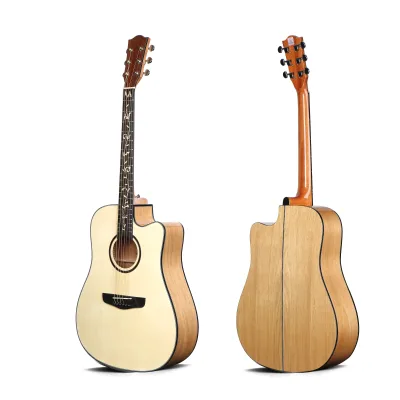
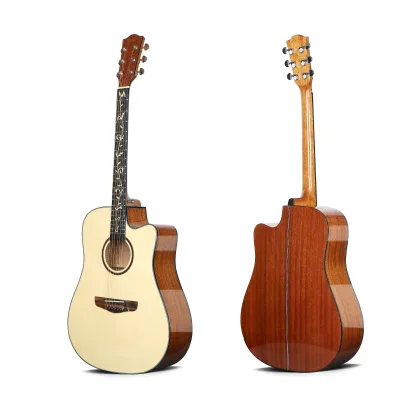


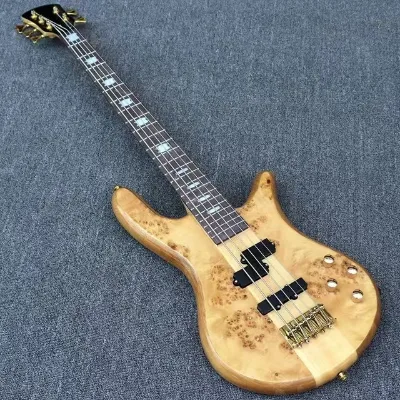
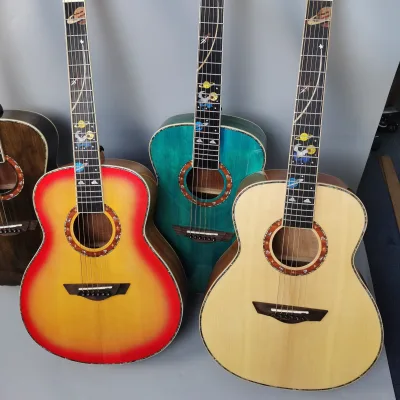
Comprehensive Sourcing Guide
Mahogany Fingerboard Acoustic Guitar Sourcing Guide
Sourcing acoustic guitars with mahogany fingerboards requires a nuanced understanding of material properties, manufacturing origins, and commercial terms. Mahogany is a traditional choice for necks and fingerboards due to its stability, warm tonal character, and workability, making it a staple in mid-range to professional instrument construction. However, the term "mahogany" in global supply chains can refer to genuine African or South American species, or more commonly, engineered alternatives like Sapele or Meranti, which offer similar visual and acoustic traits at a lower cost. Buyers must distinguish between solid wood components and plywood or composite constructions, as this distinction significantly impacts durability, resonance, and final retail pricing.
The current market landscape for these instruments is dominated by manufacturing hubs in China, particularly in Guangdong and Jiangsu provinces. These regions offer a wide spectrum of production capabilities, from high-volume OEM manufacturing to customized boutique builds. Procurement teams need to navigate a diverse range of product models, sizes, and material combinations, such as mahogany plywood bodies paired with solid spruce tops or single-board constructions. Understanding the specific configuration of each guitar is essential, as the interplay between the fingerboard material, the body wood, and the string type determines the final tonal profile and playability that end-users expect.
Product Scope and Observed Listing Signals
The observed product listings reveal a broad scope of acoustic guitars, primarily centered around standard sizes like 41-inch dreadnoughts and smaller variants such as 34-inch baby guitars. Key material observations indicate that while the fingerboard is often specified as Richlite or mahogany, the body construction varies significantly. Some models feature mahogany plywood bodies, which provide consistent performance and resistance to environmental changes, while others utilize solid spruce tops paired with catalpa or bubinga back and sides. This variation suggests that buyers are not limited to a single aesthetic or tonal profile but can select instruments based on specific market demands, whether that be durability for travel or rich resonance for studio use.
Brand presence in the observed data includes established names like Winzz and Deviser, indicating a market that supports both private labeling and branded distribution. The availability of customization options is a critical signal for B2B buyers, with suppliers offering tailored specifications for OEM orders. This includes the ability to modify machine heads, rosette inlays, and string types, such as Daddario strings, which are often cited as a quality benchmark. The presence of specific model numbers, such as AF386C, 41SD, and QTS-95, allows for precise tracking and reordering, ensuring that procurement teams can maintain consistency in their inventory over time.
Technical Specifications to Verify
Verifying the exact material composition of the fingerboard is the first critical technical step. While mahogany is the core keyword, listings may specify Richlite, a durable phenolic resin alternative, or solid mahogany. Buyers must confirm whether the neck is also made of mahogany, as this affects the instrument's overall weight and balance. Additionally, the bridge material, often described as high-density man-made wood or solid wood, plays a crucial role in transferring string vibration to the body. Misalignment between the advertised material and the actual product can lead to customer dissatisfaction, so physical sampling or third-party verification of wood species is recommended before scaling orders.
Dimensional accuracy and structural integrity are equally important verification points. The standard size for many of these guitars is 41 inches, but variations like 42-inch models or 34-inch baby guitars cater to different player demographics. Buyers should verify the neck profile, fret count, and scale length, as these factors influence playability. Furthermore, the quality of the hardware, including die-cast machine heads and golden tuners, must be assessed for smooth operation and tuning stability. The packing dimensions, such as 1064262cm for certain models, are vital for calculating logistics costs and warehouse storage requirements, ensuring that the supply chain remains efficient from factory to destination.
Compliance and Safety Documentation
Compliance with international safety and environmental standards is non-negotiable for acoustic guitar exports. While specific certification statuses may vary by supplier, buyers should prioritize vendors who adhere to FSC (Forest Stewardship Council) guidelines or equivalent sustainable forestry practices. This is particularly relevant for mahogany and other tropical hardwoods, where sourcing legality is under increasing scrutiny. Documentation proving the legal origin of the wood helps mitigate risks associated with trade regulations and enhances the brand's reputation among environmentally conscious consumers. Buyers should request chain-of-custody certificates to ensure that the materials used in the fingerboard and body are sourced responsibly.
Chemical safety is another critical area of compliance. Acoustic guitars often involve the use of finishes, glues, and varnishes that must meet strict regulations regarding volatile organic compounds (VOCs) and heavy metals. Buyers should verify that the finishing process complies with REACH regulations in Europe or similar standards in other target markets. Additionally, the strings and other metal components should be free from harmful substances like lead or nickel, which can cause allergic reactions. Requesting test reports from accredited laboratories for these chemical components ensures that the final product is safe for consumer use and avoids potential recalls or legal liabilities.
Cost Drivers and Commercial Terms
The cost of mahogany fingerboard acoustic guitars is influenced by several key drivers, including the type of wood, the level of customization, and the order volume. Solid wood components, such as a solid spruce top or solid mahogany neck, command a higher price than plywood or composite alternatives due to the scarcity and processing costs of the material. Customization options, such as custom branding, unique inlay designs, or specific hardware upgrades, also add to the unit cost. Buyers should analyze the trade-off between these premium features and the target retail price to ensure that the final product remains competitive in the market.
Commercial terms, including MOQ (Minimum Order Quantity) and lead times, vary significantly across suppliers. Observed data indicates MOQs ranging from small batches of 6 pieces for custom designs to larger volumes of 300 pieces for OEM orders. Lead times can be as short as 1-3 days for stock items but extend to 35 days for customized OEM production. Buyers must align their inventory planning with these lead times to avoid stockouts or excess inventory. Additionally, payment terms and shipping costs, which are affected by the bulky nature of guitar packaging, should be factored into the total landed cost calculation to maintain healthy profit margins.
Supplier Qualification and Quality Control
Qualifying suppliers requires a thorough assessment of their manufacturing capabilities and quality control processes. Buyers should verify the supplier's production capacity, especially if they plan to place large OEM orders. Factories in Guangdong and Jiangsu provinces often have established production lines for acoustic guitars, but it is essential to confirm that they have experience with mahogany fingerboard construction. Requesting references from previous clients and conducting factory audits can provide insights into the supplier's reliability, ethical labor practices, and overall operational efficiency. A supplier with a strong track record in quality control is less likely to deliver products with defects such as fret sprout, neck warping, or poor finish application.
Implementing a robust quality control protocol is essential to maintain product consistency. Buyers should define clear acceptance criteria for visual defects, structural integrity, and acoustic performance. Pre-shipment inspections (PSI) are recommended to catch any issues before the goods leave the factory. This includes checking the alignment of the neck and fretboard, the smoothness of the fret ends, and the functionality of the tuning machines. For customized orders, approving physical samples before mass production is crucial to ensure that the final product matches the agreed-upon specifications. Establishing a clear communication channel with the supplier for addressing quality issues can help resolve problems quickly and minimize disruptions.
Long-Term Procurement Checks
Long-term procurement success depends on building a resilient supply chain that can adapt to market changes and material shortages. Buyers should regularly review supplier performance metrics, including on-time delivery rates, defect rates, and responsiveness to issues. Maintaining relationships with multiple suppliers can provide flexibility and reduce dependency on a single source. Additionally, staying informed about trends in wood sourcing and alternative materials can help buyers make informed decisions about future product lines. For instance, as sustainability becomes more important, exploring suppliers who offer FSC-certified mahogany or sustainable alternatives can enhance brand value and comply with evolving consumer expectations.
Continuous improvement in product design and cost efficiency is also vital for long-term competitiveness. Buyers should work closely with suppliers to identify opportunities for cost reduction without compromising quality, such as optimizing packaging to reduce shipping costs or streamlining production processes. Feedback from end-users and retailers should be incorporated into product development cycles to ensure that new models meet market demands. By fostering a collaborative relationship with suppliers and maintaining a focus on quality and sustainability, buyers can secure a reliable supply of mahogany fingerboard acoustic guitars that drive growth and customer satisfaction in the long run.
FAQs
What materials are used for the body and fingerboard?
The body is constructed from mahogany plywood or single board spruce, while the fingerboard utilizes Richlite material. Some models feature solid red bubinga back and sides with a solid spruce top. These combinations ensure durability and specific tonal qualities for acoustic guitars.
Which customization options are available for these guitars?
Customization is available for these acoustic guitars, allowing buyers to request specific modifications. The brand Winzz offers customized options, and OEM orders can be placed with a minimum order quantity of 300 pieces. Stock items have a lead time of 1-3 days.
What are the standard sizes and specifications for these instruments?
Standard sizes include 41-inch and 42-inch models, with specific model numbers like AF386C and QTS-95. The guitars come in normal exporting packages or inner boxes with cartons. Some units are packed at 6 pieces per carton with dimensions around 106 by 42 by 62 centimeters.
Can I find mahogany fingerboard acoustic guitars with low MOQ?
Yes, minimum order quantities range from 1 to 120 pieces depending on the supplier and model. Specific OEM requirements may start at 300 pieces, while stock items allow for smaller orders. Buyers should verify the exact MOQ for the desired model number before purchasing.
Where are these mahogany acoustic guitars manufactured?
These guitars originate from China, specifically from regions like Jiangsu and Guangdong. Some products list Guangzhou as the place of origin. The manufacturing location ensures access to quality materials like mahogany and spruce for the body and top construction.
What type of strings and machine heads are included?
The guitars are equipped with quality strings, including Daddario options, and feature golden machine heads. Some models use die-cast head machines for stability. The string type is specified as quality strings suitable for acoustic performance.