Find Double Row Steering Knuckle for Cars, Trucks, and Buses
Source 30 verified listings for the Double Row Steering Knuckle from manufacturers in China. Buyers can compare specifications like material, certification, and customization options to find suitable parts for automotive applications.
Key considerations
Products List


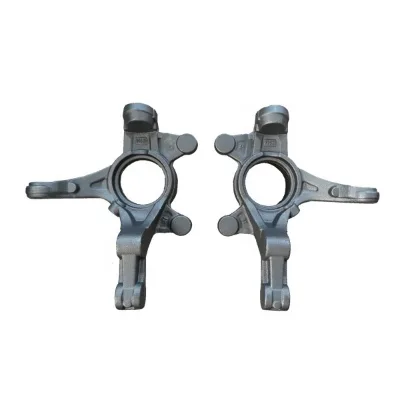


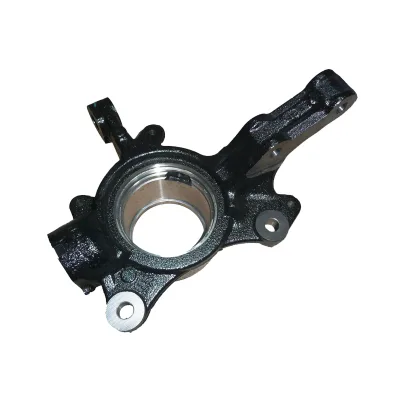

Aluminum Hot Forging Steering Knuckle Forklift/Truck/ATV Steering Knuckle Arm
$5.00 - $20.00
MOQ: 100 Pieces



Comprehensive Sourcing Guide
Strategic Sourcing Guide for Double Row Steering Knuckle Procurement
Understanding Technical Specifications and Material Integrity
When sourcing a Double Row Steering Knuckle, the primary objective is to identify components that meet rigorous mechanical demands while ensuring compatibility with specific vehicle architectures. Based on available market data, these components are frequently categorized under automotive parts with specific model identifiers such as DSC9841, DSC04788, and DSC04773. The material composition is a critical differentiator; observed listings indicate a prevalence of Stainless Steel and Grey Iron, though Steel variants are also common. Buyers must verify that the selected material aligns with the operational environment, particularly regarding load-bearing capacity and corrosion resistance.
The manufacturing process plays a pivotal role in the final integrity of the knuckle. Evidence suggests that production often involves a combination of Die Forging, Machining, and Stamping. This multi-stage approach ensures that the grain structure of the metal is optimized for strength, which is essential for steering components subjected to dynamic stress. Furthermore, the surface finish is not standardized across all listings; instead, it is often determined by the buyer's specific requirements. This flexibility allows for tailored corrosion protection or aesthetic finishes but requires clear communication during the initial specification phase.
Dimensional consistency is equally vital. While some product standards reference specific dimensions like 1200800450, these often relate to packaging or general machine specifications rather than the part itself. For the steering knuckle specifically, the model number serves as the primary identifier for dimensional accuracy. Buyers should expect variations in single package sizes, which can range significantly depending on the supplier's packing methodology. The "steering knuckle horns" designation further highlights the need for precise geometry to ensure proper wheel alignment and suspension articulation.
Compliance, Certification, and Regulatory Standards
Navigating the compliance landscape is essential for any procurement strategy involving automotive components. The market data reveals a strong emphasis on quality management systems, with ISO certification appearing frequently. Specific references include ISO, ISO9001:2015, and GB (Guobiao) standards. These certifications indicate that the manufacturing facility adheres to established quality control protocols, which is a prerequisite for high-volume automotive supply chains. However, the presence of "GB" standards alongside ISO suggests that some suppliers may primarily serve domestic Chinese markets or have specific regional compliance strengths.
Buyers must distinguish between general company certifications and product-specific standards. While many suppliers list "ISO" broadly, the specific mention of ISO9001:2015 provides a higher level of confidence regarding process consistency. Additionally, the standard "Nonstandard" classification observed in some listings indicates that these parts are often custom-engineered rather than off-the-shelf items. This necessitates a thorough review of the technical drawings and engineering specifications provided by the supplier to ensure they meet the buyer's local regulatory requirements, such as FMVSS in the United States or ECE regulations in Europe.
The "Standard" designation in some product attributes suggests that certain dimensions or tolerances may align with established industry norms, yet the "Nonstandard" label warns against assuming universal compatibility. Verification of the specific standard applicable to the intended market is crucial. For instance, a knuckle manufactured to a "GB" standard might require re-certification or additional testing to be legally compliant in a Western market. Therefore, the procurement team should explicitly request documentation proving that the specific batch of parts meets the target market's regulatory framework, rather than relying solely on the supplier's general certification claims.
Cost Drivers and Pricing Dynamics
The pricing structure for double row steering knuckles is influenced by a complex interplay of material costs, manufacturing complexity, and order volume. The observed price range in the market spans from $0.10 to $500 USD, a vast disparity that reflects the diversity of product types, from simple castings to fully machined, high-tolerance assemblies. This range indicates that a single "unit price" is not a reliable metric without context regarding the specific model, material grade, and finishing requirements.
Material selection is a primary cost driver. Components made from Stainless Steel or high-grade Steel will inherently command a higher price point than those cast from Grey Iron, due to the raw material costs and the energy intensity of the processing. The "Die Forging+Machining+Stamping" process also adds significant value and cost compared to simple casting alone. Buyers should anticipate that custom surface finishes, such as specialized coatings or heat treatments for high-temperature resistance, will further increase the unit cost.
Order volume, defined by the Minimum Order Quantity (MOQ), is another critical factor. The data shows MOQs ranging from 100 to 1000 pieces, with some suppliers offering as low as 100 pieces. This variability suggests that smaller orders may incur a premium per unit due to the setup costs associated with tooling and machine calibration. Conversely, larger orders that meet the higher MOQ thresholds are likely to benefit from economies of scale. The "Free-sample" availability mentioned in some listings can be a strategic tool for buyers to validate quality before committing to a larger order, though it does not necessarily reduce the cost of the bulk purchase.
Typical Applications and Operational Environments
The Double Row Steering Knuckle is a critical component in heavy-duty and specialized automotive applications. The observed application data lists a broad spectrum of machinery, including Metal Casting Machinery, Metal Coating Machinery, Metal Drawing Machinery, and Metal Forging Machinery. While these applications highlight the versatility of the component, the specific mention of "steering knuckle" and "steering gears/shaft" points directly to automotive and heavy vehicle usage. These parts are designed to withstand the rigors of steering systems in vehicles that require high stability and load-bearing capacity.
The "Automatic" and "Semi-Automatic" classifications of the machinery used to produce these parts suggest that they are integral to automated assembly lines in modern manufacturing. The "High Temperature Resistance" feature is particularly relevant for vehicles operating in extreme climates or those with high-performance braking systems that generate significant heat. This attribute ensures that the knuckle maintains its structural integrity under thermal stress, preventing deformation or failure during operation.
Furthermore, the "Metal Processing Machinery Parts" category indicates that these knuckles may also be used as replacement parts or components within the machinery that manufactures other vehicles. This dual-use potential underscores the need for robust quality control. The "Hot sale customized automotive parts" designation implies a high demand for tailored solutions, suggesting that buyers in the automotive sector often require specific modifications to fit unique chassis designs or suspension geometries.
Supplier Evaluation and Operational Capabilities
Selecting the right supplier requires a deep dive into their operational capabilities and business nature. The market data identifies suppliers as "Manufacturer&Exporter," which is a significant advantage as it eliminates the risk of middlemen markups and ensures direct access to production lines. This direct relationship facilitates better communication regarding technical specifications and faster resolution of production issues. The "OEM/ODM" acceptance status is another key indicator; it confirms that the supplier is equipped to handle custom designs and private labeling, which is essential for buyers seeking unique solutions or brand-specific parts.
Geographic location is a factor in logistics and lead times. The data points to origins in Zhejiang and Hebei, China, which are known industrial hubs for automotive parts manufacturing. These regions offer a mature supply chain ecosystem, but buyers must verify the specific factory location to assess shipping costs and import regulations. The "Delivery: 30 Days After Payment" lead time is a standard benchmark, but it should be confirmed for each specific order, as customizations or material shortages can extend this timeline.
The "Quality Control: 100% Inspection" claim is a strong selling point, but it must be validated through on-site audits or third-party testing. Buyers should inquire about the specific inspection methods used, such as dimensional checks, tensile strength testing, or visual inspections for surface defects. The "Sample: Free-sample" option provides an opportunity to evaluate the supplier's quality firsthand before placing a large order. Additionally, the "Customized Packing" and "Export Standard Packing" options indicate that the supplier is experienced in handling international logistics, reducing the risk of damage during transit.
Quality Control Protocols and Long-Term Procurement
Ensuring long-term reliability requires a proactive approach to quality control. The "100% Inspection" standard suggests a commitment to rejecting defective units before they leave the factory, but buyers should demand detailed inspection reports that include statistical data on defect rates and the specific parameters tested. The "Process: Die Forging+Machining+Stamping" combination requires strict control at each stage to prevent cumulative errors. For instance, the forging process must ensure uniform grain flow, while the machining stage must maintain tight tolerances for the steering knuckle horns and mounting points.
Long-term procurement considerations also involve the supplier's ability to maintain consistency over time. The "Customized" and "Customized Packing" attributes highlight the need for a flexible supply chain that can adapt to changing design requirements or volume fluctuations. Buyers should establish a partnership with suppliers who demonstrate a commitment to continuous improvement and can provide traceability for each batch of parts. This includes maintaining records of material certificates, heat treatment logs, and inspection results.
The "Condition: New" status is a baseline expectation, but buyers should also consider the lifecycle of the part. For heavy-duty applications, the durability of the knuckle is paramount. The "High Temperature Resistance" and "Stainless Steel" material options suggest a focus on longevity, but the actual performance in the field depends on the quality of the manufacturing process. Regular audits and periodic re-qualification of the supplier are recommended to ensure that the quality standards remain consistent as production volumes scale up.
Comparative Analysis of Supplier Attributes
To facilitate decision-making, the following table summarizes key attributes observed in the market data, highlighting the variations buyers may encounter.
| Attribute | Observed Range/Options | Procurement Implication |
|---|---|---|
| Material | Stainless Steel, Grey Iron, Steel | Determines cost, weight, and corrosion resistance. |
| Certification | ISO, ISO9001:2015, GB | Indicates quality management system maturity; verify target market compliance. |
| MOQ | 100 - 1000 Pieces | Affects unit price and inventory strategy; lower MOQs may cost more per unit. |
| Lead Time | 30 Days After Payment | Standard benchmark; confirm for custom orders. |
| Customization | Available (OEM/ODM) | Essential for unique vehicle designs; requires detailed technical drawings. |
| Surface Finish | According to Requirement | Impacts durability and aesthetics; specify clearly to avoid disputes. |
| Origin | Zhejiang, Hebei, China | Influences logistics costs and import duties. |
| Packing | Wooden Case, Pallet, Export Standard | Ensures safe transit; verify if packaging meets destination requirements. |
This comparison underscores the importance of aligning specific buyer needs with the supplier's capabilities. By carefully evaluating these attributes, procurement teams can mitigate risks and secure a reliable supply of double row steering knuckles that meet both technical and commercial objectives.
FAQs
What materials are used for double row steering knuckles?
These parts are commonly made from Stainless Steel, Grey Iron, or Steel. The specific material depends on the model and application requirements, such as load-bearing capacity or corrosion resistance needs.
Which certifications do suppliers typically hold for these parts?
Suppliers often hold ISO, ISO9001:2015, and GB certifications. These indicate adherence to quality management systems, though buyers should verify specific batch compliance for their target market regulations.
How long is the delivery time for custom orders?
The standard delivery time is 30 days after payment. This timeline may vary if the order requires complex customization or if specific material shortages occur during the production cycle.
Can I request custom surface finishes for these knuckles?
Yes, surface finishes are available according to your specific requirements. This flexibility allows for tailored corrosion protection or aesthetic finishes but requires clear communication during the specification phase.
What is the minimum order quantity for these parts?
The minimum order quantity ranges from 100 to 1000 pieces depending on the supplier. Some vendors offer lower MOQs of 100 pieces, while others require higher volumes to justify setup costs.
Where are these manufacturers located?
Manufacturers are primarily located in Zhejiang and Hebei, China. These regions are known industrial hubs for automotive parts, offering mature supply chains but requiring verification of specific factory locations for logistics.
Do suppliers offer free samples for quality verification?
Some suppliers provide free samples to validate quality before bulk orders. This option helps buyers assess the product's integrity and surface finish without immediate financial commitment to a large purchase.