Source OEM Standard Power Steering Pump for Tractor Truck Harvester
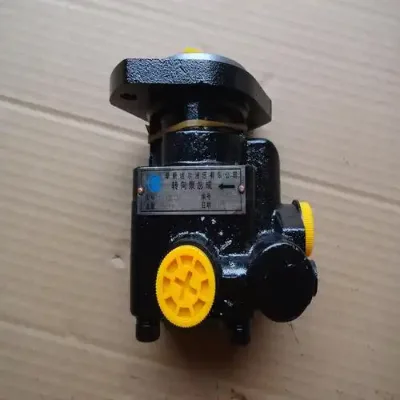
Compare 21 listings for OEM Standard Power Steering Pump suitable for tractors, trucks, and harvesters. Buyers can evaluate specifications like displacement, pressure, and material to find the right component for their machinery needs.
Key considerations
Products List


Comprehensive Sourcing Guide
OEM Standard Power Steering Pump Sourcing Guide
Navigating the market for OEM standard power steering pumps requires a disciplined approach to distinguishing between genuine original equipment and compatible aftermarket alternatives. The supply landscape for these hydraulic components is dominated by manufacturers in China, with specific production hubs in Chongqing and Jinan serving as primary origins for the bulk of available inventory. Buyers must recognize that while the core function remains consistent, the quality variance between "Original" and "Copy" designations can significantly impact the longevity and safety of the steering system in heavy-duty applications.
Procurement decisions should be grounded in the specific model numbers and displacement requirements of the target machinery, as the observed listings reveal a wide array of configurations ranging from 18 ml/r to 200 cc displacements. The market offers products with varying warranty structures, including standard 12-month coverage and specific exclusions for wearing parts, which necessitates a clear understanding of the supplier's liability terms before finalizing any order. Understanding these baseline distinctions is the first step in securing a reliable supply chain for critical vehicle steering components.
Product Scope and Observed Listing Signals
The product scope for OEM standard power steering pumps encompasses a diverse range of hydraulic units designed for heavy machinery, including tractors, trucks, harvesters, and specialized vehicles. Listings indicate that these pumps are available in various materials, primarily steel and iron, with some plastic components noted in specific sub-assemblies or housing types. The observed market data highlights specific model identifiers such as 101s, 1308495, and 542000810, which serve as critical reference points for matching the pump to the correct vehicle or machine architecture.
Buyers will encounter a variety of packaging and shipping configurations, ranging from individual carton boxes to palletized sea transportation units, which directly influences logistics planning and storage requirements. The observed listings also reveal that some units are marketed with specific performance claims, such as volumetric efficiency of 80% or greater, and working pressures up to 16 MPa, though these figures should be treated as product-specific observations rather than universal guarantees. The presence of customization options suggests that suppliers may offer tailored solutions for specific displacement or mounting requirements, provided the buyer can clearly articulate these needs.
Technical Specifications to Verify
Verifying the technical specifications of a power steering pump is essential to ensure compatibility with the intended vehicle or machinery, particularly regarding displacement and pressure ratings. Buyers must confirm the exact displacement in cubic centimeters or milliliters per revolution, as the market data shows significant variation from 18 ml/r to 200 cc, which directly affects the hydraulic flow rate and steering assist force. Additionally, the maximum pressure rating, often cited as 16 MPa with a tolerance of ±0.3, must be validated against the system's operating requirements to prevent premature failure or seal damage under high-load conditions.
The physical dimensions and mounting interfaces are equally critical, with observed listings specifying sizes such as 1/2 inch or specific model-based dimensions like 31x31x17 cm for packaging. It is vital to cross-reference the model number, such as RD 15 or ZYB-1618R/715B-17, with the original equipment manufacturer's documentation to ensure that the shaft type, port configuration, and overall footprint match the existing system. Furthermore, the distinction between automatic and manual operation modes, as well as the specific function like Load Sensing (LS), must be confirmed to avoid installing a pump that cannot communicate correctly with the vehicle's hydraulic control logic.
Compliance and Safety Documentation
Compliance and safety documentation for power steering pumps often include references to international standards such as ISO 9001, which indicates a manufacturer's commitment to quality management systems, though this should be verified on a per-supplier basis. Buyers should request specific test reports or certification documents that validate the pump's performance against OEM standards, ensuring that the unit meets the rigorous safety and durability requirements expected in commercial and agricultural transport. The absence of explicit certification data in a listing should prompt a direct inquiry to the supplier regarding their quality assurance protocols and adherence to industry norms.
Safety considerations extend to the warranty terms and the specific exclusions outlined in the supplier's agreement, such as the common exclusion of wearing parts from the standard one-year warranty period. Procurement teams must ensure that the documentation provided clearly defines the scope of coverage, including whether the warranty applies to the entire unit or only specific components like the housing or internal gears. Understanding these liability boundaries is crucial for risk management, as it determines the financial exposure in the event of a premature failure or manufacturing defect.
Cost Drivers and Commercial Terms
The cost of OEM standard power steering pumps is influenced by several factors, including the material composition, displacement capacity, and the degree of originality, with prices observed in the market ranging from $0.99 to $6000 depending on the specific model and volume. Higher displacement units and those marketed as "Original" rather than "Copy" typically command a premium, reflecting the higher quality of materials and stricter manufacturing tolerances required for heavy-duty applications. Buyers should be aware that the minimum order quantity (MOQ) can vary significantly, with observed ranges from 1 to 100 units, which may impact the unit price and overall procurement strategy.
Commercial terms such as payment methods, lead times, and shipping arrangements are critical variables that affect the total cost of ownership and supply chain reliability. While specific lead times are not universally standardized in the provided data, the observation of "Sea Transportation" and "Pallet" packaging suggests that logistics costs and transit times will be significant considerations for international buyers. Negotiating clear terms regarding the "Customization" availability and the specific packing requirements, such as inner and outer cartons, can help avoid unexpected costs and ensure that the goods arrive in a condition suitable for immediate installation.
Supplier Qualification and Quality Control
Supplier qualification for power steering pumps requires a thorough vetting process that goes beyond the basic listing information to assess the manufacturer's actual production capabilities and quality control systems. Buyers should prioritize suppliers who can provide verifiable evidence of their origin, such as specific locations in Chongqing or Jinan, and who demonstrate a consistent track record of meeting OEM standards. The presence of a "Standard" or "OEM STANDARD" designation in the product description is a positive signal, but it must be backed by tangible quality control measures and the ability to produce units that match the performance of the original equipment.
Quality control checks should include a detailed review of the product's condition, with a strong preference for "New" units that have not been refurbished or reconditioned unless explicitly stated. Buyers must verify the supplier's ability to maintain consistency across batches, particularly regarding critical attributes like volumetric efficiency and maximum pressure ratings, which are essential for the reliable operation of the steering system. Establishing a clear communication channel for pre-shipment inspections and post-delivery support is also vital to ensure that any deviations from the agreed specifications are addressed promptly and effectively.
Long-Term Procurement Checks
Establishing a long-term procurement strategy for power steering pumps involves regular audits of supplier performance and continuous monitoring of product quality to ensure sustained reliability. Buyers should implement a system for tracking warranty claims and failure rates, using this data to evaluate whether the current supplier continues to meet the required standards over time. This proactive approach helps identify potential issues early, allowing for corrective actions before they escalate into significant operational disruptions or safety hazards.
Regular re-evaluation of the market landscape is also necessary to ensure that the procured components remain competitive in terms of cost and performance. As technology evolves and new models are introduced, buyers must stay informed about updates to OEM standards and the availability of alternative suppliers who may offer improved specifications or better pricing. Maintaining a diverse supplier base and keeping open lines of communication with multiple vendors can provide the flexibility needed to adapt to changing market conditions and ensure a stable supply of critical steering components.
FAQs
What is the working pressure for this pneumatic power steering pump?
The working pressure is 7 Bar. This specification ensures reliable operation for standard hydraulic applications. It is suitable for various industrial and vehicle systems requiring consistent pressure levels. Always verify compatibility with your specific system requirements before installation to ensure optimal performance and safety.
Can I get customization for the OEM Standard Power Steering Pump?
Yes, customization is available for these units. Buyers can request specific modifications to meet unique operational needs. This flexibility allows for tailored solutions in diverse mechanical environments. Contact suppliers directly to discuss your specific requirements and available customization options for your project.
What is the warranty period for the plastic power steering pump?
The warranty period is 12 months or one year. This coverage typically excludes wearing parts. It provides assurance for the main unit's durability. Buyers should review the specific warranty terms with the supplier to understand what components are covered and what maintenance is required.
Which models are available for the load sensing function?
Models such as 101s and 101s-5t offer load sensing functions. These units feature displacements of 100 Cc and 200 Cc respectively. They are designed for applications like tractors and trucks. Check specific model numbers to ensure they match your hydraulic system's flow and pressure demands.
What is the maximum flow rate for the RD 15 model?
The maximum flow rate is 57 L/Min for the RD 15 model. This capacity supports efficient hydraulic operation in various machinery. It is suitable for applications requiring moderate to high flow rates. Ensure your system can handle this flow to prevent pressure drops or inefficiencies during operation.
Where are these power steering pumps manufactured?
These pumps are manufactured in China, with origins in locations like Chongqing and Jinan. This indicates a broad manufacturing base within the country. Buyers can expect consistent production standards from these regions. Verify the specific origin with the supplier to ensure it meets your sourcing preferences.