Source Dynamic U Beam Platform Weighbridge with Lightning Protection for Logistics, Mining, and Ports
Compare 30 Dynamic U Beam Platform Weighbridge with Lightning Protection options from verified suppliers. These electronic scales feature customizable capacities, LED displays, and CE and OIML certifications for industrial weighing applications.
Key considerations
Products List

U-Type Weighbridge Vehicle Weighing Scale Weighing Bridge for Trucks Weighbridge
$11000.00 - $21000.00
MOQ: 1 Pieces

Heavy-Duty 80 Ton Weighbridge with Intelligent Load Measurement Software
$3000.00 - $5000.00
MOQ: 1 Pieces


Electronic Truck Scale Weighing Weighbridge Weight Bridge with Steel Ramp
$2000.00 - $15000.00
MOQ: 1 Pieces

Electronic Weigh Bridge 30 80 Tonnes Weigh Bridge Platform Truck Scale Price
$2000.00 - $15000.00
MOQ: 1 Pieces

3X18m or Other Custom Platform Scale Electronic Weighbridge Truck Scale
$2000.00 - $15000.00
MOQ: 1 Pieces


Automatic Truck Weighbridge with Lightning Protection China Factory Price
$1800.00 - $18000.00
MOQ: 1 Pieces


3X18m 150 Ton Weighbridge Manufacturer-Mining & Ports. Best Factory Price + Lifetime Support.
$1800.00 - $18000.00
MOQ: 1 Pieces

Automation with Lightning Protection Weighbridge Truck Weighing System
$3000.00 - $15000.00
MOQ: 1 Pieces

Hot Sale U Beam Weighbridge Electronic Truck Scale with High Quality
$3000.00 - $10000.00
MOQ: 1 Pieces

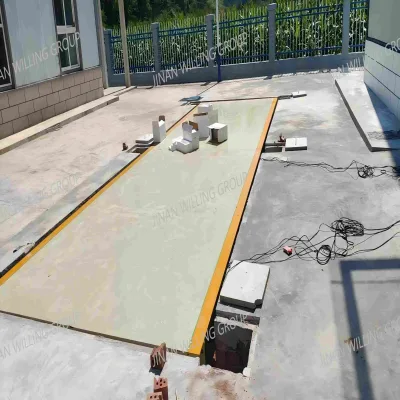


Scs-Mu3 Modular Metal Weighbridge for High-Performance Truck Weighing
$6000.00 - $14000.00
MOQ: 1 Pieces


Weighing Bridge Weighbridge Digital Truck Scale Weightbridge Movable Weighing Scale
$9800.00 - $10000.00
MOQ: 1 Pieces

3X18m 60t 80t Electronic Weighing Weighbridge Truck Scale Big Weighing Platform
$7500.00 - $8000.00
MOQ: 1 Pieces

Weighbridge Anti-Cheat Truck Scale System Saving Costs and Improving Efficency
$2001.00 - $20000.00
MOQ: 1 Pieces


Comprehensive Sourcing Guide
Strategic Sourcing Guide for Dynamic U-Beam Platform Weighbridges with Lightning Protection
Selecting a dynamic U-beam platform weighbridge equipped with lightning protection represents a critical infrastructure decision for logistics, mining, and heavy industrial operations. The procurement of such systems requires a rigorous understanding of mechanical engineering principles, electrical safety standards, and the specific operational environments where these scales function. Unlike static scales, dynamic weighing systems demand higher precision under motion, necessitating robust structural designs and advanced sensor technologies. This guide synthesizes available product attributes and industry standards to provide a comprehensive framework for buyers evaluating suppliers and specifications for these complex weighing solutions.
Structural Engineering and Platform Design
The foundation of any reliable weighbridge lies in its structural integrity, particularly when designed for dynamic weighing applications. The core keyword specifies a "U-beam" structure, which corresponds to the observed "U-Type Steel" configuration in the product data. This design is preferred for its high strength-to-weight ratio and resistance to torsional stress, essential for maintaining accuracy when vehicles traverse the platform at speed. The platform construction typically utilizes Q235B steel, a standard low-carbon structural steel known for its weldability and durability. The main beam configuration often involves six primary beams, providing a stable lattice that distributes the load evenly across the load cells.
Platform dimensions are highly customizable to meet specific site requirements. The observed data indicates a platform width ranging from 3 meters to 3.4 meters, with lengths extending from 6 meters up to 30 meters. This flexibility allows buyers to tailor the scale to accommodate various vehicle types, from standard trucks to oversized transport units. The top plate thickness is a critical variable, with options available in 8mm, 10mm, 12mm, and 14mm increments. Thicker plates are generally recommended for heavy-duty dynamic applications to prevent deformation under repeated high-load impacts. The mechanical performance of the scale platform is engineered with a strength safety factor greater than 2.5, ensuring that the structure can withstand maximum safe overloads up to 200% of the full scale capacity without permanent deformation.
Dynamic Weighing Technology and Sensor Systems
Dynamic weighing introduces unique challenges compared to static weighing, as the system must capture accurate mass data while the vehicle is in motion. The product attributes highlight the use of digital sensors and bridge-type load cells, which are integral to modern electronic scales. These sensors convert mechanical force into electrical signals with high fidelity, minimizing the impact of environmental variables. The accuracy class is specified as OIML III Scales Standard, a classification that defines the permissible error limits for commercial weighing instruments. For dynamic applications, the system must maintain this accuracy even when vehicles are moving at varying speeds.
The operating environment for these sensors is a key consideration. The digital sensors are rated to function within a temperature range of -30 °C to +70 °C, while the instrument itself operates between -10 °C and higher limits. This wide operational window ensures reliability in diverse climates, from arctic mining sites to tropical ports. The working power supply is compatible with a broad voltage range of 100240VAC at 4961Hz, allowing for seamless integration into different regional electrical grids. Furthermore, the system supports unattended operation, featuring intelligent weighing software and self-service capabilities that can handle capacities ranging from 10 to 300 tons, with options for customization beyond 300 tons.
Electrical Safety and Lightning Protection Integration
In regions prone to thunderstorms or with unstable electrical grids, lightning protection is not merely an optional feature but a necessity for protecting sensitive electronic components. The product specifications explicitly confirm the availability of "With Lightning Protection" systems. This feature is critical for dynamic weighbridges, which often rely on external cabling and remote sensors that can act as antennas for lightning strikes. The inclusion of lightning protection systems typically involves surge protection devices (SPDs) installed at the junction box and the main control unit to divert high-voltage transients safely to the ground.
The working environment humidity is rated at ≤95%, indicating that the electronic components are designed to resist moisture ingress, which often accompanies stormy weather. However, the presence of explosion-proof requirements for certain occasions suggests that buyers must verify the specific electrical ratings if the weighbridge is to be installed in hazardous zones. The system supports both "Explosion-proof Loadometer" and "Non Explosion Proof Loadometer" configurations, meaning the procurement process must clearly define the safety requirements of the installation site. The power supply unit is designed to handle fluctuations, but the integration of lightning protection ensures that the digital scale and weighing software remain operational after electrical disturbances.
Compliance, Certification, and Regulatory Standards
Navigating the regulatory landscape is a primary concern for B2B procurement. The observed product data lists CE and OIML certifications, which are fundamental for international trade and compliance. The CE mark indicates conformity with health, safety, and environmental protection standards for products sold within the European Economic Area. The OIML (International Organization of Legal Metrology) certification, specifically the III accuracy class, is crucial for commercial transactions where legal-for-trade accuracy is required. Buyers must verify that the specific model number, such as the "Scs" or "FSG" series, holds these certifications for the intended market of operation.
In addition to international standards, local regulations often dictate the installation and usage of weighbridges. The product standard is noted as "customized," "CS," and "SCS," suggesting that the manufacturer can adapt the scale to meet specific national or regional codes. The foundation type is another area where compliance is vital; options include "Without Foundation Pit," "Shallow Foundation Pit," or "Ca" (likely referring to concrete foundations). The choice of foundation impacts the scale's stability and its ability to meet legal metrology requirements. Buyers should ensure that the foundation design aligns with local civil engineering standards and the specific soil conditions of the installation site.
Cost Drivers and Procurement Considerations
The cost of a dynamic U-beam platform weighbridge is influenced by several variables, including platform dimensions, material thickness, and the complexity of the electronic system. The observed price range of 110 to 21,000 USD reflects the vast difference between basic static configurations and fully automated, unattended dynamic systems with advanced software. The minimum order quantity (MOQ) is observed as 1, indicating that these systems are typically sold as complete units rather than in bulk batches. However, the total cost of ownership extends beyond the initial purchase price.
Key cost drivers include the customization of the platform size, the selection of thicker steel plates for heavy-duty use, and the integration of unattended weighing software. The "OEM, ODM" support indicates that buyers can request custom branding or specific functional modifications, which may incur additional costs. The "Automatic Spraying" surface treatment process adds to the durability and longevity of the structure, reducing long-term maintenance expenses. Buyers should also consider the cost of the foundation work, which varies significantly based on whether a pit is required. The "Wooden Packing" and "Wooden Box Package" ensure safe transport, but logistics costs for oversized cargo must be factored into the budget.
Supplier Evaluation and Quality Assurance
Evaluating a supplier for a dynamic weighbridge requires a focus on technical capability and quality control processes. The product origin is listed as Qingdao, Shandong, China, a region known for its heavy manufacturing industry. Buyers should verify the supplier's ability to provide the full range of customization options, including the specific beam height of 280mm or 300mm and the main beam number of 6PCS. The "High Quality Q235B Steel" and "Plain Plate" specifications suggest a focus on material quality, but buyers must request mill certificates to confirm the steel grade and properties.
Quality control should extend to the testing of the load cells and the calibration of the entire system. The "Bridge-Type" load cells are a specific technical detail that should be verified against the supplier's test reports. The "Accuracy: 10kg" specification provides a benchmark for performance, but buyers must ensure this accuracy is maintained under dynamic conditions. The supplier's ability to provide "Customized Support" for installation and commissioning is also a critical factor. Since the system includes "Weighing Software" and "Self-Service Weighing All-in-on" features, the supplier must demonstrate expertise in software integration and user training.
Long-Term Operational Viability
The long-term success of a weighbridge installation depends on its ability to withstand environmental stress and maintain accuracy over time. The "Mechanical Performance of Scale Platform" with a safety factor greater than 2.5 ensures that the structure can handle unexpected overloads. The "Maximum Safe Overload" of 200%Fs provides a buffer against accidental overloading, which is common in busy logistics hubs. The "Explosion-Proof Requirements" and "Lightning Protection" features are essential for long-term reliability in harsh environments, preventing catastrophic failures due to electrical surges or hazardous conditions.
Buyers should also consider the maintenance requirements of the system. The "Automatic Spraying" surface treatment reduces the risk of corrosion, extending the lifespan of the steel structure. The digital sensors and electronic components should be designed for easy replacement and calibration. The "Working Environment Temperature" and "Humidity" ratings indicate that the system is built for durability, but regular inspections are necessary to ensure that the seals and protective coatings remain intact. By selecting a system with robust engineering and comprehensive safety features, buyers can ensure a reliable weighing solution that supports their operational needs for years to come.
Comparative Analysis of System Configurations
To assist buyers in making informed decisions, the following table summarizes the key technical attributes observed in the product data, highlighting the variations available for dynamic U-beam platform weighbridges.
| Attribute Category | Standard Configuration | Customizable / High-End Option |
|---|---|---|
| Platform Structure | U-Type Steel, 6 Main Beams | Custom Beam Height (280mm/300mm) |
| Platform Dimensions | 3m x 6m | Width 3m-3.4m, Length 6m-30m |
| Steel Thickness | 8mm | Options: 8, 10, 12, 14mm |
| Material Grade | Q235B Steel | High Quality Q235B Steel |
| Sensor Type | Digital Scale, Bridge-Type | Explosion-proof Loadometer (Optional) |
| Weighing Method | Dynamic Weighbridge | Static Truck Scale (Alternative) |
| Safety Features | Lightning Protection | Explosion-proof for Hazardous Zones |
| Accuracy Class | OIML III | Customized Standard (CS, SCS) |
| Power Supply | 110V to 240V | 100 |
| Software | Basic Weighing | Unattended, Self-Service All-in-One |
This comparison illustrates that while the core technology remains consistent, the flexibility in dimensions, material thickness, and safety features allows buyers to tailor the system to their specific operational constraints. The presence of both static and dynamic weighing methods in the product attributes suggests that some suppliers may offer hybrid solutions, though the core keyword emphasizes dynamic performance.
Final Procurement Recommendations
In conclusion, sourcing a dynamic U-beam platform weighbridge with lightning protection requires a meticulous approach to technical verification and supplier evaluation. Buyers must prioritize the structural integrity of the U-beam design, ensuring that the Q235B steel and beam configuration meet the required safety factors. The integration of lightning protection and explosion-proof capabilities is non-negotiable for sites with specific environmental risks. Compliance with OIML and CE standards must be confirmed through documentation, and the customization options for platform size and software functionality should be clearly defined in the procurement contract. By adhering to these guidelines, buyers can secure a weighing system that delivers accuracy, safety, and long-term reliability in demanding industrial environments.
FAQs
What certifications apply to Dynamic U Beam Platform Weighbridge with Lightning Protection?
The scales typically hold CE and OIML certifications for international compliance. These standards ensure the device meets legal metrology requirements for commercial weighing transactions in various global markets.
How does lightning protection integrate with the weighing system?
Lightning protection systems are included to safeguard sensitive digital sensors and control units from electrical surges. This feature is essential for outdoor installations in regions prone to thunderstorms or unstable power grids.
Which platform dimensions are available for dynamic weighing applications?
Platform sizes are customizable, typically ranging from 3 meters to 3.4 meters in width and 6 to 30 meters in length. Buyers can select specific dimensions to fit their site constraints and vehicle types.
Can the scale operate in extreme temperature environments?
Yes, the digital sensors function reliably between -30 °C and +70 °C. The instrument unit operates within a slightly narrower range, ensuring stability in diverse climates from arctic to tropical conditions.
What is the maximum safe overload capacity for these scales?
The system is designed to withstand a maximum safe overload of 200% of the full scale capacity. This safety factor prevents permanent deformation during accidental overloading events in busy logistics operations.
How is the platform structure constructed for dynamic weighing?
The platform uses a U-Type Steel structure made of high-quality Q235B steel with a strength safety factor greater than 2.5. This design distributes load evenly across six main beams for accurate dynamic measurement.
What customization options are available for unattended weighing systems?
Suppliers offer OEM and ODM support with customizable capacities ranging from 10 to 300 tons. The system includes intelligent weighing software and self-service features that can be tailored for specific operational needs.