Source E0 Veneer Acoustic Room Divider for Offices, Hotels, and Classrooms
Explore 30 listings for the E0 Veneer Acoustic Room Divider designed for offices, hotels, and classrooms. Buyers can compare specifications like thickness, NRC ratings, and customization options to find the right partition wall solution.
Key considerations
Products List


Interior Commercial Auditorium Soundproof Room Dividers Acoustic Wall Partition
$85.00 - $132.00
MOQ: 10 Square Meters


Noise Insulation Melamine Board Collapsing Folding Acoustic Door Room Dividers
$82.00 - $102.00
MOQ: 1 Square Meters

Interior Folding Sliding Partitions Decorative Acoustic Room Divider Price
$82.00 - $102.00
MOQ: 100 Square Meters

Sound Insulation Board Panels Polyester Acoustic Partition Screen Room Divider
$5.00 - $8.00
MOQ: 10 Square Meters


Wall Partition Acoustic Panel Sound Absorbing Pet Panel Acoustic Wall Office Desks Room Divider
$7.00 - $12.00
MOQ: 10 Square Meters


Wooden Acoustic Panels 100% Polyester Fiber room divider groove panel
$55.00 - $65.00
MOQ: 200 Square Meters


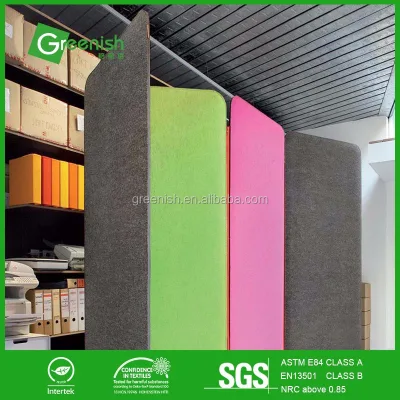


Folding Divider Sliding Door Acoustic Panel Wall Room Divider Screen
$87.00 - $107.00
MOQ: 50 Square Meters

M&W Hotel Sound Proofing Floor to Ceiling Acoustic Room Dividers
$232.14 - $325.00
MOQ: 50 Square Meters

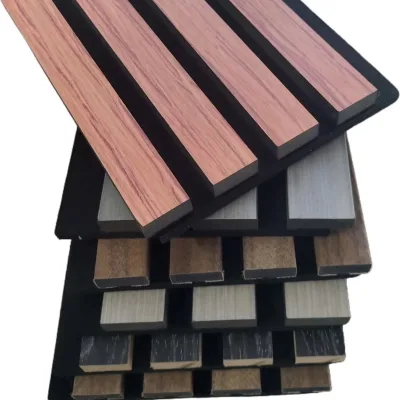

Hot Sale Custom Acoustic Panels Acoustic Foam Panel Divider Creative Foam for Studio Room
$0.24 - $36.75
MOQ: 50 Square Meters

Comprehensive Sourcing Guide
Strategic Sourcing Guide for E0 Veneer Acoustic Room Dividers
Understanding the Product Category and Technical Specifications
The core keyword "E0 Veneer Acoustic Room Divider" refers to a specialized class of movable partition systems designed to balance spatial flexibility with acoustic performance and aesthetic finish. In the current B2B market, these units are frequently categorized under sliding wall dividers, collapsing acoustic room dividers, and partition walls. The primary function of these systems is to transform large open spaces, such as banquet halls, offices, and meeting rooms, into smaller, sound-isolated zones without the permanence of fixed construction.
When evaluating the technical specifications of these dividers, buyers must look beyond the general category name to the specific construction details. The supplied data indicates a prevalence of 65 mm and 85 mm thickness profiles, with specific models explicitly noted as "65 mm sliding wall dividers" or "85 mm acoustic room dividers." The 65 mm variant is often associated with a standard thickness of 2 9/16 inches, while the 85 mm version measures 3 1/4 inches. These dimensions are critical as they directly influence the sound transmission class (STC) and the overall mass of the panel.
The material composition is a defining characteristic of the "E0 veneer" designation. The provided facts reveal that these units often utilize a base board of 9 mm MDF (Medium Density Fiberboard) or a composite structure consisting of 60% polyester, 30% MDF, and 10% veneer. The "E0" designation typically refers to formaldehyde emission standards, suggesting a low-emission core material, though the specific numerical emission values must be verified against the supplier's test reports. The surface finish is frequently described as melamine, fabric, or leather, applied over the veneer or MDF core. The frame material is consistently identified as aluminum alloy, which provides the necessary structural rigidity for panels that may reach heights of 2 to 4 meters.
Compliance, Certification, and Environmental Standards
Compliance with environmental and safety standards is paramount when sourcing acoustic room dividers for commercial and institutional use. The supplied product data explicitly mentions ISO certification as a high-confidence attribute for several listings. Buyers should verify that the supplier holds valid ISO certification relevant to the manufacturing of building materials and acoustic partitions. This certification serves as a baseline indicator of a standardized quality management system.
The "E0" classification in the keyword implies a focus on formaldehyde emissions. While the provided text notes that the products are "Environmentally Friendly" and lists a "Ros: 0" attribute (likely referring to specific regulatory compliance or a zero-rating for a specific parameter), it does not provide explicit numerical emission values (e.g., mg/L or ppm). Therefore, procurement teams must request specific test reports from the supplier to confirm that the formaldehyde emission levels meet the E0 standard or equivalent regional regulations such as CARB Phase 2 or EN 717-1. The absence of a specific numerical value in the general product description necessitates a rigorous verification step during the supplier qualification phase.
Additionally, the acoustic performance is a critical compliance metric. The data indicates a Noise Reduction Coefficient (NRC) range of 0.9 to 1.1 for certain 85 mm models. This is a high-performance metric, suggesting that these specific units are capable of absorbing a significant portion of incident sound energy. However, buyers must understand that NRC values can vary based on the specific panel configuration, the presence of the veneer, and the installation method. The "Installation" attribute notes that some units are designed for "Back Side Glue Attach Onto The Wall," which implies a fixed installation method for certain acoustic panels, whereas other listings describe "Sliding Wall Dividers" and "Collapsing" mechanisms. This distinction is vital for ensuring the product meets the acoustic isolation requirements of the intended space.
Cost Drivers and Pricing Dynamics
The pricing for E0 veneer acoustic room dividers is influenced by a complex interplay of material costs, customization levels, and logistical factors. The observed price range in the market spans from $0.24 to $325 USD. This wide variance indicates that the unit price is not a fixed commodity rate but is heavily dependent on the configuration and scale of the order. The lower end of the spectrum likely corresponds to individual acoustic panels or smaller components, while the higher end reflects complete partition systems, including tracks, hardware, and custom-fabricated veneer finishes.
Material costs are a primary driver. The use of aluminum alloy frames, MDF cores, and high-quality veneers contributes significantly to the base cost. The "Melamine Surface" finish is noted as a standard process, but the option for fabric or leather surfaces will increase the price. Furthermore, the thickness of the panel is a direct cost factor; 85 mm units generally command a higher price than 65 mm units due to the increased material volume and potentially superior acoustic performance.
Customization is another major cost variable. The product attributes list "Customization: Available" and "Customized: Customized" as standard features. Buyers can expect to pay a premium for non-standard dimensions, specific color requests (e.g., White), or unique veneer patterns. The "Service: OEM ODM" attribute confirms that suppliers are equipped to manufacture private-label or custom-engineered solutions, which inherently involves higher setup and engineering costs compared to off-the-shelf inventory.
The Minimum Order Quantity (MOQ) also impacts the effective unit cost. The observed MOQ range is 1 to 2000 units. Orders placed at the lower end of this range may incur higher per-unit costs due to the fixed costs of setup and production runs. Conversely, bulk orders approaching the 2000-unit threshold will likely benefit from economies of scale, reducing the price per panel or per linear meter of the divider system. Buyers must balance their immediate project needs with the potential for cost savings through larger order volumes.
Typical Applications and Functional Requirements
The versatility of E0 veneer acoustic room dividers makes them suitable for a diverse range of commercial and institutional environments. The supplied product data highlights several key application areas, including office spaces, hotel banquet halls, classrooms, and meeting rooms. In office settings, these dividers provide the necessary acoustic privacy for conference calls and collaborative workspaces while maintaining a modern aesthetic. The "American" and "Modern" style attributes suggest that the designs are tailored to contemporary architectural trends, making them ideal for corporate headquarters and co-working spaces.
In the hospitality sector, hotel banquet halls are a primary use case. The ability to collapse or slide these dividers allows venues to reconfigure large halls into smaller breakout rooms for weddings, conferences, or private events. The "Sound Proofing" feature is particularly critical in these environments to prevent noise bleed between simultaneous events. The "Collapsing Acoustic Room Dividers" and "Sliding Partition Walls" are specifically engineered for this dynamic environment, offering the flexibility to change room sizes on demand.
Educational institutions also benefit from these systems. The application in "Classroom" and "Meeting Room" settings requires durable, easy-to-clean surfaces and reliable acoustic performance to ensure clear communication. The "White" color option and "Melamine Surface" finish are practical choices for these high-traffic areas, as they are resistant to wear and easy to maintain. The "Panel Width" of 800-1200 mm and "Panel Height" of less than 4 meters are standard dimensions that accommodate most commercial ceiling heights and doorways, facilitating installation in existing buildings.
Supplier Evaluation and Quality Control Protocols
Selecting a reliable supplier for E0 veneer acoustic room dividers requires a rigorous evaluation process that goes beyond price comparison. Buyers should prioritize suppliers who demonstrate transparency in their manufacturing processes and quality control measures. The "Guangzhou, China" origin is a common location for these products, indicating a mature supply chain with access to raw materials like MDF and aluminum. However, the proximity to the manufacturing hub does not guarantee quality; therefore, verification of the supplier's capabilities is essential.
Quality control should focus on the consistency of the veneer application, the structural integrity of the aluminum alloy frame, and the accuracy of the acoustic performance claims. Buyers must request samples to verify the "Surface" finish quality, ensuring that the melamine, fabric, or leather is applied evenly without bubbles or delamination. The "Packing" method, described as "Wooden Box" or "Carton Package" with "MDF Batten on Four Section Sides," is a critical indicator of the supplier's attention to detail during shipping. Proper packaging prevents damage to the delicate veneer and the precision-machined frames during transit.
When evaluating suppliers, buyers should also assess their ability to provide the "Sample: Optional" service. Receiving a physical sample allows for a hands-on inspection of the product's weight, finish, and acoustic properties. The "Condition: New" attribute is a baseline expectation, but buyers should verify that the samples are not refurbished or returned goods. Additionally, the "Service: OEM ODM" capability suggests that the supplier has the engineering capacity to customize products, which is a valuable asset for projects with unique requirements.
Long-Term Procurement Considerations and Maintenance
Long-term procurement strategies for acoustic room dividers must account for the lifecycle of the product, including maintenance, durability, and potential future modifications. The "Installation" method, which may involve "Back Side Glue Attach Onto The Wall" for certain panels, implies that some units are semi-permanent. Buyers should consider the ease of removal and reinstallation if the space configuration needs to change in the future. For sliding or collapsing systems, the longevity of the track hardware and the smoothness of the movement over time are critical factors.
Maintenance requirements are generally low for products with melamine or veneer surfaces, but the specific care instructions should be obtained from the supplier. The "Environmentally Friendly" attribute suggests that the materials are durable and resistant to degradation, but regular cleaning with appropriate agents is necessary to maintain the aesthetic appeal. The "Standard: 65 mm thickness" or "85 mm thickness" should be maintained throughout the procurement process to ensure consistent performance and compatibility with existing tracks or mounting systems.
Buyers should also consider the scalability of their procurement. If a project requires an initial installation of 50 units with the potential for expansion to 200 units, the supplier must be able to maintain consistency in the product batch. The "Customized" nature of the product means that reordering identical units in the future requires precise documentation of the original specifications, including the exact veneer type, frame dimensions, and finish. Clear communication of these details is essential to avoid discrepancies in future orders.
Comparative Analysis of Product Variants
To assist buyers in making informed decisions, the following table summarizes the key differences between the primary product variants observed in the market data. This comparison highlights the trade-offs between thickness, acoustic performance, and application suitability.
| Feature | 65 mm Sliding Wall Dividers | 85 mm Acoustic Room Dividers | Acoustic Panels (Composite) |
|---|---|---|---|
| Thickness | 65 mm (2 9/16 Inch) | 85 mm (3 1/4 Inch) | 21 mm |
| Primary Material | 9 mm MDF Board, Aluminum Frame | MDF, Veneer, Polyester | 60% Polyester, 30% MDF, 10% Veneer |
| Acoustic Performance | Standard Sound Proofing | NRC 0.9-1.1 (High Absorption) | N/A (Panel specific) |
| Typical Application | Office, Hotel Banquet Hall | Banquet Hall, High-End Offices | Wall Mounting, General Acoustic Treatment |
| Installation | Sliding/Collapsing System | Collapsing / Fixed | Back Side Glue Attach |
| Surface Finish | Melamine, Fabric, Leather | Melamine, Fabric, Leather | Veneer, Fabric |
| Certification | ISO | ISO | ISO |
This comparison illustrates that while the 65 mm and 85 mm dividers share similar construction materials and finish options, the 85 mm variant offers superior acoustic absorption, making it the preferred choice for high-noise environments. The 21 mm composite panels, while sharing the "E0 veneer" aesthetic, serve a different function as wall-mounted acoustic treatments rather than movable room dividers. Buyers must align their selection with the specific acoustic and spatial requirements of their project to ensure optimal performance.
FAQs
What thickness options are available for these dividers?
The available thickness options are 65 mm and 85 mm. The 65 mm panels measure 2 9/16 inches, while the 85 mm variant measures 3 1/4 inches. These dimensions directly influence the sound isolation capabilities and overall mass of the partition system.
Can I customize the size and finish of the panels?
Yes, customization is available for size and surface finish. The panel width ranges from 800 to 1200 mm, and heights can reach up to 4 meters. Surface options include melamine, fabric, or leather applied over the core material.
Which certification standards do these products meet?
The products hold ISO certification as a high-confidence attribute. This indicates adherence to standardized quality management systems for manufacturing building materials. Buyers should verify specific test reports to confirm formaldehyde emission levels for E0 compliance.
How is the acoustic performance measured for these units?
Acoustic performance is measured using the Noise Reduction Coefficient, which ranges from 0.9 to 1.1 for the 85 mm models. This high rating suggests significant sound absorption. The performance depends on the specific panel configuration and installation method used.
What materials are used to construct the divider panels?
The panels are constructed using a base of 9 mm MDF board or a composite of 60% polyester, 30% MDF, and 10% veneer. The frame material is consistently identified as aluminum alloy to provide structural rigidity for panels up to 4 meters in height.
Where are these acoustic dividers typically manufactured?
These products originate from Guangzhou, China. This location indicates a mature supply chain with access to raw materials like MDF and aluminum. Buyers should verify supplier capabilities and quality control measures regardless of the manufacturing hub proximity.