Source E0 Multi-Color Melamine Board for Furniture, Cabinets, and Decor
Compare 30 listings of e0 multi-color melamine board available for indoor and outdoor applications. Buyers can review specifications like thickness, density, and surface finishes to find suitable options for furniture decoration and modern style projects.
Key considerations
Products List


Versatile Eco-Friendly Melamine Board with White Core and Smooth Surface
$9.50 - $11.00
MOQ: 100 Pieces


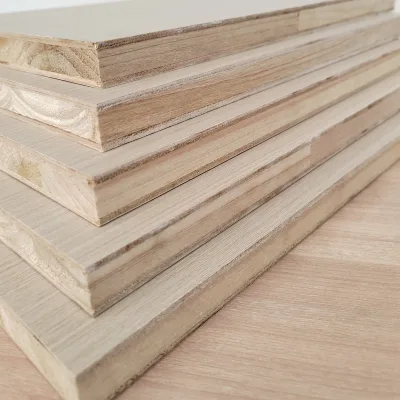
1220*2440*18mm Customized Size E1 Glue Poplar Core Melamine Laminated Block Board
$8.00 - $25.00
MOQ: 800 Pieces



Comprehensive Sourcing Guide
Strategic Sourcing Guide for E0 Multi-Color Melamine Board Procurement
Sourcing high-performance engineered wood products requires a disciplined approach to technical verification and supplier evaluation. The core keyword "E0 multi-color melamine board" represents a specific segment of the market where environmental compliance, aesthetic versatility, and structural integrity intersect. Buyers must navigate a landscape where product attributes vary significantly between listings, even when the core description appears identical. This guide provides a framework for evaluating these materials based on observed market data, ensuring that procurement decisions are grounded in verifiable facts rather than marketing assertions. The focus remains on understanding the tangible specifications, regulatory standards, and supply chain realities associated with this category.
Technical Specifications and Material Composition
The foundation of any successful procurement strategy lies in a precise understanding of the product's physical and chemical properties. For melamine boards, the core material is often Medium Density Fiberboard (MDF) or particle board, which dictates the board's density, strength, and workability. Market observations indicate that the base material for these products can range from MDF to particle board, with specific listings citing "Wood Fiber" or "Particle Board" as the primary component. The density of the core is a critical metric for structural performance, with observed ranges falling between 630 and 800 kg/m³, and specific instances noted between 630 and 680 kg/m³. Buyers should verify the exact density of the specific batch they intend to purchase, as this directly impacts screw-holding ability and resistance to warping.
The dimensional stability of the board is equally important. Standard sheet sizes observed in the market are consistently 1220mm by 2440mm, which aligns with international industry norms for panel products. However, thickness specifications vary, with observed ranges spanning from 9mm to 25mm, and specific models listing 18mm as a standard thickness. Crucially, the moisture content must be controlled to prevent dimensional changes during storage or installation; observed values typically fall between 8% and 12%. The surface treatment involves laminating the board with melamine paper, which provides the "multi-color" aesthetic. Available finishes include wood grain, solid colors, and marble patterns, with surface textures ranging from matte and embossed to gloss. The shape is consistently square, and the surface finishing is described as "finished," indicating the product is ready for immediate fabrication.
Environmental Compliance and Formaldehyde Standards
The "E0" designation in the core keyword refers to a specific formaldehyde emission standard, which is a primary concern for indoor air quality and regulatory compliance. The market data reveals a spectrum of glue types used in production, labeled as E0, E1, and E2. While the E0 standard represents the lowest emission level among these classifications, buyers must not assume that every product labeled "E0 multi-color" automatically meets the strictest E0 criteria without verification. The observed data confirms that "E0" glue is available, but "E1" and "E2" options are also present in the same product category.
Compliance extends beyond the glue classification. The products are subject to specific formaldehyde emission standards, with some listings explicitly referencing "E2" as a standard, while others imply compliance through the use of E0 glue. Furthermore, certifications such as CARB (California Air Resources Board) and FSC (Forest Stewardship Council) are observed in the product attributes. CARB compliance is particularly relevant for buyers targeting the North American market, as it sets strict limits on formaldehyde emissions. FSC certification indicates that the wood fiber or raw materials originate from responsibly managed forests. However, the presence of these certifications in general product descriptions does not guarantee that every SKU within the listing possesses them. Buyers must request specific test reports or certificates of conformity for the exact model numbers they intend to order, rather than relying on the general category tags.
Cost Drivers and Pricing Variables
The pricing for melamine boards is not uniform and is influenced by a complex matrix of material costs, processing requirements, and logistical factors. The observed price range in the market is vast, spanning from $1.50 to $1500 per unit. This extreme variance suggests that the unit of measure or the specific product configuration (e.g., thickness, size, or quantity) significantly impacts the final price. A price at the lower end likely corresponds to thinner boards, smaller quantities, or standard colors, while the higher end may reflect custom thicknesses, specialized finishes, or bulk pricing structures that are not immediately apparent.
Several factors drive these costs. First, the grade of the material is a primary determinant; listings specify "First-Class" grade, which commands a premium over lower grades due to fewer defects and better surface quality. Second, the customization options available, such as specific colors or textures, add to the production complexity and cost. Third, the origin of the product, identified as China in the observed data, influences the base manufacturing cost but also introduces variables related to international freight and tariffs. The packing method, whether on pallets or according to export standards, also affects the final landed cost. Buyers should be wary of prices that seem anomalously low, as they may indicate compromised quality or hidden costs in freight and duties.
Typical Applications and Design Integration
The versatility of E0 multi-color melamine boards makes them suitable for a wide array of applications, primarily driven by their aesthetic flexibility and durability. The observed usage categories include both indoor and outdoor applications, though the "Indoor" designation is more frequently associated with the specific E0 emission standards required for residential and commercial interiors. The primary application identified is furniture decoration, where the boards are used for cabinetry, shelving, and office furniture. The design style is typically modern, aligning with current trends in minimalist and functional interior design.
The surface durability is another key factor for application suitability. The products are described as scratch and stain-resistant, which is essential for high-traffic areas such as kitchens, offices, and commercial spaces. The available colors, including single and multi-color options, allow for extensive design customization. The texture options, such as embossed or honed finishes, provide tactile variety that can enhance the visual appeal of the final product. However, buyers must carefully match the board's properties to the intended environment. While some listings mention outdoor usage, the moisture content and glue type must be rigorously verified to ensure the board can withstand humidity and temperature fluctuations without delaminating or warping.
Supplier Evaluation and Verification Protocols
Selecting the right supplier requires a methodical evaluation process that goes beyond the initial product listing. The market data shows a high number of distinct product models, such as "003," "DSC01500," "lilinyue10," and "HX2254789," indicating a fragmented supply chain with numerous potential vendors. Buyers should not rely on the general category description but must verify the specific capabilities of the supplier for the exact model they require. The presence of customization options is a positive indicator, suggesting the supplier has the flexibility to meet specific client needs.
When evaluating suppliers, buyers should prioritize those who can provide transparent documentation regarding their production processes. The observed production process is listed as "Dry-Process," which is a standard method for MDF and particle board manufacturing. However, the quality of the output depends on the control of this process. Suppliers should be able to demonstrate their adherence to the stated standards, such as the 1220mm x 2440mm dimensions and the specific thickness ranges. Additionally, the packing method, whether standard pallets or export-standard packaging, is a critical indicator of the supplier's attention to detail and ability to protect the product during transit. Buyers should request samples to verify the actual color accuracy, texture, and surface finish against the digital representations provided in the listing.
Quality Control and Long-Term Procurement Considerations
Ensuring long-term value from melamine board procurement requires a robust quality control (QC) framework. The observed attributes, such as "First-Class" grade and specific density ranges, serve as benchmarks for QC checks. Buyers should implement incoming inspection protocols that verify the moisture content, thickness tolerance, and surface integrity of the delivered goods. The moisture content, observed between 8% and 12%, must be consistent across the entire batch to prevent future issues. Any deviation from the specified density or thickness can lead to structural failures in the final furniture or construction application.
Long-term procurement considerations also involve the reliability of the supply chain. The observed MOQ (Minimum Order Quantity) ranges from 1 to 1000 units, offering flexibility for both small-scale projects and large-scale manufacturing. However, the lead times and freight arrangements are not explicitly standardized in the general data, with some listings directing buyers to "Contact The Supplier About Freight and Estimated D." This variability necessitates clear communication regarding delivery schedules and logistics costs. Buyers should establish long-term contracts with suppliers who demonstrate consistent quality and reliable delivery times. Furthermore, the environmental compliance of the product should be re-verified periodically, as regulations regarding formaldehyde emissions and sustainable sourcing can evolve. Maintaining a relationship with suppliers who are proactive about certification updates, such as CARB and FSC, ensures that the procurement remains compliant with changing market and legal requirements.
Comparative Analysis of Product Attributes
To facilitate decision-making, it is helpful to compare the key attributes of the observed products. The following table summarizes the critical specifications and variations found in the market data for E0 multi-color melamine boards.
| Attribute Category | Observed Specification | Variability Notes |
|---|---|---|
| Base Material | MDF, Particle Board, Wood Fiber | Varies by model; check specific SKU |
| Density | 630-800 kg/m³ (Range) | Specific models may be 630-680 kg/m³ |
| Dimensions | 1220 x 2440 mm | Standard size, but thickness varies |
| Thickness | 9mm - 25mm | Specific models often 18mm |
| Formaldehyde Glue | E0, E1, E2 | "E0" is available but verify per batch |
| Surface Finish | Melamine Paper Laminated | Textures: Matt, Embossed, Gloss |
| Colors | Wood Grain, Solid, Marble, Multi | Single and Multi-color options exist |
| Certifications | CARB, FSC | Not guaranteed for all listed items |
| Origin | China | Consistent across observed listings |
| Packing | Pallets, Export Standard | Verify freight terms with supplier |
This comparison highlights the need for precise specification matching. While the general category offers a wide range of options, the specific requirements of a project will dictate which attributes are non-negotiable. Buyers must ensure that the selected product meets the exact density, thickness, and emission standards required for their application, rather than settling for a product that merely falls within the broad observed ranges. By adhering to these rigorous evaluation criteria, buyers can secure high-quality E0 multi-color melamine boards that deliver on both performance and compliance promises.
FAQs
What certifications are available for these boards?
The products offer CARB and FSC certifications for environmental compliance. Buyers must verify that specific model numbers carry these certificates rather than assuming all listings include them.
Which formaldehyde emission standards apply to this material?
Glue types range from E0 to E2, with E0 representing the lowest emission level. Not every product labeled E0 automatically meets strict criteria without specific test reports.
How is the surface finish applied to these boards?
The surface is finished by laminating with melamine paper for durability. Available textures include matte, embossed, and gloss finishes suitable for various design styles.
Can I customize the color and texture of the boards?
Customization is available for wood grain, solid colors, and marble patterns. Buyers should confirm specific color and texture requirements with the supplier before ordering.
What are the standard dimensions and thickness options?
Standard sheet size is 1220 by 2440 mm with thickness ranging from 9 to 25 mm. Specific models may list 18 mm as a standard thickness option.
What is the typical density range for these boards?
Observed density ranges from 630 to 800 kg per cubic meter. Specific batches may fall between 630 and 680 kg per cubic meter, affecting structural strength.