Source Eco Friendly Bagasse Plates for Camping, Travel, and Parties
Compare 30 listings of Eco Friendly Bagasse Plates suitable for camping, travel, and parties. Buyers can review specifications like material, size, and customization options from verified suppliers.
Key considerations
Products List


Sustainable Bagasse Plates for Organic Restaurants and Eco-Conscious Brands
$0.03 - $0.06
MOQ: 50 Pieces


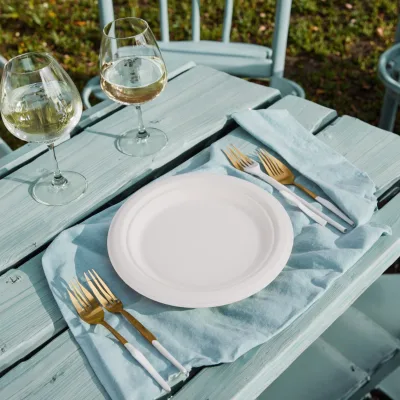


Comprehensive Sourcing Guide
Strategic Sourcing Guide for Eco-Friendly Bagasse Plates
Understanding Material Composition and Product Attributes
When sourcing eco-friendly bagasse plates, the primary focus must be on the raw material composition and the resulting physical attributes of the final product. Bagasse, a fibrous residue left after extracting juice from sugarcane, serves as the foundational material for many sustainable dinnerware options. In the current market, products are frequently described as being made from "bagasse pulp" or "paper pulp," indicating a natural, plant-based origin that avoids the use of synthetic plastics. These materials are inherently designed to be biodegradable and compostable, aligning with global sustainability goals.
The physical characteristics of these plates vary significantly based on the manufacturing process and intended use. Observations from available product data indicate that shapes range from round to oval and square, with specific dimensions such as 26319922mm noted for certain models. Color options are diverse, including standard white, unbleached natural tones, and bicolor finishes. The "unbleached" variant often appeals to buyers seeking a more rustic or purely natural aesthetic, while white plates are typically preferred for formal events or commercial food service where a clean presentation is required.
Furthermore, the structural integrity of bagasse plates is often enhanced by their thickness and density. Some specifications reference a standard weight of 15g, while others are categorized by size, such as 10-inch or 12-inch capacities. The ability to customize the product is a critical attribute for many buyers, with options for customized logos and specific printing techniques like UV printing. It is important to note that while "One Color" printing is common, more complex designs may require specific technical capabilities from the supplier. The product type is generally classified as disposable, yet the durability is sufficient for various occasions including camping, travel, parties, weddings, and school events.
Technical Specifications and Compliance Verification
Navigating the technical landscape of eco-friendly bagasse plates requires a rigorous verification of standards and certifications. Buyers must distinguish between general marketing claims and verified compliance data. The supply chain data indicates that products often carry certifications such as FDA, SGS, and references to "Ok Compost," "EU," and "LFGB" standards. These designations are crucial for ensuring that the plates are safe for food contact and meet specific regulatory requirements for compostability in different regions.
Compliance verification should not rely on a single data point but rather a holistic review of the product's certification status. For instance, while some listings mention "according to the gram" as a standard, others specify precise weights like 15g. This discrepancy highlights the need for buyers to explicitly request the weight specification for their specific order to ensure consistency. Similarly, the presence of HS Code 4823700000 is a standard identifier for paper plates and other tableware, which aids in customs clearance but does not guarantee the material quality on its own.
The following table outlines key technical parameters that buyers should verify against supplier documentation:
| Parameter | Typical Observation | Verification Requirement |
|---|---|---|
| Material | Bagasse Pulp, Paper Pulp | Confirm 100% natural fiber content; request material safety data sheets. |
| Certifications | FDA, SGS, LFGB, Ok Compost | Verify valid certificate numbers and expiration dates for each region of sale. |
| Dimensions | 26319922mm, 10inch, 6"/7"/9"/10" | Request physical samples to measure actual dimensions and wall thickness. |
| Weight | 15g (observed) | Confirm weight per unit to ensure structural integrity and cost efficiency. |
| Printing | One Color, UV Printing | Specify color count and ink type to ensure food safety compliance. |
| Packing | Carton, Plastic Bag + Paper Carton | Verify packing density to prevent damage during transit. |
It is essential to understand that while "EN13432" is a recognized standard for compostability, it appears in background context rather than as a confirmed fact for every listed product. Therefore, buyers must explicitly ask suppliers to confirm if their specific batch meets EN13432 or equivalent local standards before finalizing an order. Relying on assumed compliance can lead to significant regulatory hurdles, particularly in markets with strict environmental laws.
Cost Drivers and Pricing Structures
The pricing of eco-friendly bagasse plates is influenced by a complex interplay of material costs, production complexity, and order volume. The observed price range in the market spans from $0.01 to $0.70 USD per unit, a wide variance that reflects differences in quality, size, and customization levels. Several key factors drive these costs. First, the raw material cost of bagasse fluctuates based on global sugarcane harvest yields and processing availability. Second, the level of customization, such as the inclusion of a customized logo or specific UV printing, adds to the unit cost.
Order volume is perhaps the most significant determinant of the final price. The Minimum Order Quantity (MOQ) observed in the market ranges from 50 to 500,000 pieces, with a specific data point highlighting an MOQ of 50,000 pieces for certain models. Buyers purchasing smaller quantities often face higher per-unit costs due to the fixed costs of setup and production runs. Conversely, large-volume orders can leverage economies of scale to reduce the price significantly. However, buyers must be cautious of extremely low prices that may indicate compromised material quality or non-compliance with safety standards.
Lead times also impact the overall cost structure. Delivery times observed range from 25 days after deposit to 45 days, depending on the supplier's capacity and the complexity of the order. Rush orders or those requiring specific customizations may incur additional fees or require longer lead times, which can affect inventory planning and cash flow. Additionally, shipping costs, whether by sea or air, represent a substantial portion of the total landed cost, especially for heavy items like plates. Buyers should calculate the total cost of ownership, including freight, duties, and potential storage fees, rather than focusing solely on the unit price.
Typical Applications and Usage Scenarios
Eco-friendly bagasse plates are versatile and suitable for a wide array of applications, ranging from casual outdoor events to formal dining experiences. The product descriptions highlight their suitability for occasions such as camping, travel, parties, graduations, weddings, and family gatherings. This versatility stems from the material's ability to withstand heat and moisture better than traditional paper plates, making them ideal for serving hot foods, salads, and cakes.
The specific use cases often dictate the required specifications. For instance, plates intended for "Baby, Children, Adult" consumption must meet strict safety standards, which is why certifications like FDA and LFGB are critical. In commercial settings like restaurants and schools, the durability of the plate is paramount to prevent breakage during service. The "Square Stripped Plate" and "Oval Plate" designs mentioned in the data suggest that aesthetic variety is available to match different dining themes.
Furthermore, the "Disposable" nature of these plates makes them particularly attractive for high-volume events where cleanup efficiency is a priority. The biodegradable and compostable features ensure that waste management is simplified, aligning with corporate sustainability initiatives. Whether used for a large wedding reception or a small family picnic, the ability to customize the logo allows businesses to brand their events, enhancing the overall customer experience. Buyers should select the plate shape and size based on the specific food items being served, ensuring that the capacity (e.g., 6", 7", 9", 10") matches the portion sizes required.
Supplier Evaluation and Quality Control Protocols
Selecting the right supplier is a critical step in the procurement process, requiring a thorough evaluation of their capabilities and reliability. Buyers should prioritize suppliers who provide transparent information regarding their production standards and quality control measures. The presence of certifications like SGS and FDA is a strong indicator of a supplier's commitment to quality, but these should be verified through direct communication and document review.
Quality control protocols should be established before production begins. This includes requesting pre-production samples to verify material quality, dimensions, and print accuracy. The observed sample time of 3 days suggests that suppliers can provide quick turnaround for samples, which is beneficial for rapid decision-making. However, buyers must ensure that the sample represents the final production batch, as variations can occur between sample and mass production.
Key evaluation criteria for suppliers include:
- Certification Validity: Confirm that all listed certifications are current and applicable to the specific product model.
- Production Capacity: Assess the supplier's ability to meet the required MOQ and delivery timelines, especially during peak seasons.
- Customization Capabilities: Evaluate the supplier's technical ability to handle specific requests, such as UV printing or custom logos.
- Packaging Standards: Ensure that the packaging (e.g., Carton, Plastic Bag and Paper Carton) is robust enough to protect the plates during shipping.
- Communication: Assess the responsiveness and clarity of the supplier's communication regarding lead times and any potential delays.
Buyers should also consider the supplier's location, with China being a primary origin point for these products. While this offers competitive pricing, it necessitates careful planning for logistics and import regulations. Establishing a clear quality control agreement, including third-party inspection options if necessary, can mitigate risks associated with overseas manufacturing.
Long-Term Procurement Considerations and Sustainability
Sourcing eco-friendly bagasse plates is not merely a transactional decision but a strategic move towards long-term sustainability. Buyers should consider the lifecycle of the product, from raw material sourcing to end-of-life disposal. The "Eco-Friendly," "Biodegradable," and "Compostable" attributes are central to this strategy, but their validity depends on the local waste management infrastructure. Buyers must ensure that the compostability claims align with the facilities available in their target markets.
Long-term procurement involves building a resilient supply chain that can adapt to changing market demands and regulatory environments. This includes diversifying suppliers to mitigate risks and maintaining open communication channels for continuous improvement. Buyers should also monitor the evolution of standards and certifications, as regulations regarding single-use plastics and biodegradable materials are becoming increasingly stringent.
Additionally, the environmental impact of the packaging and shipping process should be considered. While the plates themselves are eco-friendly, the use of plastic bags and cartons in packaging can offset some of the benefits. Buyers should inquire about the recyclability of the packaging materials and explore options for reducing packaging waste. By focusing on these long-term considerations, buyers can ensure that their procurement strategy supports both their business goals and their commitment to environmental stewardship.
In conclusion, sourcing eco-friendly bagasse plates requires a balanced approach that combines technical due diligence, cost analysis, and supplier evaluation. By adhering to the verified facts and maintaining a rigorous quality control process, buyers can secure high-quality products that meet their operational needs while contributing to a more sustainable future.
FAQs
What certifications do these Eco Friendly Bagasse Plates have?
These plates hold FDA and SGS certifications for food safety. They also meet Ok Compost, EU, and LFGB standards to ensure they are safe for tableware and food use in various regions.
How long is the delivery time for these disposable plates?
Delivery typically takes 25 days after deposit or up to 45 days depending on the order. Sample time is short at 3 days, but mass production lead times vary based on customization and volume.
Which materials are used to make these Eco Friendly Bagasse Plates?
The plates are made from bagasse pulp or paper pulp for a natural feel. They are designed to be biodegradable and compostable, offering an eco-friendly alternative to plastic for parties and events.
Can I customize the logo on these disposable plates?
Yes, customized logos are available with options for one-color or UV printing. Buyers can request specific designs to match their brand for occasions like weddings, graduations, or corporate events.
What is the minimum order quantity for these plates?
The minimum order quantity ranges from 50 to 500,000 pieces depending on the supplier. Some specific models require an MOQ of 50,000 pieces, while others may accommodate smaller trial orders.
What shapes are available for these Eco Friendly Bagasse Plates?
Available shapes include round, oval, and square stripped designs. Specific dimensions like 263*199*22mm are noted, and sizes range from 6 to 10 inches to suit different food portions.