Source Eco-Friendly Easily Movable Tiny House for Hotel Apartment Office
Find 30 Eco-Friendly Easily Movable Tiny House options featuring steel structures and sandwich panels. Buyers can compare models like S580 and WFZH-ECH with fast installation and customizable styles for various applications.
Key considerations
Products List

Sustainable Mobile Village Modular House Tiny House
$600.00 - $767.00
MOQ: 1 Square Meters
Youran Mushe (Shandong) Cultural and Creative Technology Co., Ltd

Eco-Chic Modular Village Modular House Tiny House
$600.00 - $767.00
MOQ: 1 Square Meters
Youran Mushe (Shandong) Cultural and Creative Technology Co., Ltd


Modern Portable Steel Tiny Container House for Eco-Friendly Living Shelter
$900.00 - $1400.00
MOQ: 8 Pieces
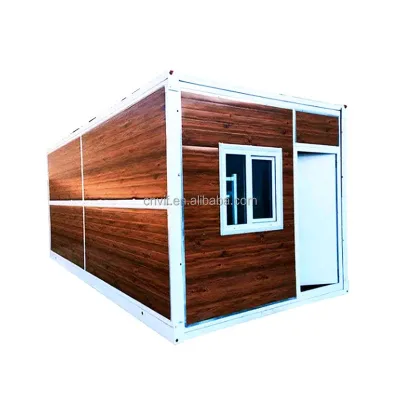


Affordable Movable Container House for Flexible Living Solutions
$35.00 - $70.00
MOQ: 200 Square Meters


Eco-Friendly Folding Container House: Comfortable and Portable Living
$3899.00 - $4499.00
MOQ: 50 Pieces


Comprehensive Sourcing Guide
Strategic Sourcing Guide for Eco-Friendly Movable Tiny Housing Solutions
Understanding the Modern Prefabricated Micro-Home Market
The global shift toward sustainable living and flexible accommodation has elevated the demand for eco-friendly, easily movable tiny houses. These structures, often categorized under prefabricated houses or folding container units, represent a convergence of modular construction, environmental responsibility, and rapid deployment capabilities. For B2B procurement professionals, sourcing these units requires a nuanced understanding of their technical architecture, material composition, and the specific logistical advantages they offer over traditional construction. The core value proposition lies in the ability to deliver a fully functional living or working space that minimizes environmental impact while maximizing mobility. Buyers must recognize that "tiny house" in this industrial context often refers to prefabricated modules designed for specific applications such as hotels, apartments, or multi-function projects, rather than the recreational vehicles typically associated with the term in consumer markets. The market is characterized by a diverse range of configurations, from fixed sandwich panel structures to collapsible units that offer significant savings in shipping volume.
Technical Architecture and Material Specifications
The structural integrity and sustainability of these units are primarily defined by their material composition and engineering design. A prevalent and robust construction method involves a galvanized steel frame combined with sandwich panels. The steel frame, often utilizing special profiles and square tubes, provides the necessary load-bearing capacity and resistance to environmental stressors. The sandwich panels serve as the primary envelope, offering critical insulation properties. Common core materials for these panels include EPS (Expanded Polystyrene), Rock Wool, and emerging technologies like Graphene Bamboo Fiber. Each material offers distinct thermal and acoustic benefits, with Rock Wool providing superior fire resistance and EPS offering lightweight thermal insulation.
The external dimensions of these units vary significantly based on the model and intended use. Standard configurations may feature external dimensions around 2500mm in width, 5850mm in length, and 2570mm in height, with internal clearances adjusted for structural thickness. For mobile applications, folded dimensions are a critical specification; some units can be collapsed to a height of approximately 560mm while maintaining the same footprint, drastically reducing transportation costs. The flooring is typically specified as PVC, chosen for its durability and ease of cleaning, while wall panels and window/door assemblies are available in aluminum, glass, or PVC variations. The structural frame is often treated with electrostatic spraying and white powder coating to enhance corrosion resistance and aesthetic appeal.
Compliance, Certification, and Safety Standards
When evaluating potential suppliers, verifying compliance with international and local safety standards is paramount. The primary certification observed in this sector is the CE mark, which indicates conformity with health, safety, and environmental protection standards for products sold within the European Economic Area. However, buyers must exercise caution, as specific standards for special items often require direct consultation with the manufacturer. The "20 feet" standard mentioned in some contexts refers to shipping container dimensions, but custom prefabricated units may deviate from this to optimize internal space.
Safety features are integral to the design, with a strong emphasis on wind resistance, earthquake resistance, and fireproofing. The use of Rock Wool in sandwich panels is a key indicator of fire safety, as it is non-combustible. Additionally, the structures are designed to be waterproof and leak-proof, ensuring durability in various climatic conditions. The warranty terms often cover quality issues, with some suppliers offering a one-year warranty and others providing lifetime support for specific structural components. Buyers should verify that the product meets the specific seismic and wind load requirements of the destination country, as these are not always uniform across all models.
Cost Drivers and Procurement Economics
The total cost of ownership for a tiny house is influenced by several dynamic factors beyond the initial unit price. The observed price range in the market spans from approximately $35 to $18,500, a variance driven by the level of customization, material quality, and included systems. A base unit with standard specifications will be significantly more affordable than a fully customized luxury model. Key cost drivers include the choice of sandwich panel core material, the complexity of the electrical and hydraulic systems, and the extent of interior finishing.
The "Whole House Water & Electricity System" is a significant value-add that can increase the unit price but reduces on-site installation time and costs. Customization of styles and colors, along with specific interior layouts, also impacts the final cost. The Minimum Order Quantity (MOQ) is another critical economic factor, ranging from a single set to 200 units. Purchasing in bulk often unlocks better pricing and more favorable shipping terms. Buyers should also consider the packaging requirements; while some units come in export-standard packaging, others may require customized packaging for shipping, which adds to the logistics cost. The net weight of the units, often around 1.2 tons for folded models, directly influences freight charges, making lightweight design a crucial cost-saving strategy.
Typical Applications and Functional Versatility
The versatility of these eco-friendly, movable structures allows them to serve a wide array of commercial and residential applications. The primary use cases identified include hotels and apartments, where rapid deployment and consistent quality are essential. The "Fast Installation" feature is particularly valuable for hospitality projects that need to open quickly to capture market demand. Furthermore, the "Multi-Function" capability allows these units to be repurposed as offices, emergency shelters, or temporary housing for construction sites.
The design style is predominantly modern, aligning with contemporary architectural trends. The ability to combine units flexibly enables the creation of larger complexes, such as a row of hotel rooms or a cluster of apartment units. The "Eco-Friendliness" and "Recycle" advantages are increasingly important for projects aiming for green building certifications. The life span of these structures is estimated between 10 to 20 years, making them a viable long-term investment for developers seeking sustainable solutions. The capacity to accommodate two people per unit makes them ideal for guest houses or staff quarters, while larger configurations can be assembled for family housing or commercial use.
Supplier Evaluation and Quality Assurance
Selecting the right supplier requires a rigorous evaluation process that goes beyond price comparisons. Buyers should prioritize suppliers who offer comprehensive project solution capabilities, including CAD and 3D one-stop solutions. This capability ensures that the final product aligns precisely with the buyer's site requirements and design expectations. The origin of the products, often from regions like Weifang in Shandong, China, provides insight into the manufacturing ecosystem and supply chain maturity.
Quality control should be a central part of the procurement strategy. Buyers must verify the "Product After-Sales Service" offerings, such as online technical support, which is crucial for troubleshooting installation or maintenance issues. The warranty policy, which often allows for the return or exchange of items with quality issues, serves as a safety net for the buyer. It is essential to confirm the specific delivery terms, such as FOB, CIF, or DDP, to understand the extent of the supplier's responsibility during transit. Additionally, the lead time and production capacity should be assessed to ensure the supplier can meet project deadlines, especially for large-scale deployments.
Long-Term Procurement and Lifecycle Management
Sourcing movable tiny houses is not merely a transactional purchase but a strategic decision involving long-term lifecycle management. The "Easily Movable" attribute ensures that the assets can be relocated as project needs change, protecting the investment against obsolescence or site-specific limitations. The "Quick Installation" and "Fast Installation" features reduce the overall project timeline, allowing for faster return on investment.
Buyers should also consider the environmental impact over the product's life. The use of recyclable materials and the low carbon footprint of prefabricated construction contribute to the sustainability goals of modern organizations. The "Whole House Water & Electricity System" simplifies the integration with existing infrastructure, reducing the energy and water consumption associated with on-site utility installation. As the market evolves, buyers should stay informed about new material technologies, such as graphene-enhanced panels, which may offer improved performance in the future. Maintaining a relationship with a supplier that offers customization and ongoing technical support will ensure that the procurement strategy remains flexible and responsive to changing market conditions.
Comparative Analysis of Key Product Attributes
To facilitate a clearer decision-making process, the following table summarizes the critical attributes observed in the current market for eco-friendly, easily movable tiny houses. This comparison highlights the variance in specifications that buyers must navigate.
| Attribute Category | Standard Specification | High-End / Custom Specification | Verification Requirement |
|---|---|---|---|
| Structure | Galvanized Steel Frame + Sandwich Panel | Galvanized Special Profile + Square Tube | Verify frame thickness and coating type |
| Wall Material | EPS Sandwich Panel | Rock Wool / Graphene Bamboo Fiber | Confirm fire rating and thermal conductivity |
| Dimensions | 2500 x 5850 x 2570 mm (External) | Customizable based on project needs | Check folded dimensions for shipping |
| Certification | CE Mark | Consult Manufacturer for Special Items | Request specific test reports for local codes |
| Warranty | 1 Year | Quality Issues Return/Exchange Policy | Clarify scope of "Quality Issues" |
| Application | Hotel, Apartment | Multi-Function, Emergency Shelter | Validate load-bearing capacity for intended use |
| Packaging | Export Standard | Customized Packaging for Shipping | Assess packaging cost and damage protection |
| Delivery Terms | FOB / CIF / DDP | Depends on Supplier Capability | Calculate total landed cost including duties |
This structured approach to sourcing ensures that buyers can identify products that not only meet their immediate functional requirements but also align with long-term sustainability and operational goals. By focusing on verified technical specifications and robust supplier capabilities, organizations can effectively leverage the benefits of prefabricated, eco-friendly housing solutions.
FAQs
What materials are used for the structure and walls?
The structure uses a galvanized steel frame combined with sandwich panels. Wall panels typically feature EPS, Rock Wool, or Graphene Bamboo Fiber cores for insulation and fire resistance.
Can these units be customized for specific styles and colors?
Yes, customization of styles and colors is available to meet specific project needs. Buyers can request tailored designs while maintaining the core structural integrity and safety features.
What is the typical lifespan of a prefabricated tiny house?
The estimated life span ranges from 10 to 20 years depending on usage and maintenance. This duration is supported by durable materials like PVC flooring and treated steel frames.
How quickly can these units be installed on site?
Fast installation is a key feature, allowing for rapid deployment of the housing units. This capability is ideal for hotel or apartment projects requiring quick turnover and immediate occupancy.
What certifications do these products typically hold?
Products often carry the CE certification indicating compliance with safety and environmental standards. Buyers should consult manufacturers for special items to ensure specific local code compliance.
What is the minimum order quantity for purchasing these units?
The minimum order quantity starts at 1 set, allowing for flexible procurement. Bulk orders up to 200 units are supported, often unlocking better pricing and shipping terms.
Are these units suitable for use in hotels and apartments?
Yes, these units are designed for applications in hotels and apartments. Their multi-function capability and modern design make them suitable for various commercial and residential uses.