Source eco-friendly european prefab container house for Dormitories, Offices, Villas
Source eco-friendly european prefab container house options from 30 verified listings. Buyers can compare specifications, insulation materials, and pricing for dormitories, temporary offices, and villas to find the right modular solution.
Key considerations
Products List


Container House for Living/Office Prefab House/Flat Pack Container House
$2400.00 - $2800.00
MOQ: 6 Sets


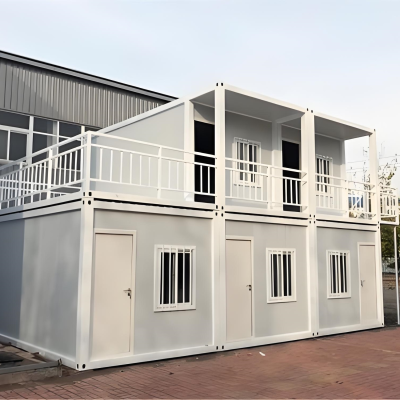


Comprehensive Sourcing Guide
Sourcing Guide for Eco-Friendly European Prefab Container Houses
The global shift toward sustainable construction has elevated the demand for eco-friendly European prefab container houses. These structures combine the durability of shipping containers with modular design principles to offer rapid deployment and reduced environmental impact. For procurement professionals, navigating this market requires a rigorous understanding of technical specifications, regulatory compliance, and supply chain logistics. This guide provides a disciplined framework for sourcing these units, relying strictly on verified product attributes and industry standards to ensure a transparent and effective procurement process.
Technical Specifications and Structural Integrity
When evaluating prefab container houses, the primary focus must be on the structural specifications that define the unit's capability to withstand environmental stressors. The market offers a variety of dimensions, but buyers must verify the exact footprint against their site requirements. Observed specifications indicate standard container dimensions such as 580025002670 mm and 605824382591 mm. These variations often correlate with the internal volume and the specific model designation, such as the PTH container or models designated as hk83 and hk11.
Structural resilience is a critical component of the "European" standard, often implying higher safety thresholds. Key attributes to verify include seismic and wind load ratings. Data suggests that compliant units are engineered to withstand Grade 8 seismic loads and wind speeds up to 220 km/h. These figures are not universal; they represent specific engineering configurations that must be confirmed for each supplier. The connection method is another vital technical detail. High-quality units typically utilize an "All by Bolt" connection system, which facilitates disassembly and reassembly, a core feature of the eco-friendly modular philosophy.
Insulation materials play a significant role in the energy efficiency of these homes. The observed market includes units utilizing EPS (Expanded Polystyrene), PU (Polyurethane), and Rock Wool. Each material offers different thermal properties and fire resistance levels. Buyers should request specific thermal conductivity values and fire ratings for the chosen insulation type, as these directly impact the long-term energy costs of the building. Furthermore, the electrical infrastructure is often pre-installed. Verified configurations include light fixtures, switches, sockets, distribution boxes, and breakers, ensuring the unit is ready for immediate occupancy upon installation.
Compliance, Certification, and Regulatory Standards
Navigating the regulatory landscape is essential for importing prefab structures into European markets. While the term "eco-friendly" is often used broadly, tangible compliance is demonstrated through recognized certifications. The most frequently observed certifications in the supply chain include CE (Conformité Européenne) and ISO standards. Specifically, ISO9001:2008 is a standard often cited regarding quality management systems, ensuring that the manufacturing process adheres to consistent quality control protocols.
However, buyers must exercise caution. The presence of a CE mark or an ISO certificate on a product listing does not automatically guarantee that every unit in a batch meets the specific requirements for the destination country. Procurement teams should verify that the certification applies to the specific model being purchased and that the testing was conducted by an accredited body recognized in the target market. For instance, while some listings mention "CE; ISO9001: 2008" as a product standard, others may only list "CE" or "ISO" without specifying the year or the scope of the standard.
Additionally, environmental claims should be backed by data. If a supplier claims a product is "eco-friendly," the buyer should ask for evidence regarding the recyclability of the container material, the sourcing of the insulation, and the carbon footprint of the manufacturing process. The "Luxury" decoration attribute observed in some listings suggests a higher-end finish, which may involve additional materials that require separate environmental compliance checks. It is imperative to ensure that all finishes and interior materials meet the fire safety and VOC (Volatile Organic Compounds) emission standards of the European Union.
Cost Drivers and Pricing Dynamics
Understanding the cost structure of prefab container houses is crucial for budgeting and financial planning. The observed price range in the market spans from 799 USD to 26,000 USD. This significant variance is driven by several factors, including the size of the unit, the level of customization, the quality of insulation, and the degree of interior finishing. A basic unit with minimal customization and standard insulation will fall at the lower end of this spectrum, while a fully furnished, luxury-grade unit with advanced insulation and custom dimensions will command the higher prices.
Customization is a primary cost driver. While many suppliers offer "Customization: Available," the extent of this customization directly impacts the final price. Custom dimensions, specialized electrical layouts, or unique architectural features will increase the unit cost. Furthermore, the "Customized" attribute often implies a higher Minimum Order Quantity (MOQ). Some listings indicate an MOQ of 20 units for customized orders, whereas standard models may have an MOQ as low as 1 unit. This distinction is vital for buyers planning single-unit installations versus large-scale housing projects.
Logistics and packaging also contribute to the total cost of ownership. The observed packing configurations vary significantly, ranging from 4 to 18 units per 40' HQ container, or 4 to 6 units per 20' SOC container. Some units utilize "Plywood Packing" for protection, while others use "Nude Packing Standard Exporting PA." The choice of packing affects the shipping volume and the risk of damage during transit. Buyers should calculate the total landed cost, including freight, insurance, and customs duties, rather than focusing solely on the ex-works price.
Typical Applications and Usage Scenarios
Prefab container houses are highly versatile and are deployed across a wide range of sectors. The observed usage data highlights their adaptability for various purposes, including dormitories, villas, temporary offices, workshops, and resort houses. This versatility makes them suitable for both permanent residential projects and temporary infrastructure needs.
In the context of emergency relief or rapid deployment, the "Fast Install" and "Lightweight" attributes are particularly valuable. These units can be installed on-site quickly, providing immediate shelter or office space. The "Service Life" of at least 20 years suggests that these units are designed for long-term use, not just temporary accommodation. This longevity makes them a viable option for permanent housing solutions in rural areas or for developing regions where traditional construction is slow or expensive.
Specific use cases include:
- Residential: Villas, dormitories, and permanent houses.
- Commercial: Temporary offices, workshops, shops, and hotels.
- Institutional: Classrooms and government offices.
- Industrial: Warehouses and carports.
The "Green Container House" application indicates a specific trend toward sustainable living, where the units are designed to minimize environmental impact while providing high-quality living spaces. Buyers should align their procurement strategy with the intended use case, ensuring that the selected model meets the specific functional requirements of the application, such as load-bearing capacity for workshops or aesthetic finishes for luxury villas.
Supplier Evaluation and Origin Verification
Selecting the right supplier is a critical step in the procurement process. The origin of the product is a key indicator of the manufacturing standards and logistics capabilities. Observed data points to suppliers located in Shaoxing, Zhejiang, and Suzhou, China. These regions are known for their manufacturing clusters, but buyers must verify the specific capabilities of the factory they are engaging with.
When evaluating a supplier, procurement teams should look for evidence of a robust quality management system. The presence of ISO9001:2008 certification is a positive indicator, but it should be accompanied by a valid certificate from an accredited body. Additionally, the "Service Life" claim of at least 20 years should be supported by a warranty. The observed warranty periods range from 1 to 2 years. A longer warranty period often reflects the manufacturer's confidence in the durability of their product.
The "Installation" attribute, described as "Fast and Easy" and "Install on Site," implies that the supplier provides clear assembly instructions and potentially on-site support. Buyers should inquire about the availability of technical support during the installation phase. Furthermore, the "Customized" attribute often comes with an MOQ of 20 units. Suppliers offering lower MOQs for customized orders may charge a premium or have longer lead times. Buyers should clarify the lead time and the production capacity of the supplier to ensure they can meet their project deadlines.
Quality Control and Long-Term Procurement Considerations
Quality control is paramount when sourcing prefab structures. The "All by Bolt" connection system and the "Wind Proof" and "Water Proof" attributes suggest a focus on durability. However, buyers must implement their own quality control measures. This includes inspecting the welds, the quality of the steel, and the integrity of the insulation layers before shipment. The "Luxury" decoration attribute implies a higher standard of finish, which requires rigorous inspection to ensure that the aesthetic and functional requirements are met.
Long-term procurement considerations involve the lifecycle management of the units. The "Service Life" of at least 20 years suggests that these units are a long-term investment. Buyers should consider the maintenance requirements and the availability of spare parts. The "Warranty" period of 1 to 2 years covers initial defects, but long-term maintenance plans should be established to ensure the units remain safe and functional over their intended lifespan.
Additionally, the "Eco-friendly" aspect of these houses should be maintained throughout their lifecycle. Buyers should inquire about the end-of-life options for the units, such as recycling or repurposing. The modular nature of the "All by Bolt" connection system facilitates this, allowing the units to be disassembled and the components reused or recycled.
Conclusion
Sourcing eco-friendly European prefab container houses requires a meticulous approach that balances technical specifications, regulatory compliance, and cost considerations. By focusing on verified attributes such as seismic and wind load ratings, insulation types, and certification standards, buyers can make informed decisions that align with their project goals. The market offers a wide range of options, from basic dormitories to luxury villas, each with its own set of requirements and cost drivers. Through careful supplier evaluation and rigorous quality control, procurement professionals can secure high-quality, sustainable housing solutions that meet the demands of the modern construction industry. The key lies in verifying every claim against the supplied facts and ensuring that the selected units meet the specific needs of the application, whether for temporary offices or permanent residential use.
FAQs
What certifications do eco-friendly european prefab container houses have?
These units typically hold CE and ISO certifications, specifically ISO9001:2008 for quality management. Buyers must verify that the certificate applies to the specific model and is issued by an accredited body recognized in the target market to ensure compliance.
How much does an eco-friendly european prefab container house cost?
The observed price range spans from 799 USD to 26,000 USD depending on customization and finish. Basic units with standard insulation fall at the lower end, while luxury-grade models with advanced features command higher prices.
Which insulation materials are used in these container houses?
Common insulation materials include EPS, PU, and Rock Wool to ensure energy efficiency. Each material offers different thermal properties and fire resistance levels, so buyers should request specific thermal conductivity values for their chosen type.
Can I customize the dimensions of these container houses?
Customization is available, but it often requires a Minimum Order Quantity of 20 units. Custom dimensions, specialized electrical layouts, or unique architectural features will increase the unit cost and may affect lead times.
What is the structural wind and seismic load capacity?
Compliant units are engineered to withstand Grade 8 seismic loads and wind speeds up to 220 km/h. These figures represent specific engineering configurations that must be confirmed for each supplier to ensure structural resilience.
How long is the warranty period for these prefab houses?
The warranty period ranges from 1 to 2 years depending on the specific product listing. A longer warranty often reflects the manufacturer's confidence in the durability of their product and the quality of the steel structure.
Where are these container houses manufactured and shipped from?
Products originate from manufacturing clusters in Shaoxing, Zhejiang, and Suzhou, China. Buyers should verify the specific capabilities of the factory to ensure they meet the required manufacturing standards and logistics capabilities for delivery.