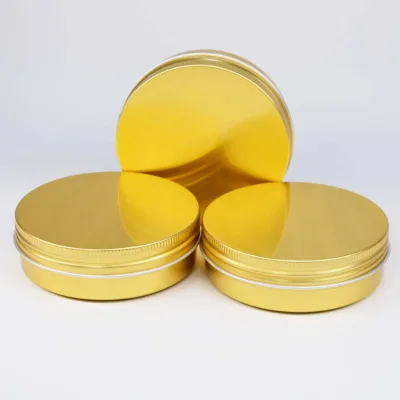
Source Eco-Friendly Recyclable Aluminum Jar for Beverages, Food, Chemical
Compare 25 Eco-Friendly Recyclable Aluminum Jar options from verified Chinese manufacturers. These containers feature airtight seals, customizable logos, and are suitable for beverages, food, and chemical storage with standard or custom packing.
Key considerations
Products List




Comprehensive Sourcing Guide
Strategic Sourcing Guide for Eco-Friendly Recyclable Aluminum Jars
The global shift toward sustainable packaging has elevated the demand for eco-friendly recyclable aluminum jars across diverse industrial sectors. For procurement professionals, identifying the right supplier involves navigating a complex landscape of material specifications, certification requirements, and logistical constraints. This guide synthesizes available market data and technical facts to provide a disciplined framework for sourcing aluminum jar lids and closures, ensuring that buyers can make informed decisions without relying on unverified claims. The focus remains on objective attributes, such as material composition, standard compliance, and customization capabilities, which are critical for maintaining supply chain integrity and product safety.
Material Composition and Structural Specifications
The foundation of any sustainable packaging solution lies in the material properties. In the current market, aluminum remains the dominant material for high-performance lids and closures due to its inherent recyclability and structural strength. The observed product attributes confirm that the primary material utilized is aluminum, often categorized under broader metal types in industrial listings. This material choice is not arbitrary; aluminum offers a unique balance of malleability for forming complex shapes and rigidity for maintaining an airtight seal.
When evaluating product specifications, buyers must look beyond the generic term "aluminum" to specific model numbers and standard designations. Market data indicates the existence of specific models such as 202#RPT, 202#SOT, and 200#SOT. These alphanumeric codes often denote specific dimensions, threading standards, or manufacturing processes unique to the supplier's tooling. For instance, the "202#" designation typically refers to a standard diameter and thread configuration used in the beverage and food industries. The shape of these components is predominantly cylindrical or round, designed to fit seamlessly onto corresponding jar bodies.
The structural integrity of these jars is further defined by their functional attributes. The products are frequently described as having an "airtight" function, which is essential for preserving the freshness of contents ranging from tea and food to beer cans and carbonated drinks. This airtight capability is often achieved through specific manufacturing techniques that ensure the lid fits tightly against the jar rim. Additionally, the "non-refillable" attribute observed in several listings suggests that these closures are designed for single-use applications where tamper evidence and security are paramount. Buyers should verify if the specific model number they are sourcing aligns with the required thread pitch and diameter for their existing production lines, as mismatches here can lead to significant operational disruptions.
Compliance, Certification, and Environmental Standards
Sourcing eco-friendly products requires rigorous verification of environmental claims and safety certifications. The term "eco-friendly" is frequently used in product descriptions, often supported by specific certifications that validate the manufacturer's commitment to sustainability. The available data highlights several key certifications, including ISO 9001, ISO 14000, and ISO 14001. ISO 9001 ensures that the supplier maintains a quality management system capable of consistent production, while ISO 14000 and ISO 14001 specifically address environmental management systems, indicating that the supplier has processes in place to minimize environmental impact.
Beyond general ISO standards, the recyclability of the aluminum material is a critical compliance factor. The product attributes explicitly list "recyclable" and "environmentally-friendly" as key features. However, buyers must distinguish between the recyclability of the material itself and the end-of-life management practices of the supplier. While aluminum is inherently 100% recyclable without loss of quality, the actual environmental benefit depends on the recycling infrastructure in the destination market.
Buyers should also verify the "child resistance" feature mentioned in specific product listings. This attribute is crucial for packaging containing chemicals or pharmaceuticals, ensuring that the lid meets safety standards to prevent accidental ingestion by children. The presence of a "child resistance lid" attribute implies that the product has undergone specific testing to meet regulatory requirements in various jurisdictions. When evaluating suppliers, procurement teams should request documentation proving that the lids meet local safety regulations, such as those enforced by the Consumer Product Safety Commission in the United States or equivalent bodies in the European Union.
Furthermore, the "standard" attributes listed, such as 5g, 10g, 15g, 30g, 50g, 80g, 100g, 150g, 200g, and 300g, likely refer to weight capacities or specific size classifications rather than weight standards. Buyers must clarify these metrics with the supplier to ensure they align with the intended application. The absence of specific test results in the general data underscores the need for buyers to request third-party test reports for seal integrity, chemical resistance, and mechanical strength before finalizing a contract.
Cost Drivers and Economic Considerations
Understanding the cost structure of aluminum jar lids is essential for effective budgeting and negotiation. The observed price range in the market is notably low, spanning from 0.01 to 1 USD per unit. This wide range suggests significant variability based on order volume, customization complexity, and specific model requirements. The minimum order quantity (MOQ) is another critical cost driver, with observed ranges extending from 1,000 to 100,000 units.
The high MOQs observed in the market indicate that aluminum lid manufacturing is a volume-driven industry. Suppliers often require substantial order sizes to justify the setup costs associated with tooling and production line adjustments. For buyers with lower volume needs, this can present a challenge, necessitating a strategy that consolidates orders or partners with suppliers who offer flexible MOQ tiers. The cost per unit typically decreases as the order volume increases, making it imperative for buyers to forecast their demand accurately to leverage economies of scale.
Customization is a significant factor influencing cost. The data confirms that "customization" is available and "customized" is a common attribute. This includes options for custom logos, specific printing handling, and tailored packing requirements. While these features add value, they also increase the unit cost and potentially the lead time. Buyers should weigh the marketing benefits of custom branding against the incremental cost and the impact on the MOQ. Additionally, the "standard carton packing" versus "according to customer's requirements" options can affect logistics costs. Custom packing solutions may reduce damage rates but often come with higher upfront costs and longer lead times.
Typical Applications and Industrial Use Cases
The versatility of aluminum jar lids is evident in the diverse range of industrial applications they serve. The product attributes list "tea," "food," "beer cans," "carbonated drinks," and "chemical" as primary usage areas. This broad applicability makes aluminum lids a preferred choice for manufacturers in the beverage, food processing, and chemical industries.
In the beverage sector, the "airtight" function is critical for maintaining the carbonation of beer and soft drinks. The "non-refillable" nature of these lids ensures that once opened, the seal is broken, providing a clear indication to the consumer that the product has been tampered with. This is particularly important for carbonated beverages where pressure retention is vital. For food products, such as tea or preserved goods, the airtight seal prevents oxidation and moisture ingress, extending shelf life and maintaining flavor integrity.
The chemical industry also utilizes these lids, particularly those with "child resistance" features. The "metal type" being aluminum provides excellent corrosion resistance, which is essential when packaging reactive or corrosive substances. The "small package tank" attribute suggests that these lids are also used in specialized containers for industrial chemicals or laboratory reagents. Buyers in these sectors must prioritize lids that meet specific chemical compatibility standards and safety regulations.
The "industrial use" category further expands to include general packaging needs where durability and sustainability are key. The "popular" style and "custom logo" options make these lids suitable for consumer-facing products where brand identity is a competitive advantage. Whether for a premium tea blend or a household chemical, the aluminum lid serves as a functional and aesthetic component of the final product.
Supplier Evaluation and Sourcing Strategy
Selecting the right supplier requires a systematic evaluation of their capabilities, location, and service offerings. The market data indicates that suppliers are located in various regions of China, including Zhejiang, Shanghai, Hangzhou, and Guangdong. Each of these regions has its own industrial strengths; for example, Zhejiang and Guangdong are known for their robust manufacturing ecosystems, while Shanghai often hosts more advanced engineering and logistics hubs.
Buyers should prioritize suppliers that offer "24 hours online" service, as this indicates a commitment to responsiveness and support. The ability to communicate effectively across time zones is crucial for resolving production issues or adjusting order specifications. Additionally, the "OEM/ODM" (Original Equipment Manufacturer/Original Design Manufacturer) status being "highly welcomed" suggests that many suppliers are flexible in adapting to client needs. This flexibility is a positive indicator for buyers looking for tailored solutions.
When evaluating suppliers, buyers should verify the "custom order" acceptance policy. This confirms that the supplier is willing to deviate from standard offerings to meet specific requirements. However, buyers must be cautious of suppliers who claim to offer extensive customization without clear evidence of their manufacturing capabilities. Requesting samples and conducting factory audits can help validate these claims.
The "printing handling" attribute, listed as "customized," highlights the importance of visual branding. Buyers should ensure that the supplier has the necessary equipment and expertise to apply logos and designs with high precision. The quality of printing can significantly impact the perceived value of the product, making this a critical evaluation point.
Quality Control and Long-Term Procurement Considerations
Ensuring consistent quality is paramount in the procurement of aluminum jar lids. The "standard carton packing" and "according to customer's requirements" options suggest that packaging plays a role in protecting the product during transit. However, buyers must also consider the internal quality control processes of the supplier. The presence of ISO certifications is a good starting point, but buyers should inquire about specific quality control measures, such as statistical process control (SPC) and random sampling protocols.
Long-term procurement considerations involve building a resilient supply chain. The "lead time" is not explicitly provided in the data, but buyers should expect variability based on order size and customization. Establishing a clear communication channel and setting realistic expectations for delivery times is essential. Buyers should also consider the environmental impact of their sourcing decisions. While the product is "eco-friendly" and "recyclable," the carbon footprint of shipping from China to other regions should be factored into the overall sustainability strategy.
Finally, buyers should plan for scalability. The high MOQs observed suggest that suppliers are geared toward large-scale production. For growing businesses, it is important to negotiate terms that allow for volume increases without significant price hikes or lead time extensions. Building a partnership with a supplier who can grow with the business ensures continuity and stability in the supply chain. By focusing on these strategic elements, buyers can secure a reliable source of high-quality, eco-friendly aluminum jar lids that meet their specific operational and sustainability goals.
FAQs
What certifications do Eco-Friendly Recyclable Aluminum Jar suppliers hold?
Suppliers typically hold ISO 9001, ISO 14000, and ISO 14001 certifications. These standards validate quality management and environmental systems, ensuring the aluminum lids meet sustainability and safety requirements for food and chemical applications.
Which specifications are available for the aluminum jar lids?
Available specifications include model numbers like 202#RPT, 202#SOT, and 200#SOT. Weight standards range from 5g to 300g, and the lids feature a cylindrical shape designed for airtight sealing on beverage and food containers.
Can buyers request custom logos and packaging for these jars?
Yes, customization is available for custom logos, printing handling, and packing requirements. Buyers can specify standard carton packing or request packaging according to their own requirements to support branding and logistics needs.
How do MOQ values affect the sourcing of these aluminum lids?
Minimum order quantities typically range from 1,000 to 100,000 units. High MOQs reflect the volume-driven nature of the industry, so buyers must forecast demand accurately to leverage economies of scale and reduce unit costs.
What locations host manufacturers of these recyclable aluminum jars?
Manufacturers are located in Zhejiang, Shanghai, Hangzhou, and Guangdong in China. These regions offer robust manufacturing ecosystems, with suppliers often providing 24-hour online service to assist with procurement and communication.
What is the price range for Eco-Friendly Recyclable Aluminum Jar lids?
The observed price range spans from 0.01 to 1 USD per unit. This wide variation depends on order volume, customization complexity, and specific model requirements, with costs generally decreasing as order sizes increase.