Source eco-friendly recycled kraft paper box for Food Packaging, Takeaway, and Shipping
Find 30 listings for eco-friendly recycled kraft paper box solutions suitable for food packaging, takeaway containers, and shipping. Compare specifications such as greaseproof features, customizable sizes, and OEM support from verified manufacturers to identify the best fit for your supply chain needs.
Key considerations
Products List


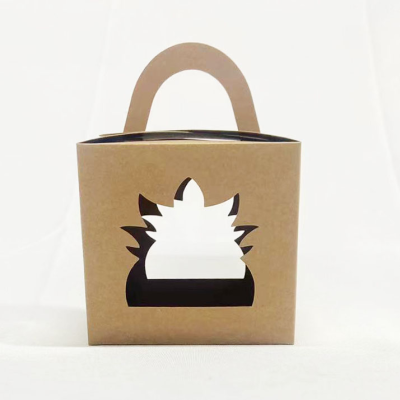


Custom Eco Biodegradable Food Packing Natural Kraft Paper Cardboard Box
$0.04 - $0.08
MOQ: 1000 Pieces


Comprehensive Sourcing Guide
Eco-Friendly Recycled Kraft Paper Box Sourcing Guide
Sourcing eco-friendly recycled kraft paper boxes requires a nuanced understanding of material composition, manufacturing capabilities, and regulatory compliance. Buyers must distinguish between products marketed as "recycled" and those that are simply "kraft" or "greaseproof," as these terms carry different environmental and functional implications. The supply chain for these packaging solutions is diverse, ranging from large-scale industrial paper mills producing raw rolls to specialized converters creating finished, custom-branded containers. Understanding this spectrum is critical for aligning procurement strategies with both sustainability goals and operational needs.
This guide focuses on verified market signals and technical realities observed in the current B2B landscape. It emphasizes the importance of verifying specific attributes such as grease resistance, layer construction, and origin, rather than relying on generic marketing terms. By adhering to evidence-based verification steps, procurement teams can mitigate risks associated with greenwashing, supply chain disruptions, and quality inconsistencies. The following sections provide a structured approach to evaluating suppliers, specifications, and commercial terms for eco-friendly kraft paper packaging.
Product Scope and Observed Listing Signals
The market for kraft paper packaging exhibits significant variation in product definitions and capabilities. Observed listings indicate that "kraft paper" is often associated with specific raw materials, including wood pulp, straw, and waste paper, which directly impacts the recyclability and environmental profile of the final product. Buyers should note that while many suppliers offer "eco-friendly" or "recycled" options, the actual content of recycled fibers varies. Some products are explicitly labeled as having a "greaseproof" feature, which is essential for food applications, while others may rely on additional coatings or laminations that could complicate end-of-life disposal.
Listing signals also reveal a strong emphasis on customization and automation in production. Suppliers frequently advertise "customized support" for packaging, dimensions, and branding, indicating a flexible manufacturing base. The presence of "automatic" production lines suggests that high-volume orders can be fulfilled with consistent quality, though this may come with higher minimum order quantities (MOQs). Additionally, the availability of "multicolor" printing and "two-sided" printing options highlights the versatility of these products for branding purposes. However, buyers must verify whether these aesthetic enhancements affect the biodegradability or compostability of the packaging.
Technical Specifications to Verify
Technical verification begins with confirming the physical and chemical properties of the paper. Key specifications to validate include paper thickness, gram weight, and layer construction. Observed data suggests that paper thickness can range from standard to "thick paper" variants, with gram weights typically spanning 50-350 G/M2. The layer structure is often customizable, which allows for tailored strength and barrier properties. Buyers should request detailed technical data sheets that specify the exact basis weight and tensile strength, as these factors determine the box's durability during shipping and storage.
Another critical area is the drying method and coating technology. Steam drying is a common process observed in industrial settings, which can influence the paper's moisture resistance and dimensional stability. For food-grade applications, the presence of a greaseproof barrier is non-negotiable. Buyers must verify whether this barrier is inherent to the paper structure or achieved through chemical coatings. Additionally, the "non-leaking" feature and "one-piece design" that requires no assembly are important functional attributes for takeaway containers. Confirming these details ensures that the packaging will perform as expected under real-world conditions, preventing product damage and customer dissatisfaction.
Compliance and Safety Documentation
Compliance documentation is paramount, especially for products intended for food contact. Buyers must ensure that suppliers provide valid certifications such as CE, ISO 9001, FDA, CIQ, LFGB, and EEC, depending on the target market. These certifications indicate adherence to specific quality and safety standards, but they do not automatically guarantee that the product is made from recycled materials. It is crucial to cross-reference these certifications with the supplier's claims about environmental friendliness. For instance, while a product may be FDA-approved for food safety, it may not meet specific compostability standards required by certain retailers or regions.
The origin of the product also plays a significant role in compliance and supply chain transparency. Observed listings indicate origins in China, including specific provinces like Henan and Qingdao. Buyers should verify the manufacturing location to assess the regulatory environment and potential logistical risks. Additionally, the "eco-friendly" label should be supported by third-party certifications such as FSC, although this is noted as a low-confidence background fact in current listings. Buyers should proactively request proof of sustainable sourcing practices, such as chain-of-custody documentation, to substantiate environmental claims and avoid reputational risks associated with unsustainable forestry practices.
Cost Drivers and Commercial Terms
Cost structures for kraft paper boxes are influenced by raw material prices, production volume, and customization requirements. The observed price range is broad, reflecting the diversity of products from simple unbranded boxes to complex, multi-layered, custom-printed containers. Buyers should anticipate that higher customization levels, such as specific dimensions or unique printing designs, will increase unit costs. Additionally, the MOQs observed in the market range from small batches to large industrial orders, with some suppliers requiring up to 30,000 units. Understanding these thresholds is essential for budgeting and inventory management.
Lead times and payment terms are also significant commercial factors. Sample lead times are typically short, ranging from 3 to 5 days, allowing for quick prototyping and approval. However, production lead times can extend to 10-15 days or longer, depending on order volume and supplier capacity. Buyers should negotiate clear delivery schedules and penalty clauses for delays. Furthermore, packaging methods, such as "wood, foam, and steel frame" protection, add to the overall cost but are necessary for preventing damage during transit. Clarifying these terms upfront helps in calculating the total landed cost and avoiding unexpected expenses.
Supplier Qualification and Quality Control
Supplier qualification involves a rigorous assessment of manufacturing capabilities and quality management systems. Buyers should prioritize suppliers with "automatic" production lines and "customized support" for packaging, as these indicate a mature and flexible operation. Verifying the supplier's ability to handle "thick paper" and various gram weights is also important, as it reflects their technical expertise. Additionally, checking for relevant certifications like ISO 9001 provides assurance that the supplier has established quality control processes in place.
Quality control measures should be defined in the purchase agreement. This includes specifying acceptance criteria for dimensions, print quality, and structural integrity. Buyers should request pre-shipment inspections or third-party audit reports to verify that the products meet the agreed-upon specifications. Given the "eco-friendly" nature of the product, it is also advisable to include clauses related to material consistency and the absence of prohibited substances. Establishing a clear quality framework helps in maintaining product standards and resolving disputes efficiently.
Long-Term Procurement Checks
Long-term procurement success depends on continuous monitoring of supplier performance and market trends. Buyers should regularly review supplier compliance with environmental regulations and sustainability commitments. This includes verifying that the "recycled" content claims remain accurate and that the supplier is adapting to evolving regulatory landscapes, such as new plastic bans or extended producer responsibility laws. Maintaining open communication with suppliers about future needs and potential changes in design or material requirements can help in building a resilient supply chain.
Additionally, buyers should stay informed about technological advancements in paper packaging, such as new barrier technologies or more efficient recycling processes. This knowledge can inform strategic decisions about product innovation and cost optimization. By regularly assessing the total cost of ownership, including logistics, waste disposal, and brand impact, buyers can ensure that their sourcing strategy remains aligned with both business objectives and sustainability goals. Continuous evaluation and adaptation are key to leveraging the benefits of eco-friendly kraft paper packaging in a competitive market.
FAQs
What certifications do eco-friendly recycled kraft paper boxes have?
These boxes typically hold CE, ISO 9001, FDA, CIQ, LFGB, and EEC certifications. Specific models may also feature Greaseproof and Eco-Friendly attributes suitable for food packaging applications.
Can I customize the size and layering of these kraft paper boxes?
Yes, customization is available for size, layer count, and packing methods. Buyers can select from various dimensions and request packaging with wood, foam, and steel frames for protection.
What is the minimum order quantity for these paper boxes?
The minimum order quantity is 5000 pieces for standard orders. Some suppliers may offer different MOQs depending on the specific model and customization requirements requested by the buyer.
How long does it take to receive samples and bulk orders?
Samples are ready within 3 to 5 days, while bulk products require 10 to 15 days. This lead time applies to standard production runs for food packaging containers.
Which raw materials are used to make these recycled kraft paper boxes?
Manufacturers use wood pulp, straw, and waste paper as primary raw materials. Some specific models also incorporate bamboo and wood to ensure durability and eco-friendly properties.
Are these boxes suitable for food packaging applications?
Yes, they are designed for food packaging and feature greaseproof and non-leaking properties. The materials are certified safe for direct food contact under various international standards.