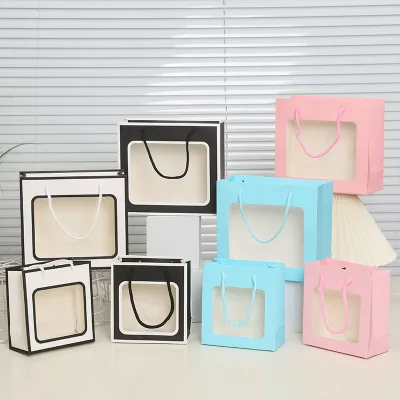
Source Square Bottom Paper Bag with Window for Food, Promotion, Household
Compare 30 Square Bottom Paper Bag with Window options from verified suppliers. These customizable bags feature flexo printing, moisture proofing, and bio-degradable materials suitable for food packaging, promotions, and household use; compare the available evidence and request quotations based on your requirements.
Key considerations
Products List


Eco Friendly Biodegradable Compostable Stand up Paper Bags with Window
$0.05 - $0.40
MOQ: 20000 Pieces


Eco-Friendly Paper Square Bottom Bread Bakery Food Packging Bag with Window
$0.06 - $0.12
MOQ: 30000 Pieces

Color Printing Kraft Paper Packing Pouch with Window Square Bottom Bread Bag
$0.05 - $0.12
MOQ: 30000 Pieces


Comprehensive Sourcing Guide
Square Bottom Paper Bag with Window Sourcing Guide
Sourcing square bottom paper bags with windows requires balancing aesthetic appeal with functional integrity, particularly for food and promotional applications. Buyers must recognize that while the core material is often paper, the inclusion of a window necessitates a laminated structure to ensure durability and moisture resistance. The observed market data indicates a wide range of customization options, from customized raw materials like kraft paper and PLA to specific printing methods such as flexo printing with up to ten colors. This flexibility allows brands to tailor packaging for diverse uses, including coffee beans, dry fruits, and household items, while maintaining a premium look.
Procurement teams should also note the variability in minimum order quantities and production timelines, which can significantly impact inventory planning. Listings show MOQs ranging from 10,000 to 50,000 pieces, with lead times typically spanning 18 to 25 days depending on order volume. Understanding these commercial constraints is crucial for aligning packaging orders with sales cycles. Furthermore, the availability of customized logos and bag sizes means that buyers can optimize shelf presence and storage efficiency, but this requires early engagement with suppliers to finalize design specifications and secure production slots.
Product Scope and Observed Listing Signals
The product scope for square bottom bags extends beyond simple paper construction to include complex composite structures designed for high-barrier performance. Observed listings highlight materials such as laminated combinations of PET, VMPET, PE, and kraft paper, which provide essential moisture proofing and shock resistance. These features are critical for preserving the freshness of sensitive products like food packaging items. The presence of a window, often integrated into the design, requires careful material selection to ensure transparency without compromising the bag’s structural integrity or sealability. Buyers should verify that the window material is food-safe and compatible with the surrounding paper layers.
Listing signals also reveal a strong emphasis on customization and branding capabilities. Suppliers offer customized logos, design-dependent printing, and various bag varieties, including upright and box pouch styles. The observed models, such as GRY-011 and GRY-006, suggest a standardized yet adaptable product line that can be tailored to specific client needs. Additionally, the sealing methods, including zipper closures and heat-sealing, provide versatility for different product types. Buyers should assess whether the observed sealing mechanisms align with their product’s shelf-life requirements and consumer convenience expectations, ensuring that the chosen bag type supports both protection and ease of use.
Technical Specifications to Verify
Verifying technical specifications is paramount to ensuring that the square bottom paper bag meets functional requirements. Buyers must confirm the exact material composition, particularly the ratio of paper to plastic layers in laminated bags, to assess recyclability and biodegradability claims. The observed features include moisture proofing, recyclability, and bio-degradability, but these attributes depend heavily on the specific raw materials used, such as high-barrier PLA or standard kraft paper. It is essential to request detailed material breakdowns to understand the environmental impact and performance characteristics of the final product, ensuring alignment with corporate sustainability goals.
Sealing and structural integrity are other critical technical aspects that require verification. The observed sealing methods, including heat-sealing and zipper closures, must be tested for reliability under various storage conditions. Buyers should inquire about the bag’s ability to maintain a secure seal, especially for products containing powders, liquids, or oils. Additionally, the transparency and waterproof performance of the window area should be evaluated to prevent leakage or fogging, which can detract from product visibility. Confirming these specifications through sample testing or supplier documentation helps mitigate the risk of packaging failures during transit or on the shelf.
Compliance and Safety Documentation
Compliance and safety documentation are non-negotiable for packaging used in food and household applications. Buyers must ensure that all materials, including the window film and adhesives, comply with relevant food contact regulations in their target markets. The observed certifications, such as ISO and BRC, indicate a supplier’s commitment to quality management systems, but buyers should verify that these certifications cover the specific product lines and materials being procured. It is crucial to request certificates of compliance and migration test results to confirm that no harmful substances leach into the packaged goods, particularly for fatty or acidic foods.
Transparency in sourcing and manufacturing processes is also vital for maintaining brand integrity. Buyers should ask for detailed information on the origin of raw materials, such as whether the kraft paper is sourced from sustainable forests. Additionally, understanding the supplier’s quality control procedures, including in-process inspections and final product testing, helps ensure consistent quality across large orders. Documentation should also cover the biodegradability and recyclability claims, providing evidence from accredited laboratories to support marketing assertions. This due diligence protects the brand from regulatory penalties and reputational damage associated with non-compliant packaging.
Cost Drivers and Commercial Terms
Cost drivers for square bottom paper bags with windows include material complexity, printing requirements, and order volume. The use of laminated materials and custom windows increases production costs compared to standard paper bags. Buyers should analyze how factors like the number of printing colors, the complexity of the design, and the choice of sealing mechanisms impact the unit price. Observing the price range of $0.01 to $3600 USD highlights the significant variation based on these variables. Understanding these drivers allows buyers to negotiate effectively and identify areas where cost savings can be achieved without compromising quality.
Commercial terms, including MOQs and delivery schedules, also play a crucial role in total cost of ownership. The observed MOQs of 10,000 to 50,000 pieces require buyers to balance inventory holding costs with production efficiency. Lead times of 18 to 25 days necessitate accurate demand forecasting to avoid stockouts or excess inventory. Buyers should also consider the price terms, such as CIF or FOB, which affect logistics costs and risk allocation. Clear communication of these terms early in the sourcing process helps in budgeting and planning, ensuring that the procurement strategy aligns with financial and operational objectives.
Supplier Qualification and Quality Control
Supplier qualification involves assessing the manufacturer’s capability to deliver consistent quality and meet customization demands. Buyers should evaluate the supplier’s production facilities, focusing on their expertise in composite packaging and window integration. The observed making processes, such as composite packaging bag production, indicate a level of technical sophistication that should be verified through site audits or virtual tours. Additionally, checking the supplier’s history with similar clients and their ability to handle customized orders, such as specific bag sizes and logos, is essential for ensuring a smooth partnership.
Quality control measures must be robust to prevent defects in the final product. Buyers should inquire about the supplier’s QC protocols, including raw material inspection, in-process checks, and final product testing. The observed features like shock resistance and moisture proofing should be validated through standardized tests. Establishing clear quality standards and acceptance criteria in the purchase agreement helps mitigate risks. Regular communication and feedback loops with the supplier can also help identify and address potential issues early, ensuring that the delivered bags meet the buyer’s expectations for durability and appearance.
Long-Term Procurement Checks
Long-term procurement checks focus on sustainability and adaptability in a changing market. Buyers should regularly review the supplier’s commitment to environmental standards, such as the use of bio-degradable materials and recyclable components. The observed features like bio-degradability and recyclability should be monitored for compliance with evolving regulations and consumer preferences. Engaging with suppliers who invest in sustainable innovations can provide a competitive advantage and align with corporate social responsibility goals. This proactive approach ensures that the packaging strategy remains relevant and responsible over time.
Adaptability to market trends and product changes is another critical aspect of long-term procurement. Buyers should assess the supplier’s flexibility in accommodating new designs, materials, or sealing technologies. The observed customization options, such as customized raw materials and bag sizes, suggest a supplier capable of adapting to diverse needs. Maintaining a collaborative relationship with the supplier allows for continuous improvement and innovation. Regular performance reviews and open dialogue help ensure that the partnership evolves in tandem with the buyer’s business needs, securing a reliable supply of high-quality packaging solutions.
FAQs
What materials are used for these square bottom paper bags?
These bags use paper, laminated materials, or combinations like PET, VMPET, PE, and Kraft Paper. Some options include high barrier PLA and Kraft Paper blends. The raw materials are customized to meet specific buyer needs for food, household, or promotional applications.
Can I customize the logo and printing on these bags?
Yes, you can customize the logo and printing with up to ten colors using flexo printing. The design depends on your specific demand, and the logo is fully customizable. This allows for unique branding on square bottom bags for food or promotional use.
What are the minimum order quantities for these bags?
Minimum order quantities vary between 10,000 and 50,000 pieces depending on the specific model and customization level. Some listings indicate a standard MOQ of 30,000 pieces. Buyers should verify the exact requirement based on the selected product model and material composition.
How are these bags sealed and what features do they have?
These bags feature heat-sealing or zipper closure methods for secure packaging. They offer moisture proof, waterproof, and shock resistance properties. Additional features include being recyclable, bio-degradable, and disposable, making them suitable for food, coffee, and dry fruit storage.
Where are these bags manufactured and what is the lead time?
These bags are manufactured in China Mainland, specifically in Guangdong. The delivery lead time typically ranges from 18 to 25 days depending on the order quantity. Packaging is done in cartons and pallets to ensure safe transport of the customized square bottom bags.
What certifications do these manufacturers hold for food packaging?
Manufacturers often hold ISO and BRC certifications for their food packaging products. These standards ensure the bags meet safety requirements for food, household, and promotional applications. Buyers should confirm specific certification details for their chosen product model and material composition.
What sizes and shapes are available for these paper bags?
Available shapes include square bottom bags, box pouches, and upright bags with medium or customized sizes. The bag variety can be tailored to your specific demand. Sizes are often customized to fit different product needs while maintaining structural integrity for various applications.