Source Edge Embossing Underpad Making Machine for pads, diapers, and wipes
Compare 30 Edge Embossing Underpad Making Machine listings from verified Chinese suppliers. Evaluate specifications like speed, voltage, and dimensions to find the right equipment for sanitary pad, adult diaper, and wipe production lines.
Key considerations
Products List
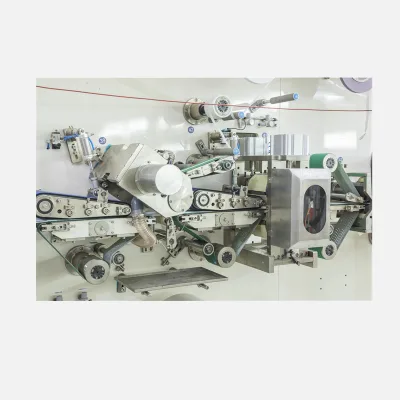
$530000.00 - $535000.00
MOQ: 1


Automatic Absorbent Under Pad Disposable Underpad Making Machine
$118000.00 - $120000.00
MOQ: 1 Pieces


Under Pad Machine Under Pad Making Machinery Under Pad Machine Under Pad Production Line
$250000.00 - $300000.00
MOQ: 1 pieces

Automatic Disposable Pets Under Absorbent Pad Making Machine Underpad Folding Machine
$125000.00 - $130000.00
MOQ: 1 Sets


High Speed Disposable Underpad Making Machine with Ce Certificate
$150000.00 - $300000.00
MOQ: 1 Pieces


Cost-Effective Automatic Underpad Making Machine China Professional Manufacturer
$300000.00 - $550000.00
MOQ: 1 Pieces


Comprehensive Sourcing Guide
Strategic Sourcing Guide for Edge Embossing Underpad Making Machines
Understanding the Technical Architecture of Modern Underpad Production
When evaluating an Edge Embossing Underpad Making Machine, buyers must first distinguish between the mechanical capabilities of the equipment and the specific output requirements of their production line. The core keyword suggests a focus on machines designed to produce underpads, which are essential for hygiene and absorbency in both adult care and medical settings. Based on available market data, these machines are typically categorized as automatic processing units capable of handling multiple material layers. The observed specifications indicate a robust industrial design, with some models featuring a production speed of up to 250 meters per minute, while others operate at a stable speed of 200 meters per minute. This variance in speed is a critical factor for buyers to verify, as it directly impacts the throughput and return on investment of the facility.
The physical dimensions of these machines are substantial, reflecting the complexity of the embossing and folding processes involved. Available data points to a machine size of approximately 25 meters in length, 6 meters in width, and 4 meters in height, though some configurations may vary to 20,000mm by 2,000mm by 2,500mm. Buyers should not assume a single standard footprint; rather, they must request specific dimensional drawings from potential suppliers to ensure the equipment fits within their existing factory floor plans. The material processing capability is equally important. These machines are designed to handle five layers of material, which is a standard configuration for high-quality underpads that require a balance of absorbency, softness, and leak protection. The ability to customize the product width, typically ranging from 800mm to 1200mm, allows manufacturers to produce pads for various target demographics, including adult care products.
The automation level is a defining characteristic of modern underpad machinery. The equipment is classified as fully automatic, utilizing computer control panels to manage the intricate sequence of feeding, embossing, folding, and cutting. This level of automation reduces human error and ensures consistent product quality. The power requirements for such heavy-duty machinery are significant, with some units rated at 380 kilowatts, while others may operate on lower power inputs like 6.5 kilowatts depending on the specific model and configuration. Voltage compatibility is another technical specification that requires careful attention, as machines may support 220V, 380V, or other voltage requirements based on the local electrical infrastructure. Buyers must verify the exact voltage and power consumption before finalizing a purchase to avoid costly retrofitting of their electrical systems.
Compliance Verification and Certification Standards
In the global B2B market for medical and hygiene machinery, compliance is not merely a formality but a prerequisite for market entry and operational safety. When sourcing an Edge Embossing Underpad Making Machine, buyers must rigorously verify the certification status of the equipment. The most common certifications observed in this sector include CE (Conformité Européenne) and ISO 9001:2015. The presence of these certifications indicates that the machine meets specific safety, health, and environmental protection requirements for the European market and adheres to international quality management standards. However, buyers should treat these certifications as observations that require validation rather than automatic guarantees. It is essential to request current, valid certificates from the supplier and verify their authenticity with the issuing bodies.
The warranty of core components is another critical compliance and reliability indicator. A standard warranty period for critical parts such as motors, control systems, and embossing rollers is typically one year. This warranty coverage protects the buyer against manufacturing defects and ensures that the supplier stands behind the quality of their core machinery. Buyers should scrutinize the terms of this warranty, including what constitutes a "core component," the response time for service calls, and whether the warranty covers labor costs or only parts. Additionally, the condition of the machine is a fundamental specification. Most suppliers offer new equipment, but buyers must explicitly confirm the "New" status to avoid receiving refurbished or used machinery that may have hidden wear and tear.
Standardization in the production of underpad machines is not always uniform. While some models adhere to standard industrial specifications, others are built to custom standards. Buyers should verify if the machine conforms to specific national or international standards relevant to their target market. For instance, if the end product is intended for export to the United States, the machine may need to meet specific FDA-related guidelines or UL standards, even if the machine itself is manufactured in China. The "Customized" nature of these machines means that the production line can be tailored to specific product requirements, but this also introduces complexity in the compliance verification process. Buyers must ensure that any custom modifications do not void existing certifications or introduce new regulatory hurdles.
Cost Drivers and Financial Considerations in Procurement
The financial landscape of sourcing an Edge Embossing Underpad Making Machine is influenced by a variety of factors beyond the sticker price. The observed price range for such equipment is extremely broad, spanning from $1 to $1,200,000. This wide variance indicates that the cost is highly dependent on the specific configuration, automation level, brand reputation, and included features. A basic model with lower speed and fewer layers may fall at the lower end of the spectrum, while a fully automated, high-speed machine with advanced computer control and custom engineering will command a premium price. Buyers should not rely on a single price point but rather expect a range of options based on their specific production needs.
The minimum order quantity (MOQ) is another financial consideration that affects procurement strategy. In this sector, the MOQ is often flexible, with some suppliers offering a minimum of just one set. This low barrier to entry allows smaller manufacturers or startups to enter the market without the need for massive capital investment. However, buyers should be aware that purchasing a single unit may result in higher per-unit costs compared to bulk orders. The payment terms are also a significant factor in the financial planning of the project. Standard payment methods include Letter of Credit (L/C) and Telegraphic Transfer (T/T). These terms provide security for both parties, with L/C offering a bank guarantee and T/T offering a direct transfer mechanism. Buyers should negotiate payment schedules that align with their cash flow, often opting for a deposit upon order confirmation and the balance upon shipment or installation.
Shipping and logistics costs are substantial hidden drivers in the total cost of ownership. The product is typically packed in wooden boxes or wooden cases to protect the machinery during transit, which adds to the weight and volume of the shipment. The single gross weight of the machine can be significant, and the single volume is often measured in cubic meters, requiring specialized freight forwarding. The port of shipment is frequently FOB (Free On Board) Xiamen, which means the buyer is responsible for all costs and risks once the goods are loaded onto the vessel at the port of origin. This includes ocean freight, insurance, customs duties, and inland transportation to the final destination. Buyers must factor these logistics costs into their total budget, as they can sometimes exceed the cost of the machine itself, especially for large, heavy equipment.
Typical Applications and Production Capabilities
The primary application of an Edge Embossing Underpad Making Machine is the mass production of sanitary underpads, which are widely used in healthcare, elderly care, and pet care industries. These machines are specifically designed to process materials into products that offer high absorbency and leak protection. The ability to produce five layers of material is crucial for creating underpads that can handle significant fluid volume while maintaining structural integrity. The edge embossing feature is particularly important for enhancing the aesthetic appeal and structural strength of the product, ensuring that the edges do not fray or separate during use.
The target demographic for the end product is primarily adults, as indicated by the product object specification. This suggests that the machines are optimized for producing larger, more absorbent pads suitable for incontinence care. However, the customization capabilities of these machines allow for the production of smaller sizes for other applications, such as pet training pads or baby care products. The product width range of 800mm to 1200mm provides the flexibility to produce various sizes, catering to different market segments. The processing type is identified as a paper folding machine, which highlights the importance of the folding mechanism in the final product quality. Proper folding ensures that the pad is compact, easy to handle, and ready for packaging.
The speed of production is a key performance indicator for these machines. With a designed production speed of up to 250 meters per minute, these machines can achieve high output volumes, making them suitable for large-scale manufacturing operations. However, the stable production speed of 200 meters per minute is a more realistic figure for continuous operation, accounting for material variations and maintenance stops. Buyers should evaluate their production requirements against these speed specifications to ensure the machine can meet their demand. The ability to customize the product dimensions and layers allows manufacturers to adapt to changing market trends and customer preferences, ensuring long-term competitiveness.
Supplier Evaluation and Quality Assurance Protocols
Selecting the right supplier is a critical step in the procurement process, as it directly impacts the quality, reliability, and support of the machinery. When evaluating potential suppliers, buyers should look for evidence of a "New" condition and a warranty of one year for core components. The brand name, such as "Alt" or "Shengquan," can be an indicator of market presence, but buyers should not rely solely on brand recognition. Instead, they should request detailed technical documentation, including machinery test reports, which are often provided by reputable suppliers. These reports offer objective data on the machine's performance, speed, and efficiency, allowing buyers to verify the supplier's claims.
The location of the supplier is another important factor. Most of the observed data points to Fujian, China, as the place of origin for these machines. This region is known for its manufacturing capabilities in the machinery sector, but buyers should still conduct due diligence on the specific factory. They should verify the supplier's production capacity, quality control processes, and after-sales support network. The availability of a computer control panel and the ability to customize the machine are also indicators of a supplier's technical competence. Buyers should engage in technical discussions with the supplier to assess their understanding of the production process and their ability to troubleshoot potential issues.
Quality control should be an integral part of the procurement process. Buyers should insist on a pre-shipment inspection to verify that the machine meets the agreed-upon specifications. This inspection should cover the mechanical components, electrical systems, and software controls. The supplier should provide a detailed checklist of the inspection points, including the condition of the embossing rollers, the accuracy of the folding mechanism, and the stability of the computer control system. Additionally, buyers should verify the packaging standards, ensuring that the machine is securely packed in wooden cases to prevent damage during transit. The single gross weight and volume of the machine should be accurately documented to facilitate smooth logistics and customs clearance.
Long-Term Procurement and Operational Sustainability
The long-term success of an underpad production line depends on the sustainability and maintainability of the machinery. Buyers should consider the service life of the equipment, which is often highlighted as a key selling point. A machine with a long service life reduces the total cost of ownership and minimizes downtime. The warranty of core components for one year provides a baseline of protection, but buyers should also inquire about the availability of spare parts and the lead time for replacements. The ability to customize the machine allows for future upgrades and modifications, ensuring that the equipment can adapt to new production requirements or technological advancements.
Energy efficiency is another critical consideration for long-term operations. The power consumption of the machine, which can range from 6.5 kilowatts to 380 kilowatts, has a direct impact on operating costs. Buyers should evaluate the energy efficiency of the machine and look for features that minimize power consumption, such as variable frequency drives or energy-saving control systems. The voltage compatibility of the machine should also be considered, as it affects the cost of electrical infrastructure upgrades. A machine that can operate on multiple voltage standards offers greater flexibility and reduces the risk of compatibility issues.
The maintenance requirements of the machine are also a key factor in long-term procurement. Buyers should request a comprehensive maintenance manual that outlines the routine maintenance tasks, recommended spare parts, and troubleshooting procedures. The availability of a computer control panel simplifies the monitoring of machine performance and allows for predictive maintenance, reducing the risk of unexpected breakdowns. The supplier should provide training for the maintenance team to ensure that they are equipped to handle routine maintenance and minor repairs. Finally, buyers should consider the environmental impact of the machine, looking for features that reduce waste and energy consumption, aligning with sustainable manufacturing practices.
FAQs
What is the production speed of the machine?
The machine offers a designed production speed of 250 meters per minute with a stable speed of 200 meters per minute. This high efficiency supports large-scale manufacturing needs for underpad production lines.
Can the machine handle five material layers?
Yes, the equipment is designed to process five layers of material for enhanced absorbency and leak protection. This configuration ensures the final underpad product meets high-quality standards for adult care applications.
Which certifications does the machine hold?
The machine typically holds CE and ISO9001 certifications to ensure safety and quality compliance. Buyers should verify these certificates directly with the supplier to confirm current validity for their specific region.
What is the minimum order quantity for purchase?
The minimum order quantity is one set, allowing flexible entry for new manufacturers. This low barrier enables buyers to acquire a single unit without committing to bulk inventory immediately.
How is the machine packaged for shipping?
The equipment is packed in wooden boxes or wooden cases to ensure safe transit. This robust packaging protects the machinery from damage during international shipping from the port of Xiamen.
What is the warranty period for core components?
The warranty for core components covers a period of one year against manufacturing defects. This coverage applies to critical parts like motors and control systems to ensure operational reliability.
Can the product width be customized?
Yes, the machine supports customization with a product width range of 800 to 1200 millimeters. This flexibility allows manufacturers to produce pads tailored to specific adult care or medical requirements.