Source EDM Electrode Holder with Centering Plate 50 for molds, electrodes, and workpieces
Find 17 options for the EDM Electrode Holder with Centering Plate 50 designed for EDM machines and CNC setups. Buyers can compare steel and brass models, varying accuracies, and warranty terms from suppliers in Guangdong, China.
Key considerations
Products List
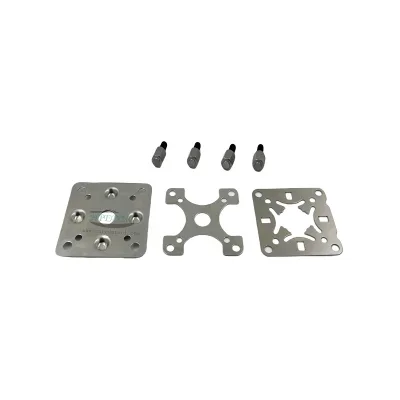
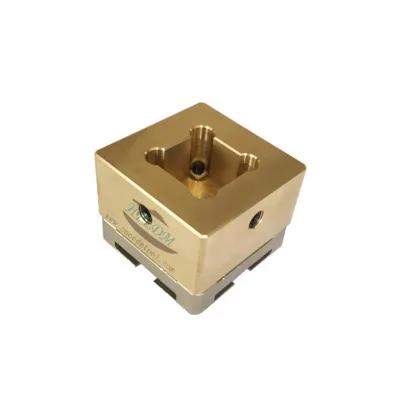
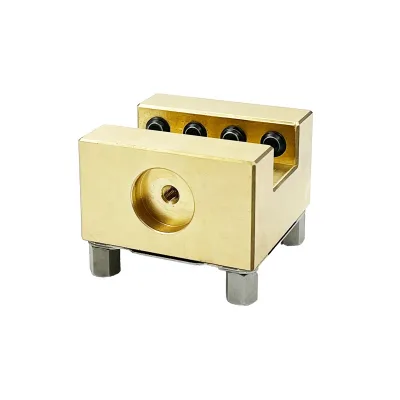
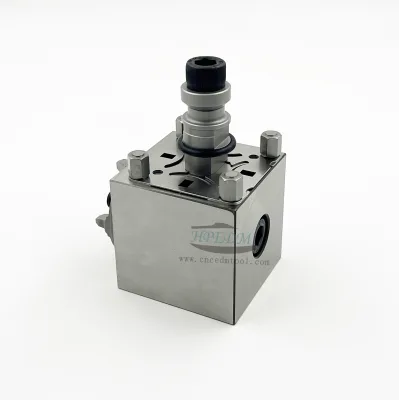


Comprehensive Sourcing Guide
Strategic Sourcing Guide for EDM Electrode Holders with Centering Plate 50
Understanding the Core Component and Technical Specifications
In the realm of precision manufacturing, specifically within Electrical Discharge Machining (EDM), the electrode holder serves as the critical interface between the machine tool and the workpiece. When sourcing an EDM Electrode Holder with Centering Plate 50, buyers must first distinguish between the specific mechanical configurations available in the current market. The "centering plate 50" designation typically refers to a standardized mounting interface designed to accommodate electrodes or workpieces with a specific footprint, ensuring rapid and repeatable positioning.
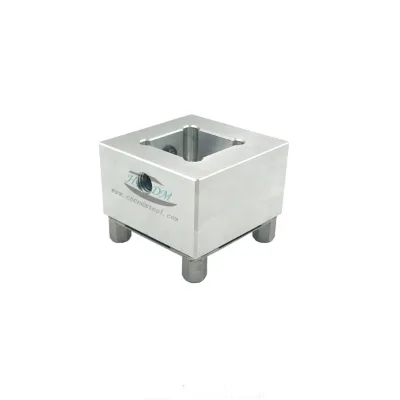
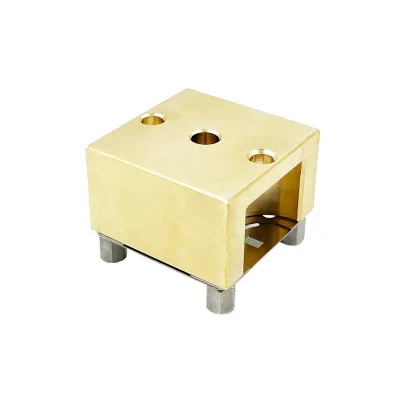
Based on observed product attributes, the market offers variations in material composition and structural design. One prevalent configuration utilizes steel as the primary material, featuring a corrosion-resistant version that includes four supporting feet. This design is explicitly noted for its application on ITS chucks and is optimized for small workpieces. The physical dimensions for such a unit are often compact, with a single package size recorded at 15x15x10 cm and a weight of 0.5 kg. Conversely, other market offerings may feature a brass construction, designed with a macro centering plate measuring 54x54 mm. These units are often engineered to mount electrodes and workpieces up to 25 mm, offering a distinct advantage by mimicking the interface of established systems like 3R.
The mechanical accuracy of these components is a primary differentiator. High-precision models, such as those identified as EROWA electrode holders, boast an accuracy rating of 0.002mm. These units are often constructed from stainless steel and feature hardened and ground 90° angles to ensure rigidity. The number of jaws can vary, with some models specified to have four jaws for secure clamping. The application scope is broad, ranging from mold processing to the handling of tungsten and copper electrodes. Buyers must verify whether the specific unit they are evaluating is intended for Milling Machines or dedicated EDM machines, as the mechanical tolerances and mounting interfaces differ significantly between these two categories.
Compliance, Certification, and Verification Protocols
When evaluating suppliers for precision tooling, the presence of formal certifications is a vital indicator of manufacturing maturity. While the general market context often references ISO 9001:2015 as a baseline for quality management, buyers must exercise caution. This standard should not be assumed to apply to every listed product unless explicitly confirmed by the supplier. Instead of relying on general market assumptions, procurement teams should demand specific evidence of compliance for the batch being purchased.
A critical document to request is the machinery test report. In the observed product data, this report is explicitly marked as "Provided" for certain models. This document serves as tangible proof that the product has undergone rigorous functional testing to verify its dimensional stability and performance under load. For an electrode holder, this test report should confirm that the centering plate maintains its alignment after repeated mounting cycles.
Furthermore, buyers should scrutinize the warranty terms provided by the supplier. The market data indicates a range of warranty periods, with some units offering a 1-year warranty while others provide only 6 months. A longer warranty period often correlates with higher confidence in the product's durability and the supplier's commitment to after-sales support. However, the warranty terms must be clearly defined in the contract, specifying what constitutes a defect versus normal wear and tear.
Another aspect of compliance is the customized support capability. Many suppliers offer OEM (Original Equipment Manufacturer) services, allowing buyers to request specific modifications to the standard design. This is particularly relevant for unique production lines where standard 50mm plates may not fit existing fixtures. Buyers should verify if the supplier can provide a test report for a customized batch, ensuring that the modifications do not compromise the structural integrity or accuracy of the holder.
Cost Drivers and Pricing Structure Analysis
The pricing of EDM electrode holders is influenced by a complex interplay of material costs, manufacturing precision, and order volume. The observed price range in the market is extensive, spanning from $0.24 to $611.32. This wide variance is not arbitrary but reflects significant differences in the product's specifications.
The primary cost driver is the material. Units made from brass or stainless steel generally command a higher price than those made from standard steel due to the raw material cost and the additional processing required to achieve corrosion resistance and high hardness. Additionally, the accuracy of the component plays a substantial role. A holder with an accuracy of 0.002mm requires advanced grinding and polishing processes, which increase production time and cost compared to standard tolerance units.
The Minimum Order Quantity (MOQ) is another critical factor in the total cost of ownership. The market data shows an MOQ range from 1 piece to 1200 pieces. For buyers with low-volume needs, a supplier with a low MOQ (e.g., 1 or 12 pieces) may be more cost-effective, even if the unit price is higher. Conversely, high-volume buyers can leverage economies of scale to reduce the per-unit cost, provided they can meet the higher MOQ thresholds.
Other cost considerations include the packaging and shipping weight. The single gross weight of these units varies, with some models weighing 0.5 kg and others up to 0.8 kg. While seemingly minor, these differences accumulate in shipping costs for large orders. Buyers should also consider the Selling Units; some products are sold as single items, while others may be packaged in sets. Understanding the total landed cost, including packaging and logistics, is essential for accurate budgeting.
Typical Applications and Operational Context
The utility of an EDM electrode holder with a centering plate 50 extends across various sectors of the manufacturing industry. The primary application is in mold making, where precise electrode positioning is crucial for creating complex cavities. These holders are specifically designed to mount electrodes and workpieces, with some models capable of handling sizes up to 20mm or 25mm.
The application scope also includes the processing of tungsten and copper electrodes. These materials are commonly used in EDM due to their conductivity and erosion resistance. The holder must provide a secure grip to prevent vibration during the machining process, which could otherwise lead to surface imperfections on the final product. The power source for these holders is typically manual, relying on the operator to engage the clamping mechanism, although some advanced systems may integrate with automated tool changers.
Specific use cases highlight the versatility of these components. For instance, a horizontal electrode holder with a hardened 90° angle is ideal for operations requiring precise angular positioning. Similarly, holders with chip holes are designed to facilitate the removal of debris during machining, preventing accumulation that could interfere with the electrode's performance. The advantage of using a holder that mimics a specific system interface, such as EROWA or 3R, is the ability to integrate seamlessly into existing workflows without requiring significant retooling or fixture adjustments.
Supplier Evaluation and Selection Criteria
Selecting the right supplier requires a multi-faceted evaluation process that goes beyond price comparison. Buyers should prioritize suppliers who can provide comprehensive documentation, including the machinery test report and detailed product specifications. The place of origin is also a relevant factor; many observed products originate from Guangdong, China, a region known for its manufacturing capabilities but also requiring careful vetting for quality consistency.
Key evaluation criteria include the version of the product. Buyers should look for features such as corrosion resistance and supporting feet, which enhance the longevity and stability of the holder in a workshop environment. The model number is another critical identifier; for example, models like HE-C06441, HE-R06658, and HE-E06453 represent distinct configurations with specific attributes. Verifying the model number against the supplier's catalog ensures that the buyer receives the exact component required for their application.
The warranty period is a strong indicator of supplier confidence. A 1-year warranty is preferable to a 6-month term, as it suggests the supplier stands behind the durability of their product. Additionally, the availability of customized support and OEM services can be a deciding factor for buyers with unique requirements. Suppliers who offer flexible customization options demonstrate a deeper understanding of the buyer's specific operational needs.
Quality Control and Long-Term Procurement Strategy
Implementing a robust quality control (QC) strategy is essential for maintaining production efficiency. Buyers should establish clear acceptance criteria based on the accuracy specifications, such as the 0.002mm tolerance observed in high-end models. Incoming inspection should verify the single package size and weight to ensure consistency with the ordered specifications. Any deviation in these metrics could indicate a manufacturing defect or a mismatch in the product version.
For long-term procurement, buyers should consider the lead time and supply chain reliability. While specific lead times are not provided in the current data, the MOQ flexibility can impact the ability to maintain a steady inventory. Suppliers with lower MOQs may be better suited for just-in-time manufacturing strategies, while those with higher MOQs may require more advanced inventory planning.
The material choice also plays a role in long-term performance. Stainless steel and brass offer superior corrosion resistance compared to standard steel, reducing the need for frequent replacement or maintenance. Buyers should assess the operating environment of their facility; in humid or corrosive conditions, investing in corrosion-resistant versions with supporting feet can significantly extend the service life of the equipment.
Finally, buyers should maintain open communication with suppliers regarding test results and performance claims. While specific test data should not be assumed, requesting detailed reports for each batch ensures that the quality remains consistent over time. By combining rigorous QC protocols with a strategic approach to supplier selection, buyers can secure a reliable supply of EDM electrode holders that meet the demanding standards of modern precision manufacturing.
Comparative Analysis of Product Variants
To facilitate informed decision-making, the following table summarizes the key differences between observed product variants. This comparison highlights the trade-offs between material, accuracy, and application scope.
| Feature | Variant A (Steel, ITS Chuck) | Variant B (Brass, 3R Interface) | Variant C (Stainless Steel, EROWA) |
|---|---|---|---|
| Material | Steel | Brass | Stainless Steel |
| Centering Plate | 50mm | 54x54mm | 50mm |
| Accuracy | Not Specified | Not Specified | 0.002mm |
| Max Workpiece | Small Workpiece | Up to 25mm | Up to 20mm |
| Jaws | Not Specified | Not Specified | 4 Jaws |
| Warranty | 1 Year | 6 Months | 1 Year |
| Weight | 0.5 kg | 0.68 kg | 0.5 kg |
| Key Advantage | Corrosion-resistant, 4 feet | Same as 3R system | Hardened 90° angle |
| Model Number | HE-C06441 | HE-R06658 | HE-E06453 |
This comparison underscores the importance of matching the specific product variant to the operational requirements of the buyer. While Variant C offers the highest accuracy, Variant A may be more suitable for general applications where cost is a primary concern. Variant B provides a bridge to existing 3R system workflows, making it ideal for facilities already invested in that ecosystem. By carefully analyzing these attributes, buyers can optimize their procurement strategy to achieve the best balance of performance, cost, and reliability.
FAQs
What material options are available for the centering plate 50?
The product is available in steel, brass, and stainless steel variants. Steel versions often include corrosion-resistant features with supporting feet, while stainless steel models offer hardened 90-degree angles for precision applications.
How accurate are the high-precision electrode holders?
High-precision models like the EROWA type achieve an accuracy of 0.002mm. This level of tolerance ensures reliable positioning for mold processing and tungsten or copper electrode handling on EDM machines.
Which warranty periods are offered for these holders?
Warranty terms vary between 6 months and 1 year depending on the specific model. A 1-year warranty is common for standard units, while some specialized versions may offer shorter coverage periods.
Can I find suppliers with a minimum order quantity of 1 piece?
Yes, some suppliers offer a minimum order quantity of 1 piece for specific models. Other options may require orders of 10 or 12 pieces, so buyers should verify the specific MOQ for their selected item.
What is the typical weight of a single package?
Single package weights typically range from 0.5 kg to 0.8 kg. The exact weight depends on the material and dimensions, with some compact units weighing 0.5 kg and larger assemblies reaching 0.8 kg.
Which machine types are compatible with these holders?
These holders are designed for use on EDM machines and CNC machines. Some specific models are also compatible with milling machines, ensuring versatility across different precision manufacturing workflows.
How can I verify the product specifications before ordering?
Buyers can request a machinery test report which is provided for certain models. This document confirms dimensional stability and performance, ensuring the product meets the required accuracy and structural standards.