Source Efficient Compressor Vacuum Packing Machine for food, pillows, and cushions
Find 30 Efficient Compressor Vacuum Packing Machine options for food, pillows, and cushions. Compare specifications like voltage, automation, and sealing dimensions from verified suppliers in Guangdong, China.
Key considerations
Products List

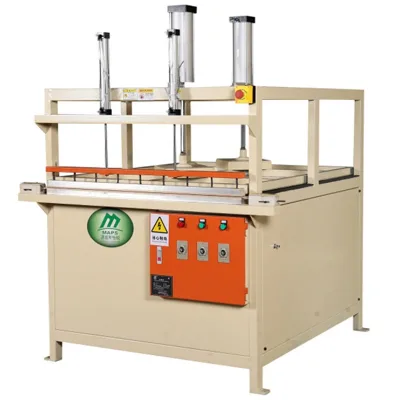
Vacuum Compressor Packaging Machinepillow Type Vacuum Compression Packing Machine
$2500.00 - $3000.00
MOQ: 1 sets


Vacuum Packaging Machine Portable Vacuum Sealer Packing Machine Vacuum Packing Machine
$2000.00 - $5000.00
MOQ: 1 Pieces


High Quality Vacuum Packing Machine
$435.00 - $2750.00
MOQ: 1 set
Qingdao Zhongkang Printing and Packaging Machinery Co., Ltd.


Comprehensive Sourcing Guide
Strategic Sourcing Guide for Efficient Compressor Vacuum Packing Machines
Understanding the Technical Landscape of Compressor Vacuum Systems
When sourcing an Efficient Compressor Vacuum Packing Machine, buyers must first distinguish between the various mechanical architectures available in the current market. The core keyword implies a focus on machines that utilize compression to reduce product volume, a critical function for industries handling bulky items such as pillows, cushions, and textiles. Based on observed product data, these machines are designed to handle a diverse range of object states, including solid, liquid, powdery, and paste forms, though their primary application in the observed dataset leans heavily toward solid items like bedding and soft goods.
The automation level is a primary differentiator. The market presents options ranging from fully automatic systems to semi-automatic units. Fully automatic models, such as those identified with the model number LW-T320, are engineered for high-throughput environments where consistency and speed are paramount. These units typically feature an electric power drive with a voltage requirement of 380V and a power consumption around 5.25KW. In contrast, semi-automatic variants, like the AV-800-1, may operate with different power supplies, such as 220V 50Hz, and rely on pneumatic power for specific mechanical actions. The distinction is vital; a buyer must assess their production line's capacity to support the specific electrical infrastructure required by the chosen automation tier.
Furthermore, the physical dimensions of the machinery are a critical logistical consideration. The observed data indicates significant variance in footprint. For instance, the LW-T320 model measures 1000mm in width, 900mm in depth, and 1920mm in height, weighing approximately 380kg. Another model, the YS-600, presents a different compression area of 600x600mm with a compression stroke of 30cm. Buyers must ensure their facility has adequate floor space and ceiling height to accommodate these units, particularly when considering the "Outside Pumping Vacuum Packing Machine" type which may require additional clearance for external components. The sealing strip dimensions, observed at 600x10mm in certain configurations, also dictate the maximum size of the packaging bags that can be processed in a single cycle.
Compliance, Certification, and Regulatory Standards
Navigating the regulatory landscape is essential for international procurement, particularly when importing machinery from manufacturing hubs like Guangdong, China. The observed product listings frequently cite CE and ROHS certifications. These are not merely marketing terms but indicate adherence to specific safety and environmental standards. The CE mark suggests compliance with European health, safety, and environmental protection standards, which is often a prerequisite for selling or operating machinery within the European Economic Area. Similarly, ROHS certification indicates that the machine's electrical and electronic components are manufactured without specific hazardous materials, aligning with global environmental directives.
However, buyers must exercise caution when interpreting these certifications. While the data lists CE and ROHS as available attributes, it is imperative to verify the validity of these certificates for the specific unit being purchased. The documentation should explicitly state the model number and serial number to ensure the certification applies to the exact configuration ordered. Additionally, the observed data mentions a "machinery test report" as a provided attribute. This document is crucial for verifying that the machine has undergone rigorous internal testing for performance and safety before shipment.
Regarding standards, the market offers flexibility. Some products list "can be customized" for their standard specifications, while others adhere to specific dimensional standards like 860x860x1670mm. Buyers should not assume that a machine labeled with a specific standard automatically meets all local regulatory requirements in their destination country. It is the buyer's responsibility to cross-reference the supplier's provided test reports and certification documents with the local regulations of their jurisdiction. For instance, while ISO9001 is a common background standard in the industry, its specific application to the production process of a given machine should be confirmed through direct inquiry rather than assumed from general market knowledge.
Cost Drivers and Pricing Variables
The pricing of efficient compressor vacuum packing machines is influenced by a complex interplay of factors, including automation level, material quality, and customization requirements. The observed price range in the market is extensive, spanning from 0 to 425,000 USD. This wide variance reflects the difference between basic semi-automatic units and high-end, fully automated systems with advanced features. The lower end of the spectrum typically corresponds to simpler mechanical designs with fewer core components, while the higher end encompasses machines with sophisticated control systems, higher power ratings, and custom engineering.
Material composition is a significant cost driver. The majority of observed units are constructed from high-quality stainless steel, which offers superior durability, corrosion resistance, and hygiene—critical factors for food and pharmaceutical applications. The use of stainless steel generally commands a higher price point compared to machines utilizing carbon steel or other alloys. Additionally, the core components, such as the engine, play a pivotal role in the overall cost. High-performance engines that ensure consistent compression and sealing performance contribute to the machine's longevity and efficiency, thereby justifying a premium price.
Customization is another major variable. The market data indicates that customization is available for product packing, standards, and even the packaging material itself. A buyer requiring a machine specifically tailored to a unique bag shape, a non-standard compression area, or a specialized sealing strip dimension will incur additional costs. The "Selling Units" attribute often lists "Single item," suggesting that these machines are typically sold as bespoke solutions rather than mass-produced off-the-shelf items. Consequently, the final price is often a negotiation based on the specific configuration of the machine, the volume of the order, and the complexity of the customization requested.
Typical Applications and Operational Capabilities
The primary application of these machines is evident in the compression and vacuum packing of soft, bulky goods. The observed data explicitly mentions "pillow" and "cushion vacuum packing" as key use cases. This makes the technology ideal for the textile, bedding, and furniture industries, where reducing the volume of products is essential for optimizing storage and shipping logistics. By compressing these items, businesses can significantly reduce the cubic volume of their inventory, leading to substantial savings in warehousing and freight costs.
Beyond textiles, the versatility of these machines extends to other industries. The ability to handle solid, liquid, powdery, and paste states suggests potential applications in food processing, where moisture-proof sealing is required to extend shelf life. The "Feature: Moisture Proof" attribute highlights the machine's capability to create an airtight seal, protecting contents from humidity and contamination. This is particularly valuable for food products that require long-term storage or transportation across varying climatic conditions.
The operational capabilities are further defined by the driven type and power source. Most observed units are driven mechanically or pneumatically, with electric power serving as the primary energy source for the control systems and motors. The "Easy To Operate" key selling point suggests that user interfaces are designed for simplicity, reducing the training time required for operators. However, the specific power requirements, such as 380V for automatic models versus 220V for semi-automatic ones, must be matched to the facility's electrical infrastructure to ensure safe and efficient operation.
Supplier Evaluation and Quality Assurance
Selecting a reliable supplier is as critical as selecting the right machine. The observed data indicates that the place of origin for many of these units is Guangdong, China, a region known for its manufacturing capabilities. However, the concentration of suppliers in a specific region does not guarantee quality. Buyers should evaluate suppliers based on their ability to provide comprehensive documentation, including machinery test reports and valid certification copies. The presence of a "1 Year" warranty is a standard offering, but the terms and conditions of this warranty should be clearly understood, including what components are covered and the process for claiming service.
Quality control should be a collaborative effort between the buyer and the supplier. The "machinery test report" provided by the supplier is a key document to review. It should detail the results of performance tests, including compression force, sealing integrity, and cycle times. Buyers should request these reports before placing an order to ensure the machine meets their specific performance criteria. Additionally, the "Product name" and "Model No." should be clearly defined in the purchase agreement to avoid any ambiguity regarding the specifications of the delivered unit.
When evaluating suppliers, buyers should also consider the "Packaging" method used for shipping the machine. The observed data mentions "film" and "wood" packaging, with some units shipped in a "Wooden Box." Proper packaging is essential to prevent damage during transit, especially for heavy machinery weighing up to 380kg. A supplier that invests in robust packaging demonstrates a commitment to product integrity and customer satisfaction. Furthermore, the "Customization" attribute suggests that a capable supplier should be willing to work with the buyer to tailor the machine to their specific needs, rather than offering a one-size-fits-all solution.
Long-Term Procurement and Operational Considerations
Procuring a compressor vacuum packing machine is a long-term investment that requires careful consideration of maintenance, spare parts availability, and total cost of ownership. The "Warranty: 1 Year" is a starting point, but buyers should plan for the machine's lifecycle beyond this period. The "Core components," such as the engine, are likely to require maintenance or replacement over time. Ensuring that the supplier can provide genuine spare parts and technical support is crucial for minimizing downtime.
The "Lead time" for delivery is another critical factor. The observed data indicates a delivery time of "45 Days From Receipt of Payment." This timeline can vary based on the level of customization and the supplier's current production schedule. Buyers should factor this lead time into their production planning to avoid disruptions. Additionally, the "MOQ" (Minimum Order Quantity) is observed to be 1, which offers flexibility for small businesses or those testing new equipment. However, for larger orders, buyers should negotiate potential volume discounts or favorable payment terms.
Finally, the "Packing" of the machine itself, whether in a wooden box or other custom packaging, should be considered in the context of environmental regulations and disposal. As sustainability becomes a more prominent concern in global trade, buyers may prefer suppliers who use eco-friendly packaging materials or who offer recycling programs for the machine's components. By addressing these long-term considerations during the procurement phase, buyers can ensure a smooth operational experience and maximize the return on their investment in efficient compressor vacuum packing technology.
FAQs
What automation levels are available for these machines?
Both automatic and semi-automatic models are available for efficient compressor vacuum packing machines. Fully automatic units like the LW-T320 offer high throughput, while semi-automatic variants such as the AV-800-1 provide flexibility for specific production needs.
Which certifications should I verify before purchasing?
You should verify CE and ROHS certifications for safety and environmental compliance. These marks indicate adherence to European standards, but you must confirm the validity of the certificates for the specific model number and serial number being ordered.
How long is the typical delivery lead time?
The typical delivery lead time is 45 days from receipt of payment. This timeline may vary depending on the level of customization required and the current production schedule of the supplier in Guangdong, China.
Can the machine handle different material states?
Yes, the machine can handle solid, liquid, powdery, and paste object states. While primarily used for solids like pillows and cushions, this versatility allows for applications in food processing and other industries requiring moisture-proof sealing.
What warranty coverage is typically provided?
A standard warranty of 1 year is typically provided for these machines. Buyers should review the terms to understand which components are covered and the process for claiming service or repairs during the warranty period.
How is the machinery packaged for shipping?
The machinery is typically packaged in a wooden box with film protection. This robust packaging method is designed to prevent damage during transit, especially for heavy units weighing up to 380kg.