Source Efficient Rice Mill Spare Parts for Flour, Beans, Wheat
Find reliable Efficient Rice Mill Spare Parts from 30 verified suppliers. Compare models like YBRM and polisher units with ISO certifications for processing flour, beans, and wheat applications.
Key considerations
Products List


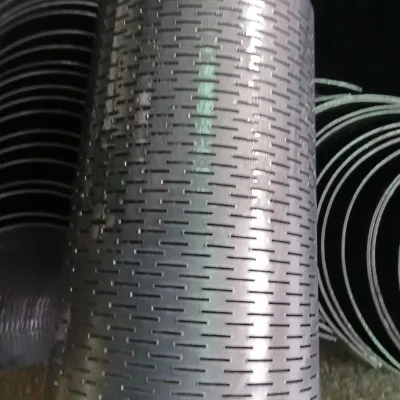
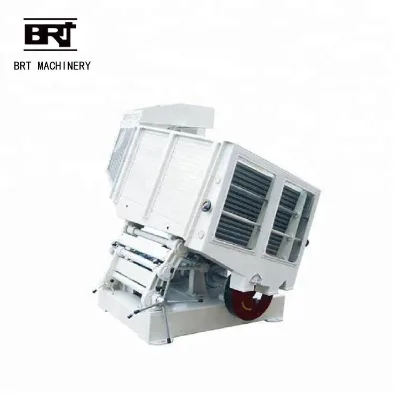


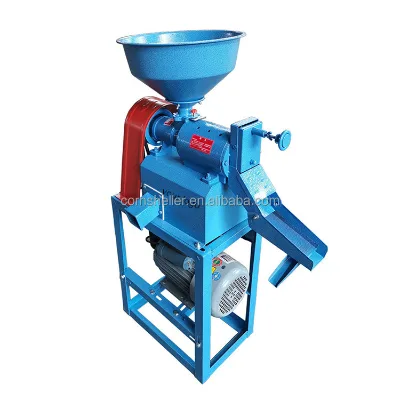


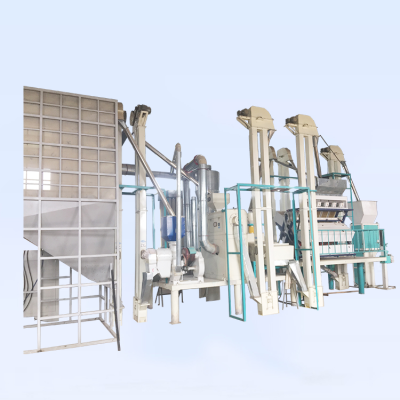
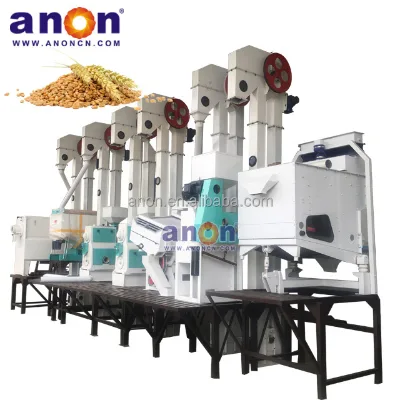
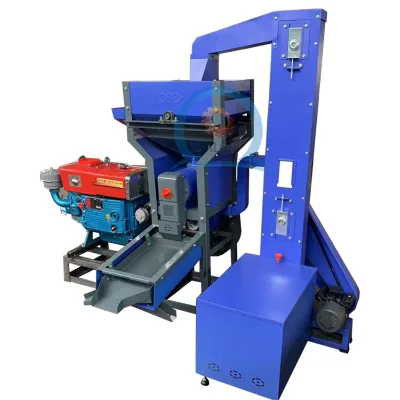
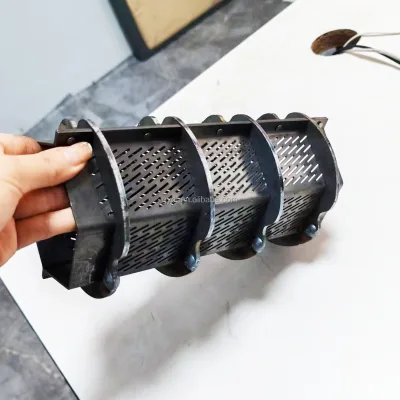
Comprehensive Sourcing Guide
Strategic Sourcing Guide for Efficient Rice Mill Spare Parts
Procuring Efficient Rice Mill Spare Parts requires a nuanced understanding of the machinery's operational ecosystem, the specific technical parameters of the components, and the rigorous verification of supplier capabilities. The global market for rice milling equipment, particularly those originating from manufacturing hubs in China, offers a wide spectrum of options ranging from small-scale horizontal units to large-scale vertical systems. Buyers must navigate a landscape where product attributes vary significantly, from voltage requirements and power consumption to extraction rates and final product quality. This guide provides a structured approach to sourcing, ensuring that procurement decisions are grounded in verified data and technical reality rather than marketing claims.
Technical Specifications and Component Compatibility
The foundation of efficient rice milling lies in the precise matching of spare parts to the host machinery's technical specifications. The supplied data indicates a diverse range of configurations, including both horizontal and vertical machine appearances. A critical observation is the variation in voltage standards; some units operate on 380V, while others are designed for 220V. When sourcing spare parts, buyers must verify the voltage compatibility of the specific component against the mill's electrical system to prevent operational failure or safety hazards.
Power consumption is another pivotal specification. The market data reveals power ratings ranging from 18.5 kW to a broader range of 37-45 kW for different models. Spare parts such as motors, bearings, and transmission belts must be selected to match these specific power loads. For instance, a component designed for a 18.5 kW unit may fail prematurely if installed in a 45 kW system. Furthermore, the "Press Series" designation, noted as Second or Fourth in various listings, suggests different stages of the milling process. Spare parts for the "Fourth" press series, often associated with polishing, will differ materially from those used in earlier stages.
Capacity and throughput are equally vital. The observed standards indicate production capacities ranging from 2.5 to 3.5 tons per hour for specific models, while broader industry standards span from 5 tons to 500 tons per day. Buyers must ensure that replacement parts, such as sieves, rollers, or elevators (like the TLSE - Titan Low Speed Elevator mentioned in the data), are rated for the specific throughput of their facility. Mismatching a low-capacity part with a high-throughput mill can lead to bottlenecks and increased downtime. The physical dimensions, such as the 1870x800x2080 mm standard for certain units, also dictate the spatial requirements for installation and maintenance access.
Compliance, Certification, and Quality Standards
In the B2B procurement of industrial machinery, compliance and certification serve as the primary indicators of reliability and safety. The supplied facts highlight several key certifications, including ISO and CE. Specifically, some products are listed with ISO2008 certification, while others carry the CE mark. When sourcing spare parts, buyers should explicitly request proof of these certifications to ensure the components meet international safety and quality benchmarks.
The presence of ISO certification suggests adherence to quality management systems, which is crucial for maintaining consistent part dimensions and material integrity. However, buyers must be cautious not to assume that every listed product satisfies every standard. The data shows that while some items are certified under ISO and CE, others may only be listed with ISO. Therefore, the verification process must involve direct confirmation of the specific certification applicable to the spare part batch being purchased.
Additionally, the "Standard" field in the product data often refers to production capacity or physical dimensions rather than a regulatory standard. For example, one entry lists "1870x800x2080" as a standard, which clearly refers to dimensions. Buyers should distinguish between regulatory certifications (ISO, CE) and technical specifications (dimensions, capacity) to avoid confusion. The "Condition" of the products is consistently listed as "New," which is a positive indicator for spare parts, but buyers should still verify the manufacturing date and storage conditions to ensure the parts have not degraded during transit or warehousing.
Cost Drivers and Pricing Dynamics
Understanding the cost drivers for rice mill spare parts is essential for budgeting and negotiation. The observed price range in the market is vast, spanning from $0.10 to $180,000 USD. This extreme variance reflects the difference between small consumables, such as filters or minor fasteners, and major components like entire milling units or large elevator systems. Buyers must categorize their needs to avoid overpaying for generic items or underestimating the cost of critical, high-tolerance components.
Several factors influence the final price. The "Customization" attribute is available for many products, and customized parts typically command a higher price due to the specialized tooling and engineering required. Conversely, non-customized, standard parts may be more affordable but less optimized for specific machinery. The "Discount" attribute is noted as "Negotiable," indicating that the listed prices are often starting points. Buyers should leverage this flexibility, especially when placing larger orders.
The "MOQ" (Minimum Order Quantity) range of 1 to 300 units also impacts cost efficiency. Ordering at the lower end of the MOQ spectrum may result in a higher unit price, while bulk orders can reduce the per-unit cost. However, buyers must balance cost savings against inventory holding costs and the risk of obsolescence. The "Delivery Time" is another cost factor; items listed as "in Stock" may be available immediately but could carry a premium compared to items requiring production lead times.
Typical Applications and Operational Context
The application of rice mill spare parts is dictated by the type of grain being processed and the desired final product. The data indicates that these machines are versatile, capable of processing flour, beans, wheat, and all types of grains, with a specific focus on rice. The "Final Product" is often listed as "Parboiled Rice," suggesting that the spare parts must be compatible with the specific hardness and moisture content of parboiled grains.
The "Extraction Rate" of 70% and "Milled Rice Rate" of 75% are key performance indicators that depend on the quality of the spare parts. Worn or incorrect parts can significantly reduce these rates, leading to lower yields and increased waste. The "Broken Rice" rate, observed at 2-3%, is another critical metric. Spare parts that maintain precise tolerances are essential for keeping broken rice within acceptable limits, which directly affects the market value of the final product.
Furthermore, the "Combined Machine" attribute, which includes cleaning and destoning functions, implies that spare parts for these auxiliary systems are integral to the overall efficiency of the mill. Buyers should not view the milling unit in isolation; the health of the cleaning and destoning components directly impacts the quality of the rice entering the milling stage. The "Useful Life" of 20 years suggests that high-quality parts can provide long-term value, reducing the frequency of replacements and the total cost of ownership.
Supplier Evaluation and Verification
Evaluating suppliers requires a rigorous assessment of their capabilities and the authenticity of their claims. The "prod_origin" is consistently listed as China, with specific mentions of Shandong China. While this provides a geographic context, buyers should verify the specific factory location and its operational history. The "Installation" attribute, described as "Responsible Installation," indicates that some suppliers offer on-site support, which is a valuable service for complex machinery.
Buyers should prioritize suppliers who provide clear documentation regarding the "prod_packing." The data shows variations such as "Container by Sea Shipping," "Seaworthy Packing," and "Wooden Case." Proper packing is crucial for preventing damage during transit, especially for heavy or precision components. The "OEM" (Original Equipment Manufacturer) attribute being "Workable" suggests that suppliers are willing to produce parts under the buyer's brand or specifications, which can be beneficial for maintaining consistency across a fleet of machinery.
It is also important to verify the "Warranty Period." The standard warranty observed is 1 Year. Buyers should negotiate terms that align with the expected lifespan of the parts and the criticality of the application. A supplier offering a robust warranty is often more confident in the quality of their products. Additionally, the "Feature" of "Low Consumption" should be verified through technical data sheets rather than relying solely on marketing statements.
Quality Control and Long-Term Procurement Strategy
Implementing a robust quality control (QC) strategy is essential for maintaining the efficiency of rice milling operations. Given the "Low Consumption" feature and the specific performance metrics like "Broken Rice" rates, buyers should insist on pre-shipment inspections. These inspections should verify dimensions, material composition, and surface finish against the provided specifications. The "Air Volume" of 2000-2500m3/H for certain units is a specific parameter that should be tested to ensure the components meet the required airflow standards.
Long-term procurement considerations involve building a relationship with suppliers who can provide consistent quality over time. The "Useful Life" of 20 years implies that the supply chain must be stable and reliable. Buyers should consider the "Delivery Time" and "Lead Time" when planning their inventory. While some items are "in Stock," others may require production time, which could impact operations if not planned for.
Finally, buyers should maintain a detailed record of all spare parts, including their model numbers, certifications, and performance history. This data will facilitate future troubleshooting and ensure that replacement parts are compatible with the existing machinery. By adhering to these structured sourcing principles, buyers can secure efficient, high-quality spare parts that support the long-term success of their rice milling operations.
| Attribute Category | Observed Data Points | Verification Requirement |
|---|---|---|
| Voltage | 380V, 220V | Match specific mill electrical system |
| Power | 18.5 kW, 37-45 kW | Confirm load capacity of component |
| Certification | ISO, ISO2008, CE | Request valid certificates for batch |
| Capacity | 2.5-3.5 t/H, 5-500 t/day | Ensure part rating matches throughput |
| Packing | Container, Wooden Case, Seaworthy | Verify protection for transit |
| Warranty | 1 Year | Confirm terms and coverage scope |
| Origin | China, Shandong China | Verify factory location and capability |
| Condition | New | Check manufacturing date and storage |
FAQs
What certifications do Efficient Rice Mill Spare Parts have?
Many units carry ISO and CE certifications, with some specifically listed as ISO2008 compliant. Buyers must verify that the specific batch of parts holds valid certificates matching these standards before purchase.
Which voltage options are available for rice mill spare parts?
Products are available in both 380V and 220V configurations depending on the specific model. Buyers must match the spare part voltage to their existing mill electrical system to ensure safe operation.
How long is the warranty period for these rice mill machines?
The standard warranty period observed for these new units is one year. Buyers should confirm the specific coverage terms and duration with the supplier before finalizing the procurement agreement.
Can I find Efficient Rice Mill Spare Parts with customization options?
Customization is available for many products, while others are listed as non-customized. Buyers requiring specific dimensions or features should confirm the customization capability and associated costs with the manufacturer.
What is the typical capacity range for rice milling equipment?
Production capacities range from 2.5 to 3.5 tons per hour for specific models up to 500 tons per day for larger systems. Spare parts must be selected to match the throughput capacity of the facility.
Where are these Efficient Rice Mill Spare Parts manufactured?
The products originate from China, with specific mentions of the Shandong region. Buyers should verify the exact factory location and shipping terms when sourcing these components for international delivery.