Source EGR Water Inlet for Auto Cooling, Engine Systems, and Industrial Plants
Find 30 verified listings for EGR Water Inlet components suitable for automotive cooling and industrial applications. Buyers can compare specifications including material, certification, and production processes to select the right parts for their needs.
Key considerations
Products List


$1.00 - $2.00
MOQ: 1000 Pieces
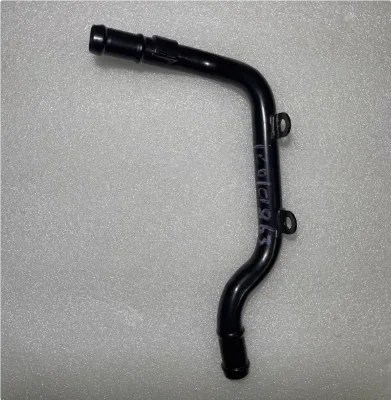


EGR Valve Integrated with Cooler Cost Effective Solution for Emissions Repair
$15.00 - $150.00
MOQ: 1 Pieces

$44.20 - $60.00
MOQ: 1 Pieces





Comprehensive Sourcing Guide
Strategic Sourcing Guide for EGR Water Inlet Components
Technical Specifications and Material Composition
When sourcing components described under the core keyword of EGR Water Inlet, buyers must first distinguish between the specific functional requirements of the Exhaust Gas Recirculation (EGR) system and the associated cooling infrastructure. The provided product data indicates a complex intersection of exhaust and cooling technologies. Specifically, the documentation references an "EGR TUBE" alongside distinct attributes for "auto coolant pipe" systems. This suggests that the procurement strategy must address both the exhaust gas pathway and the thermal management loop simultaneously.
The material composition is a primary technical differentiator. The supplied facts list "Steel" and "Iron" as body materials, with a specific mention of "Steel Tube SUS 304" for pipe applications. SUS 304 is a stainless steel grade known for its corrosion resistance, which is critical for components exposed to high-temperature exhaust gases and cooling fluids. However, other entries note "Seamless Tube" and "Steel Sheet Plate" as raw materials. Buyers must verify whether the specific EGR Water Inlet unit requires the structural integrity of seamless tubing or the formability of sheet plate, as this dictates the manufacturing process. The production process is identified as "Stamping Welding Brzae" (Braze) and "Bending, Braze, Stamping," indicating that the final assembly relies heavily on metallurgical joining techniques. The surface treatment is listed as "Coating" with a specific mention of "Zinc" plating, a standard practice for enhancing corrosion resistance on steel components.
The structural design varies across the observed product range. One entry specifies a "Screw Type" structure, while another notes a "Direct-flow" radiator type and a "Pipe Belt" core. For an EGR Water Inlet, the connection type is equally vital. The data mentions a "Male" connection and a "Round" head code. These geometric specifications must align with the vehicle's existing manifold and piping architecture. The cooling fluid type is identified as "Glycol," and the water temperature sensor type is noted as "Switch Type." This implies that the inlet assembly may integrate or interface with sensor systems that monitor thermal states, requiring precise dimensional tolerances to ensure a leak-free seal and accurate sensor reading.
Compliance, Certification, and Regulatory Standards
Navigating the regulatory landscape is essential for automotive components, particularly those involving exhaust and cooling systems. The product data reveals a fragmented but informative certification profile. Several entries cite "ISOTS" and "TSISO," which likely refer to ISO/TS 16949 (now IATF 16949), the global technical standard for automotive quality management systems. Another entry explicitly lists "IATFISOTS," reinforcing the necessity for suppliers to hold IATF 16949 certification to demonstrate adherence to automotive industry quality requirements. Additionally, "ISO9001" is mentioned, representing a baseline quality management standard.
Regulatory compliance extends beyond quality management to environmental discharge standards. The data specifies a "Discharge Standard: Euro V." This indicates that the component or the system it serves is designed to meet European emission regulations regarding nitrogen oxides and particulate matter. For buyers targeting the North American market, as noted in the "Main Market" attribute, it is crucial to verify if the component also meets EPA standards or if the Euro V compliance is sufficient for the intended export market. The "Standard Component" attribute is listed as "Non-Standard Component," suggesting that while the manufacturing process may follow standard automotive protocols, the specific part geometry is custom-engineered for particular vehicle models.
Buyers must verify the specific certification status of the supplier for the exact SKU being purchased. The presence of "ISO9001" and "IATFISOTS" in the data confirms that such certifications exist within the supply pool, but they are not universally guaranteed for every item listed. The "prod_standard" is also listed with dimensions like "453220" and "363225," which appear to be packaging or dimensional standards rather than regulatory codes. It is the buyer's responsibility to confirm that the physical dimensions and material properties of the delivered goods align with the specific regulatory requirements of the destination market, ensuring that the "Euro V" claim is backed by valid testing documentation for the specific batch.
Cost Drivers and Pricing Dynamics
The pricing structure for EGR Water Inlet components is influenced by a variety of factors, including material costs, manufacturing complexity, and certification overhead. The observed price range in the market data spans from $0.10 to $4,000 USD. This wide variance suggests that the category encompasses everything from small, simple fittings to complete, integrated cooling and exhaust assemblies. The lower end of the spectrum likely corresponds to basic steel tubes or simple connectors, while the upper end may reflect complex assemblies involving SUS 304 stainless steel, integrated sensors, and extensive surface treatments like zinc coating.
Material costs are a significant driver. The use of "Steel Tube SUS 304" and "Seamless Tube" is inherently more expensive than standard carbon steel or sheet metal. The transition from raw materials like "Steel Sheet Plate" to finished products involving "Bending, Braze, Stamping" adds labor and energy costs. Furthermore, the "Coating" process, specifically "Zinc" plating, adds a layer of cost that must be factored into the total price. The "Customization" attribute is listed as "Available" and "Support," indicating that bespoke engineering requests will incur additional tooling and setup fees, pushing the unit price higher.
The Minimum Order Quantity (MOQ) also plays a role in the effective cost per unit. The observed MOQ range is 1 to 1,000 units. For buyers requiring small batches for prototyping or low-volume production, the unit cost will be higher due to the lack of economies of scale. Conversely, buyers ordering near the 1,000-unit threshold may benefit from lower per-unit pricing, provided the supplier has the capacity to handle the volume. The "Selling Units" are listed as "Single item," which allows for flexibility in ordering but may result in higher logistics costs per unit for small orders. Buyers should analyze the total landed cost, including shipping and potential tariffs, rather than focusing solely on the unit price, especially given the "prod_origin" is listed as "China" and "Ningbo, Zhejiang," which are major manufacturing hubs but subject to varying freight rates.
Typical Applications and Vehicle Compatibility
The application scope for EGR Water Inlet components is diverse, ranging from heavy-duty automotive use to specialized industrial applications. The data explicitly mentions "Automobile Chassis Noise: Transmission Noise" and "Noise Source: The Noise of Engine," linking the component to the acoustic and mechanical environment of the engine bay. The "Main Market" is identified as "North America," suggesting a strong presence in the automotive sector of that region. Specific vehicle compatibility is noted with "Car Model: MG OR ROEWE," indicating that these components are suitable for these specific brands, which are popular in various global markets.
Beyond automotive applications, the data lists "Application: Household" and "Application: Medicine, Food and Beverage, Industry." This suggests that the technology or similar component designs may be adapted for use in industrial cooling systems or medical equipment. The "Cooling Fluid Type: Glycol" and "Radiator Type: Direct-flow" are standard in automotive cooling systems but are also applicable in industrial heat exchangers. The "Condition: New" and "Warranty: 3 MONTHS" attributes indicate that these are typically sold as replacement parts or new manufacturing components for assembly lines.
The "OE NO.: 10019863" provides a specific reference number for compatibility checks. Buyers should cross-reference this number with their vehicle's bill of materials to ensure a direct fit. The "Structure: Screw Type" and "Connection: Male" further define the mechanical interface, ensuring that the inlet can be securely fastened to the engine block or radiator. For buyers in the "Medicine, Food and Beverage, Industry" sectors, the "Material: Metal" and "Surface Treatment: Coating" are critical for hygiene and durability, as these environments often require components that can withstand rigorous cleaning and chemical exposure.
Supplier Evaluation and Production Capabilities
Evaluating a supplier for EGR Water Inlet components requires a deep dive into their production capabilities and quality assurance processes. The "Production Process" is detailed as "Bending, Braze, Stamping," and the "Technics" are listed as "Press." This indicates that the supplier must possess advanced metal forming and welding equipment. The presence of "Stamping Welding Brzae" suggests a high level of integration in the manufacturing line, where raw materials are transformed into finished parts in a single or few-step process.
Buyers should verify the supplier's ability to handle "Customization" and "Support" for custom designs. The "Standard Component" attribute is listed as "Non-Standard Component," which implies that the supplier must be agile enough to handle non-standard orders. The "prod_packing" is listed as "Carton" and "Nylon Bag & Carton," indicating that the supplier has established packaging protocols to protect the components during transit. The "prod_origin" is "China" and "Ningbo, Zhejiang," a region known for its robust manufacturing infrastructure. However, buyers must ensure that the specific factory within this region adheres to the "IATFISOTS" and "ISO9001" certifications mentioned in the data.
Quality control is another critical factor. The "Test: Drawing Force" attribute suggests that the supplier performs mechanical stress tests on the components. Buyers should request detailed test reports to verify that the components can withstand the "Mechanical Noise" and thermal stresses associated with engine operation. The "Warranty: 3 MONTHS" provides a baseline for post-delivery support, but buyers should negotiate terms that align with their specific risk tolerance. The "Brand Name: Trosung" is mentioned, but buyers should not rely solely on brand reputation; instead, they should conduct on-site audits or third-party inspections to verify the supplier's actual production capacity and quality control measures.
Quality Control and Long-Term Procurement Considerations
Ensuring the long-term reliability of EGR Water Inlet components requires a rigorous quality control strategy. The "Test: Drawing Force" is a specific metric mentioned, but buyers should also look for thermal cycling tests, pressure tests, and corrosion resistance tests, especially given the "Zinc" coating and "Glycol" fluid exposure. The "Condition: New" and "Warranty: 3 MONTHS" are standard, but for critical engine components, a longer warranty period or a more robust quality assurance agreement may be necessary.
Long-term procurement considerations include supply chain resilience and inventory management. The "Main Market: North America" and "prod_origin: China" highlight the potential for geopolitical or logistical disruptions. Buyers should diversify their supplier base or maintain safety stock to mitigate these risks. The "Customization: Available" and "Customize: Support" attributes suggest that the supply chain is flexible, but buyers should establish clear communication channels to manage design changes or updates efficiently.
The "Color: as Picture" and "Head Code: Round" attributes, while seemingly minor, are important for visual inspection and assembly verification. Buyers should ensure that the visual appearance of the delivered goods matches the provided specifications to avoid assembly errors. The "Application: Household" and "Industry" mentions suggest that the components may have secondary uses, but the primary focus should remain on the automotive "EGR TUBE" and "auto coolant pipe" applications.
In conclusion, sourcing EGR Water Inlet components requires a meticulous approach that balances technical specifications, regulatory compliance, cost efficiency, and supplier reliability. By leveraging the available data on materials, processes, and certifications, buyers can make informed decisions that ensure the performance and longevity of their vehicles and industrial systems. The wide range of prices and MOQs offers flexibility, but the complexity of the components demands a high level of scrutiny and partnership with capable suppliers.
FAQs
What materials are used for EGR Water Inlet pipes?
The pipes are constructed from steel, iron, or stainless steel tube SUS 304. Raw materials include seamless tubes and steel sheet plates, ensuring durability for high-temperature exhaust and cooling fluid applications.
Which certifications do EGR Water Inlet manufacturers hold?
Manufacturers typically hold IATF ISO TS and ISO 9001 certifications. These standards verify adherence to automotive quality management systems and ensure the components meet rigorous industry requirements for safety and performance.
How is the EGR Water Inlet surface treated?
The surface undergoes coating processes, specifically zinc plating, to enhance corrosion resistance. This treatment protects the steel components from degradation when exposed to glycol cooling fluids and harsh engine environments.
Can I request custom specifications for EGR Water Inlet tubes?
Yes, customization is available and supported for specific requirements. Buyers can request non-standard components tailored to unique vehicle models like MG or ROEWE, though this may affect minimum order quantities and lead times.
What is the typical production process for these inlet tubes?
Production involves bending, stamping, and brazing techniques using press technology. These processes transform raw steel sheets and tubes into finished parts, often followed by drawing force tests to ensure structural integrity.
Where are EGR Water Inlet components primarily manufactured?
Components originate from China, with specific production hubs in Ningbo, Zhejiang. This location supports a wide range of automotive parts, including exhaust pipes and coolant systems, for global distribution.