Source Elastic Pin Sleeve Coupling for Cars, Mining, and Packaging
Explore 30 listings of Elastic Pin Sleeve Coupling options from Jingjiang, China. Buyers can compare specifications like torque, bore diameter, and material while reviewing customization support and delivery terms for industrial applications.
Key considerations
Products List


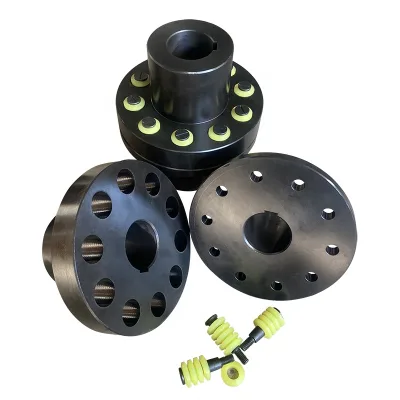
Flexible Pin Bush Couplings Nylon Pin Gear Coupling Elastic Sleeve Pin Coupling
$20.00 - $20000.00
MOQ: 1 Sets


Good Quality Elastic Pin Bushes Coupling with Rubber Sleeve and Bolt Kit
$20.00 - $20000.00
MOQ: 1 Sets


Comprehensive Sourcing Guide
Strategic Sourcing Guide for Elastic Pin Sleeve Couplings
The procurement of elastic pin sleeve couplings represents a critical decision point for industrial buyers seeking to optimize power transmission efficiency while managing operational costs. These components serve as the vital link between driving and driven shafts, designed to accommodate misalignment, dampen shock loads, and absorb vibration. Unlike rigid couplings, the elastic nature of the pin sleeve design allows for a degree of flexibility that protects downstream machinery from premature wear. When sourcing these components, buyers must navigate a complex landscape of material specifications, torque ratings, and customization capabilities. The following guide provides a disciplined approach to evaluating suppliers and selecting the right product based on verified technical attributes and market realities.
Technical Specifications and Material Composition
The foundation of a reliable Elastic Pin Sleeve Coupling lies in its precise technical specifications. Buyers must scrutinize the bore diameter, shaft hole dimensions, and torque ratings to ensure compatibility with their existing machinery. Based on observed market data, bore diameters for these units typically range from 9mm to 170mm, with specific models offering standardized sizes such as 14mm or 19mm. The shaft hole length also varies significantly, spanning from 14mm to 302mm depending on the required engagement depth and load distribution.
Material selection is equally paramount. The supply chain for these couplings features a mix of cast iron and cast steel, each offering distinct mechanical properties. Cast iron components are often selected for their damping characteristics and cost-effectiveness in lower-stress applications, while cast steel variants provide enhanced tensile strength for heavier industrial loads. Furthermore, alloy materials are frequently utilized to improve durability under extreme conditions. The structure of the coupling is generally classified as flexible, utilizing an elastic mechanism to absorb misalignment. This flexibility is often quantified by the allowed rotation speed, which can range from 800rpm to 8800rpm, with specific high-speed variants capable of reaching 9000r/M.
Torque capacity is another critical specification that dictates the suitability of a coupling for a specific application. The nominal torque ratings observed in the market span a vast range, from 6.3 N.M up to 16,000 N.M. For general industrial use, torque ratings often fall between 50-70 N.M or 70-80 N.M, depending on the specific model type such as the LX, LT, or LTZ series. Buyers must verify that the selected coupling's torque rating exceeds the maximum operating torque of their system, including a safety factor for peak loads.
Compliance, Standards, and Certification Verification
In the realm of industrial procurement, adherence to standards is non-negotiable. While many suppliers offer products that meet "Standard" classifications, a significant portion of the market also caters to "Nonstandard" or fully "Customized" requirements. It is essential for buyers to distinguish between products that adhere to established international norms and those designed to specific client specifications. The supply data indicates that some manufacturers produce to "as your requirement" standards, while others explicitly state compliance with specific customer packaging and standardization needs.
Buyers should not assume that all listed products carry universal certifications. Instead, the procurement strategy must involve a direct inquiry into the supplier's quality management systems and specific product certifications. The presence of OEM (Original Equipment Manufacturer) and ODM (Original Design Manufacturer) support suggests that the supplier is capable of adapting products to meet unique regulatory or performance standards. However, the absence of explicit certification data in general listings means that buyers must request documentation for specific batches or models. Verification should focus on whether the product meets the specific industry standards required for the application, such as those for automotive, marine, or food machinery sectors.
Cost Drivers and Pricing Dynamics
The pricing of elastic pin sleeve couplings is influenced by a complex interplay of factors, including material costs, manufacturing complexity, and order volume. The observed price range in the market is exceptionally broad, extending from $0.10 to $20,000 USD. This variance reflects the difference between small, standard off-the-shelf units and large, custom-engineered assemblies designed for heavy industrial use.
Material composition is a primary cost driver. Couplings made from cast steel or specialized alloys typically command a higher price point than those made from standard cast iron. Additionally, the level of customization significantly impacts cost. Products requiring specific bore diameters, unique torque ratings, or custom surface treatments like polishing will incur higher manufacturing expenses. The packaging method also plays a role; while some units are shipped in simple cardboard boxes, others require robust wooden cases or plywood cases with bubble wrap to prevent damage during transit, adding to the overall unit cost.
Order volume is another critical determinant of price. The Minimum Order Quantity (MOQ) observed ranges from 1 PC to 100 units. Buyers purchasing single units or small batches may face higher per-unit costs due to the setup and handling overhead. Conversely, larger orders often benefit from economies of scale, though the specific discount structure depends on the supplier's internal policies. Lead times also influence pricing; products with a delivery time of 20-45 days may be priced differently than those with immediate availability, as expedited production often carries a premium.
Typical Applications and Operational Environments
Elastic pin sleeve couplings are versatile components utilized across a diverse array of industries. Their ability to handle misalignment and dampen vibrations makes them suitable for applications ranging from light machinery to heavy industrial equipment. The observed application spectrum includes automotive systems, agricultural machinery, mining equipment, and marine vessels. In the food processing sector, these couplings are employed in food machinery where hygiene and corrosion resistance are paramount. Similarly, they are integral to the operation of electric cars, packaging machinery, conveyor systems, garment manufacturing equipment, and textile machinery.
The specific environment in which the coupling operates dictates the required material and surface treatment. For instance, couplings used in mining or marine environments may require enhanced surface treatments like polishing to resist corrosion and wear. In contrast, applications in agricultural machinery might prioritize robustness and torque capacity over aesthetic finishes. The allowed rotation speed is a limiting factor in high-speed applications; while some models support speeds up to 9000r/M, others are rated for lower speeds around 800rpm. Buyers must match the coupling's speed rating to the operational speed of their drive system to prevent catastrophic failure.
Supplier Evaluation and Sourcing Strategy
Evaluating potential suppliers requires a rigorous assessment of their capabilities beyond simple product listings. A key indicator of a reliable supplier is their willingness to support OEM and ODM requests, as well as their ability to provide customized packaging solutions. The data indicates that many suppliers offer "Elastic Coupling Customized Support" in the form of OEM, ODM, and Obm services, suggesting a high level of flexibility. However, buyers should verify the extent of these capabilities through direct communication.
Geographic origin is another factor to consider. The majority of the observed supply originates from Jingjiang, Jiangsu Province, China, a region known for its manufacturing base. While this concentration of suppliers can offer competitive pricing, it also necessitates careful vetting to ensure quality consistency. Buyers should assess the supplier's delivery terms, which often include shipment by sea, and understand the implications for lead time and logistics. The delivery time is frequently noted as "Depend on Your Quantity," indicating that lead times are variable and should be confirmed for each specific order.
Quality Control and Long-Term Procurement Considerations
Quality control is the linchpin of successful procurement for mechanical components. Buyers must implement a robust quality assurance protocol that includes pre-shipment inspections and post-delivery testing. The warranty period is a critical metric; observed data suggests a standard warranty of 1 Year for elastic couplings. This warranty should be clearly defined in the purchase agreement, covering defects in material and workmanship.
Long-term procurement considerations extend beyond the initial purchase price. Buyers should evaluate the supplier's ability to provide consistent quality over time, their responsiveness to technical inquiries, and their capacity to scale production as demand increases. The availability of spare parts and the ease of replacement are also vital for minimizing downtime. Furthermore, the customization options available, such as color requirements and specific packaging needs, can impact the long-term usability and integration of the coupling into the buyer's supply chain.
To ensure sustained performance, buyers should establish a clear specification sheet that includes all critical parameters: bore diameter, shaft hole length, torque rating, material type, and surface treatment. Regular audits of the supplier's production processes and quality control measures can help mitigate risks associated with supply chain disruptions. By maintaining a disciplined approach to sourcing and quality verification, buyers can secure a reliable supply of elastic pin sleeve couplings that meet their operational demands.
Comparative Analysis of Product Models
To assist buyers in making informed decisions, the following table compares key attributes of common Elastic Pin Sleeve Coupling models observed in the market. This comparison highlights the variations in specifications, materials, and standards that influence procurement choices.
| Feature | LX Type | LTZ / LTZ5/LTZ6 | HL Type | LT Type | Pin Coupling |
|---|---|---|---|---|---|
| Structure | Flexible | Flexible | Roller Chain | Flexible | Pin Coupling |
| Material | Cast Iron / Cast Steel | Cast Steel | Alloy | Cast Steel | Varies |
| Bore Diameter | 14mm | 19mm | 9mm - 170mm | 14mm | Varies |
| Torque Range | 50-70 N.M | 70-80 N.M | 6.3-16000 N.M | 6.3-16000 N.M | Varies |
| Max Speed | 9000 r/M | 9000 r/M | 800-8800 rpm | Varies | Varies |
| Standard | Standard | Customized | Nonstandard | Standard | Standard/Nonstandard |
| Packing | Wooden Box | Carton/Wooden Case | Depend on Qty | Wooden Case | Wooden Case |
| Origin | Jingjiang, Jiangsu | China | China | China | China |
This comparative overview underscores the importance of matching specific model attributes to application requirements. The LX and LTZ models, for instance, offer specific torque and speed ratings that may be ideal for high-precision applications, while the HL and LT models provide a broader range of torque capacities suitable for heavy-duty industrial use. Buyers should use this data as a starting point for further technical discussions with suppliers to ensure the selected model aligns perfectly with their operational needs.
FAQs
What materials are used for elastic pin sleeve couplings?
These couplings are typically manufactured from cast iron, cast steel, or alloy materials. Cast iron offers cost-effectiveness, while cast steel and alloys provide enhanced strength for heavy industrial loads.
Which torque ratings are available for these couplings?
Nominal torque ratings range widely from 6.3 N.M up to 16,000 N.M. Specific models often feature ratings between 50-70 N.M or 70-80 N.M depending on the type.
Can I request custom packaging for these products?
Yes, customers can request custom packaging requirements. Options include wooden boxes, plywood cases with bubble wrap, or carton boxes depending on the specific order needs.
What is the minimum order quantity for purchase?
The minimum order quantity can be as low as 1 PC for some suppliers. Other listings may require orders up to 100 units depending on the specific vendor policy.
How long does delivery take for these couplings?
Delivery times vary based on quantity, typically ranging from 20 to 45 days. Some suppliers state that delivery time depends entirely on the specific quantity ordered.
Which shaft hole diameters are supported by these models?
Shaft hole diameters range from 9mm to 170mm. Specific models may offer standard sizes like 14mm or 19mm to match various machinery requirements.
What is the maximum rotation speed for these couplings?
Allowed rotation speeds range from 800rpm to 8800rpm. High-speed variants can reach up to 9000r/M depending on the specific model structure.
Do these couplings come with a warranty period?
Yes, elastic couplings typically come with a 1-year warranty. This warranty covers defects in material and workmanship as per standard industry practices.