Source Electric Horizontal Oil Flushing Unit for Transformers
Find and compare 30 electric horizontal oil flushing units for transformer, turbine, and lubricant oil treatment. These machines offer vacuum dehydration, degassing, and centrifugal separation to ensure high-purity dielectric and insulation oil performance; compare the available evidence and request quotations based on your requirements.
Key considerations
Products List

Thermostatic Heating Flushing Unit with Insulation Oil Purifier Plant Cost-Effective System
$13000.00 - $80000.00
MOQ: 1 Pieces

Newly Upgraded Centrifugal Oil Purification Unit for Dirty Oil Filtration Treatment
$27000.00 - $150000.00
MOQ: 1 Pieces

Rexon Centrifugal Oil Separator, Sludge Removal Unit for Lubricating Oil Purification
$5000.00 - $50000.00
MOQ: 1 Pieces

High Efficient Centrifugal Oil Purifier, Oil Water Separator, Particles Removal Unit
$27000.00 - $150000.00
MOQ: 1 Pieces

Rcf Centrifugal Oil Purifier Equipment, Waste Lubricating Oil Cleaning, High-Speed Dewatering Unit
$27000.00 - $150000.00
MOQ: 1 Pieces


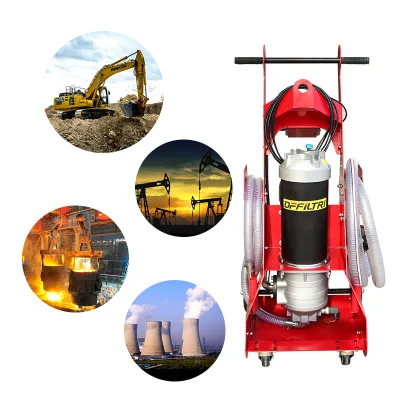
Portable Oil Purifier and Transfer Unit for Hydraulic Oil/Anti-wear Oil
$1200.00 - $1400.00
MOQ: 1 pieces


Rsu Rapid Service Rig Flushby Unit Rapid Service Unit for Oilfield
$300000.00 - $20000000.00
MOQ: 1 Pieces

Hydraulic Oil Gear Oil Cleaning System Lubricating Oil Purifier Unit
$5500.00 - $20000.00
MOQ: 1 Pieces


High Torque Hydraulic Bucking Unit API Standard Oilfield Pipe Bucking Unit
$9999.00 - $40000.00
MOQ: 1 Set


Bucking Unit with Wireless Remote Control, 12, 000 FT-Lb, for Safe Operation
$10000.00 - $25000.00
MOQ: 1 Set


Non-Standard OEM Electric Hydraulic Power Unit for Water Extraction Pump
$5980.00 - $6180.00
MOQ: 1 Sets


Energy Saving High Dirt-Holding Capacity Hydraulic Oil Purification Unit for Factory Maintenance
$18000.00 - $39500.00
MOQ: 1 Pieces
Comprehensive Sourcing Guide
Electric Horizontal Oil Flushing Unit Sourcing Guide
Procuring an Electric Horizontal Oil Flushing Unit requires distinguishing between vacuum dehydration systems and centrifugal separation units, as both serve critical roles in industrial oil maintenance. The observed market data indicates a wide spectrum of capabilities, ranging from units designed for transformer oil treatment with specific vacuum ranges to centrifuges focused on solid-liquid separation. Buyers must carefully align their specific fluid requirements, such as lubricant or turbine oil, with the correct machine architecture to ensure operational efficiency.
The horizontal configuration is a distinct structural choice that influences installation footprint and maintenance accessibility. While some listings highlight fixed structures and continuous operating types, others emphasize automatic self-cleaning features and touch screen operations. Understanding these mechanical differences is essential before engaging with suppliers, as the choice between a vacuum-based dehydration process and a disc centrifuge separation method will dictate the final purity levels achievable for your specific oil inventory.
Product Scope and Observed Listing Signals
The current market listings reveal a diverse range of models, including the ZYD-100 and various RCF series units, each tailored for different throughput needs. Observed specifications show flow rates reaching 100 liters per minute for certain vacuum units, while centrifuge models advertise capacities up to 8000 liters per hour. These variations in model numbers and performance metrics suggest that buyers must verify the exact processing capacity required for their facility's volume to avoid under-specifying or over-investing in equipment.
Listing signals also indicate significant variation in the functional scope of available units, with some machines offering multi-stage oil filtering and others focusing on powerful constant heating. The presence of applications for cooking oil alongside industrial transformer oil suggests a broad utility, yet the specific filtration mechanisms differ substantially between vacuum dehydration and centrifugal separation. Buyers should scrutinize the listed functions to ensure the unit can handle the specific impurities and moisture levels present in their current oil stock.
Technical Specifications to Verify
Critical technical parameters include the working vacuum range, which is observed between -0.06 and -0.099 MPa for dehydration units, and the best heating temperature of 55 to 65 degrees Celsius. These specific ranges are vital for ensuring the oil is treated without degradation, and buyers must confirm that the supplier's unit maintains these exact thresholds during operation. Verifying the voltage rating, typically 380V, is also necessary to ensure compatibility with existing industrial power infrastructure before finalizing any purchase agreement.
Post-process performance metrics provide a clear benchmark for evaluating the effectiveness of the oil flushing unit. The data indicates that effective units should achieve impurity sizes below 1 micron, gas content under 0.1%, and moisture content below 3 parts per million. Buyers should request test results or performance guarantees that align with these specific numerical targets, as these figures directly correlate with the longevity and reliability of the machinery being treated.
Compliance and Safety Documentation
Safety and regulatory compliance are paramount when sourcing industrial oil treatment equipment, with TüV and CE certifications appearing frequently in the product listings. These certifications indicate that the electrical and mechanical components meet specific international safety standards, which is crucial for protecting personnel and ensuring the machine operates within legal frameworks. Buyers must verify that the specific model they intend to purchase carries these valid certifications and that the documentation is current and applicable to their region.
In addition to electrical safety, the material composition of the machine requires careful review to ensure durability and chemical resistance. The observed listings mention carbon steel and stainless steel as primary materials, which are standard for handling various oil types without corrosion. Procurement teams should confirm the exact material grades used in the construction of the unit, particularly for components in direct contact with the oil, to prevent contamination and ensure the equipment withstands the harsh conditions of continuous industrial operation.
Cost Drivers and Commercial Terms
The pricing landscape for these units is highly variable, with observed ranges extending from approximately 83.59 USD to significantly higher figures, reflecting differences in capacity, automation, and material quality. The minimum order quantity (MOQ) is flexible, ranging from 1 to 100 units, which allows for both single-unit procurement and bulk purchasing strategies. Buyers should analyze the total cost of ownership, considering that higher-priced units often offer advanced features like automatic self-cleaning and real-time monitoring that reduce long-term labor costs.
Commercial terms regarding delivery and packaging are equally critical for supply chain planning. The standard delivery time is observed to be 3 to 4 weeks, and units are typically packed in export-standard wooden cases or plywood cases to ensure safe transit. Buyers must confirm these lead times and packaging specifications in their contracts, as delays or inadequate packaging can result in damage or operational downtime, especially when importing from China where the majority of these units originate.
Supplier Qualification and Quality Control
Supplier qualification should focus on the manufacturer's ability to provide customization and their track record with specific oil types. The availability of customization options suggests that suppliers can adapt units to unique operational needs, but buyers must verify the extent of these modifications and the associated costs. It is essential to assess whether the supplier has experience with the specific application, such as transformer oil or lubricant oil, to ensure they understand the nuances of the treatment process.
Quality control processes must be rigorous, particularly given the critical nature of oil purification in industrial settings. Buyers should inquire about the supplier's internal testing protocols and whether they provide pre-shipment inspections that verify the unit's performance against the stated specifications. The condition of the equipment, typically listed as new, should be confirmed through detailed inspection reports that cover the centrifuge type, pressure ratings, and the integrity of the automatic control systems before the unit leaves the factory.
Long-Term Procurement Checks
Long-term procurement success depends on establishing a clear maintenance and support framework for the Electric Horizontal Oil Flushing Unit. Buyers should verify the availability of spare parts, particularly for high-wear components like filters and heating elements, to minimize downtime during extended operations. The continuous type of operation implies that the machine will run frequently, making the reliability of the supplier's after-sales service and parts supply chain a decisive factor in the overall value of the investment.
Future-proofing the procurement strategy involves monitoring the evolution of oil treatment standards and the adaptability of the purchased unit. As industrial regulations tighten and oil quality requirements become more stringent, the ability to upgrade the unit's software or hardware becomes increasingly valuable. Buyers should negotiate terms that allow for future upgrades or modifications, ensuring that the initial investment remains relevant and effective as operational demands and industry standards evolve over time.
FAQs
What is the working vacuum range for the ZYD-100 transformer oil treatment unit?
The ZYD-100 unit operates within a working vacuum range of -0.06 to -0.099 MPa. This specific range ensures effective vacuum oil dehydration and degassing for transformer and dielectric oils. The system maintains stable performance during continuous operation, allowing for efficient moisture removal from insulation oil without compromising the dielectric properties of the treated fluid.
Can the Electric Horizontal Oil Flushing Unit handle lubricant and turbine oil applications?
Yes, the equipment supports multiple applications including lubricant oil, turbine oil, and cooking oil treatment. It features automatic self-cleaning and touch screen operation for versatile use. The unit provides efficient filtration and solid-liquid separation, making it suitable for various industrial oil purification needs beyond just transformer oil maintenance and processing tasks.
What are the moisture and gas content results after processing with the RCF-8T centrifuge?
After processing with the RCF-8T centrifuge, moisture content drops below 3 Ppm and gas content falls below 0.1%. The impurity size is reduced to below 1 micron. These results demonstrate the unit's capability for high-efficiency oil purification, ensuring that used oil meets strict quality standards for reuse in critical industrial machinery applications.
Which certifications are available for the Electric Horizontal Oil Flushing Unit models?
The available certifications include TüV, CE, and ISO. These credentials verify compliance with international safety and quality standards for industrial machinery. Buyers can rely on these documented certifications when sourcing equipment for regulated industries, ensuring that the oil purification units meet necessary operational and safety requirements for global deployment and installation.
How long is the delivery time for the ZYD-100 and RCF series units?
The standard delivery time is 3 to 4 weeks for these units. This lead time applies to the ZYD-100 and RCF series models, which are packed in export standard wooden or plywood cases. Buyers should account for this timeframe when planning procurement schedules, as it reflects the manufacturing and preparation period for new condition equipment.
What is the voltage requirement for the automatic controlled oil purification machines?
The machines require a 380V voltage supply for operation. This electrical specification supports the automatic controlled working mode and powerful heating functions up to 55-65 degrees Celsius. The consistent power input ensures stable performance for vacuum dehydration, degassing, and centrifugal separation processes across different model variants in the product lineup.