Source Electric Ice Crusher for Household, Commercial, Industrial
Explore 30 verified listings for the Electric Ice Crusher, featuring integral structures and stainless steel materials. Buyers can compare crushing capacities ranging from 5 to 100 tons daily, voltage options, and packing standards across diverse applications.
Key considerations
Products List


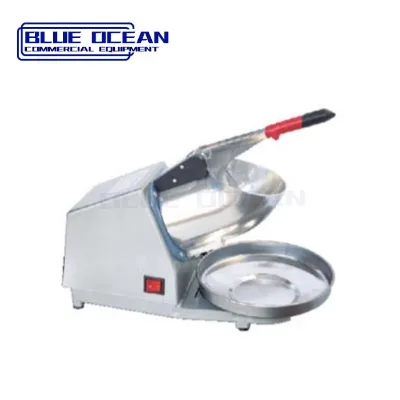


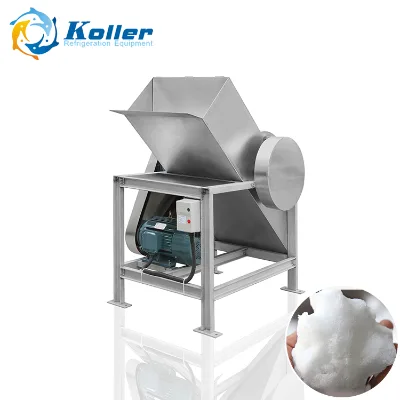

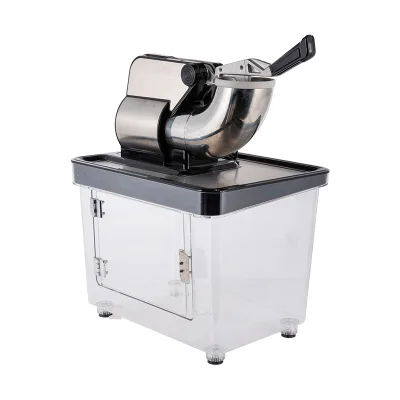


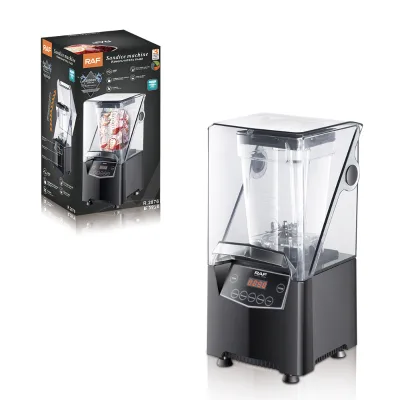
Comprehensive Sourcing Guide
Strategic Sourcing Guide for Electric Ice Crushers
Understanding Core Technical Specifications and Variability
When sourcing electric ice crushers, buyers must first navigate a landscape defined by significant variability in technical specifications. The market does not offer a monolithic product; rather, it presents a spectrum of machines tailored to different throughput requirements and physical constraints. A critical observation from current market data is the wide range of production capacities, with specific models demonstrating output capabilities ranging from 108kg per hour to as high as 100 tons of ice in a 24-hour period. This disparity necessitates a precise definition of operational needs before engaging with suppliers.
The physical dimensions of these units are equally diverse, directly impacting facility planning and logistics. Observed specifications include compact models with dimensions around 350mm by 290mm by 430mm, suitable for smaller commercial kitchens, up to substantial industrial units measuring 1125mm by 1092mm by 908mm. Some heavy-duty variants extend to 1025mm by 1195mm by 768mm, while others reach 900mm by 1070mm by 1310mm. Buyers must verify that the "Machine Size" and "Meansurement" (Measurement) provided by a supplier align with their available floor space and ceiling height, as these are not standardized across all electric ice crushers.
Furthermore, the structural integrity and design philosophy vary. Most units in the current supply pool are classified as "Integral Type" or "Integral Unit Structure," suggesting a self-contained design that simplifies installation compared to modular systems. The feeding mechanism is another key technical differentiator; specific models feature a feeder size of 250mm by 500mm, which dictates the maximum size of ice blocks that can be processed without pre-cutting. The hopper drum is often a customizable element, with suppliers offering designs tailored to specific customer needs rather than a one-size-fits-all approach.
Electrical requirements also demand careful scrutiny. While many units operate on standard industrial voltages such as 380V at 50Hz with a 3-phase configuration, the market also supports 220V 50Hz options and 220V 60Hz configurations. Some advanced units offer non-standard power supply flexibility, accommodating 380V 60Hz or other custom voltage frequencies. The power input for high-capacity models can reach 4kw, while smaller units may operate with significantly lower consumption. Speed is another critical parameter, with observed operational speeds reaching 1400rpm, which influences the fineness of the crushed ice and the wear rate of internal components.
Compliance, Certification, and Safety Standards
In the realm of B2B procurement, compliance is not merely a formality but a fundamental risk management strategy. For electric ice crushers, the electrical and mechanical safety of the equipment is paramount, particularly given the high-speed rotating components and the handling of large volumes of ice. Buyers should prioritize suppliers who can provide documentation for recognized international certifications. The current market data indicates that reputable manufacturers often secure a suite of certifications including CE, RoHS, ISO, UL, CSA, and CCC.
The presence of the CE mark suggests conformity with health, safety, and environmental protection standards for products sold within the European Economic Area. RoHS compliance indicates that the device is manufactured without specific hazardous materials, which is increasingly important for environmental sustainability and waste disposal regulations. ISO certification typically reflects adherence to quality management systems, ensuring that the manufacturing process is consistent and controlled. UL and CSA certifications are particularly relevant for North American markets, verifying that the electrical components meet rigorous safety standards for fire and shock hazards. The CCC mark is essential for products entering the Chinese market, indicating compliance with Chinese national standards.
However, buyers must exercise caution. The presence of a certification claim in a product listing does not automatically guarantee that every unit in a specific order batch is certified. Verification should be a proactive step in the supplier evaluation process. Procurement teams should request valid, up-to-date certification certificates for the specific model being purchased. It is also vital to understand that while some products are listed with "Automation" features, the level of automation can vary. Some units may be fully automatic, while others might require manual intervention for feeding or cleaning. The distinction between "Automatic Cleaning Device" availability and "Without Automatic Cleaning Device" is a crucial compliance and operational detail. Many industrial-grade crushers are supplied without automatic cleaning mechanisms, requiring manual maintenance protocols that must be factored into the operational workflow.
Cost Drivers and Pricing Dynamics
The pricing structure for electric ice crushers is highly dynamic, driven by a complex interplay of capacity, material quality, and customization. The observed market price range is exceptionally broad, spanning from approximately $2.80 to $4,800. This vast disparity underscores the importance of aligning budget with specific functional requirements. A unit priced at the lower end of this spectrum is likely a compact, low-capacity model intended for light commercial use, whereas a unit approaching the upper limit represents a heavy-duty industrial machine capable of processing 100 tons of ice in 24 hours.
Material composition is a primary cost driver. High-end models are constructed from stainless steel, a material choice that offers superior corrosion resistance, hygiene, and longevity, particularly in wet and cold environments. The use of stainless steel increases the initial capital expenditure but reduces long-term maintenance costs and extends the service life of the machine. Conversely, lower-cost alternatives may utilize mixed materials or lower-grade metals, which could compromise durability and food safety standards.
Customization is another significant factor influencing price. Products listed with "Customization: Available" allow buyers to tailor specific attributes, such as hopper drum design, power supply configuration, or overall dimensions. These bespoke solutions invariably command a premium over standard off-the-shelf models. Additionally, the packaging method affects the final landed cost. Most industrial units are shipped in wooden cases, a robust packaging solution that protects the machinery during international transit but adds to the shipping weight and volume.
Minimum Order Quantity (MOQ) also plays a role in the effective cost per unit. The observed MOQ range spans from 1 to 3,000 units. Buyers purchasing a single unit for a pilot project or a small business may face a higher per-unit cost compared to large-scale distributors or industrial chains placing bulk orders. Understanding the MOQ thresholds is essential for negotiating favorable terms and managing inventory risk.
Typical Applications and Operational Context
Electric ice crushers serve a diverse array of sectors, each with unique operational demands. The market data identifies three primary application categories: Household, Commercial, and Industrial. This classification is not merely semantic but dictates the required performance characteristics of the machine.
In the Household sector, the focus is on compactness, ease of use, and lower noise levels. These units typically feature smaller capacities, such as the 108kg/hr models, and operate on standard residential voltages like 220V. They are designed for home bars, small parties, or residential ice cream production, where the volume of ice required is intermittent and relatively low.
The Commercial sector encompasses restaurants, hotels, bars, and ice cream shops. Here, the demand is for reliability and consistent output during peak hours. Machines in this category often bridge the gap between household and industrial specs, offering capacities that can handle steady service flows. The 20-30 tons per 24-hour models fit well within this segment, providing sufficient throughput for medium-to-large establishments without the footprint of a full industrial plant.
The Industrial application represents the high-end of the market, including large-scale beverage manufacturers, food processing plants, and ice distribution centers. These facilities require machines capable of processing massive volumes, such as the 50-ton or 100-ton per 24-hour models. The operational context here is continuous, high-intensity usage. Consequently, these machines are built with "Durable" components rated for more than 10 years of service. The structural design, often integral and robust, is engineered to withstand the rigors of 24/7 operation. The feeder size and power requirements for these industrial units are significantly higher, reflecting the need to process large blocks of ice efficiently.
Supplier Evaluation and Verification Protocols
Selecting the right supplier is as critical as selecting the right machine. Given the global nature of the ice crusher market, with origins primarily traced to China, buyers must implement rigorous verification protocols. The first step is to validate the supplier's ability to meet the specific technical requirements outlined in the product specifications. Buyers should request detailed technical datasheets that confirm the exact dimensions, power supply compatibility, and capacity ratings.
Verification of the "prod_origin" is essential for logistics and tariff planning. Most units in the current dataset originate from China, which influences shipping lead times and import duties. Buyers should confirm the specific port of loading and the estimated lead time, as these can vary based on production volume and customization requirements.
Quality assurance is another pillar of supplier evaluation. Buyers should inquire about the "Condition" of the equipment, ensuring that new units are supplied as specified. The "prod_packing" method, typically a wooden case for export, should be confirmed to ensure it meets international shipping standards. Furthermore, the "Automation" level should be clearly defined. If a buyer requires a fully automated system, they must verify that the specific model includes the necessary sensors and control systems, as some units are listed as "Without Automatic Cleaning Device" or have limited automation features.
It is also prudent to assess the supplier's track record regarding the "Durable" claims. While many products are advertised with a lifespan of "More Than 10 Years" or "More 10 Years," buyers should seek references or case studies from existing clients to validate these longevity claims. The ability to provide a warranty and after-sales support is a strong indicator of a supplier's confidence in their product's quality.
Quality Control and Long-Term Procurement Considerations
Implementing a robust quality control (QC) strategy is vital for mitigating risks associated with the procurement of heavy machinery. Given the variability in specifications and the potential for customization, a pre-shipment inspection is highly recommended. This inspection should verify that the delivered unit matches the agreed-upon specifications, including dimensions, power ratings, and material composition. For stainless steel units, buyers should verify the grade of the steel used, as this directly impacts corrosion resistance and hygiene.
Long-term procurement considerations extend beyond the initial purchase price. The "Meansurement" and "Machine Size" must be evaluated in the context of future expansion. A machine that fits current needs might become a bottleneck if the business scales up. Therefore, buyers should consider the scalability of the equipment and the availability of spare parts. The "Feeder Size" and "Hopper Drum" design should be assessed for their ability to handle different ice block sizes, ensuring the machine remains versatile as operational needs change.
Maintenance is a critical long-term factor. Units "Without Automatic Cleaning Device" require a dedicated maintenance schedule to prevent ice buildup and ensure hygiene. Buyers should factor in the labor costs and downtime associated with manual cleaning when calculating the total cost of ownership. Additionally, the "Supply Power" flexibility should be considered. Units that support multiple voltage configurations (e.g., 380V/50Hz, 220V/60Hz) offer greater flexibility for future relocation or expansion into different markets.
Finally, the "prod_standard" and "prod_model" codes should be used as unique identifiers for tracking and ordering. Ensuring that the documentation clearly links the physical unit to its model number (e.g., Vib100, VIB50, SY-ICR108TA) simplifies the procurement of spare parts and technical support in the future. By adopting a holistic approach that balances immediate technical needs with long-term operational sustainability, buyers can secure electric ice crushers that deliver reliable performance and value over their entire lifecycle.
FAQs
What is the maximum ice crushing capacity available?
The maximum observed capacity is 100 tons of ice in 24 hours. Some models offer lower capacities like 50 tons or 20 to 30 tons, allowing selection based on specific operational volume needs.
Which certifications are available for these machines?
Available certifications include CSA, RoHS, ISO, UL, CE, and CCC. Buyers should verify specific model documentation to ensure compliance with regional safety and environmental standards before purchase.
Can the hopper drum be customized for my needs?
Yes, customization is available for the hopper drum design. Suppliers offer designs tailored to specific customer needs rather than a standard one-size-fits-all approach for this component.
What power supply options are supported by the units?
Units support various power supplies including 380V 50Hz 3p, 220V 50Hz, and 220V 60Hz 3p. Some advanced models also accommodate 380V 60Hz or non-standard configurations for flexibility.
How long is the expected service life of the machine?
The machines are designed to be durable with a service life of more than 10 years. This longevity is a key feature for industrial applications requiring continuous, high-intensity usage.
What is the typical packaging method for export?
Products are typically packed in wooden cases for export. This robust packaging method ensures the machinery is protected during international transit and meets standard shipping requirements.
Which applications are these electric ice crushers suitable for?
These crushers are suitable for household, commercial, and industrial applications. The specific model selected depends on the required throughput, ranging from small kitchen units to large industrial plants.