Find Electric Hydraulic Transfer Chair for Hospitals, Clinics, and Home Care
Source 30 electric hydraulic transfer chairs from verified Chinese manufacturers. Buyers can compare specifications like load bearing, lifting range, and waterproof ratings to select the ideal unit for patient mobility and recovery needs.
Key considerations
Products List


Electric Wheelchair Transfer Chair for Seniors with Hydraulic Function
$150.00 - $168.00
MOQ: 10 Boxes


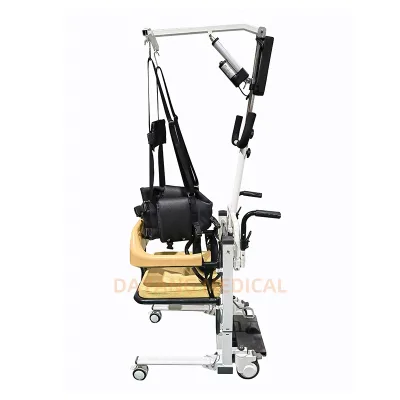


Adjustable Hydraulic Transfer Chair for Comfortable and Secure Repositioning
$148.00 - $157.00
MOQ: 10 Pieces


Multi-Position Hydraulic Transfer Chair for Elderly and Disabled Care
$156.00 - $165.00
MOQ: 10 Pieces

Hydraulic Assisted Transfer Chair with Padded Seat and Backrest for Safety
$148.00 - $157.00
MOQ: 10 Pieces

Hydraulic Transfer Chair with Reinforced Steel Tube for High Capacity
$156.00 - $165.00
MOQ: 10 Pieces


Comprehensive Sourcing Guide
Strategic Sourcing Guide for Electric Hydraulic Transfer Chairs
Understanding the Core Product Architecture and Technical Specifications
The Electric Hydraulic Transfer Chair represents a specialized category of medical mobility equipment designed to assist caregivers in safely moving patients with limited mobility. Unlike standard wheelchairs, these units integrate a hydraulic lifting mechanism that elevates the seat to a height compatible with beds, toilets, or transfer boards, thereby reducing the physical strain on caregivers and minimizing the risk of patient injury during transfers. The fundamental architecture of these devices typically relies on a robust steel frame, which provides the necessary structural integrity to support dynamic loads during the lifting and transfer processes.
When evaluating the technical specifications of these chairs, buyers must focus on the load-bearing capacity and the specific mechanics of the lifting system. The observed market data indicates that many units are engineered to support a maximum load of 135kg (approximately 300lbs), while some heavy-duty variants may support up to 150kg. This capacity is critical for ensuring the safety of patients with higher body weights. The lifting range is another pivotal specification; functional models often demonstrate a seat lifting range of approximately 35cm, allowing the seat to adjust from a lower position of 40cm to a higher position of 75cm. This range is essential for aligning the seat height with various furniture and medical surfaces.
The power supply system for these electric chairs typically utilizes rechargeable batteries, with specific configurations such as 25.2V/2.5Ah units observed in the market. The motor power, often cited in terms of force generation (e.g., 6000N), drives the hydraulic pump or linear actuator to execute the lifting stroke. The motor stroke length, which can be around 13cm, determines the vertical displacement per cycle. It is important to distinguish between models that offer a "hydraulic transfer" function and those that provide "electric lift" capabilities, as the control logic and actuation speed may vary. Furthermore, the physical dimensions of the folded and unfolded states are crucial for logistics. Standard dimensions for unfolded units may range around 98cm in length and 54.5cm in width, while folded configurations can reduce the footprint significantly, sometimes to dimensions like 95cm by 65cm by 29cm, facilitating storage and transport.
Compliance, Certification, and Regulatory Standards
Navigating the regulatory landscape is a non-negotiable aspect of sourcing medical equipment. Buyers must verify that suppliers possess valid certifications that align with the destination market's requirements. The observed product data frequently references CE, RoHS, and ISO certifications. The CE mark indicates conformity with health, safety, and environmental protection standards for products sold within the European Economic Area. RoHS compliance ensures that the device is manufactured without specific hazardous materials, which is a standard requirement for electronic components. ISO certification generally implies that the manufacturer adheres to international quality management standards, though the specific ISO standard number should be confirmed on a case-by-case basis.
In addition to general certifications, the instrument classification is a vital regulatory marker. Many electric hydraulic transfer chairs are classified as Class I medical devices. This classification suggests that the device is considered low-risk and is subject to general controls, but it still requires adherence to specific safety standards regarding electrical isolation and mechanical stability. Buyers should request the specific test reports that validate these classifications, particularly for the electrical safety and electromagnetic compatibility (EMC) of the battery and motor systems.
Waterproofing is another compliance-related attribute that affects the usability and durability of the chair in clinical environments. Specifications such as "Level IP54" or a general "Yes" for waterproofing indicate the device's resistance to dust and water splashes. An IP54 rating means the chair is protected against limited dust ingress and water jets from any direction, which is suitable for environments where cleaning with damp cloths or exposure to minor spills is expected. However, buyers must verify if the specific model meets the IP rating required for their intended use case, as some high-moisture environments may require higher ratings.
Cost Drivers and Pricing Structure Analysis
The pricing of electric hydraulic transfer chairs is influenced by a complex interplay of factors, including material costs, technological complexity, and supply chain logistics. The observed price range in the market spans from 0.01 to 1000 USD, which indicates a significant variance based on the specific configuration, brand positioning, and order volume. It is critical for buyers to understand that the lower end of this spectrum often corresponds to basic models or sample prices, while the upper end reflects fully featured units with advanced safety mechanisms, higher load capacities, or premium branding.
Material composition is a primary cost driver. The use of steel frames, while essential for strength, adds weight and material cost compared to aluminum alternatives. The complexity of the hydraulic or electric lifting mechanism also dictates the price; models with precise speed control, smooth lifting profiles, and integrated safety sensors command a higher price point. Additionally, the battery capacity and the quality of the motor contribute significantly to the overall cost. A 25.2V battery system is standard, but the longevity and cycle life of the battery cells can vary, affecting the long-term value proposition.
Order volume plays a substantial role in the final unit cost. The minimum order quantity (MOQ) typically ranges from 1 to 100 units. Buyers purchasing in bulk can often negotiate more favorable pricing tiers, whereas single-unit purchases may incur a premium. Packaging requirements, such as "Carton with Styrofoam" or "Carton with Polystyrene," also add to the cost, particularly for international shipping where protection against damage is paramount. Buyers should request detailed cost breakdowns that separate the hardware, battery, packaging, and logistics costs to ensure transparency in the pricing structure.
Typical Applications and Usage Scenarios
Electric hydraulic transfer chairs are designed for a diverse range of applications, primarily serving patients, seniors, individuals with disabilities, and those in recovery or pregnancy. The versatility of these devices allows them to be used in various settings, including indoor environments like hospitals, nursing homes, and private residences, as well as outdoor settings where the terrain is relatively flat. The "Height Adjustable" feature is particularly valuable in scenarios where the transfer height needs to match different bed heights or toilet seats, ensuring a seamless transition for the patient.
The specific functionality of the chair, such as "Hydraulic Transfer" or "Electric Lift," dictates its suitability for different care scenarios. For caregivers who need to transfer patients from a bed to a wheelchair, a chair with a high lifting range and a stable base is essential. The "Both Sides Separate" leg rest type offers additional flexibility, allowing for easier access to the patient during transfers or medical examinations. The "Non-Tilted" and "Non-Folding" or "One-Piece Folded" configurations also influence the application; a non-folding model might be preferred for permanent installation in a care facility, while a foldable model is ideal for home use where storage space is limited.
The "Suitable" attribute listing patients, seniors, disabilities, recovery, and pregnancy highlights the broad demographic reach of these devices. In a hospital setting, these chairs can be used for patient transport between departments, reducing the need for manual lifting. In a home care environment, they empower caregivers to assist patients with daily activities such as using the toilet or bathing, thereby maintaining the patient's dignity and independence. The "Using Ambient" specification of "Indoor,Outdoor" suggests that these chairs are built to withstand varying environmental conditions, though buyers should verify the specific weather resistance ratings for outdoor use.
Supplier Evaluation and Sourcing Strategy
When evaluating potential suppliers for electric hydraulic transfer chairs, buyers must adopt a rigorous due diligence process. The origin of the product is a key indicator of supply chain reliability. The observed data points to manufacturers located in China, specifically in regions like Fujian, Guangdong, and general Chinese origins. While these regions are known for their manufacturing capabilities, buyers should verify the specific factory audits and production capabilities of the supplier. The "Brand Name" such as "Dayang medical" may indicate an established manufacturer, but buyers should not rely solely on brand recognition without verifying the specific product lineage and quality control processes.
Supplier evaluation should also include an assessment of their customization capabilities. The "Customization" and "Customized" attributes suggest that many suppliers offer tailored solutions, such as specific color options (e.g., White), modified dimensions, or specialized features. Buyers should inquire about the lead times for customized orders and the minimum order quantities required for such modifications. Additionally, the "Warranty" terms, often cited as "One Year," are a critical factor in supplier selection. Buyers must clarify the scope of the warranty, including coverage for the battery, motor, and hydraulic system, and understand the process for claims and repairs.
Logistics and packaging are also vital considerations. The "prod_packing" details, such as "Carton with Styrofoam" or "Carton with Polystyrene," indicate the level of protection provided during transit. Buyers should verify the single package size and weight to calculate shipping costs accurately. The "Loading Weight" and "Loading capacity" specifications, which may range from 100kg to 150kg, are essential for determining the number of units that can be shipped per container, impacting the overall freight cost.
Quality Control and Long-Term Procurement Considerations
Ensuring the quality of electric hydraulic transfer chairs requires a multi-faceted approach to quality control. Buyers should request detailed test reports that validate the structural integrity of the steel frame, the performance of the hydraulic or electric lift system, and the safety of the electrical components. The "Instrument classification" as Class I implies that the device must meet specific safety standards, which should be verified through third-party testing. Regular maintenance and the availability of spare parts are also crucial for the long-term viability of the procurement.
The "Condition" of the product, typically listed as "New," should be confirmed to ensure that buyers receive brand-new units rather than refurbished or used equipment. The "Folded" and "Foldable" attributes indicate that the chair can be collapsed for storage, but buyers should verify the durability of the folding mechanism over time. The "Motor stroke" and "Lifting Range" specifications should be tested to ensure they meet the advertised performance levels, as any deviation could affect the safety and usability of the device.
Long-term procurement considerations include the total cost of ownership, which encompasses not only the initial purchase price but also maintenance, battery replacement, and potential repair costs. The "Warranty" period of one year is a standard starting point, but buyers should negotiate extended warranty options if available. Additionally, the "Using Ambient" specification suggests that the chair is designed for both indoor and outdoor use, but buyers should verify the specific environmental limits to prevent premature wear and tear. By focusing on these quality control and long-term factors, buyers can ensure a reliable and cost-effective procurement strategy for electric hydraulic transfer chairs.
Comparative Analysis of Key Product Attributes
To facilitate informed decision-making, the following table summarizes the key attributes observed in the market for electric hydraulic transfer chairs. This comparison highlights the variations in specifications that buyers should consider when selecting a supplier.
| Attribute Category | Observed Specification Range/Value | Key Consideration for Buyers |
|---|---|---|
| Load Bearing | 135kg / 150kg / 300lbs | Verify patient weight requirements against max capacity. |
| Lifting Range | 20cm / 35cm (40cm to 75cm) | Ensure range matches bed/toilet heights in target environment. |
| Material | Steel / Steel Frame | Check for corrosion resistance and structural durability. |
| Power Supply | Battery / Rechargeable / 25.2V | Confirm battery life, charging time, and replacement availability. |
| Waterproof Rating | IP54 / Yes / Yts | Match rating to cleaning protocols and environmental exposure. |
| Dimensions (Folded) | 956529cm / 88.558.534.5cm | Assess storage space requirements and transport logistics. |
| Certifications | CE, RoHS, ISO | Verify specific standard numbers and validity for target market. |
| Warranty | One Year | Clarify coverage scope for motor, battery, and hydraulic parts. |
| Origin | China (Fujian, Guangdong) | Evaluate supply chain stability and shipping lead times. |
| Customization | Available / Customized | Determine feasibility of color, size, or feature modifications. |
This comparative overview underscores the importance of matching specific product attributes to the unique needs of the procurement scenario. By carefully analyzing these factors, buyers can select an Electric Hydraulic Transfer Chair that offers the optimal balance of safety, functionality, and cost-effectiveness.
FAQs
What is the maximum load capacity for these chairs?
Most models support a load bearing of 135kg or 150kg. Some heavy-duty variants reach up to 150kg to ensure safety for patients with higher body weights during transfers.
How high can the seat lift on these transfer chairs?
The seat lifting range typically spans 35cm, adjusting from 40cm to 75cm. This height adjustment aligns the seat with various beds and toilets for seamless patient transfers.
Can these chairs be used outdoors as well as indoors?
Yes, these units are designed for both indoor and outdoor ambient usage. They feature waterproof ratings like IP54 to resist dust and water splashes in various environments.
Which certifications do these medical devices typically hold?
Products often carry CE, RoHS, and ISO certifications. They are classified as Class I medical devices, ensuring compliance with health and safety standards for the European market.
What is the warranty period for these electric chairs?
The standard warranty provided is one year. This coverage typically includes the battery, motor, and hydraulic system, though specific terms should be verified with the supplier.
How are these chairs packaged for shipping?
Items are packed in cartons with Styrofoam or Polystyrene for protection. This packaging ensures the steel frame and electronic components remain undamaged during international transit.
Can I customize the color or dimensions of these chairs?
Customization is available for specific colors like white or modified dimensions. Buyers should inquire about lead times and minimum order quantities required for these tailored solutions.