Source Electric Mortar Sprayer for Painting, Construction, and Farming
Explore 30 Electric Mortar Sprayer options with adjustable pressure, 220V or 380V power supply, and various hopper volumes. Buyers can compare models like YG-511 and XF-16M1 for applications in painting, medicine, and general spraying tasks.
Key considerations
Products List

Factory Supply Cement Mortar Spraying Machine Electric Mortar Sprayer
$1800.00 - $2300.00
MOQ: 1 Pieces


New Mortar Spraying Mortar Sprayer Concrete Sprayer Spraying Machine
$1800.00 - $2300.00
MOQ: 1 Pieces
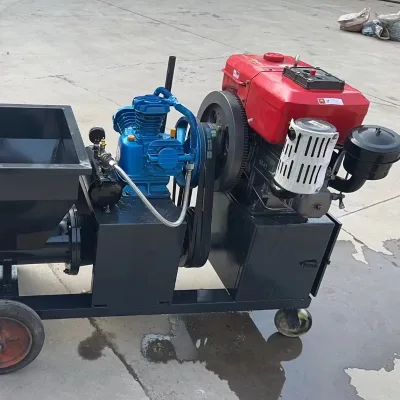


$250000.00 - $350000.00
MOQ: 1 Pieces


Comprehensive Sourcing Guide
Strategic Sourcing Guide for Electric Mortar Sprayers
Understanding Technical Specifications and Performance Metrics
When sourcing electric mortar sprayers, the primary objective is to align machine capabilities with specific project requirements. The market presents a diverse array of configurations, ranging from compact handheld units to heavy-duty industrial systems. A critical observation in the current supply landscape is the variation in voltage requirements. Buyers must verify whether a unit operates on standard 220V systems or requires 380V industrial power, as some models offer 110V customization for specific regional grids. The power supply is consistently electric, eliminating the need for fuel logistics, but the motor power varies significantly. For instance, certain high-performance units feature a motor power of 2800W, which directly influences the machine's ability to handle viscous materials like mortar and plaster without stalling.
The mechanical architecture of these sprayers often centers on the core components, which typically include the engine and motor. The type of motor is a decisive factor in maintenance and longevity; brushed motors are a common specification in the current catalog, offering a balance of cost and performance, though their service life differs from brushless alternatives. The pressure control mechanism is another vital technical attribute. Adjustable pressure systems allow operators to modulate the output from 40bar upwards, ensuring the spray can be tailored for different surface textures and material viscosities. The flow rate is equally critical; a standard specification for many models is around 15L, which dictates the speed of application.
Physical dimensions and weight are essential for logistics and on-site maneuverability. Units vary from lightweight backpack-style sprayers weighing approximately 13kg to heavier stationary models with a weight of 180kg. The hopper volume is a key determinant of operational continuity; a 30L hopper capacity is observed in several industrial-grade units, reducing the frequency of refilling during large-scale projects. The nozzle size, often standardized at 1.3 mm, affects the spray pattern and the fineness of the finish. Additionally, the air inlet size, typically 1/2 inch, must be compatible with the facility's compressed air supply if the unit utilizes pneumatic assistance. The installation method, whether internal threaded connection or external thread connection, dictates how the sprayer integrates with existing piping or hose systems.
Compliance, Certification, and Standard Verification
Navigating the compliance landscape for electric mortar sprayers requires a rigorous approach to verifying certifications and standards. While some market data suggests the existence of CE certification, buyers should not assume this status is universal across all listed products. Instead, procurement teams must treat certification as a variable that requires active verification from the supplier for each specific order. The absence of a guaranteed certification in the general product listing means that the buyer must explicitly request proof of compliance with relevant safety and electromagnetic compatibility standards for their target market.
Product standards are often embedded in the physical specifications rather than listed as abstract regulatory codes. For example, the "prod_standard" attribute in some listings refers to physical dimensions like 712320cm, which indicates that standardization in this context may relate to packaging or unit footprint rather than a safety certification. Buyers must distinguish between physical dimensions and regulatory standards. When evaluating suppliers, it is crucial to ask for documentation regarding the electrical safety of the motor and the pressure vessel integrity, especially given the high pressures (up to 40bar) involved.
The origin of the product is a significant factor in compliance. The majority of the observed supply originates from China, with specific manufacturing hubs identified in Shandong and Taizhou. While these regions have robust manufacturing ecosystems, the distance from the point of origin to the destination affects the logistics chain and the potential for quality control audits. Buyers should verify that the supplier can provide test reports or third-party inspection certificates that align with the import regulations of the destination country. The "Video outgoing-inspection" feature mentioned in some product attributes is a positive indicator, suggesting that suppliers are willing to provide visual evidence of the production quality before shipment, which serves as a preliminary compliance check.
Cost Drivers and Pricing Structure Analysis
The pricing for electric mortar sprayers exhibits a massive variance, ranging from approximately $7.10 to $350,000 USD. This wide spectrum reflects the difference between small-scale agricultural or DIY units and large-scale industrial concrete pumping systems. The lowest price points typically correspond to lightweight, single-item units with smaller hopper volumes and lower motor power, such as the 13kg backpack sprayers. Conversely, the high-end price range is associated with heavy-duty industrial machines featuring larger capacities, advanced pressure controls, and robust construction materials like PE (Polyethylene) tanks.
Several factors drive these cost variations. The material composition is a primary driver; units with PE tanks are common, but the quality and thickness of the plastic, as well as the inclusion of metal components for the engine and motor housing, significantly impact the price. The complexity of the customization available also influences cost. Products offering customization options, such as adjustable voltage or specific packing requirements (LCL vs. Carton/Wooden Packaging), often command a premium. The weight of the unit is another cost indicator; heavier machines with 180kg weights generally involve more raw materials and more complex engineering, leading to higher prices.
Minimum Order Quantity (MOQ) is a critical component of the total cost of ownership. The observed MOQ range spans from 1 to 300 units. For buyers seeking to test the market or equip a small team, an MOQ of 1 is highly advantageous, allowing for single-item purchases without significant capital commitment. However, for large-scale procurement, negotiating an MOQ closer to 300 might unlock volume discounts, although the base unit price in the high-end range suggests that even small quantities of industrial equipment are capital-intensive. The selling unit configuration, often listed as "Single item," simplifies the procurement process for small orders but may require careful logistics planning for bulk shipments.
Typical Applications and Operational Scenarios
Electric mortar sprayers are versatile tools designed for a wide array of applications, primarily centered around surface coating and material application. The most prominent application identified is paint spraying, where the adjustable pressure and flow rate allow for precise control over the finish quality. However, the utility of these machines extends far beyond simple painting. The "Liquid Contained" attribute lists "Medicine," suggesting that the technology is adaptable for agricultural or pharmaceutical applications, although the primary focus remains on construction and industrial coating.
The "Spraying Shape" of "Liquid Column" indicates that these machines are capable of delivering a focused, high-velocity stream of material, which is ideal for filling gaps, applying thick mortars, or reaching difficult-to-access areas. The "Lance" being adjustable adds to the versatility, allowing operators to change the angle and reach of the spray without repositioning the entire machine. This is particularly useful in complex construction sites or renovation projects where space is constrained.
The "Technics" attribute mentions "Screen Printing," which might seem unrelated to mortar spraying at first glance. However, in a broader industrial context, this could imply that the machinery is part of a larger system used for coating or printing on various substrates, or it may refer to the specific method of material delivery in certain niche applications. The "Type" of "Knapsack" confirms the existence of portable, human-carried units suitable for small-scale jobs, while the larger industrial models are designed for continuous, high-volume output. The "Horizontal Delivery Distance" of 20M is a specific performance metric that defines the reach of the machine, making it suitable for medium-sized rooms or outdoor areas where the operator does not need to move the unit constantly.
Supplier Evaluation and Sourcing Strategy
Evaluating suppliers for electric mortar sprayers requires a focus on transparency and the ability to provide verifiable data. The "Brand Name" HG is observed in the supply chain, but buyers should not limit their search to a single brand. Instead, the strategy should involve comparing multiple suppliers based on their ability to meet specific technical requirements. The "prod_packing" attribute varies between "LCL" (Less than Container Load) and "Carton / Wooden Packaging," which is a crucial factor for logistics. Suppliers offering wooden packaging may be better suited for heavy, high-value units that require extra protection during international transit.
The "Place of Origin" being Shandong, China, and "prod_origin" being Taizhou provides geographical context. Buyers should consider the logistics implications of sourcing from these regions. While these areas are known for manufacturing, the distance from the port of loading to the final destination will impact lead times and shipping costs. The "Video outgoing-inspection" is a valuable tool for supplier evaluation. Buyers should request video evidence of the production line and the final inspection process to ensure that the machine being purchased matches the specifications listed. This visual verification helps mitigate the risk of receiving substandard products.
When assessing suppliers, the "Warranty" period is a key indicator of confidence in the product. A standard warranty of 1 Year is observed, which serves as a baseline for after-sales support. Buyers should inquire about the terms of this warranty, including what components are covered and the process for claiming repairs or replacements. The "Core Components" being the Engine and Motor suggests that these are the parts most likely to require maintenance or replacement. A supplier that offers readily available spare parts for these components will be more valuable in the long term.
Quality Control and Long-Term Procurement Considerations
Ensuring quality in Electric Mortar Sprayer procurement involves a multi-layered approach to inspection and testing. The "prod_standard" attribute, while sometimes referring to dimensions, highlights the need for buyers to define their own quality standards. For instance, verifying the integrity of the PE tank and the precision of the nozzle size (1.3 mm) is essential for consistent performance. The "Installation" method, whether internal or external threaded connection, must be tested for leaks and durability under pressure.
Long-term procurement considerations extend beyond the initial purchase price. The "Weight" of the unit, whether 13kg or 180kg, impacts the wear and tear on the operator and the equipment itself. Heavier units may require more robust maintenance schedules. The "Motor" type, specifically the brushed motor, has a known lifespan and may require periodic replacement of carbon brushes. Buyers should factor in the cost and availability of these consumables when calculating the total cost of ownership.
The "High operating efficiency" is listed as a unique selling point, but this claim should be validated through performance testing. Buyers should request data on the actual flow rate and pressure stability under load to confirm that the machine delivers on its efficiency promises. The "Customization" availability is a significant advantage for long-term procurement, as it allows the machine to be adapted to changing project requirements or specific site conditions.
Finally, the "Color" of the machine, typically yellow, is a standard safety feature that enhances visibility on construction sites. While this may seem trivial, it contributes to overall site safety and equipment management. By focusing on these detailed attributes and maintaining a rigorous verification process, buyers can secure reliable electric mortar sprayers that meet their operational needs while minimizing the risks associated with international procurement. The combination of technical verification, supplier transparency, and a clear understanding of cost drivers ensures a successful sourcing outcome.
FAQs
What is the maximum pressure output of these sprayers?
The maximum pressure output is 40bar. This adjustable pressure allows operators to modulate the spray for different surface textures and material viscosities, ensuring precise application for paint spraying and mortar tasks.
Can the voltage be customized for different regions?
Yes, the voltage can be customized. While standard units operate on 220V, some models offer 110V customization to accommodate specific regional power grids, ensuring compatibility with local electrical infrastructure.
How much material can the hopper hold?
The hopper volume is 30L. This capacity reduces the frequency of refilling during large-scale projects, allowing for continuous operation and improved efficiency when handling viscous materials like mortar and plaster.
What is the horizontal delivery distance capability?
The horizontal delivery distance is 20M. This reach makes the machine suitable for medium-sized rooms or outdoor areas where the operator does not need to move the unit constantly during application.
Which motor type is commonly used in these units?
A brushed motor is commonly used in these units. This type offers a balance of cost and performance, though its service life differs from brushless alternatives, and it is a key core component alongside the engine.
What packaging options are available for shipping?
Packaging options include LCL, Carton, or Wooden Packaging. Suppliers offer these variations to suit different logistics needs, with wooden packaging often recommended for heavy, high-value units requiring extra protection during transit.