Source Electric Vehicle AC Motor Controller for Air-Conditioner, Industrial, Electric Forklift
Find 30 Electric Vehicle AC Motor Controller options from Ningbo and Guangxi suppliers. Compare specifications including voltage, power, and certifications like RoHS and CE for air-conditioner, industrial, and electric forklift applications.
Key considerations
Products List


Maintain and Convert Electric Vehicle AC Asynchronous Motor Speed Controller
$378.00 - $388.00
MOQ: 10 Pieces


18kw 72V 650A Electric Vehicle Controller AC Asynchronous Motor Controller
$378.00 - $388.00
MOQ: 10 Pieces

20kw 96V 650A Electric Vehicle Controller AC Asynchronous Motor Controller
$448.00 - $458.00
MOQ: 10 Pieces

High Precision System Electronic Vehicle Reliability AC Induction Motor Controller
$105.00 - $115.00
MOQ: 10 Pieces


$1100.00 - $1400.00
MOQ: 1 Pieces


Electric Vehicle EV System Popular Application AC Motor Controller 48V 72V
$225.00 - $235.00
MOQ: 1 Pieces


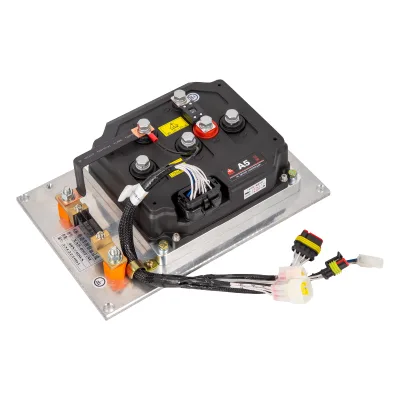


High Efficiency Durable Reliable Precision Control Electric Vehicles Motor Controller
$36.50 - $39.00
MOQ: 10 Pieces



Comprehensive Sourcing Guide
Strategic Sourcing Guide for Electric Vehicle AC Motor Controllers
Understanding Technical Specifications and Performance Parameters
When sourcing an Electric Vehicle AC Motor Controller, buyers must first establish a clear understanding of the technical specifications that define the unit's capability and compatibility. The core function of these controllers is to manage the conversion of electrical energy to mechanical motion, often involving complex interactions between voltage, current, and frequency. In the current market, specifications vary significantly based on the intended application, ranging from small-scale industrial drives to heavy-duty electric forklifts.
A critical parameter to verify is the voltage rating. Market observations indicate that controllers are available in various voltage configurations, including 3V units for low-power applications and high-voltage systems such as 60V, 72V, and 96V for more robust industrial or vehicle applications. Power output is equally significant, with observed ratings spanning from 4KW to 20KW. For instance, specific models are designed for 96V systems delivering 20KW, while others operate at 60V or 72V with 18KW or 4KW outputs. Buyers should not assume a single voltage standard applies to all units; instead, they must match the controller's voltage and power rating to the specific motor and battery pack of their vehicle or machinery.
The starting mode and speed control mechanisms are also essential technical considerations. Some controllers utilize an auto-induction voltage-reduced starting mode, which helps manage inrush current and protects the motor during startup. Speed characteristics can range from low-speed operations to variable speed control, often managed through specific pole configurations. The number of stator poles, such as single-phase arrangements, dictates the motor's rotational characteristics and efficiency. Additionally, the casing protection type, often described as a closed type, is vital for ensuring the controller can withstand the environmental conditions of the vehicle, whether it is an indoor forklift or an outdoor air-conditioning unit.
Compliance and Certification Verification
Navigating the regulatory landscape is a non-negotiable aspect of sourcing electric vehicle components. Buyers must rigorously verify that potential suppliers adhere to international and regional safety and environmental standards. The most frequently observed certifications in the current supply base include RoHS (Restriction of Hazardous Substances) and ISO standards, which often appear in conjunction with CE marking. These certifications indicate that the product meets specific environmental and safety requirements regarding hazardous materials and electrical safety.
Specific standards observed in the market include CE, CQC, and ISO, which serve as benchmarks for quality and compliance. For industrial applications, the presence of CQC (China Quality Certification) is particularly relevant for domestic and regional markets. It is important to note that while some listings mention "ISO: CE" or "CE, CQC, RoHS, ISO," these are specific to certain product lines and should not be assumed to be universal across all suppliers. Buyers must request valid, up-to-date certification documents for the exact model number they intend to purchase.
Furthermore, the material composition of the controller housing and internal components plays a role in compliance. While some units are constructed with plastic, others may utilize cast iron for enhanced durability and heat dissipation in heavy-duty environments. The choice of material often correlates with the intended application; for example, industrial controllers may require cast iron casings to withstand harsh conditions, whereas lighter applications might utilize plastic. Buyers should verify that the material specifications align with the environmental regulations of their target market, particularly regarding fire safety and chemical emissions.
Cost Drivers and Pricing Dynamics
The pricing of electric vehicle AC motor controllers is influenced by a complex interplay of technical specifications, material costs, and order volume. The observed price range in the market is extensive, spanning from $0.99 to $7,300. This wide disparity is primarily driven by the power rating, voltage capacity, and the complexity of the control algorithms embedded within the unit. A low-voltage, low-power controller for a small appliance will naturally be priced significantly lower than a 96V, 20KW industrial drive designed for heavy machinery.
Minimum Order Quantity (MOQ) is another significant factor affecting the effective cost per unit. The market shows an MOQ range from 1 to 500 units. Buyers purchasing small quantities may face higher per-unit costs but benefit from lower capital outlay and reduced inventory risk. Conversely, bulk purchasing can unlock significant cost savings, provided the buyer has the storage capacity and demand forecast to justify the volume. The packaging method also influences logistics costs; units shipped in standard cartons may incur lower freight charges compared to those requiring wooden pallets or specialized packaging for heavy industrial components.
It is crucial for buyers to understand that the listed price is often a starting point for negotiation and may not include shipping, duties, or installation services. The "Deliver Time" for some suppliers is noted as 1 to 3 days, which can impact the total cost of ownership if expedited shipping is required for urgent production needs. However, for standard orders, lead times may vary based on the supplier's production schedule and the customization level of the order. Buyers should factor in these logistical variables when calculating the total cost of acquisition.
Typical Applications and Use Cases
Electric vehicle AC motor controllers are versatile components deployed across a diverse range of industries. The primary application observed is in the realm of industrial material handling, specifically for electric forklifts. In this context, the controller manages the driving and lifting functions, ensuring smooth acceleration and precise control of the load. The specific application of "Electric Forklift" is a dominant use case, where reliability and durability are paramount. These controllers often feature a "Control, Driving" function set and are designed to operate in environments with varying noise levels and temperature fluctuations.
Beyond forklifts, these controllers are also utilized in climate control systems, such as air-conditioning units. In this application, the controller manages the fan speed, which can be adjusted to high, medium, and low settings, and regulates the mode of operation, including Auto, Cool, Dry, Fan, and Heat. The ability to customize the color and the universal nature of some controllers make them adaptable to various HVAC system designs. The transmission distance for these units is typically less than 50 meters, which is sufficient for most indoor and semi-indoor applications.
The industrial sector also sees the use of these controllers in general machinery where precise speed control and high torque are required. The "Industrial" application category encompasses a wide array of equipment, from conveyor systems to pumps. In these scenarios, the controller's ability to handle specific voltage and power ratings is critical. For instance, models designed for 60V/72V systems with 18KW power are well-suited for heavy-duty industrial motors. Buyers must carefully match the application requirements with the controller's specifications to ensure optimal performance and longevity.
Supplier Evaluation and Selection Criteria
Selecting the right supplier requires a thorough evaluation of their capabilities, reliability, and product quality. The origin of the products is a key indicator of the supply chain's structure. Many controllers are manufactured in Ningbo, Zhejiang, or Guangxi, China, regions known for their manufacturing prowess in electronics and industrial machinery. However, buyers should not rely solely on the location; they must assess the supplier's track record in delivering products that meet the specified standards.
Quality is a paramount consideration, with many suppliers advertising "Top Ranking" quality. This claim should be substantiated by the supplier's ability to provide consistent product performance and adherence to the stated specifications. The warranty period is another critical metric; a standard one-year warranty is common, but buyers should verify the terms and conditions of this warranty, including coverage for defects and support for troubleshooting. The condition of the product, typically listed as "New," should be confirmed to ensure that no refurbished or used units are being sold as new.
Customization capabilities are also a differentiator among suppliers. While some products are available as standard units, others offer customization options for color, dimensions, and specific functional requirements. The "Universal" attribute of some controllers suggests a high degree of compatibility, but buyers must verify if the specific model can be adapted to their unique needs. Additionally, the packaging method, such as "Carton" or "Carton with Wooden Pallet," can indicate the supplier's attention to detail in protecting the product during transit.
Quality Control and Long-Term Procurement Considerations
Ensuring the long-term reliability of electric vehicle AC motor controllers requires a robust quality control strategy. Buyers should implement rigorous testing protocols to verify that the controllers meet the specified performance criteria. This includes checking the noise levels, as some units are explicitly noted for their noise characteristics, and verifying the dimensional accuracy, which may be "According to Order" for custom applications. The weight of the unit, such as 4.235kg for certain models, is also a factor that impacts installation and structural requirements.
Long-term procurement considerations involve building a sustainable relationship with suppliers who can provide consistent support and spare parts. The "One Year" warranty period is a baseline, but buyers should explore options for extended warranties or service contracts that cover the lifecycle of the equipment. The availability of replacement parts and the supplier's ability to provide technical support are critical for minimizing downtime. Furthermore, buyers should monitor the market for updates in standards and certifications to ensure that their procurement strategy remains compliant with evolving regulations.
The condition of the product upon delivery is another aspect of quality control. Buyers must inspect the packaging and the unit itself for any signs of damage or tampering. The "New" condition should be verified through visual inspection and functional testing. Additionally, the "Standard" classification of some products suggests a baseline level of quality, but buyers should not assume that all standard products are equal. Each model may have unique characteristics that require specific testing and validation.
In conclusion, sourcing electric vehicle AC motor controllers requires a meticulous approach that balances technical specifications, compliance, cost, and supplier reliability. By understanding the diverse applications, verifying certifications, and implementing strict quality control measures, buyers can secure high-performance components that meet their operational needs. The wide range of available options, from low-voltage units to high-power industrial drives, offers flexibility but also demands careful selection to ensure the best fit for the specific application.
FAQs
What certifications do electric vehicle ac motor controllers have?
These controllers typically hold RoHS, ISO, and CE certifications. Some listings also include CQC standards for quality assurance. Buyers must verify specific documents for the exact model number to ensure compliance with regional safety regulations.
Which voltage ratings are available for these controllers?
Available voltage ratings include 3V for low-power applications and high-voltage systems like 60V, 72V, and 96V. Specific models support 20KW or 18KW outputs, so users must match the rating to their motor and battery pack requirements.
Can I customize the color and dimensions of the unit?
Customization is available for color options such as white, black, grey, or specific requests. Dimensions may be set according to order specifications, though some standard models have fixed sizes like 4.235kg weight. Verify customization limits with the supplier.
What is the minimum order quantity for purchasing these items?
The minimum order quantity ranges from 1 to 500 units depending on the supplier and model. Bulk purchasing often unlocks better pricing, while single-unit orders may have higher per-unit costs but lower inventory risk for buyers.
How long is the warranty period for these controllers?
A standard one-year warranty period is common for these industrial components. This coverage typically applies to defects but buyers should verify specific terms regarding spare parts and technical support to ensure long-term reliability and minimal downtime.
Where are these electric vehicle ac motor controllers manufactured?
Products originate from manufacturing hubs in Ningbo, Zhejiang, and Guangxi, China. These regions are known for producing electronics and industrial machinery. Buyers should confirm the specific origin to assess supply chain reliability and logistics costs.