Source Engine Disassembly Platform for Schools Workshops Training
Find 30 Engine Disassembly Platform options for technical schools, training centers, and workshops. Compare specifications, certifications, and prices for teaching equipment ranging from basic models to advanced simulators.
Key considerations
Products List


Gasoline Engine Disassembly and Assembly Educational Training Platform
$1750.00 - $2750.00
MOQ: 1 Pieces


Truck Rear Axle Disassembly and Assembly Training Platform Demonstration Tool
$1800.00 - $3800.00
MOQ: 1 Pieces


Automobile Education Training Model Engine Disassembly Teaching Equipment
$1235.00 - $1680.00
MOQ: 1 Pieces


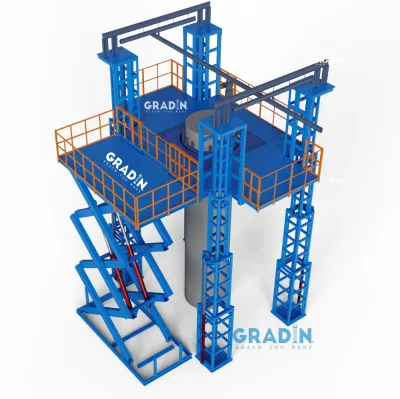
$2000000.00 - $9000000.00
MOQ: 1 set




Comprehensive Sourcing Guide
Strategic Sourcing Guide for Engine Disassembly Platforms
Procuring an Engine Disassembly Platform requires a disciplined approach that balances technical functionality with compliance verification and long-term operational value. For educational institutions, technical training centers, and vocational workshops, these platforms serve as the cornerstone of hands-on learning. The market offers a diverse array of units, ranging from basic mechanical frames to complex electronic control system simulators. This guide outlines the critical factors buyers must evaluate to ensure the selected equipment meets rigorous educational and safety standards without relying on unverified marketing claims.
Technical Specifications and Functional Requirements
The primary differentiator among engine disassembly platforms lies in their specific functional design and physical dimensions. Buyers must first define the scope of training, whether it involves general engine inversion, specific electronic control system diagnostics, or module disassembly. The provided market data indicates that models vary significantly in size and configuration. For instance, specific training platforms are designed with dimensions of 1200×600×1100mm, while others intended for more complex electronic control systems, such as the Santana Ajr Engine Electronic Control System Teach unit, may reach 1260×850×1800mm.
When evaluating technical specifications, the material composition is a critical observation. High-quality steel is frequently cited as the main material for these units, ensuring durability under repeated disassembly and reassembly cycles. The structural integrity must support the weight of various engine components while maintaining stability during student manipulation. Furthermore, the power requirements for these units must be verified against the facility's infrastructure. Many platforms operate on AC220V electricity, which is standard for industrial and educational settings, but some advanced simulators may have specific power source requirements.
The operational environment also dictates necessary specifications. Units designed for harsh environments or specific climates may list a working temperature range of -40°C to +50°C, ensuring functionality regardless of the workshop's ambient conditions. Buyers should verify that the selected model's physical footprint aligns with their available floor space. The standard packing for these heavy-duty units is typically a wooden carton or wooden box, which influences logistics planning and on-site assembly requirements.
Compliance and Certification Verification
In the B2B procurement of educational equipment, compliance is not merely a formality but a prerequisite for safety and legal operation. The market data highlights several certifications associated with these platforms, including CE, ISO, and CCC. The presence of CE marking indicates conformity with health, safety, and environmental protection standards for products sold within the European Economic Area, while CCC (China Compulsory Certification) is essential for products entering the Chinese market.
Buyers must treat certification claims as observations that require verification rather than automatic guarantees. It is imperative to request current certification documents directly from the supplier to confirm that the specific model, such as the ZC-QCA12A or GZSX-H003, holds valid status. The condition of the equipment is also a critical compliance factor; the supplied data consistently notes that these units are "New," which implies they have not been previously used or modified in a way that could compromise safety standards.
Additionally, the standard of manufacturing should be scrutinized. While general ISO 9001 background knowledge exists, specific product standards listed in the data, such as 1200×600×1100mm or 1500mm×1000mm×1700mm, serve as physical benchmarks rather than abstract quality management standards. Buyers should ensure that the supplier can provide evidence that the manufacturing process adheres to recognized quality management systems, even if the specific ISO standard is not explicitly printed on the product datasheet.
Cost Drivers and Pricing Dynamics
The pricing landscape for engine disassembly platforms is highly variable, with observed ranges spanning from $1 to $9,000,000. This vast disparity is driven by several key factors, including the complexity of the engine system simulated, the level of automation, and the inclusion of electronic control modules. A basic mechanical disassembly platform will naturally cost significantly less than a fully automated unit featuring electronic control system diagnostics.
The minimum order quantity (MOQ) is another significant cost driver. The data indicates an MOQ range of 1 to 100 sets, with many suppliers offering an MOQ of just 1 set. This flexibility allows educational institutions to start with a single unit for pilot programs or small workshops without committing to large-scale inventory purchases. However, buyers should be aware that unit prices may decrease as order volumes increase, though specific volume discount structures are not universally standardized.
Customization is a major factor influencing cost. The availability of OEM customization and the ability to tailor the platform to specific teaching levels (from beginner to advanced) can increase the base price. Features such as specific color schemes (e.g., White-Blue), custom language interfaces, and tailored teaching materials add value but also incur additional costs. Buyers must balance the budget against the necessity of these customizations, ensuring that the investment directly supports the curriculum goals.
Typical Applications and Educational Integration
Engine disassembly platforms are designed for a specific set of applications, primarily within technical schools, training centers, and workshops. The "Function" of these units is explicitly defined as "Teaching," and they are suitable for a wide range of educational levels. The platforms support a progression from beginner to advanced training, making them versatile assets for institutions with diverse student cohorts.
The application scope extends beyond simple mechanical disassembly. Advanced models serve as "Engine Training Simulators" or "Module Disassembly Machines," facilitating the study of complex systems like the Santana Ajr Engine Electronic Control System. These units allow students to engage in "Teaching Experiment Equipment" activities that mimic real-world scenarios without the risk of damaging expensive actual engines. The "Feature" of these platforms is often categorized as "Education Training," emphasizing their role in skill development rather than industrial production.
Furthermore, the "Application" field notes suitability for "Office School Multimedia Machine" contexts, suggesting that some platforms integrate with digital learning tools. This integration allows for a hybrid learning approach where physical manipulation is combined with multimedia instruction. The "Type" of platform, whether a "Training Platform" or a "Teaching Experiment Equipment," should align with the specific pedagogical goals of the institution. Buyers should ensure that the selected unit supports the intended curriculum, whether it focuses on mechanical skills, electronic diagnostics, or a combination of both.
Supplier Evaluation and Customization Capabilities
Evaluating suppliers requires a focus on their ability to deliver customized solutions and maintain product consistency. The data indicates that "Customization" is available, with options for OEM (Original Equipment Manufacturer) branding and language customization. This capability is crucial for institutions that require branding alignment or specific instructional languages. Buyers should assess the supplier's flexibility in adapting the "prod_model" to meet unique requirements, such as specific dimensions or material finishes.
The "prod_packing" and "prod_standard" details provide insight into the supplier's attention to detail. Consistent use of wooden cartons or boxes suggests a commitment to protecting the equipment during transit. However, buyers must verify that the packaging standards are sufficient for international shipping if the origin is China. The "prod_origin" being China is a common attribute in this sector, but it necessitates a thorough review of the supplier's export experience and logistics capabilities.
When evaluating suppliers, buyers should also consider the "Condition" of the product. The consistent listing of "New" condition is a positive indicator, but it should be verified through pre-shipment inspections. Suppliers who offer transparent communication regarding the manufacturing process and provide detailed product specifications are more likely to deliver reliable equipment. The ability to provide a "Warranty" of 1 year is a standard expectation, and buyers should clarify the terms of this warranty, including coverage for parts and labor.
Quality Control and Long-Term Procurement Considerations
Ensuring the long-term viability of engine disassembly platforms requires a robust quality control strategy. Buyers should implement a verification process that includes checking the "Certification" documents, inspecting the physical build quality, and testing the functionality of the unit upon delivery. The "Working Temperature" range and "Power Source" specifications must be validated to ensure the equipment operates safely in the intended environment.
Long-term procurement considerations also involve the availability of spare parts and technical support. Given the "Customized" nature of some units, it is essential to confirm that the supplier can provide replacement parts for the specific model, such as the ZC-QCB142B or GZSX-H004. The "Automation" level of the platform, whether automatic or manual, will also impact maintenance requirements. Automated units may require more specialized technical support, while manual units might need more frequent mechanical servicing.
Finally, buyers should consider the scalability of their procurement strategy. With an MOQ as low as 1 set, institutions can expand their training facilities incrementally. However, maintaining consistency across multiple units is vital for standardized training. Buyers should aim to procure from a single supplier for large orders to ensure uniformity in specifications, materials, and functionality. This approach simplifies maintenance, training, and future expansion, ensuring that the educational investment yields maximum value over time.
Comparative Analysis of Platform Models
To assist in decision-making, the following table summarizes key specifications observed in the market data for various Engine Disassembly Platform models. This comparison highlights the diversity in dimensions, certifications, and specific applications.
| Model Number | Dimensions (mm) | Certification | Primary Application | Material |
|---|---|---|---|---|
| ZC-QCA12A | 1200 × 600 × 1100 | CE, ISO, CCC | Teaching Experiment | Steel |
| ZC-QCA12B | 1200 × 600 × 1100 | CE, ISO, CCC | Teaching Experiment | Steel |
| ZC-QCA04A | 1500 × 1000 × 1700 | ISO | Teaching Experiment | Steel |
| ZC-QCA04B | N/A | ISO | Teaching Experiment | Steel |
| ZC-QCB142B | 730 × 850 × 810 | N/A | Teaching Experiment | Steel |
| GZSX-H003 | 800 × 650 × 1100 | N/A | School | High-Quality Steel |
| GZSX-H004 | 1260 × 850 × 1800 | N/A | Electronic Control | High-Quality Steel |
| GZSX-H002 | N/A | N/A | Electronic Control | High-Quality Steel |
| GZSX-D003 | 1260 × 850 × 1800 | N/A | Module Disassembly | High-Quality Steel |
This table illustrates that while some models share identical dimensions, their certifications and specific applications may differ. Buyers must cross-reference these specifications with their specific training needs to select the most appropriate unit. The presence of "High-Quality Steel" across multiple models confirms the industry standard for durability, while the variation in dimensions underscores the need for precise space planning.
In conclusion, sourcing an Engine Disassembly Platform is a multifaceted process that demands careful attention to technical specifications, compliance, cost, and supplier reliability. By adhering to the guidelines outlined in this guide, buyers can make informed decisions that support their educational objectives and ensure the long-term success of their training programs.
FAQs
What certifications do engine disassembly platforms typically have?
These platforms commonly carry CE, ISO, and CCC certifications. Buyers must verify current documents for specific models like ZC-QCA12A to ensure compliance with safety standards for educational equipment.
Which dimensions are standard for these training units?
Standard dimensions vary, with common sizes including 1200x600x1100mm and 1500x1000x1700mm. Buyers should check the specific model datasheet to ensure the footprint fits their workshop space.
Can these platforms be customized for specific teaching needs?
Yes, customization is available including OEM branding and language options. Buyers can request tailored features to align with beginner to advanced curriculum goals at technical schools.
How much does a single unit cost to purchase?
Prices range widely from 1 to 9000000 USD depending on complexity. Basic mechanical frames cost less than automated simulators with electronic control systems, and MOQs start at one set.
What material is used to construct these training platforms?
High-quality steel is the main material used for durability. This ensures the structure supports repeated disassembly cycles while maintaining stability during student manipulation in workshops.
What is the warranty period for new training equipment?
A standard warranty period of one year is typically offered. Buyers should clarify the specific terms regarding parts and labor coverage when purchasing new units from suppliers.