Source ESD PVC Belt Workbench for Hospital, Lab, and Workshop
Find 30 verified ESD PVC Belt Workbench options for hospitals, research institutes, and workshops. Compare stainless steel models with 10^6-10^11 Ohm resistance, 1530x750mm sizes, and heavy bearing capacity. Source customized lab benches with SGS and ISO certifications directly from China suppliers.
Key considerations
Products List


$232.00 - $235.00
MOQ: 20 Pieces

$386.00 - $389.00
MOQ: 20 Pieces


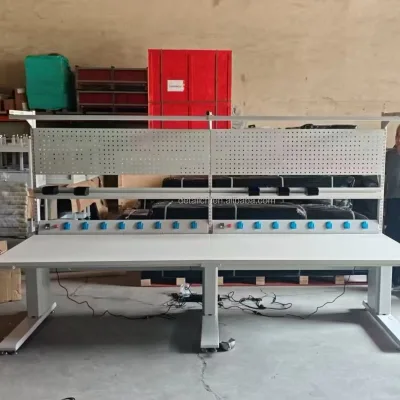
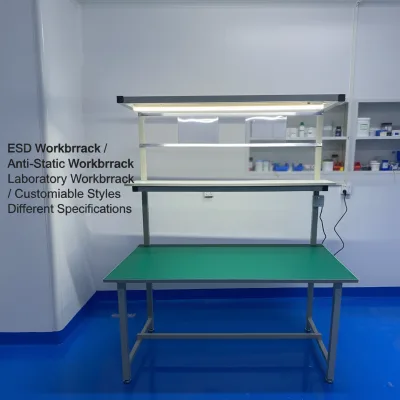


Comprehensive Sourcing Guide
ESD PVC Belt Workbench Sourcing Guide
Procurement professionals seeking ESD PVC belt workbenches must first distinguish between static-dissipative surfaces and general laboratory furniture. The observed market listings indicate a strong focus on stainless steel construction with grey finishes, specifically designed for hospital and research institute environments. Buyers should verify that the surface material meets the specific resistivity requirements for electronic assembly, as the data shows a range of 10^6 to 10^11 Ohms for surface resistance. This specific electrical property is critical for protecting sensitive components from electrostatic discharge during handling and assembly processes.
When evaluating product listings, it is essential to recognize that customization is a primary feature rather than a standard baseline. The available data confirms that models like the LN-SAW and MY-WB series offer professional customized services, allowing buyers to tailor dimensions and configurations to their specific facility layouts. However, the standard sizes observed, such as 1530750mm or H1800W1500*D750mm, serve as a reference point for initial budgeting. Buyers must explicitly confirm whether the PVC belt surface is included in the base price or if it is an optional upgrade, as this significantly impacts the final unit cost and lead time.
Product Scope and Observed Listing Signals
The current market signals reveal a diverse range of workbench types, from central benches to specialized ESD lab benches, all sharing a common origin in China. Listings frequently mention modern appearances and heavy bearing capacities, suggesting these units are built for durability in high-traffic commercial furniture settings. The observed usage categories extend beyond research institutes to include schools and workshops, indicating a versatile design that accommodates various industrial and educational needs. Buyers should scrutinize the specific model numbers, such as MY-WB-02 or MY-WB-09, to ensure the physical dimensions match their available floor space.
Packing and shipping details provide critical insight into the logistical complexity of sourcing these heavy industrial units. The data indicates a mix of packaging methods, including carton boxes, plywood crates, and international standard five-layer cartons, with some units shipped on wooden pallets. This variation suggests that buyers must clarify the packaging standard to prevent damage during transit, especially for units weighing up to 71kg. Furthermore, the observation of a 40HQ container capacity of 150 pieces highlights the efficiency of bulk shipping, which can be leveraged to reduce per-unit freight costs for large procurement orders.
Technical Specifications to Verify
Surface resistance is the most critical technical parameter for any ESD workbench, and buyers must verify that the listed range of 10^6 to 10^11 Ohms applies to the specific PVC belt surface. While some listings cite this range as a general specification, it is vital to confirm that the entire work surface, including the belt and grounding points, maintains this consistency. The thickness of the steel components, observed between 0.8mm and 1.0mm, also requires verification to ensure the bench can support the intended load without flexing or degrading over time.
Dimensional accuracy is another area requiring strict verification, as the observed listings present multiple standard sizes ranging from 1530750mm to larger configurations like H1800W1500*D750mm. Buyers should not assume that a model number implies a fixed size, as customization is explicitly available and often requested. The presence of wheeled options is noted as "No" in some listings, meaning mobility may be limited unless a specific mobile base is ordered. Confirming the exact height, width, and depth is essential for integrating the workbench into existing laboratory or workshop layouts without requiring structural modifications.
Compliance and Safety Documentation
Safety compliance for ESD workbenches in hospital and research settings often requires adherence to specific international standards, though the exact certification status must be confirmed per supplier. The observed data lists certifications such as SGS, BV, ISO14001, and ISO9001, which indicate a commitment to quality management and environmental standards. However, buyers should not assume that every listed product automatically carries these certifications; instead, they must request valid, current certificates for the specific batch being purchased to ensure regulatory compliance in their jurisdiction.
Electrostatic discharge safety is paramount, and while IEC 61340-5-1 is a relevant industry standard, its specific application to the listed products must be validated through testing reports. The observed surface resistance values suggest a design intent to meet ESD safety requirements, but buyers should demand test reports that verify the static-dissipative properties under actual operating conditions. Additionally, the heavy bearing capacity noted in the listings implies structural integrity, but safety documentation should also address load distribution and stability to prevent tipping or collapse during heavy use in commercial furniture applications.
Cost Drivers and Commercial Terms
The price range observed in the market, spanning from 50 to 4998 USD, reflects significant variability based on customization, size, and material specifications. Buyers must understand that the lower end of this range likely corresponds to standard, non-customized units with basic configurations, while the higher end includes specialized ESD belts, custom dimensions, and enhanced packaging. The lead time of 10-15 workdays is a critical commercial term that influences inventory planning, and buyers should negotiate this period based on the complexity of the customization requested.
Minimum Order Quantities (MOQ) observed between 1 and 20 units offer flexibility for small-scale procurement but may impact the per-unit cost structure. Buyers should evaluate whether the cost savings from bulk ordering outweigh the storage and handling costs associated with larger quantities. The packing volume of 0.46cbm per unit is a key factor in calculating freight costs, and buyers should request detailed shipping quotes that include the cost of wooden pallets or crates. Understanding these commercial terms helps in creating a total cost of ownership model that accounts for both the initial purchase price and the logistics expenses.
Supplier Qualification and Quality Control
Supplier qualification for ESD workbenches requires a thorough review of their manufacturing capabilities and quality control processes, particularly regarding the customization of stainless steel components. The availability of professional customized services suggests that suppliers have the flexibility to adapt designs, but buyers must verify their track record in delivering consistent quality across different batches. Requesting samples or visiting the facility can help assess the precision of the welding, the quality of the PVC belt application, and the overall finish of the grey surface.
Quality control checks should focus on the consistency of the surface resistance and the structural stability of the workbench. Buyers should implement a pre-shipment inspection protocol that verifies the model numbers, dimensions, and packaging standards against the purchase order. The observation of multiple model numbers like MY-WB-04 and MY-WB-23 indicates a diverse product line, so it is crucial to ensure that the specific unit delivered matches the ordered specifications. Establishing a clear communication channel for quality issues is essential, especially given the custom nature of many of these orders.
Long-Term Procurement Checks
Long-term procurement success depends on establishing a reliable supply chain that can consistently meet the evolving needs of hospital and research institute environments. Buyers should monitor the supplier's ability to maintain the 10^6 to 10^11 Ohm surface resistance over time, as wear and tear on the PVC belt can affect performance. Regular audits of the supplier's quality management systems, including their ISO9001 and ISO14001 certifications, ensure that they continue to adhere to the required standards for production and environmental safety.
Inventory management strategies should account for the 10-15 workday lead time and the potential for customization delays. Buyers should maintain a buffer stock of critical components or consider a just-in-time delivery model if the facility has limited storage space. The observation of a 40HQ container capacity of 150 pieces suggests that bulk ordering is efficient, but buyers must balance this with the risk of obsolescence if product designs change. Establishing a long-term partnership with a supplier who offers professional customized services can provide the flexibility needed to adapt to future procurement requirements.
FAQs
What is the surface resistance of this ESD workbench?
The surface resistance ranges from 10^6 to 10^11 Ohms. This specification ensures effective static dissipation for sensitive electronic components. The grey stainless steel construction supports this performance. It is suitable for hospital and research institute environments requiring reliable ESD protection during delicate assembly tasks.
Can the workbench be customized for specific lab needs?
Yes, professional customization services are available for this unit. Buyers can request specific dimensions, such as 1530 by 750mm or other standard sizes. The modern appearance and heavy bearing capacity allow for tailored configurations. This flexibility ensures the bench fits various commercial furniture requirements and specific workflow layouts.
What certifications does the ESD lab bench hold?
The product holds SGS, BV, ISO14001, and ISO9001 certifications. These credentials verify quality management and environmental standards. The stainless steel material and robust construction meet rigorous industry expectations. This documentation supports procurement compliance for research institutes and companies requiring verified safety and quality benchmarks.
How long is the lead time for production?
The standard lead time is 10 to 15 workdays. This duration applies to the manufacturing and preparation of the lab work bench. Buyers should account for this timeframe when planning inventory. The efficient production cycle helps maintain supply continuity for commercial furniture needs in workshops and schools.
What are the packaging details for shipping?
The workbench is packed in carton boxes and plywood crates. Some units use international standard five-layer cartons for protection. The packing volume is approximately 0.46 cubic meters per piece. This secure packaging ensures the heavy stainless steel bench arrives undamaged, facilitating safe handling and installation at the destination.
What is the weight and load capacity of the bench?
The unit weighs 71kg and features heavy bearing capacity. This robust design supports substantial laboratory equipment and tools. The stainless steel construction contributes to its durability and stability. It is ideal for workshop and school environments where reliable support for heavy instruments is essential for daily operations.