Source ERW Galvanized Steel Tube for Pipeline, Construction, and Machinery
Compare 30 listings of ERW Galvanized Steel Tube from Tianjin suppliers. Buyers can evaluate round, square, and rectangular sections in carbon steel with cold drawn or hot rolled techniques for pipeline transport, construction, and machinery applications.
Key considerations
Products List



Comprehensive Sourcing Guide
Strategic Sourcing Guide for ERW Galvanized Steel Tube
The global market for Electric Resistance Welded (ERW) galvanized steel tubes presents a complex landscape for B2B procurement professionals. These products serve as critical infrastructure components across diverse industries, ranging from oil and gas drilling to food and beverage processing. Sourcing decisions must be grounded in a rigorous analysis of technical specifications, material grades, and surface treatment processes. The following guide outlines the essential factors buyers must evaluate to secure high-quality ERW galvanized steel tubes while mitigating supply chain risks.
Technical Specifications and Material Composition
Understanding the precise technical attributes of ERW galvanized steel tubes is the first step in any procurement strategy. The core manufacturing technique for these products is Electric Resistance Welding, which involves heating the edges of the steel strip and pressing them together to form a continuous seam. This process is distinct from cold drawn or hot rolled techniques, although market listings indicate that products may also be available via cold drawn or hot rolled methods depending on the specific application requirements.
The material composition is a primary determinant of performance. The supplied data indicates that the base material is predominantly Carbon Steel, with specific grades including Q195, Q235, Q345, and Q355. These grades correspond to different yield strengths and mechanical properties, allowing buyers to select the appropriate steel for their load-bearing needs. Furthermore, the alloy status is typically Non-Alloy, which simplifies the material selection process for standard structural applications.
Dimensions and geometry vary significantly based on the intended use. The section shapes observed in the market include Round, Square, and Rectangular configurations. For rectangular hollow sections, dimensions can range from 16mm x 16mm up to 150mm x 150mm, while round tubes often fall within a diameter range of 21.3mm to 325mm. Wall thickness is another critical variable, with observed specifications ranging from 0.6mm to 6mm, and some standards requiring a minimum thickness of 0.3mm. Lengths are typically standardized at 5.8 meters, 6 meters, 11.8 meters, or 12 meters, though custom requests are frequently accommodated by suppliers.
Surface Treatment and Corrosion Protection
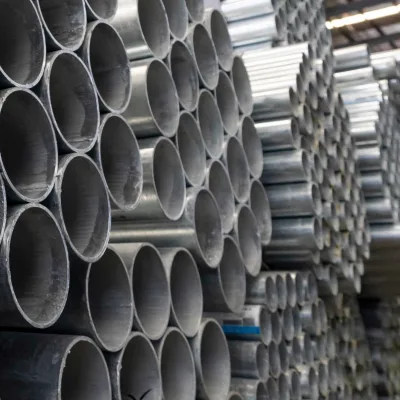
The "galvanized" designation in the core keyword refers to the zinc coating applied to the steel surface to prevent corrosion. This process is vital for products destined for outdoor environments, chemical industries, or moisture-prone areas like food and beverage processing facilities. The supplied facts specify that the zinc coating weight can range from 40 to 275 grams per square meter (G/M2). This variation allows buyers to match the coating thickness to the environmental severity of the application; a higher G/M2 value indicates a thicker, more durable protective layer suitable for harsh marine or industrial conditions.
Surface treatment is not limited to galvanization alone. Some listings indicate "Galvanized" as a standard specification, while others mention "Zinc Coating" as a specific process attribute. Buyers must verify the exact method of galvanization, whether it is hot-dip or electro-galvanized, as this impacts the adhesion and longevity of the coating. The standard product packing often involves bundling with steel belts or bulk packing, ensuring the galvanized surface remains intact during transit.
Compliance, Standards, and Certification Verification
Navigating the regulatory landscape is essential for ensuring that purchased steel tubes meet international and local safety requirements. The market data highlights several key standards that buyers should look for in supplier documentation. These include API-5L for pipeline transport, ASTM-A53 for general structural applications, Bs1387-1985 for plumbing and heating, and GB/T3091-2001 for general structural steel. Additionally, specific model numbers such as RELONG62252 or T869 may appear in product listings, serving as internal identifiers for specific configurations.
While ISO 9001 is mentioned in background contexts, buyers should not assume certification status without direct verification from the supplier. The presence of a standard number in a product listing does not guarantee that the specific batch has been tested against that standard. Procurement teams must request valid test reports and certificates of analysis that explicitly reference the relevant standard for the specific order. For applications involving food and beverage, dairy products, or chemical industries, additional compliance with hygiene and chemical resistance standards is mandatory.
Cost Drivers and Pricing Dynamics
The pricing of ERW galvanized steel tubes is influenced by a combination of raw material costs, manufacturing complexity, and logistical factors. The observed price range in the market spans from 300 to 850 USD, though this figure likely represents a specific unit metric or a bundled order value rather than a per-meter price. Buyers should be aware that the cost is driven heavily by the thickness of the steel, the weight of the zinc coating, and the specific grade of carbon steel used.
Logistics and trade terms play a significant role in the final landed cost. Common trade terms include FOB (Free on Board), CFR (Cost and Freight), and CIF (Cost, Insurance, and Freight). The origin of the products is frequently listed as Tianjin, China, which is a major hub for steel production. Buyers must factor in shipping costs, insurance, and potential tariffs when calculating the total cost of ownership. The Minimum Order Quantity (MOQ) also affects pricing, with observed ranges between 1 and 30 units. Smaller orders may incur higher per-unit costs due to setup and handling fees, whereas bulk orders often benefit from economies of scale.
Typical Applications and Usage Scenarios
The versatility of ERW galvanized steel tubes is evident in the wide array of applications listed in the market data. These products are utilized in pipeline transport for oil and gas drilling, where high pressure and corrosion resistance are paramount. In the construction and decoration sector, square and rectangular hollow sections are preferred for structural frameworks, fencing, and architectural elements. The machinery industry relies on these tubes for hydraulic systems and automobile components, while the mining sector uses them for specialized purpose equipment.
Specific industries have unique requirements that dictate the choice of tube specifications. For instance, the food, beverage, and dairy products industry requires tubes that can withstand cleaning agents and maintain hygiene standards, often necessitating a specific surface finish and non-toxic coating. The boiler pipe application demands tubes capable of withstanding high temperatures and pressures, requiring careful selection of material grades like Q345. Buyers must align the product's section shape, thickness, and coating with the specific operational demands of their industry to ensure long-term reliability.
Supplier Evaluation and Quality Control
Evaluating potential suppliers requires a multi-faceted approach that goes beyond price comparison. Buyers should verify the supplier's ability to provide customization, as the data indicates that customization is available for these products. This includes the ability to produce specific section shapes, custom lengths, and tailored zinc coating weights. The acceptance of OEM (Original Equipment Manufacturer) and ODM (Original Design Manufacturer) services is another indicator of a supplier's flexibility and technical capability.
Quality control is paramount in the steel industry. Buyers should implement a rigorous inspection protocol that includes visual checks for surface defects, verification of dimensions against the specified tolerances, and testing of the zinc coating weight. The "Normal Export Packing" or "Packing in Bundles with Steel Belt" should be inspected to ensure that the products are protected from damage during transit. Lead times are typically reported as 15 to 20 days after receiving the deposit, but buyers should confirm these timelines in writing, as they can vary based on order volume and production scheduling.
Long-Term Procurement Considerations
Sourcing ERW galvanized steel tubes is not merely a transactional activity but a strategic partnership that impacts long-term operational efficiency. Buyers should consider the supplier's capacity for consistent quality over time, their ability to scale production as demand grows, and their responsiveness to technical queries. The availability of spare parts or replacement tubes in the future is also a critical factor, especially for maintenance-heavy industries like oil and gas or construction.
Sustainability and environmental compliance are increasingly important in procurement decisions. The galvanization process involves the use of zinc, and buyers should inquire about the supplier's environmental management practices and waste disposal protocols. Additionally, the durability of the galvanized coating directly influences the lifecycle cost of the product; a higher quality coating may have a higher upfront cost but significantly reduces maintenance and replacement expenses over time.
Comparative Analysis of Product Attributes
To facilitate informed decision-making, the following table summarizes the key attributes observed in the market for ERW galvanized steel tubes. This comparison highlights the variability in specifications and helps buyers identify the specific requirements for their projects.
| Attribute Category | Observed Variations | Key Selection Criteria |
|---|---|---|
| Section Shape | Round, Square, Rectangular | Structural load requirements, aesthetic needs, space constraints |
| Material Grade | Q195, Q235, Q345, Q355 | Yield strength, ductility, application pressure/temperature |
| Surface Treatment | Galvanized (40-275 G/M2) | Environmental exposure, corrosion resistance needs |
| Manufacturing Technique | ERW, Cold Drawn, Hot Rolled | Dimensional accuracy, surface finish, mechanical properties |
| Standard Compliance | API-5L, ASTM-A53, GB/T3091 | Industry regulations, safety codes, legal requirements |
| Packing Method | Bundle, Bulk, Steel Belt | Shipping safety, storage efficiency, handling requirements |
| Origin | Tianjin, China | Logistics costs, lead time, trade agreements |
Conclusion
Procuring ERW galvanized steel tubes requires a meticulous approach that balances technical specifications, regulatory compliance, and cost efficiency. By understanding the nuances of material grades, surface treatments, and manufacturing techniques, buyers can select products that meet their specific operational needs. The market offers a wide range of options, from standard round tubes to specialized rectangular hollow sections, each with its own set of advantages and limitations.
Success in this procurement process depends on thorough supplier evaluation, rigorous quality control measures, and a clear understanding of the long-term implications of the chosen materials. Buyers must remain vigilant in verifying standards and certifications, ensuring that the products they purchase are not only cost-effective but also reliable and safe for their intended applications. As the demand for high-quality steel products continues to grow, maintaining a strategic and evidence-based approach to sourcing will be essential for maintaining competitive advantage and operational excellence.
FAQs
What material grades are available for ERW galvanized steel tubes?
The available material grades include Q195, Q235, Q345, and Q355. These carbon steel options provide varying yield strengths suitable for different structural and pressure applications in industries like oil and gas or construction.
How is the zinc coating weight specified for corrosion protection?
The zinc coating weight ranges from 40 to 275 grams per square meter. This variation allows buyers to select a coating thickness that matches the severity of the environmental exposure, ensuring durability for outdoor or industrial use.
Which section shapes can be sourced for these steel tubes?
Buyers can source round, square, and rectangular section shapes. Dimensions vary from 16mm by 16mm up to 150mm by 150mm for hollow sections, with round tubes typically ranging from 21.3mm to 325mm in diameter.
Can suppliers customize the length and packaging of the tubes?
Yes, customization is available for lengths such as 5.8m, 6m, 11.8m, or 12m, or as requested. Packaging options include bundles with steel belts or bulk packing to ensure safe transit of the galvanized surface.
What are the typical lead times for delivery after deposit?
The typical delivery time is usually 15 to 20 days after receiving the deposit. This timeline applies to standard orders, though specific production schedules may vary based on order volume and current factory capacity.
Which standards apply to pipeline and structural applications?
Applicable standards include API-5L, ASTM-A53, Bs1387-1985, and GB/T3091-2001. These standards ensure compliance for specific uses like pipeline transport, general structural applications, and plumbing systems across different regions.