Source Excavator Connecting Rod Pin for Hitachi Komatsu Caterpillar
Compare 30 Excavator Connecting Rod Pin listings from Hebei, China. Buyers can review specifications like part numbers, weights, and compatible brands such as Hitachi, Komatsu, and Caterpillar for crawler excavators.
Key considerations
Products List
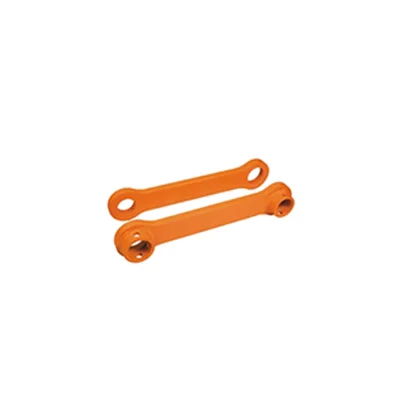


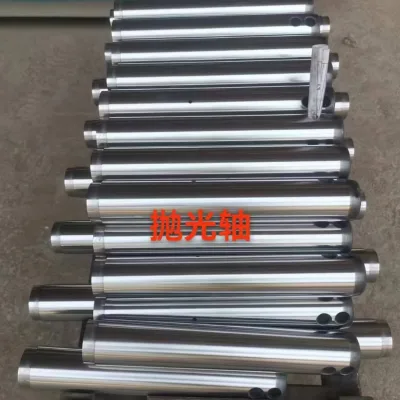


Excavator and Construction Machinery Spare Parts Excavator Bucket Pin 07144-10405
$0.30 - $0.60
MOQ: 100 Pieces

Machinery Parts Excavator Spare Parts Bucket Pin Steel Pins 207-62-D2320
$0.30 - $0.60
MOQ: 100 Pieces


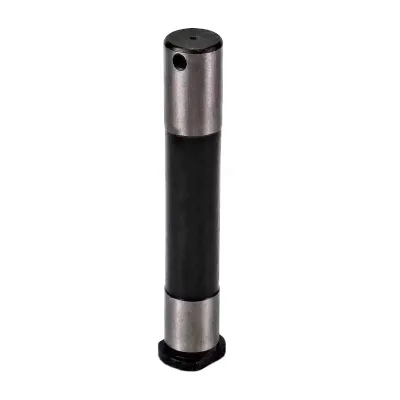


Comprehensive Sourcing Guide
Strategic Sourcing Guide for Excavator Connecting Rod Pins
Navigating the global market for heavy machinery components requires a disciplined approach, particularly when sourcing critical structural parts like excavator connecting rod pins. These components are essential for the hydraulic and mechanical integrity of crawler excavators, directly influencing operational efficiency and safety. For procurement professionals, the challenge lies in distinguishing between generic listings and verified supply chain assets. This guide synthesizes observed market data and technical requirements to provide a robust framework for evaluating potential suppliers and products. The focus remains on evidence-based criteria, ensuring that buyers make decisions grounded in verifiable facts rather than marketing assertions.
Technical Specifications and Compatibility Matrix
The primary technical differentiator for any connecting rod pin is its precise compatibility with specific machine models and brands. The market data indicates a high degree of specialization, where a single part number often corresponds to a specific machine model and weight profile. For instance, the product data explicitly links Part Number 569-5064 to Machine Model 395, with a documented weight of 139kg. Similarly, Part Number 575-1532 is associated with Machine Model 374 and a weight of 89kg. This one-to-one mapping is critical; a deviation in weight or dimensions can indicate a mismatch in material density or manufacturing tolerance, potentially leading to premature failure in the field.
Buyers must verify the "Compatible Brand" and "Application Brand" fields against their fleet inventory. The available data lists a broad range of compatible manufacturers, including ZOOMLION, Shantui, Hitachi, Sany, Sandvik, Komatsu, and Caterpillar. However, specific listings often highlight a primary application brand, such as "for Caterpillar," alongside the general application category of "Excavator" or "Crawler Excavator." The "Part Name" is consistently identified as "Connecting rod," but the specific "Model Number" (e.g., DH370) and "Machine Model" (e.g., 349, 336, 336gc, 390f) serve as the definitive identifiers.
When evaluating a supplier's catalog, procurement teams should construct a compatibility matrix. The following table illustrates how observed data points should be structured for verification:
| Part Number | Machine Model | Weight (kg) | Compatible Brands |
|---|---|---|---|
| 569-5064 | 395 | 139 | Caterpillar, Other |
| 575-1532 | 374 | 89 | Caterpillar, Other |
| 332-5189 | 349 | 135 | Caterpillar, Other |
| 436-0247 | 390f | 62 | Caterpillar, Other |
| 359-5743 | 336, 336gc | 57 | Caterpillar, Other |
This matrix highlights that while the material is consistently "Steel" and the condition is "New" or "100% Brand-new," the physical attributes vary significantly based on the machine's size class. A buyer sourcing for a smaller model like the 336gc must not accept a pin intended for the 395, as the weight difference (57kg vs. 139kg) suggests a fundamental difference in load-bearing capacity.
Material Integrity and Manufacturing Standards
The material composition is a non-negotiable aspect of the product's longevity. The observed facts confirm that the material is "Steel." However, in the context of heavy machinery, "Steel" is a broad category. Procurement guidelines must demand specific verification of the steel grade, heat treatment processes, and surface hardening techniques. While the provided data does not list specific alloy grades (e.g., 4140, 4340) or hardness values (e.g., HRC), the presence of a "Quality" attribute labeled as "High-Quality" suggests a focus on durability.
Buyers should treat the "Condition" attribute, listed as "New" or "100% Brand-new," as a baseline requirement rather than a guarantee of performance. The absence of specific "Certification" or "Standard" data in the product attributes (other than the weight being listed under "prod_standard" in some entries, which appears to be a data labeling anomaly) necessitates a rigorous inquiry into the manufacturing standards. In the absence of explicit ISO or ANSI standard citations in the source data, the buyer must request documentation proving compliance with relevant international standards for forged or machined steel components. The "Customization: Available" attribute indicates that suppliers may offer tailored solutions, but this requires clear technical drawings and agreed-upon material specifications to ensure the custom part meets the original equipment manufacturer (OEM) tolerances.
Supplier Evaluation and Geographic Context
Geographic origin plays a significant role in logistics and supply chain risk management. The data consistently identifies the "Place of Origin" as "Hebei, China" or simply "China." Hebei is a known industrial hub for steel and machinery parts in China. While this location provides access to a robust manufacturing base, it also requires buyers to assess the specific supplier's logistical capabilities. The "Delivery time" is observed as "45D" (45 days), which serves as a critical benchmark for lead time planning. This duration likely encompasses production, quality control, and international shipping.
When evaluating suppliers, the "Brand Name" is observed as "HMJ" in specific listings. However, buyers should not limit their search to a single brand name. The market shows a mix of OEM-branded parts and generic manufacturer parts. The "Selling Units" are listed as "Single item," suggesting that the market supports both bulk and single-unit procurement, though the "MOQ" (Minimum Order Quantity) varies. The observed MOQ range is 1 to 500 units, with a high-confidence fact noting an MOQ of 10 Pcs for certain items. This variability allows for flexibility; a buyer needing a single replacement part can source it, while a fleet manager can negotiate for bulk rates.
Crucially, the "Video outgoing-inspection" attribute is marked as "Not Available." This is a significant risk factor. In the absence of visual proof of the product before shipment, the buyer must rely on third-party inspection services or detailed photographic evidence of the actual goods. The lack of video inspection means that the "Quality" claim of "High-Quality" cannot be visually verified by the buyer prior to purchase. Therefore, the supplier evaluation process must prioritize those who can provide detailed inspection reports, material test certificates (MTCs), or allow for pre-shipment inspections by a trusted third party.
Cost Drivers and Pricing Dynamics
The pricing landscape for excavator connecting rod pins is highly variable. The observed listed price range spans from $0.03 to $1600 USD. This extreme variance is likely driven by several factors, including the specific machine model, the weight of the component, the complexity of the machining, and the volume of the order. A pin weighing 57kg for a 336gc model will naturally cost more than a smaller component, but the $0.03 figure suggests that the lower end of the range may represent accessories, packaging costs, or potentially erroneous data points that require immediate verification.
Buyers must analyze the cost drivers beyond the unit price. The "Packing" method is listed as both "Carton" and "Wooden Box." For heavy steel components weighing up to 139kg, a "Wooden Box" is often necessary to prevent damage during transit, which adds to the overall landed cost. The "Weight" of the product is a direct driver of shipping costs. A 139kg pin will incur significantly higher freight charges than a 57kg pin. Therefore, the total cost of ownership (TCO) calculation must include freight, insurance, and potential customs duties, not just the unit price.
The "Warranty" attribute is listed as "Unavailable" in the provided data. This absence of a warranty statement is a critical financial risk. In the absence of a formal warranty, the buyer assumes the risk of early failure. This necessitates a stricter quality control protocol and potentially a higher buffer in the procurement budget for replacement parts. The "Customization: Available" feature may also impact cost; custom specifications often carry a premium over standard off-the-shelf parts.
Quality Control and Inspection Protocols
Given the "Video outgoing-inspection: Not Available" status, establishing a robust quality control (QC) protocol is paramount. The buyer cannot rely on the supplier's internal video checks. Instead, the procurement strategy must include a requirement for a pre-shipment inspection report. This report should verify the "Condition" (100% Brand-new), the "Weight" (matching the spec, e.g., 139kg for 569-5064), and the "Part Number" accuracy.
The "Standard" attribute in the data is confusingly listed as the weight (e.g., "139kg" under "prod_standard"). This suggests a data entry error where weight was mislabeled as a standard. In a real-world scenario, the "Standard" should refer to a technical specification like ISO 9001, ASTM, or a specific OEM standard. The buyer must explicitly request the correct technical standard documentation. The "Quality" attribute of "High-Quality" is a subjective claim that must be validated through objective testing. This includes verifying the steel composition, checking for surface defects, and ensuring the dimensional tolerances match the "Model Number" and "Machine Model" requirements.
For heavy components like these, non-destructive testing (NDT) such as magnetic particle inspection or ultrasonic testing is often required to detect internal cracks or inclusions. Since the data does not confirm the availability of these tests, the buyer should include a clause in the purchase order requiring NDT results for the first batch of orders. The "Packing" method, whether "Carton" or "Wooden Box," must be inspected to ensure it meets the "Delivery time" and "Lead time" expectations without compromising the product during transit.
Long-Term Procurement and Supply Chain Resilience
Sourcing excavator connecting rod pins is not a one-time transaction but part of a long-term maintenance strategy. The "Lead time" of 45 days is a significant factor in inventory planning. A buyer must maintain a safety stock to account for this delay, especially if the equipment is critical to operations. The "Application" being "Crawler Excavator" implies that these parts are subject to high-stress environments, making reliability a top priority.
The "Compatible Brand" list includes major players like Caterpillar, Komatsu, and Hitachi. This suggests that the supply chain is diverse, but it also means that counterfeit or substandard parts may circulate under these brand names. The "Brand Name" "HMJ" observed in the data is a specific manufacturer, but buyers should be cautious of unbranded parts claiming compatibility with these major brands. The "Customization: Available" attribute offers a path to securing a steady supply of parts tailored to specific fleet needs, reducing the risk of compatibility issues.
In conclusion, sourcing excavator connecting rod pins requires a meticulous approach that prioritizes technical verification over marketing claims. The observed data provides a solid foundation for understanding the physical attributes of these parts, but the lack of video inspection and explicit warranty information demands a proactive quality control strategy. By focusing on the specific "Part Number," "Weight," and "Machine Model" correlations, and by rigorously evaluating the supplier's ability to meet the 45-day lead time and packing requirements, buyers can secure reliable components that ensure the continued operation of their heavy machinery fleets. The variability in pricing and MOQ offers flexibility, but the core requirement remains the absolute certainty of the part's compatibility and material integrity.
FAQs
What is the condition of the excavator connecting rod pins?
The excavator connecting rod pins are listed as 100% brand-new or new. This condition ensures they are ready for immediate installation without requiring refurbishment or repair work on the component itself.
Which machine models are compatible with these connecting rods?
These parts are compatible with models such as 395, 374, 349, 390f, and 336gc. Buyers must verify the specific part number against their machine model to ensure the correct weight and dimensions are selected for the excavator.
Can buyers customize the specifications of the connecting rod pins?
Yes, customization is available for these excavator connecting rod pins. Buyers can request tailored solutions, but they must provide clear technical drawings and material specifications to ensure the custom part meets original equipment manufacturer tolerances.
How long is the delivery time for these steel components?
The standard delivery time for these excavator connecting rod pins is 45 days. This duration likely encompasses production, quality control, and international shipping from the place of origin in Hebei, China.
What is the minimum order quantity for purchasing these parts?
The minimum order quantity varies, with a high-confidence fact noting an MOQ of 10 pieces for certain items. The observed range spans from 1 to 500 units, allowing flexibility for both single replacements and bulk fleet orders.
Which brands are compatible with these excavator connecting rod pins?
The parts are compatible with brands including Caterpillar, Komatsu, Hitachi, Sany, Sandvik, and Zoomlion. Specific listings often highlight Caterpillar as the primary application brand while maintaining compatibility with other major manufacturers.