Source Excavator Transport Lowbed Semi Trailer for Mining, Construction, and Logistics
Compare 30 Excavator Transport Lowbed Semi Trailer options featuring multi-link, leaf spring, and hydro-pneumatic suspension systems. These units support loads up to 80T with customizable dimensions and ABS braking systems for heavy-duty hauling.
Key considerations
Products List


Low Loader Excavator Transport Step Drop Deck Lowbed Semi Trailer for Sale
$8000.00 - $14500.00
MOQ: 1 Pieces


Lowbed Truck Trailer 3axles Excavator Transport Front Loading Trailer
$13000.00 - $15500.00
MOQ: 1 Pieces


China 3 Axles 60 Ton Low Loader Heavy Duty Excavator Transport Truck Semi Trailer for Sale
$12000.00 - $17000.00
MOQ: 1 Pieces

4axles100ton Heavy Excavator Equipment Transport Lowbed Lowloader Semi Truck Trailer
$9000.00 - $12000.00
MOQ: 1 Pieces


Vietnam Sales 80-150tons Excavator Transport Lowbed/ Low Bed Semi Trailer
$24500.00 - $26500.00
MOQ: 1 Pieces

Low Flatbed Lowbed Excavator Carrier Semi Trailer with Factory Price
$9000.00 - $15000.00
MOQ: 1 Pieces

Low Flatbed Lowbed Excavator Carrier Semi Trailer with Factory Price
$7000.00 - $8000.00
MOQ: 1 Pieces


Heavy Duty 40-100 Ton Lowbed Semi Trailer for Excavator Bulldozer Transport
$7000.00 - $9000.00
MOQ: 1 Pieces

Customized Multi Axle Lowbed Semi Trailer for Large Excavator and Crane Delivery
$10000.00 - $12000.00
MOQ: 1 Pieces


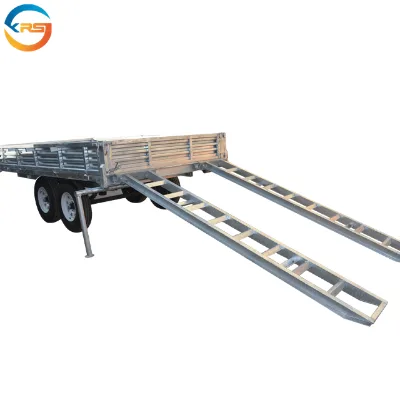

3 Axle Excavator Machinery Transportation Lowbed Semi Trailer with Detachable Ramp
$8000.00 - $17000.00
MOQ: 1 Pieces


Extendable Front Loading Low Bed Trailer for Excavators and Construction Machinery
$19620.00 - $25400.00
MOQ: 1 Pieces

Comprehensive Sourcing Guide
Strategic Sourcing Guide for Excavator Transport Lowbed Semi Trailers
Understanding the Core Product Architecture
The procurement of a lowbed semi-trailer designed specifically for excavator transport requires a precise understanding of the vehicle's structural and functional architecture. Unlike standard cargo trailers, these units are engineered to handle the extreme weight and dimensions of heavy construction machinery. Based on the available market data, the primary configuration observed is the "Low Bed Trailer," often identified by specific model codes such as AND9406TDP or AND9408TDP. These units are fundamentally distinct from flatbed or van-type trailers, as their design prioritizes a low center of gravity to ensure stability during the transport of high-center-of-gravity loads like excavators.
The material composition is a critical first step in evaluation. The supplied facts indicate that the primary structural material is steel, with specific grades ranging from Q345b to Q550d. This variation in steel grade suggests a spectrum of load-bearing capabilities, where higher grades like Q550d offer enhanced tensile strength for the heaviest duty applications. The "Heavy Duty" and "Medium Duty" classifications further segment the market, requiring buyers to align the trailer's structural integrity with the specific tonnage of the excavators they intend to move. For instance, a unit with a stated load capacity of 80T necessitates a robust steel frame and a suspension system capable of managing dynamic loads without structural fatigue.
Technical Specifications and Load Management
When evaluating technical specifications, the dimensions and axle configuration are paramount. The standard dimensions observed in the market data include lengths such as 13750mm and 12200mm, with widths consistently around 3000mm and heights varying between 1750mm and 3100mm. These dimensions are not arbitrary; they are calculated to accommodate the wheelbase and overall footprint of large excavators while adhering to road transport regulations. The wheelbase for these units is typically observed in the range of 9000-10000mm, a specification that directly influences the trailer's turning radius and maneuverability when loaded.
The suspension system is another critical technical differentiator. The market offers a variety of suspension types, including Multi-link Type, Leaf Spring Suspension, and Hydro-Pneumatic Suspension. The choice between these systems depends on the sensitivity of the cargo and the road conditions. For heavy excavators, the Leaf Spring Suspension is a common observation, with specific configurations noted as having 10 layers of leaves to distribute weight evenly. However, for more sensitive or ultra-heavy loads, Hydro-Pneumatic Suspension may be preferred to provide superior shock absorption. The axle configuration is equally vital, with options ranging from Fuwa 13t to BPW 12t axles. The selection of axle brand and capacity must be matched to the total gross vehicle weight to prevent axle overload and ensure legal compliance on public roads.
Compliance, Certification, and Safety Standards
Navigating the regulatory landscape is a non-negotiable aspect of sourcing heavy transport equipment. The compliance requirements vary significantly by destination market, and buyers must verify that the supplier can provide the necessary documentation. The observed certification landscape includes CCC (China Compulsory Certification), ISO standards, DOT (Department of Transportation), and CE marks. The presence of these certifications indicates that the manufacturer adheres to specific safety and quality benchmarks. For example, a trailer intended for the European market must possess CE certification, while those destined for the United States require DOT compliance.
Safety features are integral to the design of these trailers. The braking system is a primary safety component, with Wabco systems frequently cited as a standard option. Wabco brakes are renowned for their reliability in heavy-duty applications, offering precise control during deceleration. Additionally, the Anti-lock Braking System (ABS) is a standard feature observed in the market, designed to prevent wheel lock-up and maintain steering control during emergency stops. The landing gear, often supplied by brands like Jost or Fuwa, is another critical safety element. These gear systems must be robust enough to support the trailer's tare weight, which is observed to be around 12t, and the full load capacity when the trailer is unhitched. The kingpin specification, typically 50#/90# Jost models, ensures a secure connection to the tractor unit, preventing detachment during transit.
Cost Drivers and Pricing Dynamics
The pricing of lowbed semi-trailers is influenced by a complex matrix of factors, including material costs, customization levels, and component branding. The observed price range in the market spans from 540 USD to 26,500 USD. This wide variance is not indicative of a single product type but rather reflects the differences in load capacity, axle configuration, and the inclusion of premium components. A unit priced at the lower end of the spectrum likely features a standard steel grade, basic leaf spring suspension, and generic axle brands. Conversely, a unit at the higher end may incorporate high-grade steel (Q550d), hydro-pneumatic suspension, and premium axle and braking systems from brands like BPW or Wabco.
Customization is a significant cost driver. The market data confirms that customization is available for various attributes, including color, dimensions, and specific component selection. Buyers requesting specific colors such as red or yellow, or custom dimensions like 13750x3000x2800mm, will incur additional costs. Furthermore, the choice of tire brand, such as Triangle or Hankook, and the specific tire model, like 315/80r22.5, impacts the final price. The packing method, whether nude, container loading, or custom, also plays a role in the logistics cost, which is often factored into the total price. Buyers should be aware that the Minimum Order Quantity (MOQ) is typically low, ranging from 1 to 2 units, allowing for flexible procurement strategies without the need for large bulk orders.
Supplier Evaluation and Geographic Considerations
Evaluating suppliers requires a focus on their geographic origin and manufacturing capabilities. The majority of the observed products originate from China, specifically from regions such as Jiaozuo in Henan Province and Shandong Province. These regions are known for their robust manufacturing infrastructure and specialization in heavy vehicle components. When evaluating a supplier, buyers should verify the specific location of the factory, as this can impact lead times and logistics costs. The standard lead time and delivery terms are not explicitly defined in the provided data, so buyers must request this information directly from the supplier.
Supplier reliability is often gauged by their ability to provide detailed product specifications and compliance documentation. A reputable supplier will clearly list the product model, such as ASR5C7AW029 or YJJ9400TDP, and provide a breakdown of the components used. The availability of specific brands for critical components, such as Jost for landing gear and kingpins, or Fuwa for axles, is a strong indicator of a supplier's commitment to quality. Buyers should also inquire about the supplier's experience with international shipping and their ability to handle the specific packing requirements, such as nude loading or container loading, to ensure the equipment arrives in optimal condition.
Quality Control and Long-Term Procurement Strategy
Implementing a rigorous quality control process is essential for mitigating risks associated with heavy equipment procurement. Buyers should request detailed inspection reports that verify the steel grade, welding quality, and the functionality of the braking and suspension systems. The condition of the product is typically listed as "New," but buyers must ensure that this refers to the manufacturing state and not a refurbished unit. Visual inspections should focus on the frame integrity, the alignment of the axles, and the condition of the tires and landing gear.
For long-term procurement, buyers should consider the total cost of ownership rather than just the initial purchase price. This includes factors such as maintenance requirements, the availability of spare parts, and the durability of the components. The use of standardized components from well-known brands like Jost, Fuwa, and Wabco can simplify maintenance and reduce downtime. Additionally, the customization options should be evaluated for their long-term utility; for example, a customizable color scheme may be beneficial for fleet branding, but the paint quality must be durable enough to withstand harsh road conditions.
Comparative Analysis of Key Specifications
To facilitate decision-making, the following table summarizes the key technical and compliance specifications observed in the market for lowbed semi-trailers. This comparison highlights the variability in configurations and helps buyers identify the features that align with their specific operational needs.
| Specification Category | Observation A (Heavy Duty) | Observation B (Medium Duty) | Observation C (Customizable) |
|---|---|---|---|
| Product Model | AND9406TDP / AND9408TDP | YJJ9400TDP | ASR5C7AW029 |
| Load Capacity | 80T | Not Specified | Not Specified |
| Tare Weight | 12t | Not Specified | Not Specified |
| Material Grade | Q345b / Q550d | Not Specified | Steel |
| Suspension Type | Leaf Spring (10 Layers) | Hydro-Pneumatic | Multi-link Type |
| Axle Brand | Fuwa 13t / BPW 12t | Fuwa / BPW / Other | Not Specified |
| Braking System | Wabco | ABS Anti-lock Braking | Not Specified |
| Certification | ISO / TSCCC / DOT / CE | CCC / ISO | Not Specified |
| Origin | Shandong, China | Jiaozuo, Henan, China | Jiaozuo, Henan, China |
| Dimensions | 13750x3000x1750mm | 12200x3000x3080mm | 13750x3000x2800mm |
This table illustrates that while there is a commonality in the use of steel and specific component brands, the specific configuration of the trailer varies significantly based on the intended load capacity and duty cycle. Buyers must carefully cross-reference these specifications with their operational requirements to ensure the selected unit is fit for purpose.
Final Procurement Considerations
In conclusion, sourcing a lowbed semi-trailer for excavator transport is a complex process that demands a thorough understanding of technical specifications, compliance requirements, and supplier capabilities. The market offers a diverse range of options, from standard heavy-duty units to highly customizable models. Buyers should prioritize the verification of certifications, the quality of materials, and the reliability of critical components like axles and braking systems. By conducting a detailed evaluation of the supplier's background and requesting comprehensive technical documentation, buyers can mitigate risks and secure a trailer that meets their operational needs while ensuring safety and compliance on the road. The wide price range and customization options provide flexibility, but they also require a disciplined approach to specification management to avoid unnecessary costs or performance compromises.
FAQs
What certifications do excavator transport lowbed semi trailers have?
These trailers typically hold CCC, ISO, DOT, and CE certifications. Specific models may include TSCCC marks, ensuring compliance with regional safety standards for heavy-duty transport applications.
Which suspension systems are available for these trailers?
Options include Multi-link Type, Leaf Spring Suspension, and Hydro-Pneumatic Suspension. Heavy-duty units often feature 10-layer leaf springs, while others utilize hydro-pneumatic systems for superior shock absorption.
Can I customize the color and dimensions of the trailer?
Yes, customization is available for color, dimensions, and component selection. Buyers can specify colors like red or yellow and request standard or optional dimensions such as 13750x3000x2800mm.
What is the load capacity and tare weight of these units?
Load capacities can reach up to 80 tons with a tare weight around 12 tons. The structural integrity relies on steel grades ranging from Q345b to Q550d to support heavy excavator loads.
Where are these lowbed semi trailers manufactured?
Manufacturing origins include Jiaozuo, Henan, and Shandong, China. These regions host factories producing models like AND9406TDP and YJJ9400TDP with specific component brands like Jost and Fuwa.
What braking systems are installed on these trailers?
Most units are equipped with Wabco braking systems and ABS Anti-lock Braking Systems. These components ensure reliable deceleration and prevent wheel lock-up during emergency stops with heavy loads.
What is the minimum order quantity for purchasing these trailers?
The minimum order quantity ranges from 1 to 2 units. This allows buyers to procure single units or small batches without needing large bulk orders for initial deployment.