Source Expandable Luxury Prefab Modular Home for Hotels, Villas, and Offices
Compare 30 expandable luxury prefab modular homes featuring steel structures, eco-friendly materials, and fast installation for hotels, villas, and offices. These units offer customizable colors, earthquake resistance, and diverse layouts to meet specific project needs.
Key considerations
Products List

China Modular Expandable Container Shipping Container Luxury Prefab Homes
$3450.00 - $4850.00
MOQ: 1 Pieces

Customizable Modular Shipping Container Luxury Prefab Expandable Container Homes
$3450.00 - $4850.00
MOQ: 1 Pieces

Modular Homes Houses Shipping Container House Luxury Prefab Expandable Container Homes
$3450.00 - $4850.00
MOQ: 1 Pieces

Luxury Modular Prefab Houses Expandable Homes 20 FT Modular House Expandable Home House
$3450.00 - $4850.00
MOQ: 1 Pieces

Factory Direct Supply Expandable Modular Panel Steel Structure Container Prefab Home
$3450.00 - $4850.00
MOQ: 1 Pieces


20FT 40FT Prefab Expandable Container House Luxury Prefabricated Modular Homes
$5300.00 - $5500.00
MOQ: 2 Pieces


Luxury Expandable Container House Prefab Modular Home with Smart Home System
$3900.00 - $4300.00
MOQ: 1 Pieces


Modern Expandable Prefab Luxury Container Home for Easy Living
$3000.00 - $8000.00
MOQ: 1 Square Meters


Affordable Expandable Container House Prefab Custom Modular Portable Home
$35.00 - $80.00
MOQ: 100 Square Meters


Hot Selling Expandable Prefabricated Modular House 2 Bedroom Prefab Homes
$3800.00 - $5700.00
MOQ: 1 Pieces


China Living Design Storage Prefabricated Modular Building Prefab Home
$3800.00 - $5700.00
MOQ: 1 Pieces


Expandable Container Homes Prefab Expandable Houseexpandable Prefab House
$9999.00 - $10000.00
MOQ: 1 Sets

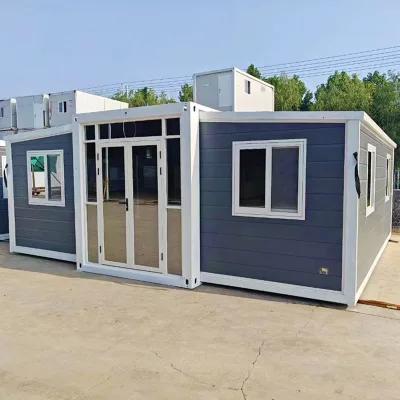
Comprehensive Sourcing Guide
Sourcing Guide for Expandable Luxury Prefab Modular Homes
The global construction sector has witnessed a significant shift toward modular and prefabricated housing solutions, driven by the urgent need for rapid deployment, cost efficiency, and sustainable building practices. Among these innovations, the Expandable Luxury Prefab Modular Home has emerged as a high-value asset for diverse commercial and residential applications. These structures combine the speed of containerized construction with the spatial flexibility of foldable designs, offering a sophisticated living or working environment that can be transported and assembled with minimal on-site labor. For procurement professionals, navigating this market requires a disciplined approach to verifying technical specifications, understanding cost drivers, and ensuring long-term durability. This guide provides a comprehensive framework for sourcing these units, grounded in observed market data and technical realities.
Technical Specifications and Structural Integrity
When evaluating expandable luxury prefab modular homes, the primary focus must be on the structural framework and material composition. The core skeleton of these units typically utilizes a steel structure, often constructed from galvanized steel pipes to ensure resistance against corrosion and structural fatigue. The wall materials are equally critical for thermal performance and safety. Observed specifications indicate the use of 50mm EPS (Expanded Polystyrene) or Rock Wool insulation within the wall panels. Rock Wool, in particular, offers superior fire resistance, which is a vital consideration for luxury applications where safety standards are stringent.
The dimensions of these units are standardized yet flexible. Common lengths observed in the market include 10FT, 20FT, 30FT, and 40FT configurations. When folded for transportation, the dimensions are optimized to reduce logistics costs, with specific folding dimensions recorded as L5900mm x W2200mm x H2480mm for certain models. Upon expansion, the internal space can reach significant proportions, such as L5480mm x W6110mm x H2240mm, providing ample room for residential or office use. The floor system is another key technical element, often utilizing 1.8mm Glass Magnesium Board, which provides a durable, moisture-resistant, and fire-retardant surface.
The structural integrity is further enhanced by features such as earthquake resistance and wind resistance. The design allows for flexible combinations, enabling buyers to create larger complexes by joining multiple units. The sealing properties are engineered to be waterproof and anti-corrosion, ensuring that the internal environment remains dry and protected regardless of external weather conditions. For buyers, verifying these specific material thicknesses and structural dimensions against the supplier's technical datasheet is essential before proceeding with an order.
Compliance, Certification, and Safety Standards
Navigating the regulatory landscape is a critical component of the procurement process for modular homes. While specific certification status varies by supplier and region, buyers must prioritize units that meet international safety benchmarks. A key observation in the market is the classification of fireproof ratings, with some units achieving Grade A fire resistance. This is a crucial differentiator for luxury applications where occupant safety is paramount. Additionally, the sound resistance of these units is a significant factor for comfort, with observed specifications indicating a sound insulation rating of greater than or equal to 30dB.
The structural standards for these homes often align with specific dimensional requirements. For instance, certain models adhere to standards defining a layout of two bedrooms, one living room, and one bathroom, with overall dimensions such as L11800mm x W6240mm x H2480mm for expanded states. Buyers should verify that the supplier can provide documentation confirming compliance with local building codes in the destination country. While some market data references CE certification, this should be treated as a variable attribute that requires direct confirmation from the manufacturer rather than an assumed standard.
Furthermore, the environmental protection aspect of the materials used is increasingly regulated. The use of green environmental protection materials is a common feature, but buyers must request specific material safety data sheets (MSDS) to ensure that the EPS or Rock Wool used does not contain harmful volatile organic compounds (VOCs). The floor live load capacity is another compliance metric, with observed standards supporting a load of 2.5kN/M2, which is sufficient for standard residential and light commercial use.
Cost Drivers and Economic Considerations
The pricing of expandable luxury prefab modular homes is influenced by a complex interplay of factors, including size, customization, and material quality. The observed price range in the market is broad, spanning from $35 to $40,000 USD. This wide variance reflects the difference between basic container units and fully equipped luxury models with refined decoration. The minimum order quantity (MOQ) is typically flexible, with many suppliers offering a starting point of just one unit, making these solutions accessible for individual buyers as well as large developers.
One of the most significant cost drivers is the customization level. The availability of customized colors and flexible layouts allows buyers to tailor the units to specific branding or aesthetic requirements, but this inevitably increases the unit cost. The weight of the units, observed at approximately 1.5 tons for certain models, also impacts transportation costs. However, the spatial efficiency of foldable transportation offers a counterbalance; the ability to transport multiple units in a single container significantly lowers the logistics cost per unit compared to traditional construction or non-foldable modular homes.
Maintenance costs are another economic factor to consider. The observed features of these homes include low maintenance costs and a long service life, with some units boasting a lifetime of more than 30 years, while others are rated for 20 years. The durability of the steel structure and the quality of the sealing properties contribute to reduced long-term operational expenses. Buyers should calculate the total cost of ownership, factoring in the initial purchase price, transportation, installation, and projected maintenance over the lifespan of the structure.
Typical Applications and Functional Versatility
Expandable luxury prefab modular homes are highly versatile, serving a wide array of applications beyond traditional residential housing. The observed market data highlights their suitability for hotels, villas, offices, and apartments. For the hospitality industry, these units offer a rapid deployment solution for temporary or permanent lodging, with features like fast installation and fully equipped interiors allowing for immediate occupancy. The aesthetic appeal, described as modern and pleasing, makes them ideal for boutique hotels or eco-resorts.
In the residential sector, the units function effectively as villas or apartments. The flexible layout allows for the creation of diverse usage requirements, from single-family homes to multi-unit housing complexes. The internal space dimensions support comfortable living arrangements, and the inclusion of amenities such as aluminum or plastic steel windows enhances the livability. For commercial use, the units serve as offices or project sites, providing a secure and professional environment that can be easily moved or expanded as business needs change.
The feature set of these homes, including being easily movable, earthquake resistant, and waterproof, makes them particularly suitable for regions prone to natural disasters or areas where temporary housing is required. The ability to combine units flexibly allows for the creation of large-scale communities or corporate campuses. Whether for a remote construction site, a luxury resort, or a permanent residence, the modular nature of these homes provides a scalable solution that adapts to the specific needs of the project.
Supplier Evaluation and Quality Assurance
Selecting the right supplier is perhaps the most critical step in the procurement process. Buyers should evaluate suppliers based on their ability to provide consistent quality, adherence to specifications, and transparency in their manufacturing processes. The origin of the products is a key factor, with China being a primary manufacturing hub, and specific locations like Dongying noted for production. However, the location of the factory should not be the sole determinant; the quality of the steel structure, the precision of the folding mechanism, and the integrity of the sealing properties are more important.
Quality control measures should be rigorous. Buyers must verify that the supplier conducts tests on the fireproof rating, sound resistance, and structural load capacity. The observation of a Grade A fireproof rating and sound resistance of >=30dB suggests that high-quality units exist in the market, but buyers must ensure that the specific units they purchase meet these standards. The production process should also be inspected to ensure that the 50mm EPS or Rock Wool insulation is applied uniformly and that the galvanized steel pipes are free from defects.
Additionally, the supplier's ability to provide after-sales support and warranty coverage is essential. Given the long lifetime of these units, ranging from 20 to over 30 years, the supplier must be capable of providing replacement parts or technical assistance if issues arise. The standard transportation packaging should be verified to ensure that the units arrive in perfect condition, ready for installation. Buyers should request references from previous clients and, if possible, visit the manufacturing facility to assess the production capabilities firsthand.
Long-Term Procurement and Lifecycle Management
Procuring expandable luxury prefab modular homes is not just a one-time transaction but the beginning of a long-term relationship with the supplier. The lifecycle of these units is designed to be extensive, with lifetimes exceeding 30 years for high-quality models. This longevity is achieved through the use of durable materials like galvanized steel and high-performance insulation. However, to maximize this lifespan, buyers must implement a proactive maintenance strategy.
The low maintenance cost feature of these homes is an advantage, but it does not eliminate the need for regular inspections. Buyers should schedule periodic checks of the sealing properties to ensure waterproofing remains intact and inspect the steel structure for any signs of corrosion. The fast installation feature reduces initial setup time, but the long-term performance depends on the quality of the initial installation and the ongoing care of the unit.
Furthermore, the modularity of these homes offers a unique advantage for future expansion or relocation. As business needs or family requirements change, the units can be disassembled, moved, and reconfigured with minimal disruption. This flexibility ensures that the investment remains relevant and valuable over time. Buyers should plan for this lifecycle by selecting suppliers who offer modular expansion options and who can support the relocation of units if necessary. By focusing on long-term value and lifecycle management, buyers can ensure that their investment in expandable luxury prefab modular homes delivers sustained benefits for decades.
FAQs
What customization options are available for expandable luxury prefab modular homes?
Customized colors are available for these units to meet specific aesthetic requirements. Buyers can also request flexible layouts to diverse usage needs while maintaining the core steel structure and 50mm EPS or Rock Wool wall materials.
Which dimensions are standard for the Expandable Luxury Prefab Modular Home units?
Standard lengths include 10FT, 20FT, 30FT, and 40FT configurations. When folded for transport, specific models measure L5900mm by W2200mm by H2480mm, expanding to internal spaces like L5480mm by W6110mm by H2240mm.
Can these expandable luxury prefab modular homes be installed quickly?
Yes, fast installation is a key feature of these structures, allowing for rapid deployment. The design supports easy assembly, making them suitable for hotels, offices, and villas where time efficiency is critical for project timelines.
What is the minimum order quantity for expandable luxury prefab modular homes?
The minimum order quantity is one unit, making these solutions accessible for individual buyers. This low entry point allows for testing the product or fulfilling small-scale residential and commercial projects without bulk commitments.
How long is the expected lifetime of an Expandable Luxury Prefab Modular Home?
The expected service life ranges from 20 years to more than 30 years depending on the model. This longevity is supported by the durable galvanized steel pipe structure and high-quality sealing properties that resist corrosion and moisture.
Which fireproof rating do these expandable luxury prefab modular homes achieve?
Some units achieve a Grade A fireproof rating, ensuring high safety standards for occupants. This classification is critical for luxury applications and commercial uses where strict building codes regarding fire resistance must be met.
What materials are used for the floor of these expandable luxury prefab modular homes?
The floor system typically utilizes 1.8mm Glass Magnesium Board for durability and moisture resistance. This material provides a safe, fire-retardant surface capable of supporting a floor live load of 2.5kN/M2 for standard use.