Source Explosion-Proof Insulating Hydraulic Cargo Lift for Warehouses Factories Commercial Buildings
Compare 30 explosion-proof insulating hydraulic cargo lift options from verified suppliers. These units feature high-strength steel construction, customizable capacities, and digital control panels for safe operation in warehouses, factories, and commercial buildings.
Key considerations
Products List


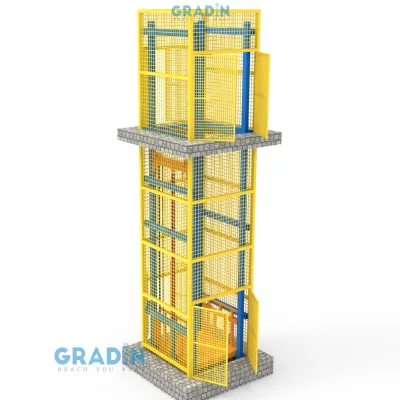


Cargo Lift Hydraulic Cargo Lifting Platform Chinese Outdoor Material Lifting Elevator
$5500.00 - $6150.00
MOQ: 1 Sets
Comprehensive Sourcing Guide
Strategic Sourcing Guide for Explosion-Proof Insulating Hydraulic Cargo Lifts
The procurement of specialized lifting equipment, specifically the explosion-proof insulating hydraulic cargo lift, requires a rigorous approach that balances technical precision with safety compliance. These units are engineered for environments where standard electrical equipment poses a risk, such as chemical processing zones, grain handling facilities, or areas with volatile atmospheres. The core keyword "explosion-proof insulating hydraulic cargo lift" points to a machine designed to prevent ignition sources while ensuring electrical isolation. Buyers must navigate a complex landscape of specifications, certifications, and operational requirements to ensure the selected unit meets the stringent demands of their specific industrial application. This guide outlines the critical factors for sourcing these high-value assets, drawing on verified product attributes and industry standards to facilitate informed decision-making.
Technical Architecture and Operational Specifications
Understanding the mechanical and electrical architecture of the cargo lift is the first step in the sourcing process. The fundamental actuation mechanism for these units is hydraulic, providing the smooth, high-torque lifting power necessary for heavy loads. The observed specifications indicate a lifting speed range of 4 to 6 meters per minute, a figure that can be customized based on the specific operational tempo of the facility. The lifting capacity is a critical variable, with observed ranges spanning from 1 ton up to 100 tons, allowing for scalability across different warehouse and industrial needs. The platform dimensions are equally flexible, with standard configurations observed around 15001800mm to 25002800mm, though customization is explicitly available to fit unique floor layouts.
The structural integrity of the lift relies on high-strength steel and high-duty steel structures, ensuring stability under maximum load conditions. The brake system is a vital safety component, typically utilizing a magnetic brake to ensure the platform remains secure when the hydraulic pressure is released or during power fluctuations. For installation, the system is designed for versatility, capable of being installed in a pit with a depth of 300mm or as a surface-mounted unit without a pit. The overall dimensions are often customized to match the specific site constraints, and the single package size can vary significantly, with some configurations reaching 450x450x350 cm. Buyers must verify that the "Running Mode" aligns with their workflow; while some units are stationary, others are designed for moving applications, and the selection depends on whether the lift is fixed to a specific floor or part of a mobile logistics chain.
Compliance, Certification, and Safety Standards
Safety compliance is non-negotiable when sourcing explosion-proof and insulating equipment. The product attributes highlight specific certifications that serve as indicators of quality and adherence to international safety norms. The observed certifications include ISO, RoHS, CE, and GS. The CE marking is particularly critical for products entering the European market, indicating conformity with health, safety, and environmental protection standards. The GS mark further validates the product's safety for the German and broader European markets. RoHS compliance ensures that the materials used do not contain restricted hazardous substances, which is essential for environmental and worker safety.
For explosion-proof applications, the equipment must be constructed to contain any internal explosions and prevent the transmission of flames to the surrounding atmosphere. The "Insulating" feature suggests that the electrical components are designed to prevent the flow of electricity to the platform or surrounding areas, reducing the risk of short circuits in damp or conductive environments. The voltage specifications observed are 220V/380V, AC power, supporting 1 or 3 phase configurations, with the ability to be customized to local voltage requirements. This flexibility is crucial for international procurement, as electrical grids vary significantly by region. Buyers must verify that the specific unit selected carries the valid certification documents for the target market and that the explosion-proof rating matches the specific hazard zone classification of their facility.
Cost Drivers and Procurement Economics
The pricing structure for hydraulic cargo lifts is highly variable, influenced by the complexity of the customization and the load capacity required. The observed listed price range spans from 1 USD to 71,000 USD, reflecting the vast difference between a small, basic platform and a heavy-duty, fully customized industrial unit. The primary cost drivers include the lifting capacity, which can range from 1 ton to 100 tons, and the platform size, which dictates the amount of high-strength steel required. Customization of the overall dimensions and the specific explosion-proof or insulating features will also significantly impact the final cost.
The Minimum Order Quantity (MOQ) for these specialized units is observed to be between 1 and 2 pieces, making them accessible for single-site deployments or pilot projects. However, the "Selling Capacity" of suppliers is noted at 15000 pieces per year, indicating a robust supply chain capable of handling large orders if required. The packaging method, typically a wooden crate or wrapping film, adds to the logistical cost and must be factored into the total landed cost. Buyers should also consider the "Single gross weight," which can reach 800 kg for certain configurations, affecting shipping and handling expenses. When evaluating cost, it is essential to look beyond the unit price and consider the total cost of ownership, including installation, maintenance, and the potential for future customization.
Typical Applications and Industry Suitability
The versatility of the explosion-proof insulating hydraulic cargo lift allows it to serve a wide array of industrial sectors. The observed applications include building cranes, warehouse cranes, shipboard cranes, and workshop cranes. This breadth of use highlights the lift's adaptability to both static and dynamic environments. In warehousing, these lifts are essential for moving goods between different levels, particularly in facilities where flammable materials are stored. The "Applicable Industries" list includes building material shops, food shops, food and beverage factories, garment shops, and even home use, demonstrating the product's scalability from heavy industrial to light commercial settings.
The specific features of the lift make it ideal for environments where safety is paramount. The explosion-proof design is critical for chemical plants, oil refineries, and grain silos where dust or vapors could ignite. The insulating feature is beneficial in food processing plants where hygiene and electrical safety are required to prevent contamination or accidents. The "Usage" is defined as goods lift and cargo lift, emphasizing its role in material handling rather than personnel transport, although safety protocols must always be strictly followed. The "Key Words" associated with these products—cargo lift, goods lift, platform—reinforce their primary function in logistics and material movement. Buyers should match the specific application requirements with the lift's capabilities, ensuring the "Safe Working Load" and "Lifting Height" (observed between 3.2m and 8m) align with their operational needs.
Supplier Evaluation and Quality Assurance
Selecting the right supplier is as important as selecting the right product. The "Brand Name" observed is Gradin, and the "Prod Origin" is Shandong, China, a region known for its manufacturing capabilities. However, buyers should not rely solely on brand recognition; they must conduct a thorough evaluation of the supplier's production capacity and quality control processes. The "Selling Capacity" of 15000 pieces per year suggests a high-volume manufacturer, but buyers must verify if the specific supplier has the capacity to handle custom orders without compromising quality.
Quality control should focus on the verification of materials and the integrity of the hydraulic system. The "Material" is specified as high-strength steel and high-duty steel structure, which must be verified through material certificates. The "Condition" of the product is listed as "New," but buyers should request proof of this status and inspection reports. The "Control" system, which can be a digital display control panel or manual, must be tested for reliability and ease of use. The "Lift Mechanism" is identified as a lift chain, which requires regular inspection for wear and tear. Buyers should also inquire about the "Installation" process, which is described as "Easy Install," but this should be validated against the specific site conditions. The "Single package size" and "Single gross weight" should be cross-referenced with the supplier's logistics capabilities to ensure safe transport.
Long-Term Procurement and Maintenance Considerations
Procuring a hydraulic cargo lift is a long-term investment that requires planning for maintenance and lifecycle management. The "Customization" feature is a double-edged sword; while it allows for a perfect fit, it can complicate future repairs if parts are not standardized. Buyers should ensure that the supplier provides a comprehensive spare parts list and that the "prod_standard" is documented clearly to facilitate future maintenance. The "Installed" configuration, whether in a pit or without, affects the long-term maintenance schedule, particularly regarding the hydraulic fluid and the pit drainage system.
The "Speed" of the lift, observed at 4-6m/min, and the "Lift Speed" being customizable, should be matched to the operational efficiency requirements of the facility. Over time, the "Running Mode" and "Control" systems may require upgrades or replacements, so buyers should check the availability of these components. The "Weight" of the unit, which can be customized, impacts the foundation requirements and the long-term structural integrity of the installation. Buyers should also consider the "Selling Units" structure, which is listed as a single item, meaning that the entire unit is purchased as a package, and any future expansion may require additional units. Finally, the "prod_packing" of wooden crates or wrapping film should be considered for storage and transport of spare parts, ensuring that the equipment remains protected over its lifespan.
Comparative Analysis of Key Specifications
To assist in the decision-making process, the following table summarizes the key technical and operational specifications observed in the market for explosion-proof insulating hydraulic cargo lifts. This comparison highlights the variability and customization options available to buyers.
| Specification Category | Observed Range / Standard | Customization Availability | Critical Verification Point |
|---|---|---|---|
| Lifting Capacity | 1 ton - 100 tons | Yes | Verify Safe Working Load (3t or Customized) |
| Platform Dimensions | 15001800mm - 25002800mm | Yes | Ensure fit with existing floor layout |
| Lifting Height | 3.2m - 8m | Yes | Check Min. Lifting Height (150mm) |
| Lift Speed | 4-6 m/min | Yes | Match to operational cycle time |
| Voltage | 220V/380V (AC) | Yes | Confirm local voltage compatibility |
| Certifications | ISO, RoHS, CE, GS | N/A | Verify valid certificates for target market |
| Material | High Strength Steel | Yes | Request material test reports |
| Brake Type | Magnetic Brake | N/A | Test brake engagement under load |
| Installation | Pit (300mm) or Surface | Yes | Verify site preparation requirements |
| Control System | Digital or Manual | Yes | Evaluate user interface and safety features |
This table serves as a reference for buyers to compare different suppliers and models. It is crucial to note that while these ranges are observed, the final specifications must be confirmed with the supplier before placing an order. The "prod_model" TP-CL-01 is one example, but the "prod_standard" is often customized, meaning that buyers should not assume a standard model will fit all needs without verification. The "Keywords" such as "heavy duty" and "stability elevator" should be backed by concrete test data or certification reports rather than marketing claims. By focusing on these verified attributes, buyers can mitigate risk and ensure the procurement of a reliable, safe, and efficient cargo lift system.
FAQs
What certifications do these lifts have?
These lifts carry ISO, RoHS, CE, and GS certifications. The CE and GS marks indicate conformity with European safety standards, while RoHS ensures restricted hazardous substances are not used in the construction.
How much can the lift carry?
The load capacity ranges from 1 ton to 100 tons depending on the model. Buyers can select a Safe Working Load of 3 tons or request a customized capacity to match specific industrial requirements.
Can the platform dimensions be customized?
Yes, the platform dimensions are fully customizable to fit unique floor layouts. Standard sizes range from 1500 by 1800mm up to 2500 by 2800mm, but the manufacturer can produce specific sizes upon request.
What is the lifting speed of the unit?
The standard lifting speed is between 4 and 6 meters per minute. This speed can be customized to align with the operational tempo of your specific facility or warehouse workflow.
How is the lift installed on site?
The unit can be installed in a pit with a depth of 300mm or mounted on the surface without a pit. The design allows for easy installation, adapting to existing floor conditions.
What power source does the system use?
The system operates on AC electric power with voltage options of 220V or 380V. It supports 1 or 3 phase configurations and can be adapted to local voltage requirements for international deployment.
Is the material high strength steel?
Yes, the structure is built using high-strength steel and high-duty steel components. This material choice ensures stability and durability under maximum load conditions for heavy-duty industrial applications.