Find explosion-proof insulating mobile shop crane for workshops, warehouses, and maintenance
Source 30 explosion-proof insulating mobile shop crane models with varying lifting capacities and boom ranges. Compare specifications from Jiaxing and China suppliers to find the right unit for workshop usage and industrial maintenance tasks.
Key considerations
Products List


Heavy Duty 2ton Portable Shop Crane for Engine Lifting with CE Certified
$120.00 - $135.00
MOQ: 50 Pieces


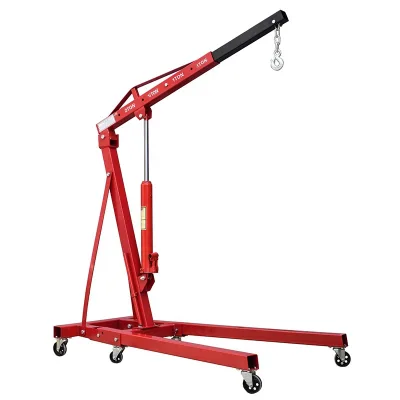


Easy Operation Portable Counter Balance Shop Crane Semi Electric Mobile Crane
$599.00 - $699.00
MOQ: 1 Pieces


Lifting Equipment Hydraulic Warehouse Mobile Small Mini Crane Shop Crane
$1100.00 - $1660.00
MOQ: 1 Pieces


Good Standard Shop Crane 500kg 2ton Electric Hoist Crane Mobile Crane for Rolls
$2800.00 - $3500.00
MOQ: 1 Pieces

Comprehensive Sourcing Guide
Strategic Sourcing Guide for Explosion-Proof Insulating Mobile Shop Cranes
The procurement of specialized lifting equipment, specifically explosion-proof insulating mobile shop cranes, requires a rigorous approach that balances technical precision with safety compliance. In industrial environments where flammable gases, dust, or explosive atmospheres are present, the selection of a crane is not merely a logistical decision but a critical safety mandate. Buyers must navigate a complex landscape of technical specifications, certification requirements, and operational constraints to ensure the selected equipment meets the exact demands of their facility. This guide provides a structured framework for evaluating potential suppliers and products, focusing on the observable attributes of the current market inventory while emphasizing the verification of safety standards.
Technical Specifications and Operational Capabilities
When evaluating mobile shop cranes, the primary focus must be on the physical parameters that define their utility and safety profile. The available market data indicates a diverse range of lifting capacities and dimensions, suggesting that a single model rarely fits all applications. Buyers should scrutinize the maximum lifting weight, which in the observed inventory ranges below 20 tons. This upper limit is significant for heavy industrial applications, but the specific requirement for an explosion-proof unit often dictates a more conservative approach to load management to ensure stability in hazardous zones.
The lifting height and working range are equally critical. Observed data shows maximum lifting heights under 10 meters, with specific models offering boom working ranges between 800mm and 2360mm. The lifting range, defined as the vertical travel distance, varies from 0-1300mm to 0-2015mm depending on the model. For an insulating crane, the boom length and articulation must be sufficient to reach the work area without compromising the insulating properties of the materials used. The product models identified, such as the OY5105D, OY5105W, and OY5105B, demonstrate distinct configurations. For instance, the OY5105B features a capacity of 2 tons, while the OY5105A-2 is noted as a "Small Crane" with a specific net weight of 80kg.
Weight distribution is another vital technical consideration. The gross weight (G.W.) and net weight (N.W.) figures provided in the inventory vary significantly, ranging from 13kg to 82kg for individual units, with some composite data showing dual weight values (e.g., 29kg/14kg). These variations likely reflect different configurations or packaging states. Procurement teams must verify the actual operational weight of the crane to ensure compatibility with the floor loading capacity of the workshop. Furthermore, the packing standards, such as the dimensions 1093218CM or 802814, must be accounted for in logistics planning to prevent damage during transit, which could compromise the insulating integrity of the equipment.
Compliance and Certification Verification
The term "explosion-proof" implies a stringent set of safety requirements that go beyond standard industrial lifting equipment. While the supplied data explicitly lists "ISOCE" as a certification attribute, buyers must exercise extreme caution. In the context of explosion-proof equipment, certifications typically refer to specific international standards such as ATEX (Europe), IECEx (International), or UL (North America) for hazardous locations. The presence of "ISO 9001" in the background data suggests a quality management system, but this is distinct from product-specific safety certification for explosive atmospheres.
Buyers must verify that the supplier can provide valid, current certificates for the specific model being purchased. The standard "IEC 60079" mentioned in the background data relates to electrical equipment for explosive gas atmospheres, but its inclusion here is marked as low-confidence. Therefore, it should not be assumed that any listed product automatically complies with this standard. The procurement process must include a direct request for the specific explosion-proof certification documents that cover the electrical components, the insulating materials, and the mechanical structure of the crane.
The origin of the products, noted as Jiaxing or China in the inventory, does not inherently determine compliance. Buyers should treat the "New" condition and "Available" customization options as positive indicators but must insist on third-party verification of the explosion-proof rating. The customization feature is particularly relevant, as it may allow for the modification of insulating lengths or the integration of specific safety features required by local regulations. However, any customization must be performed by the manufacturer or an authorized entity to maintain the validity of the certification.
Cost Drivers and Pricing Dynamics
Understanding the cost structure of explosion-proof insulating cranes is essential for budgeting and total cost of ownership analysis. The observed price range in the market spans from 1 USD to 12,000 USD, a vast disparity that reflects the difference between basic manual hoists and complex, certified electric systems. The lower end of this spectrum likely corresponds to simple, non-powered lifting aids or smaller capacity units, while the higher end encompasses fully integrated, certified explosion-proof systems with advanced control mechanisms.
Several factors drive these costs. First, the certification process itself is expensive, involving rigorous testing and documentation. Second, the materials used for insulation and explosion-proof housing are specialized and costlier than standard steel or aluminum. Third, the customization options, such as specific boom lengths or unique electrical configurations, add to the final price. The Minimum Order Quantity (MOQ) observed ranges from 1 to 50 units. For buyers requiring a single unit for a specific hazardous zone, an MOQ of 1 is advantageous, whereas larger procurement projects might benefit from the economies of scale associated with higher volumes.
Buyers should also consider the weight and dimensions as cost drivers. Heavier units with larger working ranges, such as those with a 2-ton capacity or a boom range up to 2360mm, will inherently cost more due to material usage and manufacturing complexity. The packaging standards, which vary from simple cartons to specific dimensional crates, also impact shipping costs. A comprehensive cost analysis should include not only the purchase price but also the logistics of transporting these heavy, specialized items, which may require specialized handling equipment.
Typical Applications and Operational Environments
The application of explosion-proof insulating mobile shop cranes is highly specialized, primarily serving industries where the risk of ignition is a constant threat. The inventory explicitly mentions "Workshop Usage" as an application, which is a broad category. More specifically, these cranes are indispensable in petrochemical plants, oil and gas refineries, chemical processing facilities, and grain handling plants. In these environments, the presence of flammable gases, vapors, or combustible dusts necessitates equipment that cannot generate sparks or excessive heat.
The insulating property of the crane is crucial for preventing electrical short circuits that could trigger an explosion. This is particularly important in environments where moisture or conductive dusts are present. The varying lifting ranges, from 0-1300mm to 0-2360mm, allow these cranes to be deployed in different spatial configurations within a workshop. For example, a crane with a shorter lifting range might be used for precise component assembly in a confined space, while a unit with a longer range could be used for moving heavy machinery in a large storage area.
The "Small Crane" classification found in the data suggests that these units are often designed for flexibility and mobility within a workshop setting. They are not intended for heavy outdoor construction but rather for precise, controlled lifting tasks in a controlled, albeit hazardous, indoor environment. The ability to customize the boom working range and lifting height allows for adaptation to specific workflow requirements, ensuring that the crane can reach all necessary points without the need for repositioning the entire unit, which could be hazardous in an explosive atmosphere.
Supplier Evaluation and Quality Assurance
Selecting the right supplier is as critical as selecting the right product. Given the safety-critical nature of explosion-proof equipment, buyers must evaluate suppliers based on their technical expertise, manufacturing capabilities, and commitment to quality. The observed data indicates that customization is available, which is a strong indicator of a supplier's flexibility and engineering capability. However, buyers should verify that the customization process does not compromise the explosion-proof rating or the insulating properties of the crane.
Quality control should be a central part of the supplier evaluation. Buyers should inquire about the manufacturer's quality assurance processes, including incoming material inspection, in-process testing, and final product verification. The "New" condition of the products is a baseline requirement, but buyers should also look for evidence of rigorous testing protocols. The specific product models, such as the OY5105 series, should be cross-referenced with the supplier's track record in producing similar units.
The origin of the products, whether Jiaxing or other regions in China, should not be the sole determinant of quality. Instead, buyers should focus on the supplier's reputation, their history of compliance with international standards, and their willingness to provide detailed technical documentation. The ability to provide a clear chain of custody for the certification documents is a key indicator of a reliable supplier. Additionally, the supplier's responsiveness to technical queries and their ability to offer post-sales support are vital for long-term operational success.
Long-Term Procurement and Maintenance Considerations
Procuring an explosion-proof insulating mobile shop crane is a long-term investment that requires careful planning for maintenance and lifecycle management. The "Carton" or "Cartoon" packing mentioned in the data suggests that the packaging is designed for protection during transit, but it does not necessarily imply long-term storage solutions. Buyers should consider the storage requirements for these units, especially if they are to be kept in a hazardous environment when not in use.
Maintenance is a critical aspect of ensuring the continued safety and functionality of the crane. The insulating materials and explosion-proof seals must be regularly inspected for wear and tear. Any damage to these components can render the crane unsafe for use in hazardous areas. Buyers should establish a maintenance schedule that includes regular checks of the lifting mechanisms, electrical systems, and structural integrity. The specific weight and dimensions of the crane will influence the maintenance requirements, as heavier units may experience more wear on their moving parts.
Furthermore, the availability of spare parts is a key consideration. Given the specialized nature of explosion-proof equipment, spare parts may not be readily available from general suppliers. Buyers should ensure that the supplier can provide a steady supply of replacement components, such as insulating sleeves, seals, and electrical connectors. The customization options available at the time of purchase can also impact long-term maintenance, as unique configurations may require specialized parts that are not standard in the industry.
Comparative Analysis of Key Product Attributes
To facilitate a clearer understanding of the available options, the following table summarizes the key attributes of the observed product models. This comparison highlights the variations in capacity, weight, and dimensions that buyers must consider when selecting the appropriate crane for their specific needs.
| Product Model | Capacity | Max. Lifting Height | Boom Working Range | G.W. (kg) | N.W. (kg) | Application |
|---|---|---|---|---|---|---|
| OY5105D | <20t | <10m | 930-1300mm | 29 / 14 | 28 / 13 | Workshop |
| OY5105W | 1000lbs | <10m | 1200-1800mm | 28 | 26 | Workshop |
| OY5105B | 2ton | <10m | 800-1500mm | 30 | 27 | Workshop |
| OY5102B-Q | 2000lbs | <10m | 0-2360mm | 25 / 65 | 22 / 63 | Workshop |
| OY5102B-75KG | 75KG | <10m | 0-2350mm | 77 | 75 | Workshop |
| OY5105A-2 | Small Crane | 2150mm | 870-1290mm | 82 | 80 | Workshop |
This table illustrates the diversity in the market, with capacities ranging from 75kg to 2 tons, and boom working ranges extending up to 2360mm. The variation in gross and net weights underscores the importance of verifying the specific configuration before making a purchase decision. Buyers should use this data as a starting point for their technical evaluation, ensuring that the selected model aligns with their specific operational requirements and safety standards.
In conclusion, sourcing an explosion-proof insulating mobile shop crane requires a meticulous approach that prioritizes safety, compliance, and technical suitability. By carefully evaluating the technical specifications, verifying certifications, understanding cost drivers, and assessing supplier capabilities, buyers can make informed decisions that ensure the safe and efficient operation of their facilities. The availability of customization and the diversity of product models offer flexibility, but the ultimate responsibility lies with the buyer to ensure that the selected equipment meets the rigorous demands of hazardous environments.
FAQs
What is the maximum lifting weight for these cranes?
The maximum lifting weight is below 20 tons for the available models. Specific units range from 1000lbs to 2 tons, with the OY5105B reaching a capacity of 2 tons.
Can I customize the boom working range for my workshop?
Yes, customization is available for these mobile shop cranes. The boom working range varies by model, spanning from 800mm to 2360mm depending on the specific configuration selected.
Which certification is listed for these explosion-proof units?
The product attributes explicitly list ISOCE as the certification. Buyers must verify specific explosion-proof ratings like ATEX or IECEx separately as ISOCE alone may not cover all hazardous zone requirements.
How does the lifting height compare to the boom range?
The maximum lifting height is under 10 meters across the inventory. Specific models offer lifting ranges from 0-1300mm up to 0-2360mm, while the OY5105A-2 has a max height of 2150mm.
What is the minimum order quantity for these cranes?
The minimum order quantity ranges from 1 to 50 units. This flexibility allows buyers to purchase single units for specific hazardous zones or larger batches for facility-wide deployment.
Where are these explosion-proof cranes manufactured?
The products originate from Jiaxing and China. Buyers should verify the specific factory location and quality assurance processes for each model to ensure compliance with safety standards.
Can I find small cranes for workshop usage?
Yes, the inventory includes small cranes specifically designed for workshop usage. The OY5105A-2 is identified as a small crane with a net weight of 80kg and a gross weight of 82kg.