Source Extendable Wind Turbine Blade Trailer for farms, logistics, transport
Compare 30 Extendable Wind Turbine Blade Trailer options with varying load capacities, suspension types, and customization features. Buyers can evaluate specifications for transporting heavy wind turbine components across diverse industrial applications; compare the available evidence and request quotations based on your requirements.
Updated
Key considerations
Products List
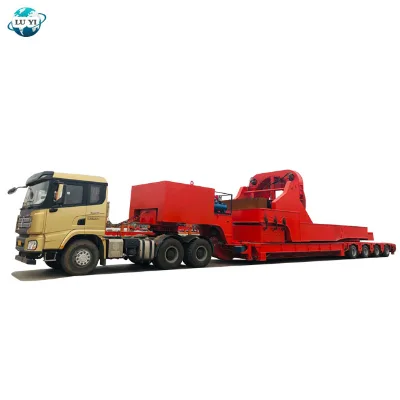


3 Axle Extendable Trailer for Windmill Blade Cargo Transportation Sale
$30000.00 - $44980.00
MOQ: 1 Unit
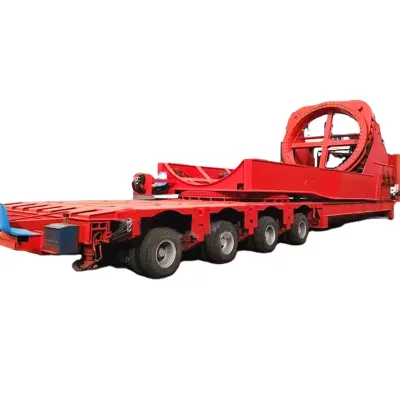
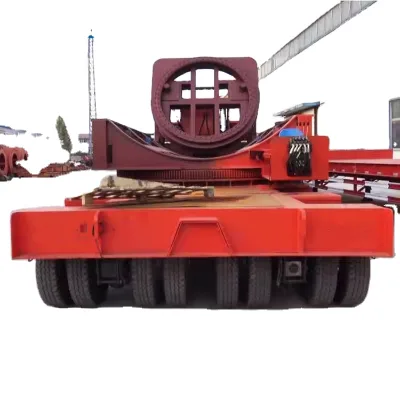
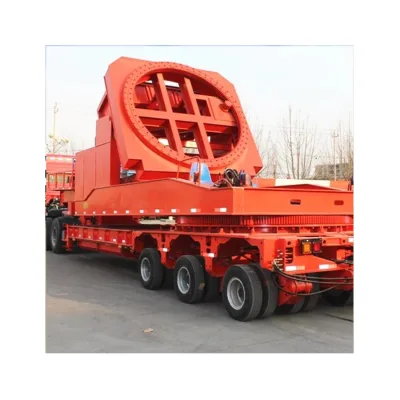
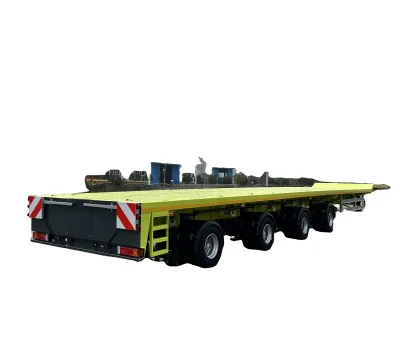
Extendable Trailers Wind Tower Transport Solutions Wind Blade Trailers Wind Tower
$34000.00 - $35000.00
MOQ: 1 long
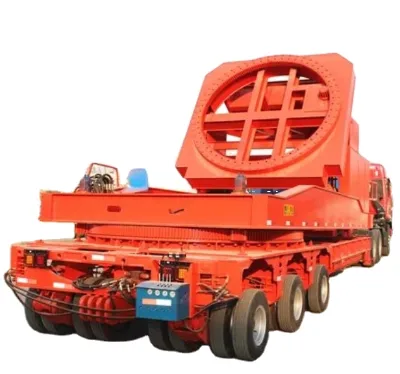
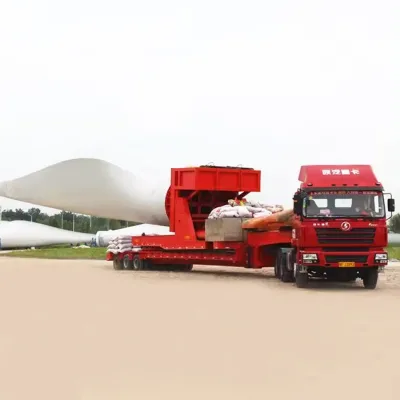


Wind Turbine Transport Trailer Windmill Trailer Wind Blade Trailer
$30000.00 - $45000.00
MOQ: 1 Pieces

Wind Turbine Unit Blade Trailer for Transport Trucks of Wind Turbines
$8500.00 - $12000.00
MOQ: 1 Pieces

Wind Blade with Rotor Adapter Extendable Wind Blade Turbine Truck Trailer
$100000.00 - $180000.00
MOQ: 1 Pieces

Blades Wind Turbine Trailer Extendable Hydraulic Windmill Blade Transport Semi Trailer
$13500.00 - $15000.00
MOQ: 1 Pieces


Windblade Transport Trailer Extendable Hydraulic Windmill Blade Transport Semi Trailer
$13500.00 - $15000.00
MOQ: 1 Pieces

Telescopic 20-80m Over Length Wind Turbine Windmill Blade Trailer Extendable Lowbed Trailer
$23000.00 - $30000.00
MOQ: 1 Pieces
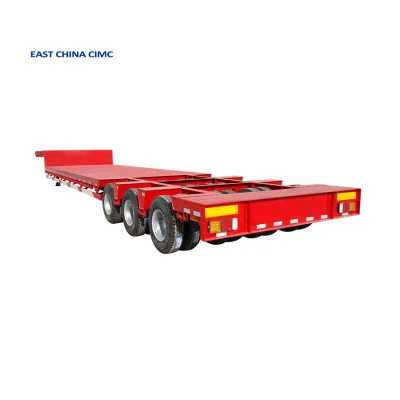
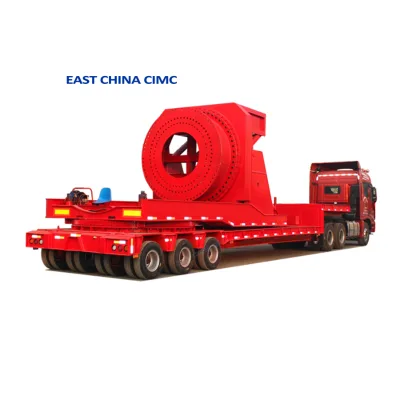
3 Axles 45m 360-revolving Transport Wind Turbine Blade Trailer for Sale
$177116.9004 - $179170.4297
MOQ: 1 sets
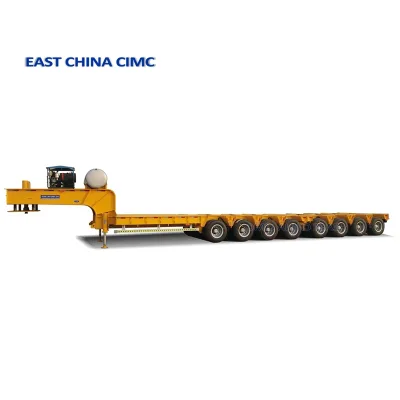
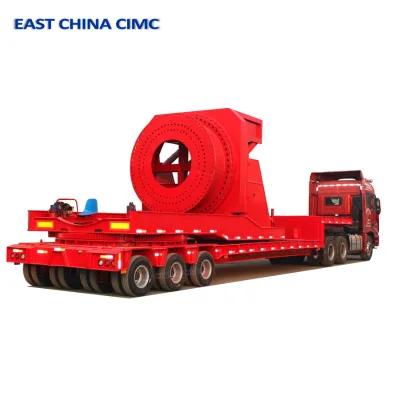
Factory Direct Sale Turbine Semi Trailer 40m Long Wind Blade Flatbed Trailer
$27950.00 - $31650.00
MOQ: 1 sets
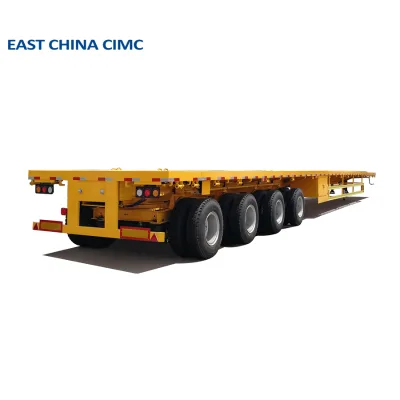
China Brand Heavy Equipment Transfer Semi-trailer for Wind Turbine Blade Transport Semi Trailer
$29256.6317 - $36797.1913
MOQ: 1 sets
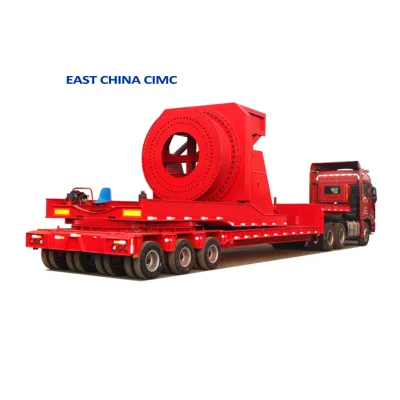
High Quality Wind Blade Traile Hydraulic Steering System Lifting Fan Blade Transport Semi-Trailer
$31922.1133 - $37415.3041
MOQ: 1 sets
Comprehensive Sourcing Guide
Extendable Wind Turbine Blade Trailer Sourcing Guide
Sourcing an Extendable Wind Turbine Blade Trailer requires a disciplined approach because these are engineered heavy-haul assets rather than catalog commodities. Listings observed for this equipment class span a wide price band — from roughly $8,500 to $180,000 — with minimum order quantities typically set at a single unit, which signals a project-driven, customization-heavy market. Buyers should therefore treat each listing as a starting point for specification dialogue, not a fixed offer.
The purpose of this guide is to help procurement teams evaluate listed configurations against actual transport routes, blade lengths, and regulatory obligations. Because payload ratings, chassis geometry, and hydraulic systems vary significantly between advertised models, verification of stated specifications before contracting is the single most effective way to avoid costly mismatches after delivery.
Product Scope and Observed Listing Signals
Listed products in this category include wind blade trailers and wind blade low bed trailers from manufacturing bases in Shandong and Jiangsu, China. Observed attributes describe heavy-duty steel flatbed semi-trailers with load capacities around 80T and payload windows of 50–100 tons, intended specifically for wind turbine blade transport. Some listings reference hydraulic steering modular trailers, indicating that extendable and modular platforms are sold alongside conventional low bed designs. Customization is explicitly marked as available, and adapted blade models are listed as customized rather than standard.
Commercial signals also matter. Observed delivery windows of 20–30 working days appear on some listings, wheelbases cluster in the 7,000–9,000 mm range, and prices vary widely depending on configuration. Certification marks shown as "ISOCE" appear on listed items, though buyers must confirm which certificates apply to their specific ordered configuration. Treat advertised attributes as per-model observations, not guarantees that every listing satisfies them.
Technical Specifications to Verify
Begin with the structural envelope. Verified listings cite tread widths of 2,240 mm, axle spacing of 1,500 mm, wheel spacing of 1,800/735 mm, and platform height around 1,175±300 mm — the last figure being especially important for extendable designs, since adaptive height compensation affects blade ground clearance during transport. Wheelbase figures of 8,000–9,000 mm and a wheelbase reference of 1,550 mm on modular units appear in listings; confirm which geometry applies to your route's turning requirements. Wheel angle capability of 55° is listed for hydraulic steering units and directly influences maneuverability on constrained site roads.
Driveline and load-bearing details demand equal scrutiny. Listings reference hydraulic suspension, cross arm suspension types, kingpin options of 2" or 3.5" Jost brand, tire sizes such as 215/75R17.5 and 12R22.5/1100R20/1200R20, and permitted speeds of 0.5/5/40/80 km/h. Verify rated payload per axle line, the exact extension range of the extendable deck, and the blade adapter design against your specific blade model before signing.
Compliance and Safety Documentation
Request documentation that ties each advertised certification to the actual unit being quoted. Listings display "ISOCE" certification marks, but buyers should ask suppliers to state precisely which certificate numbers, issuing bodies, and scope documents cover the ordered trailer — a generic mark on a product page does not confirm conformity of a customized build. Because blade transport operates on public roads, also clarify which road-legal requirements in the destination market the supplier designs to, and request drawings supporting dimensional legality.
Safety systems should be documented, not assumed. Observed listings advertise ABS anti-lock braking, and some reference self-dumping versus non-self-dumping configurations — confirm which behavior your operation requires. Ask for hydraulic circuit schematics, weld procedure records, and load test procedures for the extension mechanism. Request that factory acceptance testing of braking, steering, and hydraulic functions be witnessed or video-documented, with test criteria agreed in writing before production begins.
Cost Drivers and Commercial Terms
Pricing in this category is configuration-driven, which explains the observed $8,500–$180,000 spread. Key cost levers include payload rating (50T vs. 80T vs. 100T), the number of axle lines, hydraulic versus mechanical suspension, the extension mechanism's complexity, steel grade and material choices, and the degree of customization of the blade adapter. Modular hydraulic steering platforms command higher prices than fixed low bed designs. Packaging also affects landed cost: observed listings cite nude packaging with waxing, which suits ocean freight but should be confirmed against your route and storage conditions.
Commercial terms to pin down include delivery lead time — observed at 20–30 working days on some listings, though customized builds may differ — incoterms, payment milestones tied to inspection stages, and warranty coverage for hydraulic and extension components. Because MOQ is typically one unit, negotiate per-unit terms carefully. Request a formal quotation that itemizes each specification option so that competing offers can be compared like-for-like.
Supplier Qualification and Quality Control
Qualify suppliers on manufacturing capability rather than marketing claims. Verify that the producer operates its own fabrication lines for main beams and hydraulic assemblies, and ask for references from prior wind blade transport projects. Origin information on observed listings points to Shandong and Jiangsu, China; request factory audits — virtual or on-site — covering welding quality control, material traceability, and final assembly inspection. Confirm the supplier's engineering capacity to adapt the trailer to your specific blade model, since adapted blade models are listed as customized.
Quality control should be contractually structured across production stages: material certificates at steel sourcing, dimensional inspection of the extendable beam mechanism during fabrication, hydraulic pressure testing before dispatch, and a pre-shipment inspection against the agreed specification sheet. Require that any third-party inspection you commission be granted access by the supplier as a written condition. Retain the right to reject units failing dimensional or functional acceptance criteria, with defined remedies.
Long-Term Procurement Checks
Plan for the operating life of the asset, not just delivery. Hydraulic suspension systems, extension mechanisms, and kingpin interfaces are the highest-wear elements in blade transport service, so secure spare parts availability, hydraulic component sourcing, and documented maintenance intervals as part of the purchase agreement. Ask how tire specifications (such as 12R22.5 or 215/75R17.5 patterns) can be replaced locally in your market, and whether the supplier supports remote technical consultation for hydraulic steering calibration after installation.
Finally, build a relationship structure for repeat procurement. Wind fleet expansion typically drives additional trailer orders, so record the as-built configuration of every unit — dimensions, axle ratings, adapter drawings, and test records — in a controlled document set. This enables fleet uniformity, simplifies driver training across speed regimes like the listed 0.5/5/40/80 km/h settings, and strengthens your negotiating position on future orders. Periodically re-verify that the supplier's certifications remain valid across production years.
FAQs
How much load capacity does an Extendable Wind Turbine Blade Trailer have?
Listed models carry between 50 and 100 tons, with one configuration rated at 80T. Actual capacity depends on the axle configuration, hydraulic suspension setup, and customization chosen for the blade model. Buyers should confirm the payload rating against the specific blade length and weight before ordering, since adapted blade models are customized to each transport requirement.
What suspension system does a wind blade transport trailer use?
The Extendable Wind Turbine Blade Trailer uses hydraulic suspension in a cross arm type layout, which helps distribute load and maintain blade stability. Some listed configurations also offer mechanical, air, or bogie suspension alternatives. The suspension choice affects ride height, load distribution, and steering performance, so it should match the route conditions and blade specifications for your transport project.
What is the delivery lead time for a customized wind blade trailer?
Delivery typically takes 20 to 30 working days after order confirmation. This lead time can vary with the level of customization, since blade models are adapted to customer specifications, and with production scheduling at the factory. Buyers should factor additional time for shipping and any certification documentation into their project schedule when ordering from overseas suppliers.
Can the trailer be customized for specific wind turbine blade models?
Yes, customization is available and the adapted blade model is specified as customized. Manufacturers can adjust deck length, extension range, payload rating, and steering configuration to suit particular blade dimensions. Customization also covers size standards, so buyers should provide blade length, weight, and transport route details early so the factory can engineer the trailer correctly within the lead time.
What braking and safety features are included on these trailers?
The trailer is equipped with an ABS anti-lock braking system, which supports vehicle stability during braking under heavy loads. Kingpin options include 2 inch or 3.5 inch Jost brand fittings for coupling with compatible tractors. Buyers should verify that braking and coupling configurations match the tractor units and road regulations applicable in the destination region before finalizing an order.
What is the MOQ and packaging for wind blade trailer orders?
The minimum order quantity is one unit, which allows buyers to purchase a single trailer for a project or trial order. Packaging is a nude package with waxing, which protects the steel structure against corrosion during ocean transport. Buyers arranging shipment should confirm whether the single-item selling unit and gross weight of around 17,000 kg affect container or roll-on transport choices.
Which wheel and axle configurations are available for these trailers?
Listed configurations show wheel bases of 7000 to 9000 mm, a tread of 2240 mm, axle spacing of 1500 mm, and wheel spacing of 1800 or 735 mm. Tire options include 12R22.5, 1100R20, and 1200R20 sizes. Steering speed settings range from 0.5 to 80 km/h with a 55 degree wheel angle, supporting maneuverability on tight wind farm access roads.
Where are these wind blade trailers manufactured and certified?
Products are listed from Shandong and Jiangsu in China, with one model certified ISOCE under heavy-duty grade standards. Origin affects shipping time, cost, and inspection arrangements for international buyers. Certification should be verified for the exact model ordered, since specifications differ between the extendable blade trailer and hydraulic steering modular trailer variants offered on the platform.