Source Fancy Glass Perfume Bottle for Cosmetics, Gifts, and Daily Use
Explore 30 listings for the Fancy Glass Perfume Bottle, comparing options from Taiwan and China. Buyers can evaluate square and cylindrical designs with various sealing types and customization features for personal care applications.
Key considerations
Products List


Glass Fancy Perfume Empty Inner Spray Color Glass Fragrance Spray Bottle
$0.50 - $0.56
MOQ: 5000 Pieces


Fancy Luxury Unique Style Creative Empty Refillable Glass Perfume Bottle
$0.14 - $0.17
MOQ: 10000 Pieces


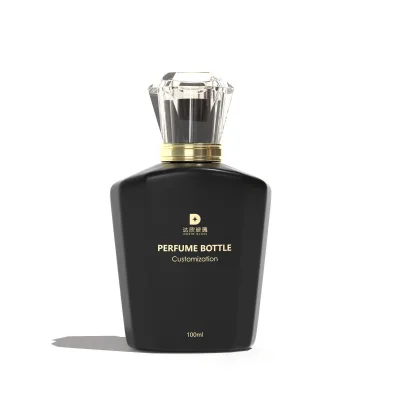


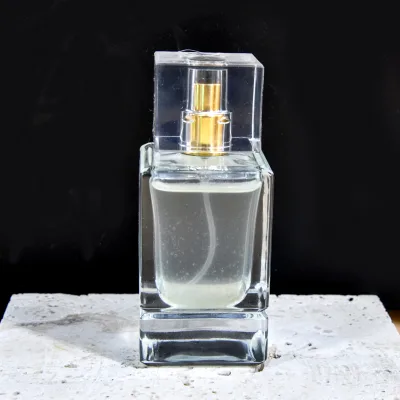
Fancy Crystal Luxury Empty Crimp Glass Perfume Bottles 30ml 50ml 100ml
$0.15 - $0.45
MOQ: 10000 Pieces


Comprehensive Sourcing Guide
Strategic Sourcing Guide for Fancy Glass Perfume Bottles
Navigating the global market for fancy glass perfume bottles requires a disciplined approach that balances aesthetic requirements with rigorous supply chain verification. For procurement professionals, the term "fancy" often implies specific design elements, such as unique shapes, specialized closures, or premium surface finishes, but the underlying technical specifications must be validated against actual supplier capabilities. This guide synthesizes observed market data and standard industry practices to provide a framework for sourcing high-quality glass containers for fragrance and personal care applications. The focus remains on factual attributes, verified specifications, and risk mitigation strategies rather than unverified marketing claims.
Technical Specifications and Design Variability
The foundation of any successful procurement for glass perfume bottles lies in understanding the precise technical specifications available in the current market. Observed data indicates a diverse range of product models, including identifiers such as WL-10024, BTL2550, PBL2334, BTL2631, BTL2546, JC-7-0, and XS494. These model numbers often correspond to specific capacity standards and dimensional profiles. Buyers must recognize that capacity standards vary significantly across listings, with observed volumes ranging from 30ml to 100ml. Specific entries highlight standards such as 30ml, 50ml, 80ml, and 100ml, while others note a general volume constraint of less than 100ml.
Shape is a critical differentiator in the "fancy" category. The market presents distinct geometric options, including square profiles and cylindrical forms. The cylindrical shape is frequently associated with standard models like BTL2550, whereas square designs are noted in other listings. The material composition is consistently identified as glass, with specific references to "melt glass" as the base material type. This distinction is important for buyers assessing the thermal stability and clarity of the final product. Furthermore, the surface handling capabilities observed include screen printing, which allows for direct branding on the glass surface. However, buyers should verify if this applies to all listed models or is specific to certain customization requests.
Closure Systems and Sealing Mechanisms
The functionality of a perfume bottle is heavily dependent on its sealing mechanism. The observed market data reveals a bifurcation in closure types, with both pump sprayers and screw caps being available. For fragrance applications, the sealing type is often a pump sprayer, designed to deliver a fine mist. Specific product attributes list "Spray Pump" and "Closure Type: Spray Pump" as standard features for models intended for perfumes and fragrances. Conversely, other listings specify a "Screw Cap" as the sealing type, which may be more suitable for roll-on applications or specific cosmetic formulations that do not require atomization.
The bottleneck design also plays a pivotal role in the selection process. The data indicates the availability of "Narrow Mouth Bottle" configurations, which are standard for pump mechanisms to ensure proper fit and function. Buyers must ensure that the selected bottle's bottleneck diameter matches the supplier's provided sprayer or cap specifications. Additionally, the presence of accessories such as "without Handle" for cup-like glass items suggests that certain designs are intended for standalone use rather than as part of a larger set. When sourcing for high-end perfumes, the integrity of the seal is paramount to prevent evaporation and leakage, making the verification of the specific closure type against the intended product formulation a mandatory step.
Compliance, Certification, and Material Standards
In the realm of glass packaging, compliance and material safety are non-negotiable. While some background information mentions REACH, this should be treated as a general industry reference rather than a guaranteed attribute of every listed product. Buyers must actively verify that suppliers can provide specific compliance documentation relevant to their target markets. The observed product quality attribute lists "SGS" as a quality indicator. This suggests that third-party testing may be available for certain models, but it does not automatically imply that every SKU in a supplier's catalog holds this certification. Procurement teams should request current SGS reports or equivalent third-party test results to confirm that the glass and any inks used in screen printing meet safety standards for contact with cosmetics and fragrances.
Standardization is another critical area. The data references specific volume standards like "100ML" and "80ML," as well as a broader range of "30ML 50ML 80ML 100ML." These standards serve as benchmarks for production consistency. However, buyers should not assume that a supplier can meet all listed standards simultaneously without confirmation. The "prod_standard" field often indicates the capacity of the specific model, but variations in wall thickness and glass density can affect the actual fill volume. Therefore, verification of the actual standard against the supplier's production line capabilities is essential to avoid discrepancies in the final product.
Cost Drivers and Minimum Order Quantities
Understanding the cost structure of glass perfume bottles is vital for budgeting and inventory planning. The observed price range in the market spans from 0.05 to 1.35 USD per unit. This wide variance is likely driven by factors such as glass thickness, design complexity, surface treatment (e.g., screen printing), and order volume. The minimum order quantity (MOQ) is a significant cost driver, with observed ranges extending from 10 pieces to 20,000 pieces. Some listings specify an MOQ of 10,000 pieces, while others indicate 20,000 pieces. This high MOQ threshold is typical for glass manufacturing due to the energy-intensive molding and firing processes involved.
Buyers must navigate these MOQ constraints carefully. For smaller brands or trial runs, an MOQ of 10 pieces might be available, but this likely comes with a significantly higher unit cost. Conversely, securing a unit price near the lower end of the 0.05 USD range typically requires adhering to the higher MOQs of 10,000 or 20,000 pieces. Payment terms observed include T/T (Telegraphic Transfer), which is a standard method for international trade but requires careful management of cash flow. The packaging method, noted as "Export Standard Packaging" or "Carton Pallet," also influences logistics costs. Bulk shipping via ship, air, or courier is available, but the choice of method will impact the total landed cost and lead time.
Supplier Evaluation and Geographic Considerations
Supplier evaluation must extend beyond the product catalog to include geographic and logistical factors. The observed data points to origins in Taiwan (specifically Taipei) and China (including Xuzhou). These regions are known for their glass manufacturing capabilities, but the specific origin can influence lead times and shipping costs. For instance, products originating from Xuzhou, China, may have different logistical profiles compared to those from Taipei. Buyers should verify the specific origin city for each order to accurately estimate shipping durations and customs requirements.
When evaluating suppliers, the "No Brand" attribute observed in some listings indicates that many manufacturers operate as OEM/ODM providers. This is advantageous for buyers seeking private label solutions, as the "OEM/ODM: Accepted" attribute confirms that customization is a core service. However, the lack of a specific brand name on the product itself means the buyer must rely on the supplier's reputation and quality control processes. The "Customization: Available" attribute further supports the ability to tailor designs, but buyers should confirm the scope of customization, including color options like "Transparent" glass and specific surface handling techniques.
Quality Control and Long-Term Procurement
Ensuring consistent quality in glass perfume bottles requires a robust quality control (QC) protocol. The "Feature" attributes listed include "Disposable, Recyclable, Degradable," which suggests an environmental focus. However, buyers must verify if these features apply to the glass itself or the packaging materials, as glass is inherently recyclable but not degradable in the traditional sense. The "Surface Handling: Screen Printing" also requires QC checks to ensure ink adhesion and resistance to fading or smudging, especially for bottles that may be exposed to humidity or handling.
For long-term procurement, consistency in the product model is key. The existence of multiple model numbers (e.g., BTL2550 vs. BTL2631) suggests that suppliers may have different production lines for different shapes or capacities. Switching between models or suppliers can introduce variability in dimensions and performance. Therefore, establishing a long-term relationship with a supplier who can consistently produce the specific model (e.g., WL-10024 or XS494) is preferable. Buyers should also consider the "Pacjaging" (Packaging) standards, ensuring that the "Carton or Pallet" methods used are sufficient to prevent breakage during transit, especially given the fragile nature of glass.
Application Suitability and Market Alignment
The final consideration in sourcing is the alignment of the bottle with its intended application. The data lists applications such as "Gift, Personal Care," "Daily Use," and specifically "Perfume Bottle, Cosmetics, Personal Care Product." The "Age Group: Adult" designation further narrows the target demographic. Buyers must ensure that the chosen bottle's design, size, and closure type match the brand's positioning. For example, a "Square" bottle with a "Pump Sprayer" might be ideal for a luxury gift set, while a "Cylinder" shape with a "Screw Cap" might be better suited for daily use personal care products.
The volume constraints, such as "50ml" for perfume bottles and "100ml" for fragrance bottles, should be matched to the product's market positioning. Smaller volumes like 30ml are often used for travel sizes or samples, while larger volumes cater to full-size retail products. By carefully mapping the observed specifications to the intended application, buyers can optimize their sourcing strategy to meet both functional and aesthetic requirements without compromising on quality or supply chain efficiency.
Comparative Overview of Key Attributes
To facilitate quick decision-making, the following table summarizes the key attributes observed in the market for fancy glass perfume bottles. This comparison highlights the variability in specifications that buyers must navigate.
| Attribute Category | Observed Options | Notes for Verification |
|---|---|---|
| Material | Glass, Melt Glass | Confirm glass thickness and clarity. |
| Shape | Square, Cylinder | Verify dimensions against design mockups. |
| Volume/Standard | 30ml, 50ml, 80ml, 100ml, <100ml | Check actual fill capacity vs. stated standard. |
| Sealing Type | Pump Sprayer, Screw Cap | Ensure compatibility with formula viscosity. |
| Origin | Taiwan (Taipei), China (Xuzhou) | Assess lead times and shipping costs per region. |
| MOQ | 10, 10,000, 20,000 Pieces | Align with budget and inventory turnover plans. |
| Surface Handling | Screen Printing | Verify ink durability and color accuracy. |
| Customization | OEM/ODM Accepted, Available | Confirm scope of design changes and tooling costs. |
| Certification | SGS (Observed), REACH (Background) | Request current test reports for compliance. |
This structured approach ensures that buyers can systematically evaluate potential suppliers and products, minimizing risk and maximizing the likelihood of a successful procurement outcome for fancy glass perfume bottles.
FAQs
What sealing types are available for fancy glass perfume bottles?
Both pump sprayers and screw caps are available for these glass bottles. The specific type depends on the product model, with narrow mouth designs often paired with pump sprayers for fragrance atomization.
Which shapes can I find for fancy glass perfume bottles?
You can find square and cylindrical shapes in the current market listings. Square profiles are noted for specific models, while cylindrical designs are common for standard capacity options ranging from 30ml to 100ml.
Can I customize the volume of these glass perfume bottles?
Yes, customization is available for various volume standards including 30ml, 50ml, 80ml, and 100ml. Buyers should verify specific capacity requirements against the supplier's production capabilities before placing an order.
What is the minimum order quantity for these glass bottles?
Minimum order quantities range from 10 pieces to 20,000 pieces depending on the supplier and model. Higher volume orders often secure lower unit prices, while small trials may start at 10 pieces.
How are these fancy glass perfume bottles packaged for shipping?
Products are typically packed using export standard packaging, carton pallets, or by ship, air, and courier. The specific method depends on the order size and the supplier's logistics capabilities to prevent breakage.
Which materials are used to manufacture these perfume bottles?
The bottles are made from glass, specifically identified as melt glass in some listings. This material ensures clarity and thermal stability suitable for personal care and fragrance applications.
What surface handling options exist for these glass bottles?
Screen printing is the observed surface handling method available for branding these glass bottles. Buyers should confirm ink adhesion and durability standards, especially for products exposed to humidity.