Source Fanless Industrial Nano Itx Motherboard for POS, Kiosk, Edge
Find 30 Fanless Industrial Nano Itx Motherboard options with varying CPU, memory, and I/O configurations. Compare specifications for POS systems, kiosks, and edge computing applications to select the right hardware for your deployment.
Key considerations
Products List


Nano Itx Motherboard, J4125 Quad Core Dual Ethernet Mother Board, Small Mainboard
$135.00 - $170.00
MOQ: 1 Pieces


Embedded Intel OEM Fanless Mini Itx Motherboard/Mother Board/Main Board
$155.90 - $189.90
MOQ: 2 Pieces


Mini Itx I3 Motherboard for Industrial Computer with Processor 12th Generation
$131.90 - $149.90
MOQ: 10 Pieces

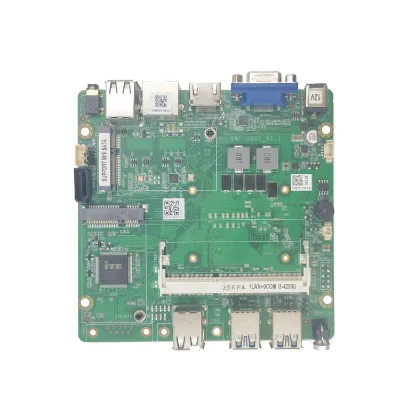


OEM Industrial 6 COM Ports Mini Itx Motherboard for Factory Automation Control
$130.00 - $135.00
MOQ: 1 Pieces


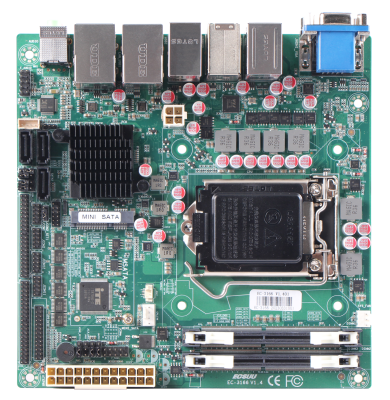
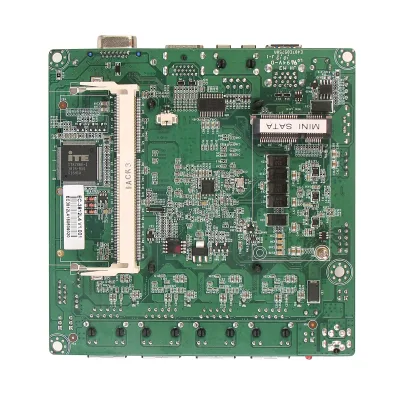
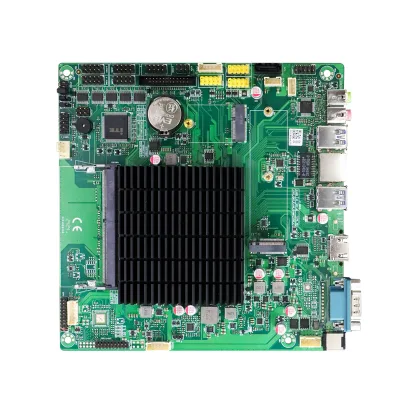
Industrial Fanless Motherboard with Celeron J6412 for Self-service Terminals
$88.00 - $98.00
MOQ: 1 pieces


Comprehensive Sourcing Guide
Strategic Sourcing Guide for Fanless Industrial Nano ITX Motherboards
Understanding the Nano ITX Form Factor and Thermal Design
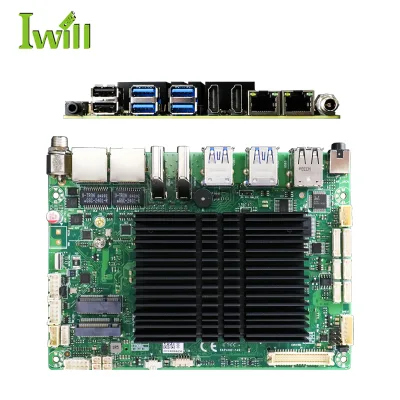
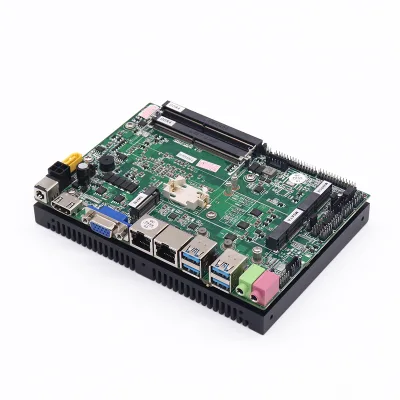
The Fanless Industrial Nano Itx Motherboard represents a specialized category of embedded computing hardware designed for environments where reliability, silence, and compact dimensions are paramount. Unlike standard consumer motherboards, these units integrate the cooling solution directly into the chassis or the board itself, utilizing passive heat dissipation methods. The observed product data indicates a specific structural constraint where the board standard is defined as 120mm x 120mm or 170mm x 170mm, aligning with the Nano ITX and Mini-ITX form factors respectively. This compact footprint allows for integration into tight enclosures such as Point of Sale (POS) terminals, industrial control panels, and compact network appliances.
A critical observation in the current market landscape is the variation in cooling architecture. While the core keyword specifies "fanless," the supply chain includes units explicitly labeled with "Fanless" cooling, which rely on large aluminum heatsinks and thermal pads to transfer heat from the processor to the enclosure. This design choice eliminates moving parts, thereby reducing the primary point of mechanical failure and removing the noise associated with active cooling fans. However, buyers must verify that the specific thermal design of the selected unit matches the ambient operating temperature of the intended deployment site. The documented operating temperature range for some units spans from -20℃ to 70℃, a specification that dictates the suitability of the board for harsh industrial environments without the need for additional climate control.
Technical Specifications and Processor Architecture
The technical core of these motherboards is defined by the integrated processor architecture, which has shifted from older Atom-based designs to more modern Intel Celeron and Elkhart Lake series chips. The supply data reveals a diversity in chipset capabilities, ranging from the Intel Celeron J1900 at 2.0GHz Quad Core to the newer Intel Celeron N100 at 0.8GHz Quad Core, and the Intel J4125 2.00GHz Quad Core Processor. This variance suggests that procurement strategies must be driven by specific performance requirements rather than a generic assumption of capability.
Memory support is another critical technical differentiator. The observed specifications show a split between legacy and modern memory standards. Some units support 1x DDR3L slots with a maximum capacity of 8GB, while newer iterations feature 1x DDR4 slots capable of supporting up to 32GB of RAM. This distinction is vital for applications running complex operating systems or virtualization layers. Furthermore, the integrated graphics capabilities are consistent across the observed range, with most units featuring integrated graphics suitable for driving multiple displays. Display output options vary, with some boards supporting VGA, HDMI, and LVDS for synchronous or asynchronous display configurations, while advanced models offer DisplayPort, HDMI 2.0, and Type-C connectivity.
Storage interfaces also demonstrate significant evolution. While earlier models rely on SATA 2.0 and mSATA slots, contemporary boards in the dataset include SATA 3.0 interfaces and M.2 Key-M slots supporting 2280 and 2242 form factors. This progression allows for faster boot times and higher data throughput, essential for modern industrial applications requiring rapid data logging or local database access.
Connectivity and Expansion Capabilities
Industrial applications often demand extensive connectivity that exceeds the capabilities of standard consumer hardware. The observed product data highlights a robust array of serial and network interfaces. A standout feature in several models is the inclusion of multiple serial ports, with some units offering up to six RS232 serial ports, with support for RS485 and RS422 protocols. This is a crucial specification for connecting legacy industrial machinery, PLCs, and sensors that rely on serial communication rather than modern Ethernet protocols.
Network connectivity is equally diverse. While some units are equipped with a single Realtek RTL8111F Gigabit Ethernet port, others feature high-performance Intel I225 or I226 controllers providing four 2.5 Gigabit Ethernet ports. This variation is significant for buyers considering the board for network security appliances like pfSense, where multi-port configurations are required for WAN/LAN separation or high-throughput routing. Additionally, expansion slots such as Mini-Pcie are available to support WiFi or 3G modules, ensuring connectivity in remote or mobile deployment scenarios.
The following table summarizes the connectivity variations observed in the current supply:
| Feature Category | Low-End / Legacy Configuration | High-End / Modern Configuration |
|---|---|---|
| Serial Ports | 2 RS232 ports | Up to 6 RS232/RS485/RS422 ports |
| Ethernet | 1x Gigabit (Realtek) | 4x 2.5G (Intel I225/I226) |
| USB Ports | 2 USB 2.0 | 2 USB 3.0, 2 USB 3.1, 1 Type-C |
| Storage | SATA 2.0 + mSATA | SATA 3.0 + M.2 Key-M 2280/2242 |
| Display | VGA + HDMI | DP, HDMI 2.0, Type-C |
Compliance, Certification, and Environmental Standards
When sourcing industrial-grade hardware, verifying compliance with environmental and safety standards is non-negotiable. The provided data mentions specific packing standards, such as "Netural Package" or "Netrual Carton Box," which implies a focus on logistics efficiency, but does not explicitly confirm third-party safety certifications. Buyers must independently verify that the manufacturer adheres to relevant international standards for electronic equipment, such as RoHS (Restriction of Hazardous Substances) and CE marking, which are common in the Chinese manufacturing sector but not guaranteed by the product listing alone.
The operating temperature range of -20℃ to 70℃ is a specific performance claim that must be validated against the actual deployment environment. In industrial settings, dust, humidity, and vibration are common factors that can degrade electronic components over time. While the fanless design reduces dust intake, the lack of active airflow means that heat buildup can be a risk if the enclosure is not properly ventilated or if the ambient temperature exceeds the board's rated limit. Buyers should request thermal testing reports or compliance certificates that confirm the board's ability to sustain operation under the specific load conditions of the intended application.
Cost Drivers and Procurement Economics
The cost of fanless industrial nano ITX motherboards is influenced by several key factors, primarily the processor generation, memory capacity, and the density of I/O ports. The observed price range of 50 to 335.8 USD reflects the significant disparity between older, lower-specification models and newer, high-performance units. The Intel Celeron N100 and Elkhart Lake series processors, which offer better performance per watt and support for DDR4 memory, command a premium over the J1900 and J4125 platforms.
Minimum Order Quantity (MOQ) is another economic variable. The data indicates an MOQ range of 1 to 10 units, suggesting that suppliers are flexible for small-batch prototyping or pilot deployments, which is advantageous for startups or research projects. However, for large-scale production runs, buyers should negotiate volume discounts, as the per-unit cost often decreases significantly with higher order volumes. Customization availability is also a cost driver; while many suppliers offer standard configurations, custom PCB layouts, specific BIOS configurations, or unique I/O port arrangements will likely incur additional engineering fees and longer lead times.
Supplier Evaluation and Quality Assurance
Evaluating suppliers for industrial motherboards requires a rigorous approach beyond simple price comparison. Since the product origin is identified as China, buyers should prioritize suppliers with a proven track record in the embedded industry and a clear supply chain for components. The absence of specific supplier names in the data necessitates a due diligence process where buyers verify the manufacturer's capacity to support long-term product lifecycles. In the industrial sector, a product discontinuation can be catastrophic if replacement parts are unavailable years later.
Quality control processes are essential to mitigate the risks associated with electronic manufacturing. Buyers should inquire about the supplier's testing protocols, including burn-in testing, thermal cycling, and functional testing of all I/O ports. The presence of "Customization: Available" suggests that the supplier has the engineering capability to adapt products, but this also introduces variability. Standardized testing procedures must be agreed upon before production begins to ensure that every unit meets the specified performance criteria. Additionally, the packaging method, whether "Netural Package" or "Netrual Carton Box," should be evaluated for its ability to protect the boards during international shipping, especially given the delicate nature of the soldered components and connectors.
Long-Term Procurement and Application Viability
The selection of a Fanless Industrial Nano Itx Motherboard is a long-term investment that impacts the entire lifecycle of the deployed system. Applications such as POS terminals, network appliances, and industrial control systems often have lifespans of five to ten years. Therefore, the procurement strategy must account for the availability of spare parts and the longevity of the component supply chain. The transition from DDR3 to DDR4 and from SATA 2.0 to SATA 3.0 indicates a market moving toward higher performance, but it also means that older platforms may become obsolete faster.
Buyers should consider the specific use case when making a final decision. For instance, a POS system requiring multiple serial ports for receipt printers and barcode scanners would benefit from the 6-port COM configuration, whereas a network security appliance would prioritize the 4x 2.5G Ethernet ports. The "Fanless" attribute is a double-edged sword; while it ensures silence and reliability, it requires careful thermal management in the final enclosure design. If the enclosure is sealed or poorly ventilated, the passive cooling may be insufficient, leading to thermal throttling or system instability.
In conclusion, sourcing a Fanless Industrial Nano Itx Motherboard requires a balanced assessment of technical specifications, environmental constraints, and supplier reliability. By carefully analyzing the processor architecture, I/O capabilities, and compliance standards, buyers can select a solution that meets the rigorous demands of industrial applications while ensuring long-term operational stability. The diversity in the current market offers options for every budget and performance tier, but the final choice must be grounded in a thorough understanding of the specific operational requirements of the target deployment environment.
FAQs
What processors are available on these fanless boards?
These boards feature integrated Intel processors such as the Celeron J1900, J4125, N100, or Elkhart Lake series. The specific chip determines performance, with options ranging from 0.8GHz to 2.0GHz quad-core configurations suitable for various industrial tasks.
Can I find boards with six serial ports?
Yes, certain models include up to six RS232 serial ports with support for RS485 and RS422 protocols. This configuration is ideal for connecting multiple legacy industrial devices, PLCs, and sensors in compact POS or control systems.
What memory capacities do these motherboards support?
Memory capacity varies by model, with some supporting up to 8GB via DDR3L slots and others reaching 32GB via DDR4 slots. Buyers must verify the specific model to ensure compatibility with their required RAM amount and generation.
How do these boards handle cooling without fans?
These units utilize passive cooling with large aluminum heatsinks to dissipate heat without moving parts. They are designed to operate within specific temperature ranges, such as -20°C to 70°C, ensuring reliability in harsh environments.
Which storage interfaces are supported on these boards?
Storage options include SATA 2.0, SATA 3.0, and M.2 slots supporting 2280 or 2242 form factors. Older models may use mSATA, while newer units offer faster SATA 3.0 and M.2 Key-M interfaces for improved data throughput.
What Ethernet port configurations are available?
Ethernet configurations range from a single Realtek Gigabit port to four Intel 2.5G ports. High-end models feature multiple 2.5G ports suitable for network appliances, while basic units may offer only one Gigabit connection.
Are these boards customizable for specific needs?
Customization is available for many of these motherboards to meet specific application requirements. Buyers can request tailored BIOS configurations or unique I/O arrangements, though this may affect lead times and unit costs.