Source Fast Installation Folding Container House for Dormitories, Warehouses, Shelters
Source 30 listings of fast installation folding container houses designed for dormitories, warehouses, and emergency shelters. Compare features like wind resistance, waterproof ratings, and folding methods to find the right temporary structure for your project needs.
Key considerations
Products List


Fast Installation Folding Container House for Warehouse Affordable and Reusable
$1100.00 - $1500.00
MOQ: 1 Pieces


Lightweight & Portable Foldable Container House Easy to Transport & Install
$649.00 - $749.00
MOQ: 1 Pieces


Fast Assemble Foldable Container House Portable Folding Container House
$999.00 - $1300.00
MOQ: 10 Pieces


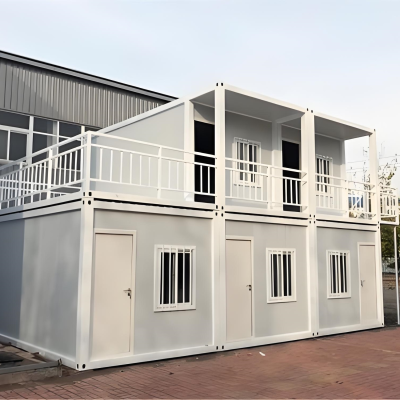


High Quality Folding Container House Fast Assembly House Save Time and Effort
$900.00 - $1400.00
MOQ: 8 Pieces


Collapsible House Folding Container House with Quick Setup for Storage
$1200.00 - $1600.00
MOQ: 1 Sets

Foldable Container House Designed for Easy Transport and Setup/Integrated House
$1399.00 - $1499.00
MOQ: 1 Pieces
Comprehensive Sourcing Guide
Strategic Sourcing Guide for Fast Installation Folding Container Houses
The global demand for rapid-deployment housing solutions has surged, driven by the need for emergency relief, temporary workforce accommodation, and flexible commercial spaces. Among the various options available, the Fast Installation Folding Container House has emerged as a critical asset for construction sites, disaster zones, and temporary commercial ventures. This guide provides a comprehensive, evidence-based framework for procurement professionals evaluating these units. It focuses on interpreting technical specifications, verifying compliance, understanding cost structures, and establishing robust supplier evaluation criteria without relying on unverified marketing claims.
Technical Architecture and Structural Integrity
The core value proposition of a folding container house lies in its structural design, which balances portability with durability. Based on observed market data, these units typically utilize a steel structure as the primary load-bearing framework. This material choice ensures the necessary rigidity to withstand environmental stressors while allowing for the folding mechanisms that define the product category. The connection method is a critical technical differentiator; high-performance units employ a hinged folding structure with a buckle fixing system. This design facilitates rapid assembly and disassembly, reducing on-site labor time significantly compared to traditional modular buildings.
When evaluating the physical specifications, buyers must scrutinize the dimensions and payload capacity. Observed models indicate a standard effective payload ranging approximately from 22.2 to 28.7 tons, which suggests these units are engineered to support heavy loads or multiple stacked configurations. The floor area for standard 20-foot models is observed to be approximately 14.4 square meters, providing a compact yet functional living or working space. The folding method itself can vary between hydraulic and manual operations. Hydraulic systems offer greater speed and reduced physical effort during deployment, whereas manual systems may offer lower maintenance requirements in remote locations. Buyers should verify the specific folding mechanism against their operational constraints and site accessibility.
Performance Metrics and Environmental Resistance
Environmental resistance is paramount for temporary structures intended for harsh conditions. The observed data highlights specific performance ratings that serve as benchmarks for quality. Wind resistance is a critical metric, with high-confidence observations citing Level 11 resistance and operational wind speeds between 90 and 110 km/hour. This indicates a robust capacity to withstand severe weather events, making these units suitable for coastal or high-wind regions. Similarly, seismic performance is rated as excellent, with specific models noted as suitable for seismic zones and capable of withstanding Grade 10 seismic resistance. This is a vital consideration for procurement in earthquake-prone areas.
Waterproofing and fire safety are equally non-negotiable. The observed waterproof rating of IP65 suggests a high degree of protection against dust and low-pressure water jets, ensuring the interior remains dry during heavy rainfall. Some data points mention a 99.9999% waterproof claim, though buyers should treat such specific percentages as marketing observations rather than guaranteed standards without third-party verification. Fire resistance is consistently rated at Level A or Grade A, indicating a high standard of non-combustibility. Additionally, thermal insulation and moisture-proofing features are standard, contributing to the habitability of the units in varying climates. Sound insulation properties are observed to be greater than or equal to 30dB, providing a baseline for acoustic privacy in multi-unit setups.
Compliance Verification and Certification Protocols
In the B2B procurement landscape, compliance verification is the primary filter for supplier selection. While specific certifications like CE are mentioned in background data, buyers must not assume this status applies to all listed products without direct confirmation from the manufacturer. The procurement process must include a rigorous request for documentation regarding fire ratings, wind load calculations, and seismic testing. The observed fire resistance rating of Level A and the seismic suitability for specific zones should be backed by official test reports from accredited laboratories.
Buyers should also verify the adherence to international or local building codes relevant to the deployment location. The standard dimensions observed, such as 585248254 cm or L9000W6240H2200mm, must align with local transport regulations and zoning laws. For instance, the "Container" standard designation implies compliance with ISO shipping container norms, which facilitates intermodal transport. However, the "Sandwich Panel" material used in wall construction requires verification of thermal conductivity and fire spread ratings specific to the destination country's regulations. Procurement teams must insist on a compliance matrix that maps every product attribute to a specific regulatory requirement, rather than relying on general claims of "Eco-Friendliness" or "Safety."
Cost Drivers and Total Cost of Ownership
The pricing for fast installation folding container houses varies significantly, with observed ranges spanning from $649 to $6,999. This wide disparity is driven by several key cost drivers. The primary factor is the material composition; units utilizing a pure steel structure may differ in cost from those incorporating sandwich panels or specialized cladding. The complexity of the folding mechanism is another major variable. Hydraulic systems inherently cost more than manual counterparts due to the inclusion of pumps, motors, and control systems.
Furthermore, the customization level heavily influences the final price. While the standard models offer a baseline, features such as external cladding support, customized door and window configurations (e.g., steel/glass doors, aluminum double glass windows), and specific color options add to the unit cost. The observed minimum order quantity (MOQ) ranges from 1 to 10 units, suggesting that small-batch procurement may incur a higher per-unit cost compared to bulk orders. Buyers should also factor in the "Service Life" and "Reusability" into their Total Cost of Ownership (TCO) analysis. While some data points suggest a service life of 10 years, others indicate a potential lifetime of more than 30 years. This discrepancy highlights the need to evaluate the quality of the steel and the durability of the folding joints. A unit with a longer lifespan and higher reusability, even at a higher initial price, often yields a lower TCO over a decade of use.
Typical Applications and Deployment Scenarios
The versatility of fast installation folding container houses allows them to serve a diverse array of applications. The observed data identifies four primary use cases: construction site temporary dormitories, temporary storage, field workstations, and emergency disaster relief shelters. In the context of construction, these units provide immediate accommodation for workers, eliminating the need for prolonged setup times. Their "Easily Movable" and "Flexibly Combinable" features allow for infinite horizontal and vertical splicing, enabling the creation of larger complexes that can be reconfigured as project needs evolve.
Beyond construction, the units are increasingly utilized for temporary storage and field workstations, where rapid deployment is essential. The "Emergency Disaster Relief" application is particularly critical; the combination of earthquake resistance, wind resistance, and waterproofing makes these units ideal for post-disaster scenarios where infrastructure is compromised. Additionally, the "Apartment" and "Villa" applications suggest a growing trend toward using these units for semi-permanent residential or hospitality purposes. The ability to support 1-4 bedrooms and the option for external cladding allow for a more finished aesthetic, bridging the gap between industrial utility and residential comfort.
Supplier Evaluation and Quality Assurance
Selecting the right supplier requires a multi-dimensional evaluation strategy. Buyers must move beyond price comparisons to assess the supplier's technical capability and quality control processes. The "Fast Installation" attribute is a standard claim, but the actual implementation varies. Suppliers should demonstrate their installation process through video evidence or on-site case studies, specifically highlighting the "Standard Installation" versus "Fast Installation" capabilities. The "Hinged Folding Structure with Buckle Fixing System" must be inspected for precision engineering; loose tolerances can lead to structural failure during deployment.
Quality assurance should focus on the "Reusability" aspect. The supplier must provide data on the number of folding cycles the unit can withstand without structural degradation. The "Warranty" period, observed to be 12 months in some cases, serves as a baseline for confidence, but buyers should negotiate terms that cover the folding mechanism and structural integrity for a longer duration. Packaging is another critical factor; the "Container" and "Standard" packing methods must ensure the units arrive without damage. Suppliers should also be evaluated on their ability to provide "Customized MOQ" requirements, as flexibility in order size can be crucial for projects with fluctuating demands.
Long-Term Procurement and Lifecycle Management
Sourcing these units is not a one-time transaction but a strategic decision impacting long-term operations. The "Detachable and Reusable Multiple Times" feature is a key asset for sustainability and cost management. Buyers should develop a lifecycle management plan that includes regular maintenance schedules for the folding mechanisms and structural joints. The "Service Life" of 10 years or more depends heavily on how well these maintenance protocols are followed.
Furthermore, the "Flexible Combination" capability offers scalability. As project needs grow, the ability to splice units horizontally and vertically allows for expansion without the need for new procurement. Buyers should verify the compatibility of different models, such as the 20FT and zd-e30 variants, to ensure seamless integration. The "Loading" capacity of 10 or 12 units per 40HC container is a logistical constraint that must be factored into shipping and storage planning. Finally, the "Eco-Friendliness" claim should be substantiated by the supplier's material sourcing and end-of-life recycling policies, ensuring that the procurement aligns with broader corporate sustainability goals. By focusing on these long-term considerations, buyers can secure a supply chain that delivers value far beyond the initial installation date.
FAQs
What is the structural material of fast installation folding container houses?
The primary structural material is steel, ensuring rigidity and durability. This steel framework supports the hinged folding mechanism and allows for heavy load capacity while maintaining portability for rapid deployment on various sites.
How fast can these units be installed on site?
These units offer fast installation capabilities using a hinged folding structure with a buckle fixing system. The process can be executed via hydraulic or manual folding methods, significantly reducing on-site assembly time compared to traditional modular buildings.
Which wind resistance level do these folding containers achieve?
High-performance models achieve Level 11 wind resistance, capable of withstanding speeds between 90 and 110 km/hour. This robust rating ensures safety in severe weather conditions and makes them suitable for coastal or high-wind regions.
Can these houses be used in earthquake-prone seismic zones?
Yes, they are suitable for seismic zones with excellent seismic performance and Grade 10 resistance. This structural integrity allows them to remain stable during earthquakes, making them ideal for emergency disaster relief and construction sites in active fault areas.
What is the typical floor area of a 20FT model?
A standard 20FT model provides an approximate floor area of 14.4 square meters. This compact space is designed to be flexibly combinable, allowing for infinite horizontal and vertical splicing to create larger living or working complexes.
How many units can be loaded into a 40HC container?
The loading capacity is typically 10 or 12 units per 40HC container depending on the specific model configuration. This efficient packing ratio minimizes shipping costs and ensures the units arrive safely for immediate deployment at the destination.
What is the expected service life of these folding containers?
The service life ranges from 10 years to more than 30 years depending on the specific construction quality. Factors such as the steel structure integrity and reusability cycles determine the actual lifespan, with some models designed for long-term reuse.