Source Faux Stone Panels for Villa, Home, and Commercial Use
Explore 30 listings of Faux Stone Panels featuring 3D stone textured surfaces and customizable options. Buyers can compare specifications, sizes, and surface finishes for villa, home decoration, and commercial applications.
Key considerations
Products List




Factory Direct Selling Artificial Faux Stone Soft Ceramic Wall Panels Flexible Stone Panel
$3.86 - $17.20
MOQ: 300 Square Meters


High Hardness Faux Stone Panel Artificial Stone for Garden Wall Decoration
$7.00 - $15.00
MOQ: 50 Pieces


Comprehensive Sourcing Guide
Strategic Sourcing Guide for Faux Stone Panels
The global construction and interior design sectors have witnessed a significant shift toward lightweight, durable, and aesthetically versatile wall cladding solutions. Among these, Faux Stone Panels have emerged as a critical category for both residential and commercial projects. These panels, often referred to as artificial stone or 3D stone textured surfaces, offer the visual grandeur of natural stone without the prohibitive weight, cost, and installation complexity associated with quarried materials. For procurement professionals, navigating this market requires a disciplined approach to verifying technical specifications, understanding cost drivers, and ensuring supplier reliability. This guide provides a comprehensive framework for sourcing these materials, grounded in observed market data and industry standards.
Technical Specifications and Material Composition
Understanding the technical architecture of Faux Stone Panels is the first step in any procurement strategy. The market offers a diverse range of product types, from solid surface composites to polyurethane-based wall panels. Buyers must distinguish between these material classes as they dictate performance characteristics such as fire resistance, weather durability, and structural load requirements.
Observed product data indicates that manufacturers offer panels with specific model numbers such as L3, Y, H3-4, and L3-6, alongside specialized designations like MY-PU Stone Wall Panel and KKR-Kitchen Countertop. These identifiers often correlate with distinct thicknesses, densities, and surface treatments. A critical specification to verify is the standard dimension. While some products adhere to a uniform standard of 1200x600mm or 1200600mm, others are available in 900200mm formats, and many suppliers offer fully customized sizes and designs to meet specific project geometries.
Surface texture and finish are equally vital. The market frequently features "Stone Grain Surface" textures achieved through processes like abrasive blasting or customized polishing. The "3D Panel" attribute suggests a relief texture that adds depth to interior spaces, while "Big Slab" formats are available for seamless, large-scale installations. Color options are extensive, with listings noting up to 13 available colors, including specific shades like Brown. However, buyers should verify that the color consistency is maintained across batches, as this is a common quality variance in textured stone products.
Compliance, Certification, and Safety Standards
In the B2B procurement of building materials, compliance with safety and environmental standards is non-negotiable. Faux Stone Panels are often marketed with advantages such as being "Eco-Friendly," "Weather Resistant," and "Fireproof." While these are strong selling points, procurement teams must demand verified documentation rather than relying on marketing assertions.
Buyers should specifically request test reports for fire performance. Although some background data references ASTM E84, this is a high-level standard for surface burning characteristics. It is essential to confirm that the specific panel model has been tested against the relevant local building codes, which may require specific flame spread and smoke development indices. For exterior applications, the "Weather Resistant" claim necessitates verification of UV stability and freeze-thaw cycle resistance.
Environmental compliance is another key area. The "Eco-Friendly" designation often implies low volatile organic compound (VOC) emissions or the use of recycled materials. Procurement officers should ask for Material Safety Data Sheets (MSDS) and environmental compliance certificates that align with the destination country's regulations. Additionally, the "Solid Surface" and "Quartz Stone" classifications mentioned in product listings suggest specific chemical compositions that must be validated for indoor air quality, particularly in sensitive environments like hospitals and laboratories.
Cost Drivers and Pricing Structures
The pricing of Faux Stone Panels is influenced by a complex interplay of material composition, customization levels, and order volume. The observed market price range spans from $3.86 to $350 per unit, a variance that reflects the difference between standard, off-the-shelf items and highly customized, large-format slabs.
Several factors drive these costs. First, the "Customized" attribute is a primary cost multiplier. While standard sizes like 1200x600mm may fall at the lower end of the price spectrum, panels with custom dimensions, unique surface finishes, or specific edge treatments (such as "different edges for choice" or "joint seamless" built-ups) will command a premium. Second, the production process plays a role; panels requiring "Abrasive Blasting" or "Customized Polishing" involve additional labor and machinery time compared to standard textured finishes.
Minimum Order Quantity (MOQ) also significantly impacts the unit cost. The observed MOQ range is broad, spanning from 1 to 1000 units. Buyers seeking small quantities for sample validation or small renovation projects may face higher per-unit costs, whereas large-scale commercial projects can leverage economies of scale to reduce costs. Suppliers often offer "Free" samples to facilitate decision-making, but the logistics of shipping these samples and the cost of the actual product once the order is placed must be factored into the total budget.
Typical Applications and Design Integration
Faux Stone Panels are highly versatile, finding applications across a wide spectrum of environments. The product data explicitly lists "Villa," "Home Decoration," "Commercial," "Kitchen," "Bathroom," "Bar," "Restaurant," "Hotel," "Hospital," and "Laboratory" as valid usage scenarios. This breadth of application underscores the material's adaptability to different aesthetic and functional requirements.
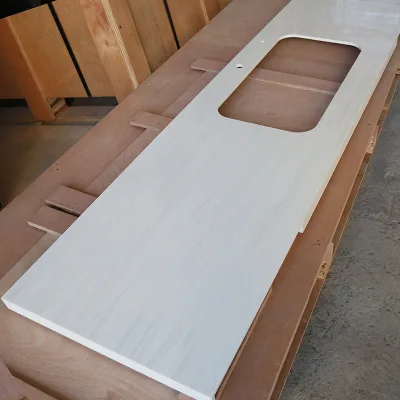
For interior decoration, the "3D Stone Textured Surface" and "Modern" design styles are particularly popular for feature walls in living areas, lobbies, and reception desks. The "Wall Panel" application is a dominant use case, offering a lightweight alternative to masonry that reduces structural load. In wet areas like bathrooms and kitchens, the "Solid Surface" and "Quartz Stone" variants are preferred due to their water resistance and ease of cleaning. These materials are often used for countertops, where features like "Professional machine work" for top holes and "Countertop Edging" options allow for precise integration with sinks and appliances.
The "Project Solution Capability" offered by many suppliers, including graphic design, 3D model design, and total solution services, is crucial for complex installations. This capability ensures that the panels can be seamlessly integrated into the overall architectural design, minimizing waste and ensuring a cohesive look.
Supplier Evaluation and Operational Capabilities
Selecting the right supplier is as important as selecting the right product. Buyers should evaluate suppliers based on their production capacity, geographic location, and after-sales support structure. The observed data indicates that major production hubs are located in Jiangsu and Guangdong, China, with dispatch ports such as Shenzhen. While these locations are known for manufacturing efficiency, buyers must verify the supplier's specific logistics capabilities and lead times.
A critical evaluation metric is the "Supply Ability." One observed metric notes a capacity of "100 sets per Day" for wall-mounted bathroom countertops, which provides a benchmark for assessing whether a supplier can meet large project deadlines. Buyers should also inquire about the "Single package size" and "Single gross weight" to calculate shipping costs accurately. For instance, a single package size of 10x10x1.2 cm suggests a compact, modular product, while larger slabs will require specialized freight arrangements.
After-sales service is another vital component of supplier evaluation. Comprehensive support packages may include "Online Technical Support," "Onsite Installation," "Onsite Training," "Onsite Inspection," and "Free Spare Parts." These services are particularly valuable for international buyers who may lack local technical expertise. A supplier offering a warranty of "More Than 5 Years" demonstrates confidence in their product's longevity and provides a safety net for the buyer.
Quality Control and Inspection Protocols
Ensuring consistent quality is paramount when sourcing building materials in bulk. The procurement process should include a rigorous quality control (QC) protocol. Many suppliers claim to perform "inspection piece by piece," a standard that buyers should verify through third-party inspection reports or on-site audits.
Key quality checkpoints include verifying the "Surface Finish" for uniformity, checking the "Color" consistency against the approved sample, and ensuring the "Edge built-up" is truly "joint seamless" where required. For countertop applications, the precision of the "Top hole" work must be confirmed to ensure a perfect fit for fixtures.
Buyers should also request "Material sample" availability upon request to test the physical properties of the product before committing to a large order. This allows for hands-on verification of the "Artificial Stone Type," whether it is solid surface or quartz stone, and ensures it meets the project's specific performance criteria. The "Cartons" or "Carton Packaging" details provided by the supplier must be robust enough to prevent damage during transit, especially for fragile textured surfaces.
Long-Term Procurement and Lifecycle Management
Beyond the initial purchase, successful procurement of Faux Stone Panels requires a long-term perspective on maintenance, replacement, and lifecycle management. The "Warranty" period, often exceeding five years, is a key indicator of the product's expected lifespan. However, buyers must understand the terms of the warranty, including what constitutes a valid claim and the process for obtaining "Free Spare Parts."
For large projects, the "Project Solution Capability" extends to the lifecycle of the installation. Suppliers who offer "Total Solution for Projects" can assist with future maintenance planning, ensuring that replacement panels match the original aesthetic and technical specifications. This is particularly important for "Commercial" and "Hospital" applications where downtime must be minimized.
Furthermore, the "Eco-Friendly" nature of these materials contributes to the building's overall sustainability goals. Buyers should consider the end-of-life disposal options for the panels, ensuring they align with local waste management regulations. The ability to source "Customized" replacements in the future ensures that the building's aesthetic remains consistent over time, avoiding the need for costly full replacements due to minor damage or style changes.
In conclusion, sourcing Faux Stone Panels requires a meticulous approach that balances aesthetic desires with technical realities. By rigorously verifying specifications, understanding cost drivers, and evaluating supplier capabilities, procurement professionals can secure high-quality materials that meet the demands of modern construction and design. The diversity of the market, from standard 1200x600mm panels to custom 3D textured surfaces, offers ample opportunity for innovation, provided that buyers maintain a disciplined focus on quality and compliance.
FAQs
What are the standard dimensions for Faux Stone Panels?
Standard dimensions include 1200x600mm and 900x200mm formats. Many suppliers also offer fully customized sizes and designs to meet specific project geometries.
Can I get free samples of these artificial stone panels?
Yes, free samples are available upon request for many product listings. Buyers should verify the shipping logistics and costs associated with receiving these samples before placing a bulk order.
Which surface finishes are available for 3D stone textured surfaces?
Available finishes include stone grain surfaces achieved through abrasive blasting and customized polishing. These processes create distinct textures suitable for modern interior decoration and wall panel applications.
How many colors are typically available for Faux Stone Panels?
Listings indicate up to 13 available colors, including specific shades like brown. Buyers must verify color consistency across batches to ensure uniformity for large-scale installations.
What is the minimum order quantity for wall mounted bathroom countertops?
The minimum order quantity ranges from 1 to 1000 units depending on the supplier and product type. Small renovation projects may face higher per-unit costs compared to large commercial orders.
Where are these artificial stone panels typically manufactured?
Major production hubs are located in Jiangsu and Guangdong, China, with dispatch ports such as Shenzhen. Buyers should verify specific supplier locations to assess logistics and lead times accurately.
Can these panels be used in commercial kitchens and hospitals?
Yes, the products are suitable for commercial kitchens, hospitals, laboratories, and hotels. They offer advantages like being eco-friendly, weather resistant, and fireproof for diverse interior applications.