Source FC-SC Single-Core Fiber Optical Adapter for Distribution, Testing, and Splicing
Find 30 options for the fc-sc single-core fiber optical adapter with SC-APC and FC-PC connector types. Buyers can compare single-mode models featuring ceramic fiber and plastic materials for fiber distribution frames, testing, and splicing applications.
Key considerations
Products List






Comprehensive Sourcing Guide
Strategic Sourcing Guide for FC-SC Single-Core Fiber Optical Adapters
Understanding the Core Product Architecture and Variants
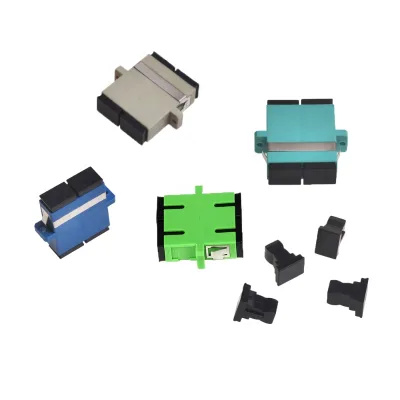
The FC-SC single-core fiber optical adapter serves as a critical interconnection component in fiber optic networks, facilitating the transition between Fiber Channel (FC) and Subscriber Connector (SC) interfaces. Based on observed market data, these adapters are primarily designed for single-mode transmission, ensuring low attenuation and high signal integrity over long distances. The product landscape reveals distinct variations in construction, with some units featuring a square shape and others a circular profile, reflecting the specific mechanical requirements of the connector types involved.
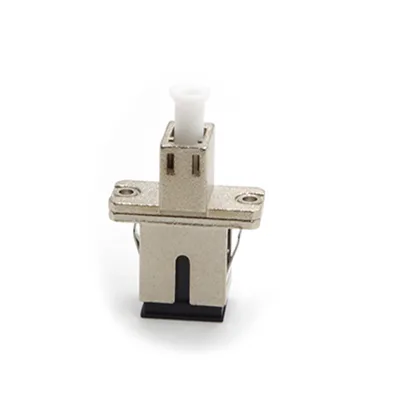
The internal architecture typically utilizes ceramic fiber for the ferrule endface, a material choice essential for maintaining precise alignment and minimizing insertion loss. The outer housing is predominantly constructed from plastic, offering a balance of durability and cost-effectiveness, though some specialized variants may incorporate metal components for testing applications. The fabrication process varies between molded and injection molding techniques, with the latter often associated with higher precision in mass production. Buyers must recognize that while the core function remains consistent, the physical attributes such as the shape (square vs. circular) and the specific connector type (SC-APC vs. FC-PC) can differ significantly between suppliers.
A critical observation in the current market is the existence of adapters with varying ferrule endface types. While some products are listed with PC (Physical Contact) or UPC endfaces, others specify APC (Angled Physical Contact) characteristics. This distinction is vital for system performance, as APC connectors typically offer superior return loss performance due to their angled polishing, which reduces back reflection. The observed data indicates that color coding is also a variable attribute, with options including blue, green, beige, or customized finishes. In standard industry practice, blue often denotes PC connectors, while green indicates APC, though buyers should verify the specific color-to-type mapping with the supplier rather than assuming a universal standard.
Technical Specifications and Performance Metrics
When evaluating the technical specifications of an FC-SC single-core fiber optical adapter, several key performance metrics must be scrutinized to ensure compatibility with the intended network infrastructure. The primary specification involves the transmission medium, which is almost exclusively single-mode for these adapter types. This ensures the adapter supports the narrow core diameter required for single-mode fiber, minimizing modal dispersion and signal loss.
Insertion loss and return loss are the two most critical quantitative metrics. Market observations suggest that high-quality adapters typically achieve an insertion loss of less than 0.2dB, a threshold that is essential for maintaining signal strength in dense network environments. Similarly, return loss is a measure of the amount of light reflected back toward the source; values greater than 45dB are commonly observed in reputable products, indicating effective management of back reflections. However, buyers must treat these figures as observations of specific listings rather than guaranteed standards for all products, as performance can vary based on manufacturing tolerances and material quality.
The mode of operation is another technical consideration. While the primary focus is on single-mode applications, some product listings mention "Sm/mm" (Single-mode/Multi-mode) compatibility. This requires careful verification, as using a single-mode adapter with multi-mode fiber or vice versa can lead to significant signal degradation or physical incompatibility. The allowed tensile strength of the adapter components is also a factor, with observed ranges indicating a capacity between 100n and 1000n. This mechanical strength ensures the adapter can withstand the physical stresses of installation and cable pulling without compromising the fiber alignment.
The following table summarizes the key technical attributes observed in the current market for FC-SC single-core adapters:
| Attribute | Observed Range/Value | Verification Requirement |
|---|---|---|
| Connector Type | FC-PC, SC-APC, FC-SC | Confirm specific interface match |
| Ferrule Endface | PC, UPC, APC | Verify polishing type for application |
| Transmission Medium | Single-Mode | Ensure compatibility with fiber type |
| Insertion Loss | < 0.2dB (Observed) | Request test reports for specific batch |
| Return Loss | > 45dB (Observed) | Verify with manufacturer data sheet |
| Shape | Square, Circular | Check mechanical fit in patch panels |
| Material | Ceramic Fiber (Inside), Plastic (Outside) | Confirm material grade for durability |
| Mode | Single-Mode, Sm/mm | Validate against network design |
Compliance, Certification, and Regulatory Standards
Navigating the regulatory landscape is a fundamental aspect of sourcing fiber optic components, particularly for projects in international markets. The supply chain for FC-SC adapters often highlights compliance with major international standards. Common certifications observed in product listings include CE, RoHS, and ISO9001. The CE mark indicates conformity with health, safety, and environmental protection standards for products sold within the European Economic Area. RoHS compliance ensures that the product is free from specific hazardous materials, which is increasingly a requirement for electronic components in many jurisdictions. ISO9001 certification reflects a commitment to quality management systems, suggesting that the manufacturer adheres to consistent production processes.
However, buyers must exercise caution when interpreting these certifications. The presence of a certification label in a product description does not automatically guarantee that every unit in a specific shipment is certified. It is imperative to request valid, up-to-date certification documents directly from the supplier before finalizing a purchase. Furthermore, while "size" is mentioned as a standard in some listings, this is a generic reference. Buyers should verify that the adapter dimensions adhere to specific industry standards such as IEC 61754 or TIA-568, which define the physical dimensions and mating characteristics of fiber optic connectors.
The origin of the product also plays a role in regulatory compliance. Products originating from manufacturing hubs like Hangzhou and Shenzhen in Mainland China are common in the global market. These regions have a mature ecosystem for fiber optic component manufacturing, but the regulatory rigor can vary between factories. Buyers should ensure that the supplier can provide traceability for the raw materials, particularly the ceramic ferrules and plastic housings, to confirm they meet the required environmental and safety standards. Additionally, the "Metal Adaptor" or "Testing Adaptor" variants may have different compliance requirements compared to standard distribution adapters, necessitating a specific review of their intended use case against local regulations.
Cost Drivers and Procurement Economics
The pricing of FC-SC single-core fiber optical adapters is influenced by a complex interplay of factors, including material costs, manufacturing complexity, and order volume. The observed price range in the market spans from $0.05 to $10.00 USD, a wide spectrum that reflects the diversity in product quality, customization levels, and order quantities. At the lower end of the price range, buyers may encounter standard, non-customized adapters produced through high-volume injection molding. These units typically feature basic plastic housings and standard ceramic ferrules. Conversely, the higher price points often correspond to adapters with specialized features, such as metal construction for testing applications, custom color coding, or enhanced performance specifications like ultra-low insertion loss.
Order Volume is a significant determinant of cost. The Minimum Order Quantity (MOQ) observed in the market ranges from 1 to 10,000 units. Suppliers offering low MOQs are often more suitable for prototyping or small-scale projects, but they may charge a premium per unit to cover setup costs. For large-scale deployments, negotiating a lower unit price is feasible, especially when the order volume reaches the upper end of the observed MOQ range. Buyers should also consider the "Customization" attribute, which is available in the market. Custom orders, whether for specific colors, shapes, or branding (OEM), will inherently carry higher costs due to the additional setup and production time required.
Payment terms and logistics also impact the total cost of ownership. The observed payment methods include T/T (Telegraphic Transfer), Western Union, L/C (Letter of Credit), and PayPal. T/T is the most common method for B2B transactions, offering a balance of security and speed. Buyers should negotiate payment terms that align with their cash flow, such as partial payments upon order confirmation and the remainder upon shipment. Shipping costs, which can be by sea, air, or express courier, vary significantly based on the weight and volume of the order. For large quantities, sea freight is the most economical option, while express shipping is reserved for urgent, low-volume needs. The "In Stock" availability noted in some listings can reduce lead times and associated inventory holding costs, making it a valuable factor in the overall procurement equation.
Typical Applications and Deployment Scenarios
FC-SC single-core fiber optical adapters are versatile components deployed across a wide range of telecommunications and data infrastructure scenarios. Their primary application is in fiber distribution frames, where they serve as the interface point for connecting different types of fiber patch cords. In these environments, the adapter allows network engineers to route signals from FC-connected equipment to SC-connected devices, or vice versa, facilitating flexible network management and maintenance.
The "Square" and "Circular" shape variations observed in the market cater to different panel designs and connector housing requirements. Square adapters are often preferred in modern patch panels that utilize SC-style mounting, while circular variants may be required for legacy systems or specific equipment enclosures. The "Single-Core" designation indicates that these adapters are designed for individual fiber strands, making them ideal for point-to-point connections in data centers, telecommunications exchanges, and enterprise networks.
Beyond standard distribution, the market also highlights specialized applications such as "Testing Adaptors" and "Bare Adaptors." Testing adapters are crucial for laboratory and field diagnostics, allowing technicians to measure insertion loss and return loss without the interference of a permanent connection. Bare adapters, which may lack a housing, are used in specific assembly processes where the adapter is integrated directly into a larger module or connector assembly. The "Laser" light source type mentioned in some contexts suggests compatibility with high-power laser applications, although this is more commonly associated with the transceivers rather than the passive adapter itself. Buyers should match the adapter's application profile with their specific network architecture, ensuring that the chosen variant supports the required density, environmental conditions, and maintenance protocols.
Supplier Evaluation and Quality Assurance Protocols
Selecting a reliable supplier for FC-SC single-core fiber optical adapters requires a rigorous evaluation process that goes beyond price comparisons. The market data indicates a concentration of suppliers in Hangzhou and Shenzhen, China, both of which are established manufacturing hubs. However, the presence of a location does not guarantee quality. Buyers should prioritize suppliers who demonstrate a commitment to quality control through certifications like ISO9001 and who provide transparent documentation regarding their fabrication processes, whether molded or injection molding.
Quality assurance should be a continuous process, not just a pre-shipment check. Buyers must verify that the supplier has a robust system for testing insertion loss and return loss, aiming for the observed benchmarks of <0.2dB and >45dB respectively. Requesting sample units for independent testing is a prudent step to validate the supplier's claims. The "Brand New" status and "Perfect After-Sale Service" attributes listed by some suppliers are positive indicators, but they should be backed by concrete service level agreements (SLAs) that define response times and replacement policies.
The "OEM" branding capability observed in the market suggests that many suppliers are willing to produce white-label products. This is beneficial for buyers who need to brand the adapters for their own distribution or internal use. However, it also means that the buyer assumes greater responsibility for quality assurance. In such cases, implementing a strict incoming inspection protocol is essential. Buyers should also evaluate the supplier's ability to handle customization requests, as the "Customization" attribute is a key differentiator in the market. A supplier's responsiveness to customization inquiries can be a strong proxy for their overall operational flexibility and customer service quality.
Long-Term Procurement and Supply Chain Resilience
Sourcing FC-SC single-core fiber optical adapters is not merely a transactional activity but a strategic decision that impacts long-term network reliability. The "Main Market" being "World Wide" indicates that these components are globally traded, which offers buyers a broad selection of suppliers but also introduces complexities related to logistics and supply chain resilience. Buyers should consider the lead times and delivery schedules, noting that while some products are "In Stock," others may require production time. Establishing a relationship with a supplier who can guarantee consistent availability is crucial for maintaining network uptime.
The "Advantage" of "High Quality, Competitive Price and Best Service" is a common claim in the market. To validate this, buyers should look for long-term partnerships with suppliers who have a track record of consistency. This includes evaluating their ability to maintain quality standards over time, even as production volumes scale up. The "Payment Term" flexibility, such as the availability of L/C or T/T, can also play a role in managing financial risk, especially for large orders.
Furthermore, buyers should plan for the lifecycle of the adapters. As network technologies evolve, the demand for specific connector types may shift. While FC and SC connectors remain prevalent, understanding the trajectory of the market is essential. Suppliers who offer "Customized" solutions can help future-proof the procurement strategy by adapting to new requirements. Finally, the "Service" aspect, including after-sales support, is a critical component of long-term procurement. A supplier who provides technical assistance and rapid resolution of any issues can significantly reduce the total cost of ownership and ensure the longevity of the fiber optic infrastructure.
FAQs
What is the typical insertion loss for this adapter?
High-quality units typically achieve an insertion loss of less than 0.2dB. Buyers should request specific test reports for their batch to verify performance, as values can vary based on manufacturing tolerances.
Which connector types and endfaces are available?
Available options include FC-PC and SC-APC connectors with PC, UPC, or APC endfaces. The specific type must be confirmed with the supplier to ensure compatibility with the network infrastructure.
Can I customize the color or branding of the adapter?
Yes, customization is available for colors like blue, green, beige, or specific OEM branding. Custom orders may incur higher costs due to additional setup and production time required by the manufacturer.
What materials are used in the construction of the adapter?
The internal ferrule is made of ceramic fiber while the outer housing is typically plastic. Some specialized testing variants may incorporate metal components, so verify the material grade for durability.
How long is the delivery time for in-stock items?
Items marked as in stock are available for immediate shipment. Lead times vary for custom orders, so confirm the specific delivery schedule with the supplier before finalizing the purchase agreement.
What certifications do these adapters typically hold?
Common certifications include CE, RoHS, and ISO9001. Buyers must request valid, up-to-date certification documents directly from the supplier to ensure compliance with international safety and environmental standards.
What is the minimum order quantity for purchasing these adapters?
The observed minimum order quantity ranges from 1 to 10,000 units depending on the supplier. Lower MOQs are suitable for prototyping, while larger volumes often qualify for better unit pricing.