Source Faux Fur Coat for Garment, Home Textile, and Auto Upholstery
Explore 30 listings for Faux Fur Coat options featuring V neck, long or short styles, and various materials like polyester or acrylic. Buyers can compare OEM services, customized logos, and features such as waterproof and breathable properties for garment, home textile, and auto upholstery uses.
Key considerations
Products List




Comprehensive Sourcing Guide
Strategic Sourcing Guide for Faux Fur Coats
Understanding Product Variations and Technical Specifications
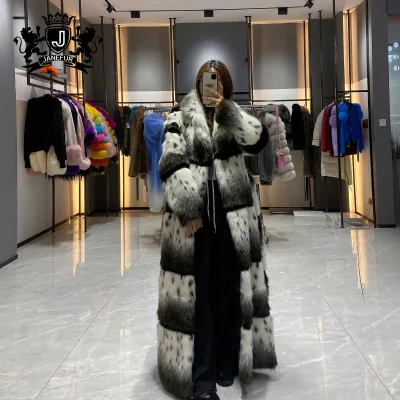
The market for faux fur coats presents a complex landscape of technical variations that buyers must navigate to ensure alignment with their specific procurement needs. Based on observed product data, the core keyword "Faux Fur Coat" encompasses a wide spectrum of designs, ranging from casual winter outerwear to specialized garment applications. A critical observation in the current supply base is the divergence in length specifications. While some listings explicitly define the product length as "Long," others categorize the same material type as "Short." This inconsistency suggests that buyers must verify the exact dimensional requirements for their target demographic, as the term "Faux Fur Coat" does not guarantee a specific silhouette.
Material composition is another pivotal technical factor. The supply chain for these garments frequently utilizes a blend of Polyester and Acrylic, or materials explicitly labeled as "Fake Fur" or "Fleece." The choice between these materials directly impacts the tactile experience, thermal retention, and durability of the final product. For instance, the presence of a "Fleece" fabric type often indicates a softer, more flexible drape suitable for casual styles, whereas "Fake Fur" might be associated with a plush, high-volume texture. Furthermore, the fabric width is a significant specification for manufacturers and cutters, with observed standards ranging from 58 to 60 inches. This dimension is crucial for calculating fabric yield and minimizing waste during the cutting process.
The construction details further differentiate these products. Buyers should expect to encounter various closure types, with "Buttons" being a common feature. The collar style also varies, with "V Neck" designs appearing alongside other options, influencing the overall aesthetic and layering potential of the garment. Additionally, the lining material is often specified as "Polyester," which affects the comfort and breathability of the coat. The thickness is generally categorized as "Standard," though this is a relative term that requires physical verification against the buyer's thermal requirements. Understanding these granular specifications is the first step in filtering a supplier's catalog to find products that meet precise functional and design criteria.
Compliance, Standards, and Certification Verification
When sourcing faux fur coats, particularly those intended for international markets, verifying compliance with relevant standards is essential. The supply data indicates that some products adhere to specific weight and density standards, such as "2500g/M 75 MM" or "1000g/m." These figures likely refer to the fabric weight per square meter, a critical metric for determining the warmth and quality of the faux fur. However, these values are not universal across all listings. Buyers must not assume that every supplier meets these specific weight thresholds without direct confirmation.
Beyond fabric weight, the broader context of certification and safety standards requires careful attention. While the provided data does not list specific third-party certifications like Oeko-Tex or ISO, the presence of attributes such as "Eco-Friendly" suggests that some manufacturers are positioning their products with sustainability in mind. Buyers should treat such claims as observations that require validation through official documentation. It is imperative to request test reports confirming that the faux fur materials are free from harmful substances and meet the fire safety regulations of the destination country.
The "Standard" attribute in the product data also includes size ranges, such as "XS S M L XL 2XL 3XL" or "S M L 2XL." These size charts must be cross-referenced with the target market's sizing conventions. A discrepancy between the supplier's size standard and the buyer's market expectations can lead to high return rates and customer dissatisfaction. Therefore, compliance is not just about safety; it extends to the accurate representation of product dimensions and sizing. Buyers should verify that the supplier's size standards align with the intended retail market and that any "Eco-Friendly" claims are backed by verifiable data rather than marketing assertions.
Cost Drivers and Pricing Dynamics
The pricing structure for faux fur coats is influenced by a multitude of factors, resulting in a wide observed range from $6.8 to $512.9 USD. This significant variance indicates that price is not solely a function of the base material but is heavily dependent on customization, complexity, and order volume. The minimum order quantity (MOQ) also plays a substantial role in cost determination, with observed ranges spanning from 1 to 300 units. Buyers seeking lower unit costs must be prepared to meet higher MOQ thresholds, while those requiring small batches may face a premium per unit.
Customization is a primary cost driver in this sector. The data highlights "Customized Logo Printing" and "OEM Service" as available attributes. Implementing custom logos, specific colorways, or unique design modifications typically incurs additional setup fees and increases the unit price. The "Pattern" attribute, which includes "Dyed" and "Plush" options, further influences cost. Complex dyeing processes or specialized plush textures require more intricate manufacturing steps, thereby increasing the production cost.
Additionally, the "Feature" set of the coat impacts pricing. Attributes such as "Anti-Wrinkle," "Waterproof," "Breathable," and "Anti-Shrink" represent value-added functionalities. Achieving these performance characteristics often requires advanced chemical treatments or specialized weaving techniques, which are reflected in the final price. Buyers must balance their desire for these features against their budget constraints. The "Supply Type" being "OEM Service" suggests that the pricing model is flexible and negotiable based on the scope of the partnership. Understanding these drivers allows buyers to negotiate more effectively and allocate their budget to the most critical product attributes.
Typical Applications and Market Segmentation
Faux fur coats serve a diverse range of applications, extending beyond simple winter wear. The product data indicates usage in "Garment," "Home Textile," "Auto Upholstery," and "Toy" sectors. This versatility suggests that the same faux fur materials used for coats can be repurposed for interior design or manufacturing accessories. For garment buyers, the "Style" attribute, which includes "Casual" and "Single Breasted" options, points to a primary market of everyday fashion. These coats are designed for "Adults" and are often marketed as "Unisex," broadening their appeal across different demographics.
The "Season" attribute, specifically "Winter," confirms the primary use case for thermal protection. However, the "Feature" set, including "Breathable" and "Anti-Wrinkle," suggests that these coats are also suitable for transitional weather or indoor wear where comfort and ease of care are prioritized. The "Color" attribute, ranging from "Colourful" to "Black," indicates that buyers can source products for various fashion trends, from bold statement pieces to classic wardrobe staples.
In the context of home textiles and auto upholstery, the "Fabric Type" of "Canvas" or "Fleece" and the "Width" of 58/60 inches become critical. These specifications ensure that the material can be cut and sewn efficiently for larger applications. For toy manufacturers, the "Plush" pattern and "Fake Fur" material are essential for creating soft, huggable products. Understanding these varied applications helps buyers identify suppliers who have the technical capability to produce high-quality faux fur for their specific niche, whether it is fashion, interior design, or manufacturing.
Supplier Evaluation and Sourcing Strategy
Evaluating suppliers for faux fur coats requires a rigorous approach to ensure reliability and quality. The "prod_origin" data points to "China" and specifically "Hebei, China" as key manufacturing hubs. Buyers should leverage this geographical knowledge to focus their search on regions known for textile production. The "Supply Type" of "OEM Service" indicates that many suppliers are capable of custom manufacturing, but the extent of this capability varies. Buyers must assess whether a supplier can handle the specific customization requirements, such as "Customized Logo Printing" or unique "Pattern" designs.
The "prod_packing" specifications, ranging from "Sea Transportation" and "Rolls" to specific dimensions like "12X16X6cm" and "40X30X10 Cm," provide insight into the supplier's logistics capabilities. A supplier offering standardized packing solutions is likely more efficient and experienced in handling large volumes. Buyers should verify that the packaging methods align with their shipping and storage requirements to prevent damage during transit.
Furthermore, the "Customization" attribute being "Available" suggests a flexible supply chain. However, buyers must confirm the lead times and the minimum order quantities associated with these custom orders. The "Feature" set, including "Anti-Wrinkle" and "Waterproof," should be verified through sample testing to ensure the supplier can consistently deliver products that meet these performance claims. A thorough evaluation of the supplier's technical capacity, logistical efficiency, and willingness to collaborate on custom designs is essential for a successful sourcing partnership.
Quality Control and Long-Term Procurement Considerations
Ensuring consistent quality in faux fur coats requires a robust quality control (QC) strategy. The "Feature" attributes like "Anti-Shrink" and "Breathable" must be validated through physical testing. Buyers should request pre-shipment samples to verify that the "Thickness" is "Standard" as claimed and that the "Lining" material is indeed "Polyester." The "Standard" size ranges, such as "XS S M L XL 2XL 3XL," must be checked against actual measurements to ensure accuracy.
Long-term procurement considerations involve building a relationship with suppliers who can maintain consistent quality over time. The "prod_model" numbers, such as "WFFC-15," "WFC-03," and "HFK0986," serve as unique identifiers for specific product lines. Buyers should track these models to ensure they are receiving the exact specifications they ordered. The "prod_packing" methods should also be consistent to protect the product during shipping.
Sustainability is another long-term consideration. With "Eco-Friendly" features appearing in the data, buyers should inquire about the environmental impact of the production process. Verifying the "Material" composition and ensuring that the "Fake Fur" is produced using sustainable practices can enhance the brand value of the final product. By focusing on these quality and sustainability aspects, buyers can secure a reliable supply chain that meets both current market demands and future regulatory requirements.
FAQs
What materials are used for faux fur coats?
Faux fur coats are commonly made from Polyester, Acrylic, or Fake Fur blends. Some listings specify Fleece or Canvas fabric types, while others use Plush patterns. Buyers should verify the specific material composition to ensure it meets their desired texture and durability requirements.
Which customization options are available for these coats?
Customization is available for logo printing, specific patterns, and design modifications. Suppliers offer OEM services allowing for customized logos and unique styles. Buyers must confirm the minimum order quantity and lead times associated with these custom manufacturing requests.
How does the length of the coat vary in listings?
Product listings show inconsistent length specifications, with some items defined as Long and others as Short. Buyers must verify exact dimensional requirements as the term Faux Fur Coat does not guarantee a specific silhouette. Checking the specific product model ensures the correct length is selected.
Can buyers find coats with specific feature sets?
Yes, coats feature attributes like Anti-Wrinkle, Waterproof, Breathable, and Anti-Shrink capabilities. Some products also include Eco-Friendly claims. These performance characteristics often require advanced treatments, so buyers should request sample testing to validate the functional claims before placing large orders.
What are the typical packaging methods for shipping?
Packaging methods vary from Sea Transportation and Rolls to specific box dimensions like 12x16x6cm. Suppliers may use different packing standards depending on the order volume and product type. Buyers should verify that the packaging aligns with their shipping and storage needs to prevent transit damage.
Where are these faux fur coats typically manufactured?
Products originate primarily from China, with specific hubs noted in Hebei. Buyers can leverage this geographical knowledge to focus their search on regions known for textile production. Confirming the exact origin helps in assessing logistics costs and supply chain reliability for international procurement.