Source Fiberglass Bar for Construction, Bridges, and Household Use
Compare 30 Fiberglass Bar options from verified suppliers offering custom sizes, pultrusion techniques, and high-strength performance. Buyers can evaluate specifications including diameter, material type, and surface treatment for construction, bridge, and household applications.
Key considerations
Products List


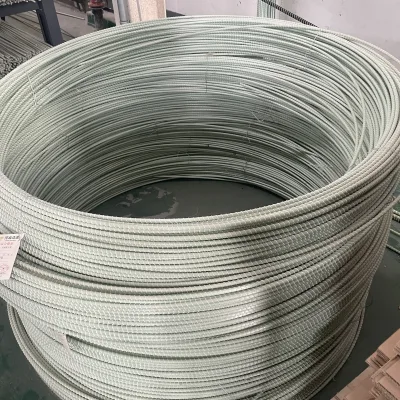


Fiberglass FRP Profile L Shaped Angle Bar - High Strength Corrosion Resistant
$0.80 - $2.50
MOQ: 1000 Pieces


Fiberglass Pultrusion T-Bar as Grating Strength Loading/GRP Pultruded Grating
$19.00 - $30.00
MOQ: 1 Square Meters


Fiberglass L Shape Pultruded Profiles FRP Pultruded Angle Bar Fiberglass Angle Bar
$6.00 - $8.00
MOQ: 300 Meters


Comprehensive Sourcing Guide
Strategic Sourcing Guide for Fiberglass Bar Procurement
Understanding Product Variants and Technical Specifications
The term "Fiberglass Bar" encompasses a diverse range of composite products, primarily identified in the market as Fiberglass Reinforced Plastic (FRP) rebar or structural profiles. Buyers must first distinguish between the specific configurations available, as the supply chain offers distinct variations based on manufacturing processes and geometric forms. The primary manufacturing technique observed is pultrusion, a process that pulls continuous fibers through a resin bath and a heated die to create consistent, high-strength profiles. This method ensures the material achieves its characteristic high strength and uniform cross-sections.
The product landscape includes both round and flat configurations. Round variants are often described as thread solid rods, designed to mimic the structural role of steel reinforcement while offering superior corrosion resistance. These are available in diameters ranging from 3mm to 42mm, with specific standard sizes often cited as 4mm, 6mm, 8mm, and 10mm. Conversely, flat profiles, such as flat strips or profiled sections, serve different structural or cladding needs. The surface finish varies significantly between listings; some products are delivered with a smooth, finished surface, while others may be listed as unfinished, requiring secondary processing.
Material composition is a critical differentiator. The core material is consistently Fiberglass Reinforced Plastic, utilizing E-Glass fibers which are noted for their electrical insulation and chemical resistance. The density of these composite bars typically falls within the range of 1.9 to 2.1 g/cm³, contributing to their lightweight nature compared to traditional steel. Buyers should also note the presence of "Alkali Free" variants, which are essential for applications involving concrete where chemical stability is paramount. The weave type for certain fabric-based or mesh-integrated components is identified as Twill Woven, though solid rods are generally continuous fiber structures.
| Feature Category | Round Profile (Rebar) | Flat/Profiled Profile |
|---|---|---|
| Shape | Round, Thread Solid Rods | Flat, Profiled |
| Diameter/Size | 3 - 42mm (Customized) | Customized (e.g., 25x15x3cm packages) |
| Surface Finish | Smooth, Finished | Smooth or Unfinished |
| Primary Use | Structural Reinforcement | General Structural, Household |
| Weave Type | Continuous Fiber | Twill Woven (for specific variants) |
Compliance, Certification, and Standard Verification
When sourcing fiberglass bars, verifying compliance with international and industry-specific standards is essential for ensuring structural integrity and safety. While the market data indicates that some suppliers claim ISO certification, buyers must treat this as a variable attribute rather than a universal guarantee. It is imperative to request valid, current certification documents for every specific batch or product line, as certification status can vary between manufacturing facilities even within the same region.
The term "Alkali Free" is a significant technical specification that buyers should verify against the product data sheet. This attribute is not merely a marketing claim but a functional requirement for concrete applications, preventing the degradation of the glass fibers by the alkaline environment of cement. Similarly, the "Fiberglass Type" must be confirmed as E-Glass, which is the standard for general structural reinforcement, rather than other types that may lack the necessary chemical resistance.
Buyers should be cautious regarding specific numerical standards. While some background knowledge references ASTM D7957, this specific standard is not explicitly confirmed in the provided product facts. Therefore, procurement teams should not assume compliance with this or any other specific standard unless the supplier provides explicit documentation linking the product to that standard. Instead, the focus should be on the "prod_standard" field, which often lists "Customized" or "Pls refer to the Spec list." This indicates that the product specifications are tailored to the order, and the buyer must define the required technical parameters before production begins. The "prod_model" codes, such as S01 or FRP Fiberglass Rebar, serve as internal identifiers but do not replace the need for external standard verification.
Cost Drivers and Pricing Dynamics
The pricing structure for fiberglass bars is influenced by a complex interplay of material costs, customization levels, and order volume. The observed price range in the market is exceptionally broad, spanning from $0.02 to $5,000 per unit. This variance is not indicative of a single product type but reflects the difference between small, single-item components and large-scale industrial orders or custom-engineered solutions.
The most significant cost driver is the level of customization. Products listed with "Customized" specifications, including unique sizes, colors, and surface treatments, command higher prices due to the setup costs and specialized tooling required. The "prod_packing" method also impacts cost; options such as Iron Pallets, Wooden Pallets, or standard export packaging vary in expense and are often negotiated based on the buyer's requirements. Furthermore, the "Sercive" or processing services, such as cutting and punching holes, add value and cost to the final product. A raw bar is less expensive than a bar that has been pre-cut to specific lengths or perforated for installation.
Minimum Order Quantity (MOQ) is another critical factor in the total cost of ownership. The observed MOQ ranges from 1 unit to 50,000 units. Small buyers or those prototyping can access the market with low MOQs, but this often results in a higher unit price. Conversely, large-volume orders can leverage economies of scale to reduce the per-unit cost, though they require significant capital commitment. The "Selling Units" are typically listed as "Single Item," suggesting that the base price is per piece, but bulk discounts are likely available for larger quantities. Buyers must balance the need for immediate inventory against the cost benefits of larger production runs.
Typical Applications and Performance Characteristics
Fiberglass bars are engineered for environments where traditional steel reinforcement fails or is impractical. The core competitive advantages of these products include impact resistance, thermal insulation, and high strength-to-weight ratios. The material is inherently corrosion-resistant, making it ideal for harsh chemical environments, marine structures, and infrastructure exposed to de-icing salts. Its insulating properties also make it suitable for electrical applications where conductivity is a liability.
The usage data highlights three primary sectors: household, industrial construction, and bridge construction. In the construction industry, these bars serve as non-corrosive reinforcement for concrete structures, particularly in bridges and tunnels where longevity is critical. The "Alkali Free" composition ensures compatibility with concrete, preventing the internal degradation that plagues steel rebar. In household applications, the lightweight nature and ease of handling (facilitated by services like cutting) make them suitable for DIY projects or light structural reinforcements.
The performance profile extends beyond strength. The thermal insulation capability prevents thermal bridging in building envelopes, improving energy efficiency. The density of 1.9-2.1 g/cm³ confirms that these products are significantly lighter than steel, reducing transportation costs and easing installation labor. However, buyers must recognize that while the material is "High Strength," its modulus of elasticity differs from steel, which may require specific engineering considerations in structural design. The "Core Competitive Advantages" listed as Impact Resistance and Thermal Insulation should be validated against the specific load-bearing requirements of the intended application.
Supplier Evaluation and Origin Analysis
Geographic origin plays a pivotal role in supplier evaluation for fiberglass bars. The majority of the supply chain data points to China, specifically the regions of Hebei and Hengshui. These locations are known hubs for composite manufacturing, offering a dense network of suppliers and established logistics infrastructure. However, the presence of multiple origin listings (Hebei, Hengshui, China) suggests a fragmented market with numerous manufacturers operating in close proximity.
When evaluating suppliers, buyers should prioritize those who provide transparent details on their "prod_packing" and "prod_standard." A supplier offering "Iron Pallet or Wooden Pallet/as Per Your Requireme" demonstrates flexibility and a customer-centric approach. Conversely, a supplier with vague standard descriptions ("Pls refer to the Spec list") requires more rigorous pre-order communication to ensure the final product meets project specifications. The "Customized" nature of the product means that the supplier's ability to manage custom orders is a key performance indicator.
Buyers should also scrutinize the "Surface Treatment" and "Technique" claims. Suppliers claiming "Pultruded" techniques and "Smooth" surface finishes are generally more aligned with high-quality structural standards. The presence of "ISO" certification is a positive signal, but it must be verified as active and applicable to the specific product line. The "Fiberglass Type" must be confirmed as E-Glass to ensure the material meets the necessary chemical and mechanical standards.
Quality Control and Long-Term Procurement Strategy
Establishing a robust quality control (QC) protocol is essential for long-term procurement success. Given the variability in "Surface Treatment" (Finished vs. Unfinished) and "Shape" (Round vs. Flat), buyers must define clear acceptance criteria before production begins. Visual inspection for surface defects, dimensional checks against the specified diameter (3-42mm), and verification of the "Alkali Free" content are fundamental steps.
For long-term partnerships, buyers should focus on suppliers who offer consistent "Processing Service" capabilities, such as cutting and punching holes. This reduces the need for secondary processing on the buyer's end, minimizing waste and labor costs. The "Single Package Size" of 25x15x3cm suggests that smaller components are packaged for individual shipment, while larger orders likely utilize palletized shipping. Buyers should negotiate packaging standards that align with their logistics capabilities to prevent damage during transit.
Finally, the "Core Competitive Advantages" of the product must be validated through third-party testing if the application is critical. While the market lists "Corrosion-Resistant" and "Lightweight" as features, these are observations that require confirmation for specific project requirements. Procurement teams should request test reports for tensile strength, chemical resistance, and thermal properties. By maintaining a focus on verified specifications rather than marketing claims, buyers can mitigate the risks associated with the broad price and quality ranges observed in the Fiberglass Bar market. The ability to customize the product, from color to size, offers significant flexibility, but it also demands a disciplined approach to specification management to ensure the final delivered product performs as intended in its intended environment.
FAQs
What manufacturing process is used for fiberglass bars?
The primary manufacturing process is pultrusion, which pulls continuous fibers through a resin bath and heated die. This technique ensures consistent high strength and uniform cross-sections for both round and flat profiles.
Which fiberglass types are available for structural reinforcement?
E-Glass fibers are the standard type used, offering electrical insulation and chemical resistance. Some variants are specifically noted as Alkali Free to prevent degradation in concrete environments.
How are the sizes and dimensions customized for orders?
Diameters range from 3 to 42mm with options for custom specifications. Sizes like 4, 6, 8, and 10mm are common, and flat strips are also available with tailored dimensions.
Can suppliers provide cutting and punching services?
Yes, processing services such as cutting and punching holes are available upon request. These services add value by preparing the bars for immediate installation without secondary processing.
What certifications do Fiberglass Bar manufacturers typically hold?
Some suppliers claim ISO certification, but this is a variable attribute that requires verification. Buyers must request valid documents for specific batches as certification status varies between facilities.
Where are the main manufacturing origins for these products?
The majority of supply chain data points to China, specifically the Hebei and Hengshui regions. These areas are known hubs for composite manufacturing with established logistics infrastructure.
What are the core performance advantages of fiberglass bars?
Key advantages include high strength, impact resistance, thermal insulation, and corrosion resistance. The material is also lightweight with a density of 1.9 to 2.1 g/cm³.
How does the minimum order quantity affect pricing?
MOQ ranges from 1 to 50,000 units, influencing the total cost of ownership. Small orders often have higher unit prices, while large-volume orders leverage economies of scale.