Source Fingerprint Unlock Automatic Piggy Bank for Gifts, Toys, and Jewelry
Explore 30 listings for the Fingerprint Unlock Automatic Piggy Bank designed for gifts, toys, and jewelry storage. Buyers can compare customization options, materials like plastic and ceramics, and packaging details from suppliers in Zhejiang and Shantou.
Key considerations
Products List



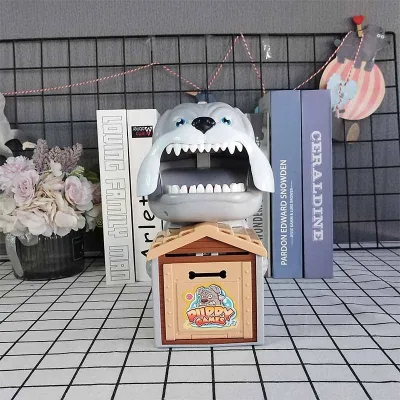
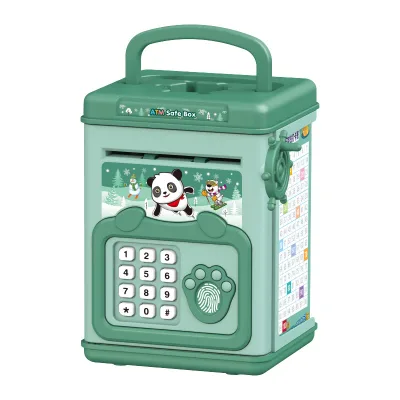
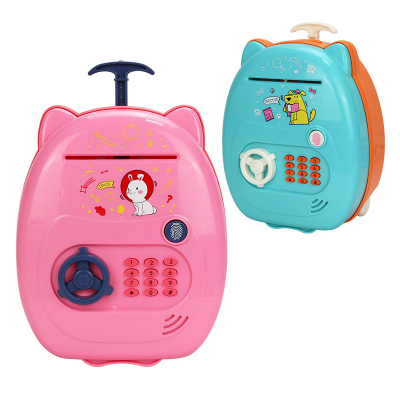
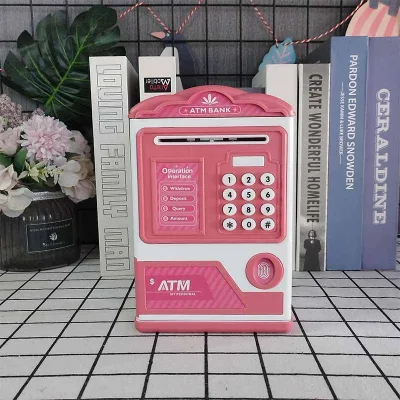
Comprehensive Sourcing Guide
Strategic Sourcing Guide for Fingerprint Unlock Automatic Piggy Banks
Understanding the Product Category and Technical Landscape
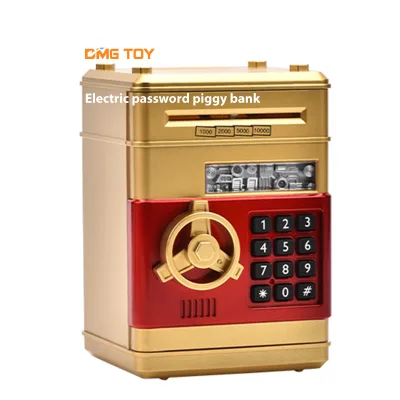
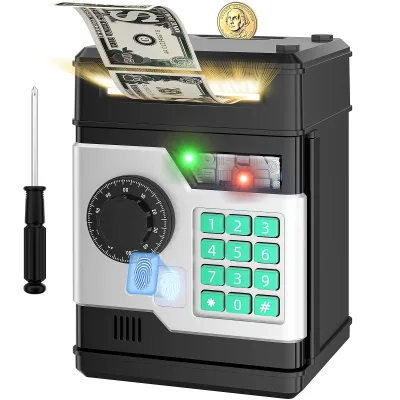
The term "Fingerprint Unlock Automatic Piggy Bank" describes a specific intersection of traditional savings tools and modern biometric security. While the core keyword implies a high-tech electronic device, the actual market data reveals a complex landscape where "automatic" functionality varies significantly between mechanical coin-counting mechanisms and electronic locking systems. Buyers must first distinguish between products that are purely decorative or mechanical and those that incorporate genuine biometric sensors. The supplied product facts indicate a diverse range of materials, including plastic, ceramics, and metals, suggesting that the "automatic" feature is not universal across all listings but is a specific value-add for certain models.
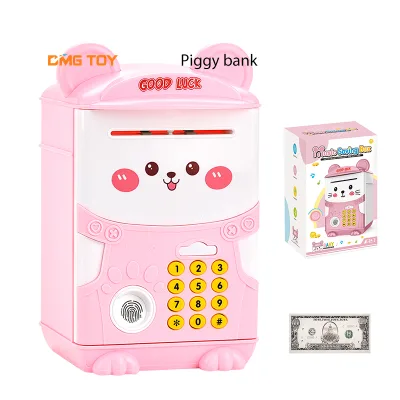
Technical specifications for these devices often hinge on the internal mechanism. For plastic models, the focus is often on the molding process and the integration of simple electronic locks, whereas ceramic and metal variants may prioritize structural integrity and aesthetic finish. The observed product attributes highlight "Hot Stamping" as a common technique for plastic items, which is a surface finishing method rather than a functional electronic feature. This distinction is critical; a buyer seeking a fingerprint sensor must verify that the product listing explicitly confirms the presence of a biometric module, as many items labeled with "Pig" or "Cartoon" shapes are purely mechanical coin banks with decorative features. The "Shape: Pig" and "Style: Cartoon" attributes are prevalent, indicating that the primary market driver is often the aesthetic appeal to children, with the fingerprint feature serving as a novelty or security upgrade rather than a standard industry baseline.
Material Composition and Manufacturing Standards
The material selection for piggy banks is a primary determinant of durability, cost, and perceived value. The data shows a clear segmentation between plastic, ceramic, and metal constructions. Plastic models, often associated with the "Hot Stamping" technique and "OPP Bag" packaging, are typically the most cost-effective option, with observed prices ranging from $0.05 to $15.27. These units are frequently manufactured in Zhejiang, a known hub for plastic injection molding and toy production. The "Standard" dimensions for these plastic units are often specific, such as 13x10.8cm, indicating a standardized mold size that allows for mass production.
In contrast, ceramic models present a different set of technical considerations. The facts list "Ceramics" as a material for specific models like "Ceramic Money Box-024L" and "Ceramic Money Box-083K." These items often feature "Customized" sizes and "Any Color Available" options, suggesting a higher degree of flexibility in the manufacturing process. The origin for these ceramic items is listed as China, with specific mentions of Shantou, a region famous for its ceramic and toy industries. The "Quality: Best" attribute associated with these ceramic units implies a focus on finish and glaze, which is essential for items intended as gifts or jewelry holders.
Metal options, identified by the "Material: Metal" attribute and "tinbox" branding, introduce considerations for casting, coating, and engraving. The application list for metal products includes "Metal Casting Machinery" and "Metal Engraving Machinery," which suggests that these suppliers have the capability to produce complex shapes and durable finishes. However, the "Metal" category also lists broad applications like "Metal Processing Machinery Parts," which buyers must scrutinize to ensure the supplier is actually producing finished consumer goods rather than industrial components. The "Standard" for metal units often references international norms like "GB, ASTM, DIN," indicating that these products are manufactured to meet specific regulatory frameworks, though the exact compliance status must be verified per batch.
Compliance, Certification, and Safety Verification
Navigating the compliance landscape for children's products and electronic devices requires rigorous verification. The "Standard" attribute in the provided data mentions "CE" and "13x10.8cm" (which appears to be a dimension rather than a safety standard). The presence of "CE" in the low-confidence background section suggests that certification is a relevant topic, but it is not confirmed as a universal attribute for all listed products. Buyers must understand that "CE" marking indicates conformity with health, safety, and environmental protection standards for products sold within the European Economic Area, but its presence on a listing does not guarantee that every unit in a shipment is certified.
For products intended for children, such as the "Children Money Box" mentioned in the facts, safety standards regarding small parts, toxicity of materials, and electrical safety (if the fingerprint unit is battery-operated) are paramount. The "Standard: CE" and references to "GB, ASTM, DIN" imply that suppliers may adhere to Chinese National Standards (GB), American Society for Testing and Materials (ASTM), or German Institute for Standardization (DIN) norms. However, these are listed as general attributes and not as verified test results for specific batches. Buyers should request current test reports from independent laboratories to confirm that the fingerprint module, battery compartment, and material composition (especially for plastic and ceramic glazes) meet the safety requirements of their target market.
The "Standard: box size: 252516.7m" entry appears to be a dimensional specification for packaging rather than a safety standard, highlighting the need for buyers to carefully parse technical data. When evaluating suppliers, the presence of "OEM: Yes" and "Customizd: Acceptable" suggests that the supplier is willing to adapt products, but this also means the final product may deviate from the original certification if modifications are made. Buyers must ensure that any customization, such as adding a specific logo or changing the color, does not compromise the safety certifications of the base product.
Cost Drivers and Pricing Dynamics
The pricing structure for fingerprint unlock automatic piggy banks is influenced by material costs, the complexity of the electronic mechanism, and the level of customization. The observed price range of $0.05 to $15.27 USD indicates a vast disparity between basic mechanical models and advanced electronic units. The lower end of the spectrum likely corresponds to simple plastic or ceramic banks without biometric features, while the higher end reflects the inclusion of fingerprint sensors, battery packs, and more sophisticated packaging.
Material is a significant cost driver. Ceramic and metal units generally command higher prices than plastic counterparts due to the cost of raw materials and the energy-intensive firing or casting processes. The "Hot Stamping" technique for plastic items adds a layer of finishing cost, while "Customized" sizes and colors for ceramic units increase production complexity and unit price. The "Mqq: 500PCS" attribute for ceramic models suggests that economies of scale play a role; smaller orders may incur higher per-unit costs, while larger volumes could reduce the price significantly.
Packaging also impacts the final cost. The data shows a variety of packaging types, from "OPP Bag" for basic plastic units to "Display Box" and "Carton" for premium items. The "Display Box" format, with a size of 252516.7m (likely a typo for cm), implies a retail-ready presentation that adds to the overall cost but enhances the product's marketability. Buyers should factor in the cost of custom packaging if they intend to brand the product, as the "Logo: Customized" and "Brand Name: tinbox" attributes indicate that branding is a common service offered by suppliers.
Supplier Evaluation and Sourcing Channels
Evaluating suppliers for this product category requires a focus on their technical capabilities and their ability to handle the specific demands of electronic integration. The "prod_origin" field lists Zhejiang and Shantou as primary manufacturing hubs. Zhejiang is renowned for its plastic and toy manufacturing infrastructure, while Shantou is a major center for ceramics and general toys. Buyers should verify that the supplier has specific experience with electronic components, as the "fingerprint unlock" feature requires a level of technical expertise that goes beyond simple molding or casting.
The "OEM: Yes" and "Customizd: Acceptable" attributes indicate that many suppliers are open to customization, which is a positive sign for buyers looking for unique products. However, buyers must assess the supplier's capacity to manage the supply chain for electronic components, such as fingerprint sensors and batteries, which may have different lead times and quality requirements than the housing materials. The "Small Orders: Accepted" attribute suggests flexibility for smaller buyers, but the "Mqq: 500PCS" for ceramic models indicates that larger volumes may be required for certain product lines.
When evaluating suppliers, buyers should request samples to test the actual functionality of the fingerprint sensor. The "Quality: Best" attribute is a marketing claim and should not be taken as a guarantee of performance. Buyers should verify the supplier's track record in producing similar electronic toys and check for any history of product recalls or safety issues. The "Brand Name: tinbox" example shows that some suppliers operate under their own brands, while others may be white-label manufacturers. Buyers should clarify the branding rights and the ability to apply their own logo, as the "Logo: Customized" feature is a key differentiator in this market.
Quality Control and Long-Term Procurement Considerations
Quality control for fingerprint unlock automatic piggy banks must address both the mechanical integrity of the housing and the reliability of the electronic locking mechanism. For plastic and ceramic units, the focus should be on the consistency of the molding or firing process, the quality of the glaze or paint, and the durability of the "Hot Stamping" finish. The "Shape: Pig" and "Style: Cartoon" attributes suggest that aesthetic consistency is crucial, as children's products are often judged by their visual appeal.
For the electronic components, buyers should implement rigorous testing protocols. This includes verifying the accuracy of the fingerprint sensor, the battery life, and the reliability of the automatic locking mechanism. The "Standard: CE" and other certification references should be validated through third-party testing to ensure that the electronic components meet safety standards. The "prod_packing" variations, such as "1PC/Polybag" or "100PCS /CTN," indicate that packaging quality is also a factor in preventing damage during transit, which can affect the final product quality.
Long-term procurement considerations involve building a sustainable relationship with suppliers who can maintain consistent quality over time. The "Customization: Available" and "OEM: Yes" attributes suggest that suppliers are willing to adapt to changing market needs, but buyers should establish clear quality agreements and inspection protocols. The "Lead time" and "MOQ" values, while not explicitly detailed in the facts, are critical factors in supply chain planning. Buyers should negotiate terms that allow for flexibility in order quantities while ensuring that the supplier can meet demand during peak seasons.
Comparative Analysis of Product Attributes
To assist buyers in making informed decisions, the following table summarizes the key attributes observed in the product data, highlighting the differences between material types and their associated features.
| Attribute | Plastic Models | Ceramic Models | Metal Models |
|---|---|---|---|
| Primary Material | Plastic | Ceramics | Metal |
| Common Shapes | Pig, Cartoon | Irregular, Custom | Various (Casting) |
| Finishing Technique | Hot Stamping | Glazing, Custom Color | Casting, Coating, Engraving |
| Packaging | OPP Bag, Carton | Polybag, Carton | Display Box, Carton |
| Origin | Zhejiang | Shantou, China | China |
| Customization | High (Logo, Color) | High (Size, Color) | High (Logo, Design) |
| Typical MOQ | Low to Medium | 500 PCS | Variable |
| Price Range | $0.05 - $15.27 | Higher (Premium) | Variable |
This comparison underscores the importance of aligning product selection with specific buyer needs. Plastic models offer cost efficiency and high customization for mass markets, while ceramic and metal models provide a premium feel suitable for gift markets or high-end retail. The "Usage: Jewelry, Gifts, Toy" attribute applies across all categories, but the specific application should guide the material choice. Buyers seeking a durable, long-lasting product might prefer metal or ceramic, while those targeting a broad, price-sensitive market might opt for plastic.
Final Procurement Recommendations
Sourcing fingerprint unlock automatic piggy banks requires a balanced approach that considers technical specifications, material quality, and supplier reliability. Buyers should prioritize suppliers who can demonstrate expertise in integrating biometric technology with traditional toy manufacturing. The "Customization: Available" and "OEM: Yes" features are valuable, but they must be backed by robust quality control processes to ensure that the final product meets safety and performance standards.
The observed data suggests a wide range of options, from basic mechanical banks to advanced electronic units. Buyers should clearly define their requirements regarding the "automatic" feature, ensuring that the supplier can deliver a functional fingerprint sensor rather than just a decorative element. The "Standard: CE" and other certification references should be verified through independent testing to ensure compliance with local regulations.
Ultimately, successful procurement in this category depends on clear communication with suppliers, rigorous sample testing, and a commitment to quality. By carefully evaluating the material, manufacturing capabilities, and compliance status of potential suppliers, buyers can secure a reliable supply of high-quality fingerprint unlock automatic piggy banks that meet the needs of their target market.
FAQs
What materials are used for fingerprint unlock automatic piggy banks?
These products are commonly made from plastic, ceramics, or metal. Plastic models often feature hot stamping and come in cartoon shapes, while ceramic options allow for customized sizes and colors. Metal variants provide durability and support engraving techniques for branding.
Can I customize the logo and color of the piggy bank?
Yes, customization is acceptable for both logo and color on many models. Suppliers offer options for any color and accept customized logos, particularly on ceramic and metal units. Buyers should verify specific MOQ requirements, which can range from 500 pieces for ceramic items.
What are the standard packaging options for these products?
Packaging varies by material and model, including OPP bags, display boxes, and cartons. Plastic units often use OPP bags, while premium ceramic or metal items may come in display boxes. Some suppliers pack 100 pieces per carton for efficient shipping and storage.
Where are these piggy banks manufactured?
Manufacturing primarily occurs in Zhejiang and Shantou, China. Zhejiang is a hub for plastic and toy production, while Shantou specializes in ceramics. Buyers should confirm the specific origin for each batch to ensure compliance with local and international shipping regulations.
What certifications apply to these children's money boxes?
Some products reference CE standards and other norms like GB, ASTM, or DIN. However, certification status is not universal across all listings. Buyers must request current test reports to verify that electronic components and materials meet safety requirements for their target market.
What is the minimum order quantity for ceramic models?
The minimum order quantity for ceramic models is typically 500 pieces. Plastic and metal variants may have different thresholds, with some accepting smaller orders. Buyers should check specific product models like Ceramic Money Box-024L for exact MOQ details before placing an order.
How does the price vary across different product types?
Prices range from $0.05 to $15.27 depending on material and features. Basic plastic models are cheaper, while ceramic and metal units with electronic locks cost more. Customization, packaging type, and order volume also significantly influence the final unit price.