Source Fire Retardant Memory Foam Mattress for Hotel, Home, and Office
Explore 30 listings for Fire Retardant Memory Foam Mattress options tailored for hotels, homes, and medical facilities. Buyers can compare sizes, thicknesses, and customization services from verified Chinese manufacturers offering OEM/ODM support.
Key considerations
Products List




Comprehensive Sourcing Guide
Strategic Sourcing Guide for Fire Retardant Memory Foam Mattresses
Understanding Product Variations and Core Specifications
When sourcing fire retardant memory foam mattresses, buyers must first navigate the diverse landscape of product specifications available in the global market. The core keyword implies a specific functional requirement—fire resistance—yet the underlying construction varies significantly between suppliers. Based on observed market data, the foam composition is a primary differentiator. While the target keyword specifies memory foam, the actual supply base includes High Density Foam, Latex, and Spring-based constructions. For instance, specific listings indicate the use of High Density Foam as a fill material, while other viable options include Latex types and Spring systems. This distinction is critical because the fire retardant treatment interacts differently with each material matrix.
Size and dimensionality are equally variable. The market offers standardized dimensions such as 1.52.0m, 1.82.0m, and 2.0*2.2m, alongside custom options that allow for specific room configurations. Thickness is another critical specification that influences both comfort and fire performance. Observed data points to a range of thicknesses, including specific topper options of 4", 8", and 12", as well as general classifications of Medium, Thick, and specific height measurements like 23 Cm. The hardness of the product also fluctuates between Soft, Medium, and potentially firmer options depending on the density of the foam used. Buyers must align these physical attributes with their specific application needs, whether for a standard hotel room or a specialized medical facility.
| Specification Category | Observed Market Options | Sourcing Consideration |
|---|---|---|
| Material Type | High Density Foam, Latex, Spring | Verify fire retardant compatibility with the specific foam density. |
| Standard Sizes | 1.52.0m, 1.82.0m, 2.0*2.2m | Ensure the supplier can meet exact room dimensions or offer custom cuts. |
| Thickness | 4", 8", 12", Medium, Thick | Thicker foams may require different fire barrier integration strategies. |
| Hardness | Soft, Medium | Match hardness to the intended user demographic (e.g., elderly vs. general). |
| Shape | Rectangular | Standard shape allows for easier integration of fire retardant layers. |
Compliance and Certification Verification Protocols
The term "fire retardant" is a regulatory claim that requires rigorous verification. In the context of procurement, relying on marketing terminology without documented proof is a significant risk. While the supplied product data lists certifications such as CE and SGS, it does not explicitly confirm specific fire safety standards like ASTM E84 or CAL 117. Buyers must treat these listed certifications as indicators of general quality or safety compliance rather than definitive proof of fire retardancy unless explicitly linked to fire testing protocols.
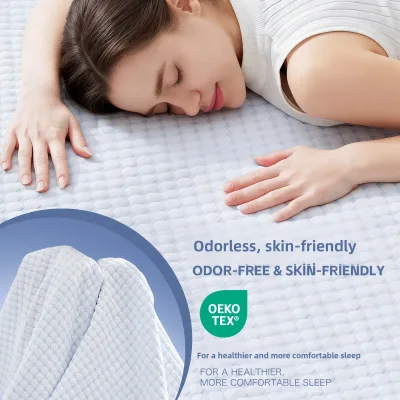
The absence of specific fire standard references in the provided data means the buyer must initiate a direct verification process. When evaluating a supplier, the primary question is not whether they claim the product is fire retardant, but which specific test standard the product has passed. The market data mentions "OEKO-TEX" and "GOTS" in a low-confidence background context; these should not be assumed to be present or relevant to fire safety without direct confirmation from the supplier. Instead, procurement teams should request the specific test reports that demonstrate the product's ability to resist ignition and slow flame spread.
Furthermore, the "Standard" field in product listings often refers to size standards (e.g., Queen, King, Twin XL) rather than safety standards. A listing might state "CE. SGS" as a standard, but this is a general compliance marker. The buyer must explicitly ask for the fire retardant certification documents. If a supplier claims compliance with a specific fire code, the buyer should demand the test report from an accredited third-party laboratory. The verification process should also include checking the validity of the certificates and ensuring they cover the specific batch or model number being purchased.
Cost Drivers and Pricing Structure Analysis
The pricing for fire retardant memory foam mattresses is influenced by a complex interplay of material costs, manufacturing complexity, and compliance expenses. The observed price range in the market spans from 13.62 USD to 250 USD, a variance that reflects differences in material quality, thickness, and the extent of fire retardant treatment. Lower-priced items in this range may utilize basic foam densities with minimal fire barrier integration, while higher-priced items likely incorporate advanced fire retardant chemicals, higher density foams, or specialized construction methods like the "Gel Top" style observed in some listings.
Material costs are a primary driver. High Density Foam, as noted in the supply data, is a premium material compared to standard foams, and its integration with fire retardant properties increases the base cost. Additionally, the customization factor plays a significant role. Products that offer "Customized Available" options, including custom colors and sizes, often command a higher price due to the setup costs and lower economies of scale. The packaging method also affects the final cost; options like "Rolled Compress Package Into PP Bag and Carton Box" or "Compress and Roll Pack in The Carton Box" involve specific machinery and labor that are factored into the unit price.
Minimum Order Quantity (MOQ) is another critical cost factor. The observed MOQ range is 1 to 100 units. Buyers seeking to minimize upfront capital may find suppliers with an MOQ of 1, but these often come with a higher per-unit cost. Conversely, ordering at the higher end of the MOQ range (e.g., 100 units) typically unlocks volume discounts, bringing the price closer to the lower end of the observed range. The lead time and origin location (Zhejiang, China) also influence the landed cost, as shipping and logistics expenses must be calculated alongside the FOB price.
Typical Applications and Usage Scenarios
The versatility of fire retardant memory foam mattresses allows them to serve a wide array of applications, from residential settings to high-risk commercial environments. The supply data highlights usage in "Hotel, Home, School," indicating a broad market reach. In the hospitality sector, fire safety is paramount, and memory foam mattresses are frequently used in hotels to meet stringent fire codes while providing guest comfort. The "Plain" style and "Carton" packing suggest these are often used in standard hotel rooms where ease of storage and transport is essential.
Beyond hospitality, the data points to specialized medical and institutional applications. Listings mention usage in "Reception Hall, Consulting Room, Nursing Center, Office Treatment, Pharmacy, Laboratory, Sickroom, Operating Room, Patient Care." This indicates that fire retardant properties are critical in healthcare settings where patient mobility may be limited, and evacuation times are a concern. The "Suitable for: Patient" attribute reinforces the need for durable, safe, and easy-to-clean surfaces. The "Easy Cleaning" and "Antimicrobial" features observed in the data are particularly relevant for these environments, where hygiene and safety standards are elevated.
In educational settings, such as schools, the fire retardant requirement is often mandated by law to protect large groups of occupants. The "Medium" hardness and "Rectangular" shape are well-suited for dormitory or institutional use. The "Summer" season attribute suggests that some products may be designed with breathability in mind, which is a secondary benefit in fire retardant foams that can sometimes trap heat. Buyers should match the specific application requirements with the product's feature set, ensuring that the fire retardant properties align with the risk profile of the intended environment.
Supplier Evaluation and Quality Control Measures
Evaluating a supplier for fire retardant memory foam mattresses requires a multi-faceted approach that goes beyond price and basic specifications. The origin of the products, primarily "Zhejiang, China" or "China Mainland," suggests a concentration of manufacturing capabilities in this region. Buyers should verify the supplier's production capacity and their ability to maintain consistent quality across batches. The "Service: OEM/ODM" attribute indicates that many suppliers are capable of custom manufacturing, which is a positive sign for buyers with specific fire safety requirements.
Quality control should be a central part of the supplier evaluation process. Buyers must assess the supplier's internal quality assurance protocols. This includes verifying the consistency of the "High Density Foam" fill material and the uniformity of the fire retardant treatment. The "Condition: New" attribute is a baseline expectation, but buyers should also inspect the "prod_packing" methods to ensure that the mattresses are protected during transit to prevent compression damage or contamination. The use of "Carton Box" and "PP Bag" packaging should be robust enough to maintain the integrity of the fire retardant layers.
When selecting a supplier, buyers should prioritize those who can provide transparent documentation regarding their fire retardant processes. The ability to offer "Customized Available" options, including "Customized Color" and specific sizes, demonstrates a level of flexibility that is valuable for large procurement projects. However, customization should not compromise the core safety features. Buyers should request samples for independent testing before committing to a large order. The "Warranty: 10 Years" or "10years" observed in some listings is a strong indicator of supplier confidence, but it must be scrutinized to ensure it covers fire safety performance and not just structural integrity.
Long-Term Procurement and Lifecycle Management
Sourcing fire retardant memory foam mattresses is not merely a transactional activity but a long-term strategic decision that impacts safety, compliance, and budget over the product's lifecycle. The "10 Years" warranty observed in the market suggests that these products are designed for extended use, but buyers must consider the longevity of the fire retardant properties. Over time, fire retardant chemicals can degrade or migrate, potentially reducing the effectiveness of the safety treatment. Buyers should inquire about the shelf life of the fire retardant properties and whether the warranty covers potential degradation of these safety features.
Maintenance and replacement cycles are also critical considerations. In high-traffic environments like hotels or hospitals, mattresses may need to be replaced more frequently than in residential settings. The "Easy Cleaning" and "Antimicrobial" features are essential for maintaining hygiene and extending the usable life of the product. Buyers should develop a maintenance plan that includes regular inspections for wear and tear, particularly in areas where the fire retardant barrier might be compromised. The "Carton" and "Rolled Compress Package" options facilitate storage and replacement, allowing for efficient logistics when swapping out old units for new ones.
Finally, buyers must stay informed about evolving fire safety regulations. As standards change, existing inventory may become non-compliant. The "Customized" nature of many products offers an advantage here, as suppliers can adjust formulations to meet new regulations. However, this requires a proactive relationship with the supplier to ensure that future orders align with the latest legal requirements. By focusing on long-term procurement strategies, buyers can ensure that their investment in fire retardant memory foam mattresses remains safe, compliant, and cost-effective over the product's entire lifecycle.
FAQs
What materials are used in fire retardant memory foam mattresses?
Products typically use High Density Foam, Latex, or Spring constructions. While memory foam is common, the supply base includes these alternative materials that can be treated for fire resistance.
Which certifications are available for these mattresses?
Some listings indicate CE and SGS certifications as general safety markers. Buyers must verify if these specific documents cover fire retardant testing standards like ASTM E84 before purchase.
Can I order custom sizes for fire retardant memory foam mattresses?
Yes, customization is available for specific dimensions like 1.8*2.0m or 1.5*2.0m. Suppliers also offer Queen, King, and Twin XL sizes or fully customized cuts to fit unique room configurations.
How is the product packed for shipping?
Items are usually compressed and rolled into a PP bag inside a carton box. This packaging method protects the mattress during transit while maintaining its structural integrity for delivery.
What is the typical warranty period for these mattresses?
Some suppliers offer a 10-year warranty on their products. This warranty typically covers structural integrity, but buyers should confirm if it explicitly includes fire safety performance retention.
Which industries commonly use these mattresses?
They are widely used in hotels, homes, schools, and medical facilities like nursing centers. The fire retardant properties are essential for healthcare settings and high-occupancy commercial buildings.
What hardness levels are available for fire retardant memory foam mattresses?
Options range from Soft to Medium hardness depending on the foam density. Buyers should select the hardness level that best suits the intended user, such as elderly patients or general guests.