Source Fish Mouth Flat Slippers for Beach, Leisure, and Summer
Compare 30 listings of Fish Mouth Flat Slippers from verified Chinese manufacturers. Buyers can evaluate options featuring PVC or PU uppers, EVA soles, and customized logos for summer beach wear and casual leisure use; compare the available evidence and request quotations based on your requirements.
Key considerations
Products List
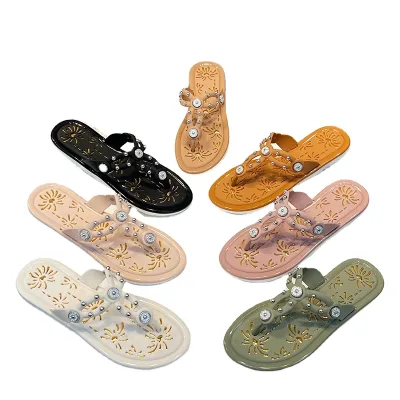


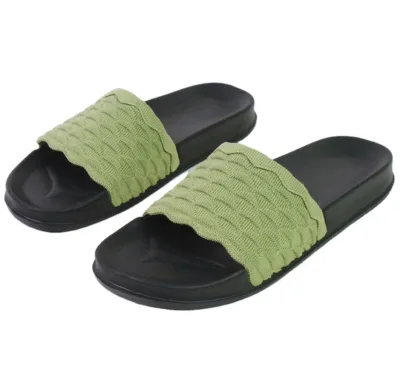
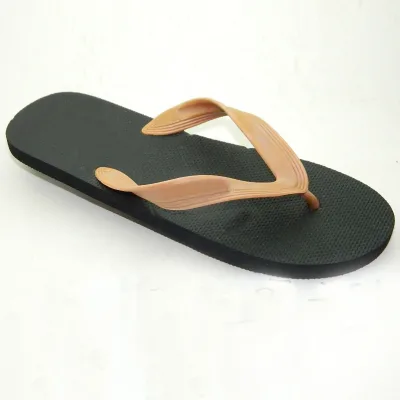


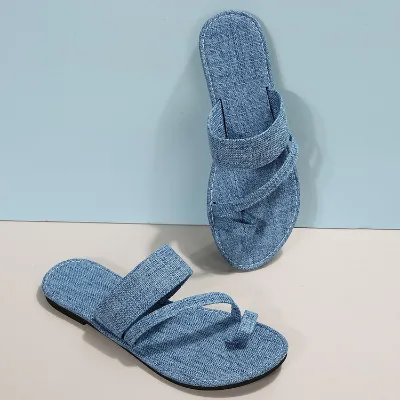
High Quality Flip Flops Sandals Beach Flip Flops Comfortable Flat Slipper
$2.85 - $5.00
MOQ: 100 Pairs


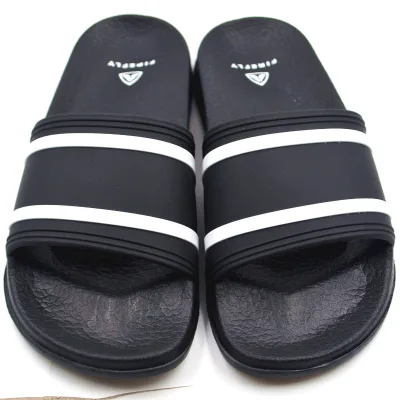
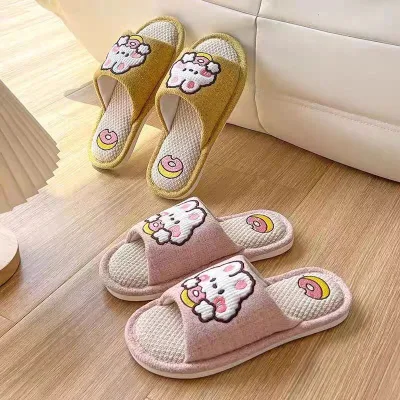
2023 Summer New Casual Slippers Non-Slip Soft Bottom Wear Cute Beach Slippers
$1.00 - $3.00
MOQ: 1000 Pairs




Comprehensive Sourcing Guide
Fish Mouth Flat Slippers Sourcing Guide
Fish Mouth Flat Slippers—open-toe flat sandals with a wide strap across the forefoot—are a seasonal staple for beach, leisure, and outdoor wear, and they remain one of the most repeat-ordered categories for footwear importers heading into spring and summer. The listings observed for this category come from Chinese manufacturing bases, with origin noted in Zhejiang and Jinjiang, and are positioned as women's and unisex flat styles in clip-toe constructions. Supply capacity in this segment can be substantial—one observed listing cites up to 1,000,000 pairs per month—which means buyers can scale quickly once a style is validated, but must also invest effort in distinguishing serious manufacturers from trading intermediaries.
This guide walks through the sourcing decisions that matter most for Fish Mouth Flat Slippers: defining the product scope, verifying technical specifications, securing compliance documentation, understanding cost drivers, qualifying suppliers, and building long-term procurement checks. The goal is to help you move from browsing listings to placing repeat orders with confidence, using the observed product attributes as a factual baseline while flagging the points you must confirm directly with each supplier before committing capital.
Product Scope and Observed Listing Signals
The observed listings cover women's summer flip-flop slippers and beach shoes, with product names such as "Hot sales women slippers summer flip flops beach summer shoes." Intended use is consistently outdoor and beach, with leisure noted as a suitability context. Gender attributes appear as both Female and Unisex across listings, so confirm which fit last and size run you are buying. Model references include hx-1, SL00105, and SL0005, and sizes span EUR 36–41 (size range 36–41#), which targets the core women's market but excludes extended and plus sizes—ask whether larger sizes can be produced before finalizing an assortment. Style descriptors include Slippers and Casual, with Sexy and Leopard Print pop elements appearing on some listings, alongside Classical Allusion on others.
Season coverage is listed as Summer, Spring, and Autumn, which suits a two-to-three-season retail window rather than year-round stock. Construction materials are PVC for both upper and lining on several listings, with PU uppers appearing on others, and EVA outsoles throughout. Colors observed include Blue, Black, Pink, White, Brown, Grey, Plum, plus Red, Blue, and Yellow variants. Notably, some listings are marked Hand Made and Non-Disposable, and customization is explicitly available with custom logo acceptance—signals that this category supports branded programs, not just open-stock commodity buying.
Technical Specifications to Verify
Materials are the first technical decision. PVC upper and lining with an EVA outsole is the dominant observed configuration, offering low cost and water resistance suited to beach use; PU uppers on some listings suggest a dressier, higher-price tier. Ask each supplier to confirm exact material grades, strap thickness, footbed density, and whether the EVA is injection-molded or cut. For clip-toe constructions, the toe-post junction is the most common failure point—request details on how the post is anchored and whether it has been pull-tested. The Flat feature and slipper classification mean there is no heel structure, so footbed cushioning and arch support claims should be substantiated with samples.
Size and packaging specifications need equal scrutiny. The observed EUR 36–41 range with a 26X18X15 cm single package size and 2.000 kg single gross weight should be cross-checked against a physical sample, since flat footwear weight claims vary widely depending on sole thickness. Verify size grading between EU sizes, strap flexibility across the range, and whether the same last is used for women's and unisex versions. One listing cites an inner box with dimensions 28.514.512.5—confirm which packaging format (opp bag, polybag with carton, or inner box) applies to your order and whether packaging costs are included in quoted prices.
Compliance and Safety Documentation
No certification status was observed in the supplied listing data, so buyers must not assume any compliance baseline and should request documentation directly. For footwear entering the US and EU markets, typical requirements to discuss with suppliers include restricted substances testing (such as azo dyes, phthalates in PVC, and heavy metals), which is especially relevant given the widespread use of PVC in this category. PVC compounds can vary significantly in plasticizer content, so a written material declaration and third-party test report from an accredited laboratory should be a precondition for any first order. Do not accept verbal assurances or scanned certificates of uncertain origin.
Beyond chemical safety, verify the supplier's position on labeling requirements—country-of-origin marking, fiber or material content labels, and care instructions differ by destination market. If you plan to sell into children's sizes, note that the observed range starts at EUR 36, which is generally adult sizing, but any future extension into smaller sizes would trigger stricter juvenile product regulations. Request that the supplier identify which tests they have previously completed for comparable orders and which tests they are willing to commission at their cost versus yours. Document every agreement in writing before production begins, and retain test reports tied to specific production batches for future audit reference.
Cost Drivers and Commercial Terms
Observed pricing spans USD 0.83 to 35 across the 30 listings, reflecting the wide quality gap between basic PVC injection flip-flops and PU-upper fashion slippers. Material choice is the largest cost lever: PVC upper and lining with EVA outsole sits at the low end, while PU uppers, handmade construction, and decorative elements such as leopard print or classical allusion detailing raise unit cost. Order quantity directly affects price, with observed MOQs ranging from 2 to 5,000 pairs—extremes that likely reflect sample orders versus bulk production. Customization requests, including custom logos, typically raise both unit price and MOQ; one listing specifies an MOQ of 1,200 pairs, and another 2,400.
Commercial terms to confirm include production time, cited as 30–35 days on one listing, and dispatch logistics, with Shenzhen listed as the port of departure. Packing format affects landed cost: opp bag with 60 pairs per carton is the observed standard, while polybag-plus-carton and inner box options appear on other listings and add material and freight weight. Confirm whether quoted prices are FOB, EXW, or include inland freight, and clarify payment terms, deposit percentages, and whether tooling or print-setup fees apply to logo customization. Get all terms itemized in a proforma invoice before comparing suppliers on price alone.
Supplier Qualification and Quality Control
Qualifying a fish mouth slipper supplier starts with verifying their production capability against the claimed scale—one listing claims 1,000,000 pairs monthly capacity, which should be validated through a factory audit or third-party inspection covering production lines, workforce, and equipment. Determine whether the supplier is a manufacturer or trader by requesting factory photos, business license scope, and evidence of in-house production for the specific construction type you need (injection PVC versus handmade assembly). Both OEM and ODM service are noted in the observed standards, so clarify upfront whether they can produce your designs or only their existing models.
Quality control should be structured around the known failure modes of flat clip-toe slippers: strap-to-sole bond strength, toe-post pull resistance, sole delamination, and color transfer. Request golden samples before mass production, define an acceptable quality limit for inspection, and commission a pre-shipment inspection on the first order at minimum. For handmade listings, expect more unit-to-unit variation than injection-molded production and set tolerance expectations accordingly. Check that color consistency matches your approved sample across all colorways ordered, since multi-color programs (Blue, Black, Pink, White, Brown, Grey, Plum) multiply the surfaces where variation appears. Establish a clear corrective-action process for rejected goods before deposit payment.
Long-Term Procurement Checks
Once a supplier passes initial qualification, long-term value depends on consistency across reorder cycles. Establish a documented record of every approved sample, material specification, and packaging format so that reorders reproduce the original standard rather than drifting toward whatever components are cheapest at production time. The observed flexibility in this category—custom logo acceptance, OEM/ODM service, and customization availability—makes it well suited to building a branded program, but that requires the supplier to maintain material traceability and version control across seasons. Agree in writing how design changes, material substitutions, and color additions will be documented and re-approved.
Monitor supplier performance with a simple scorecard covering on-time delivery against the stated 30–35 day production window, defect rates from each inspection, and responsiveness during development. Reconfirm compliance documentation annually, since PVC and PU formulations may change without notice, and request updated test reports when new colorways or materials are introduced. Diversification is prudent even with a reliable partner: keep a second qualified source for your best-selling styles, especially given the seasonal demand concentration in spring and summer when factory capacity across Zhejiang and Jinjiang tightens. Finally, review freight costs periodically, as the lightweight but bulky carton profile of flat slippers makes volume-to-weight ratios a recurring landed-cost variable worth renegotiating as order volumes grow.
FAQs
What materials are used for Fish Mouth Flat Slippers?
These slippers typically feature a PVC upper and EVA outsole for durability and comfort. The lining is also made of PVC to ensure moisture resistance. Some variations may use PU for the upper material. This combination provides a lightweight and flexible structure suitable for casual wear and beach activities.
Can I customize the logo on these slippers?
Yes, customized logos are available for these Fish Mouth Flat Slippers. Buyers can request specific branding to match their business needs. This customization option allows for unique product identification in the market. It is advisable to confirm the design requirements and approval process with the supplier before production begins.
What is the typical MOQ for these slippers?
The minimum order quantity varies by supplier, ranging from 2 to 5000 pairs. Some listings indicate an MOQ of 1200 pairs, while others may require 2400 pairs. Buyers should check specific supplier requirements as the MOQ depends on the manufacturer's production capacity and the customization level requested for the order.
Which sizes are available for women's fish mouth slippers?
Available sizes typically range from EUR 36 to 41. The product specifications list sizes 36, 37, 38, 39, 40, and 41. These sizes cater to the female demographic, ensuring a proper fit for various foot shapes. Buyers should verify the exact size chart with the supplier to ensure accuracy.
How long is the production time for these slippers?
The production time is generally 30 to 35 days. This timeframe allows for manufacturing, quality control, and packaging preparation. Buyers should plan their inventory accordingly to account for this lead time. Expedited options may be available depending on the supplier's current capacity and the complexity of the order.
What packaging options are provided for these slippers?
Standard packaging includes one pair per OPP bag, with 60 pairs packed in one carton. Some suppliers offer polybag and carton combinations. Inner box packaging is also available for certain models. This packaging ensures product protection during transit and facilitates easy storage and display for retailers and distributors.