Source Fish Skinner for Seafood Factories, Restaurants, and Kitchens
Compare 30 Fish Skinner models with varying voltage, power, and dimensions. Buyers can evaluate automatic and semi-automatic options for seafood processing, restaurants, and kitchen use.
Key considerations
Products List


Automatic Fish Skinning Machine Squid Skin Peeling Machine Squid Skinner
$6000.00 - $6200.00
MOQ: 1 pc

Stainless Steel Salmon Fish Skin Peeling Equipment Squid Skinner Remover
$4600.00 - $5000.00
MOQ: 1 pc


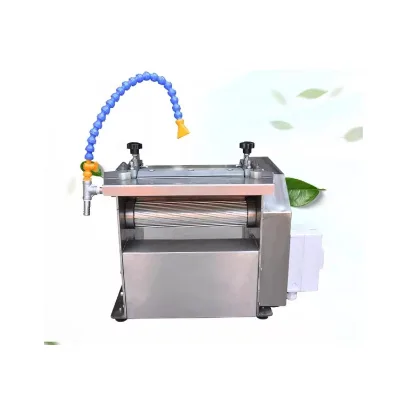
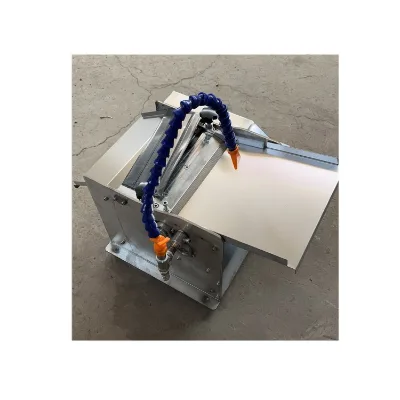


Factory Price Fish Skin Peeler / Squid Skinner / Fish Skinning Machine
$3609.00 - $4329.00
MOQ: 1 Sets


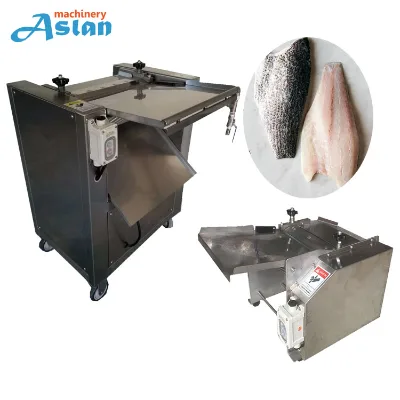


Comprehensive Sourcing Guide
Strategic Sourcing Guide for Industrial Fish Skinner Equipment
Understanding the Product Category and Operational Scope
The global seafood processing industry relies heavily on automated equipment to maintain efficiency, hygiene, and throughput. At the core of this requirement is the Fish Skinner, a specialized machine designed to remove the skin from various aquatic products with minimal waste and maximum speed. When sourcing this equipment, buyers must recognize that the term "Fish Skinner" often encompasses a broader category of skinning and peeling machinery, including units specifically marketed for squid skin removal and general skin peeling applications. The market offers a diverse range of configurations, from fully automatic systems to semi-automatic variants, each tailored to specific production volumes and product types.
Current market observations indicate that these machines are primarily electric, operating on standard industrial voltage configurations such as 220V or 380V. The power consumption varies significantly based on the model and intended capacity, with observed ratings ranging from 0.2kw to 0.75kw for smaller units. The automation level is a critical differentiator; while some units are explicitly labeled as "Automatic" with an "Automatic Grade," others may be classified as "Semi-automatic." This distinction directly impacts labor requirements and throughput consistency. Buyers should verify the specific automation grade of any unit before procurement, as a machine described as "Automatic" may have different operational constraints compared to a "Semi-automatic" model, even if both perform the same fundamental function.
Technical Specifications and Mechanical Configuration
When evaluating the technical specifications of a Fish Skinner, the physical dimensions and material composition are paramount for integration into existing production lines. The machinery is typically constructed from high-grade stainless steel, specifically SUS or Stainless Steel 304, ensuring resistance to corrosion in wet, saline environments. This material choice is essential for meeting food safety standards and prolonging the equipment's lifespan. The internal mechanics rely on core components such as motors and bearings, which are the driving forces behind the skinning action. The reliability of these components is often highlighted in supplier documentation, with some listings explicitly noting the provision of machinery test reports to verify component performance.
Dimensional analysis is crucial for facility planning. Observed specifications for various models reveal a wide range of physical footprints. For instance, compact models may measure approximately 540mm in width, 420mm in depth, and 410mm in height, suitable for smaller operations or specific product lines like squid. In contrast, larger industrial units can reach dimensions of 1270mm by 640mm by 1150mm, designed for high-volume fish farming or seafood factory environments. The cutting width is another critical metric, with specific models offering a cut width of 267mm. Buyers must ensure that the machine's physical dimensions align with their available floor space and that the cutting width matches the size of the fish or seafood products they intend to process.
The following table summarizes the observed dimensional and power variations across different model configurations:
| Model Identifier | Dimensions (L x W x H) | Voltage | Power Rating | Automation Grade |
|---|---|---|---|---|
| YP-30 | 540 * 420 * 410 mm | 220V | 0.2kw | Automatic |
| YP-50 | 620 * 570 * 900 mm | 220V/1phase | 0.75kw | Semi-automatic |
| YP-50GS | 1270 * 640 * 1150 mm | 380V | N/A | Automatic |
| BP435 | 650 * 520 * 800 mm | N/A | N/A | Automatic |
Note: Data reflects observed specifications from available product listings. Specific power ratings and voltage requirements must be confirmed with the supplier for each specific unit.
Compliance, Certification, and Safety Standards
In the B2B procurement of food processing equipment, compliance with international safety and hygiene standards is non-negotiable. While specific certification bodies are not universally mandated by the provided data, the construction material (SUS/SS304) serves as a primary indicator of compliance with food-grade safety requirements. Buyers must verify that the equipment meets the regulatory standards of their destination country, particularly regarding electrical safety and food contact materials.
The presence of a "machinery test report" is a significant positive indicator of quality assurance. This document should provide evidence that the machine has undergone rigorous testing for performance and safety. However, the existence of such a report does not automatically imply that every listed product satisfies all local regulatory requirements. Buyers should request copies of these reports and cross-reference them with local health and safety regulations. Furthermore, the warranty period is a standard metric for supplier confidence; a 1-year warranty is commonly observed, but this should be clearly defined in the contract to cover motor failures, structural defects, and other critical component issues.
Cost Drivers and Pricing Dynamics
The pricing of Fish Skinner equipment is influenced by several factors, including the level of automation, material quality, and production capacity. The observed price range in the market spans from $750 to $18,000 USD. This wide variance suggests that the cost is not merely a function of the machine's basic function but is heavily dependent on the complexity of the design and the volume of output it can handle. Lower-priced units typically correspond to smaller, semi-automatic models with reduced dimensions and lower power consumption. Conversely, the higher end of the price spectrum likely includes fully automatic systems with larger footprints, advanced motor configurations, and enhanced durability features.
The Minimum Order Quantity (MOQ) is another critical cost driver. In the current market, the MOQ is consistently observed at 1 set, allowing buyers to purchase single units without the need for bulk inventory commitments. This flexibility is advantageous for small to medium-sized enterprises that are testing new production lines or have limited capital. However, buyers should be aware that while the MOQ is low, the unit price may be higher for single purchases compared to bulk orders, depending on the supplier's pricing structure. Shipping and packaging costs also play a role in the total cost of ownership. Most units are packed in exported wooden cases or plywood cases to ensure safe transit, which adds to the overall logistics expense.
Typical Applications and Operational Versatility
Fish skinning machines are versatile tools designed for a variety of applications within the seafood supply chain. The primary application is in fish farming and seafood factories, where high-volume processing is required to maintain supply chain efficiency. These machines are also suitable for use in restaurants and commercial kitchens, where the demand for fresh, skinless fish is high. The ability to handle different types of seafood, including fish and squid, makes these units particularly valuable for facilities that process a diverse range of products.
The "Easily Operation" feature is a common advantage cited for these machines, suggesting that user training requirements are minimal. This is particularly important for facilities with high staff turnover or limited technical expertise. The inclusion of a water inlet in some models indicates that these machines may require a connection to a water supply for cleaning or specific skinning processes, which must be factored into the facility's infrastructure planning. Buyers should assess their specific operational needs, such as the type of seafood processed and the required throughput, to select a machine that offers the best balance of versatility and efficiency.
Supplier Evaluation and Quality Control Protocols
Selecting a reliable supplier is as important as selecting the right machine. The origin of the equipment is a key factor, with the majority of observed products originating from China. While this does not inherently indicate quality issues, it necessitates a thorough evaluation of the supplier's track record and quality control processes. Buyers should prioritize suppliers who provide machinery test reports and clearly define their warranty terms. The availability of core components like motors and bearings should be verified to ensure that replacement parts are accessible in the event of a failure.
Quality control should extend beyond the initial purchase. Buyers should establish clear acceptance criteria based on the machine's specifications, including dimensions, power ratings, and material composition. The "New" condition of the equipment is a standard expectation, but buyers should inspect the machine upon delivery to ensure it matches the ordered specifications. The packaging method, whether an exported wooden case or a plywood case, should be inspected to ensure the machine arrives without damage. Additionally, the single gross weight and single package size should be verified against the supplier's documentation to avoid unexpected logistics issues.
Long-Term Procurement and Maintenance Considerations
Long-term procurement considerations involve planning for maintenance, spare parts availability, and potential upgrades. The warranty period, typically 1 year, provides a baseline for initial support, but buyers should inquire about extended warranty options and the availability of technical support post-warranty. The motor and bearings are critical components that may require periodic maintenance or replacement; therefore, buyers should ensure that the supplier offers a reliable supply chain for these parts.
The adaptability of the machine to future production needs is also a consideration. As a facility grows, the need for higher throughput may arise. While the current models offer a range of capacities, buyers should consider whether the selected machine can be upgraded or if a larger model will be needed in the near future. The "Customization" availability noted in the product attributes suggests that some suppliers may offer tailored solutions to meet specific production requirements. This flexibility can be a significant advantage for buyers with unique operational needs.
In conclusion, sourcing a Fish Skinner requires a careful balance of technical evaluation, cost analysis, and supplier vetting. By focusing on the specific dimensions, material quality, and automation level, buyers can select a machine that optimizes their production efficiency while adhering to safety and hygiene standards. The wide range of available options, from compact semi-automatic units to large-scale automatic systems, ensures that there is a solution suitable for various operational scales and budgets.
FAQs
What voltage options are available for fish skinners?
Fish skinners operate on 220V or 380V depending on the specific model. Some units support 220V single-phase power, while larger industrial models require 380V to function correctly. Buyers must verify the voltage requirement before installation to ensure compatibility with their facility's electrical infrastructure.
Which automation grades are offered for these machines?
Both automatic and semi-automatic grades are available for fish skinning equipment. Fully automatic models like the YP-30 offer continuous operation, whereas semi-automatic variants may require more manual intervention. The choice depends on the desired production volume and labor availability.
Can buyers customize the Fish Skinner specifications?
Yes, customization is available for many Fish Skinner models to meet specific production needs. Buyers can request tailored dimensions or functional adjustments, though standard models like the YP-50GS come with fixed dimensions. Customization options should be confirmed directly with the manufacturer before ordering.
What material is used to construct these machines?
These machines are primarily constructed from stainless steel, specifically SUS or Stainless Steel 304. This material ensures resistance to corrosion in wet, saline environments and meets food safety standards. The use of high-grade steel is essential for maintaining hygiene during seafood processing operations.
How much does a single Fish Skinner cost?
The price for a Fish Skinner ranges from 750 to 18000 USD based on the model and capacity. Lower-priced units typically correspond to smaller, semi-automatic models, while higher costs reflect larger, fully automatic systems. The final price depends on the specific configuration and customization requirements.
What is the minimum order quantity for these units?
The minimum order quantity is typically one set for fish skinners. This allows buyers to purchase single units without needing bulk inventory commitments. The low MOQ is advantageous for small to medium enterprises testing new production lines or with limited capital.
Where are these fish skinners manufactured?
The majority of these fish skinners originate from China. Buyers should verify the specific origin of the unit they intend to purchase. While China is the primary source, the specific factory location and shipping logistics must be confirmed to ensure timely delivery.
What warranty is provided for the machinery?
A standard one-year warranty is commonly provided for fish skinning equipment. This warranty typically covers motor failures and structural defects. Buyers should request specific warranty terms and documentation to ensure coverage for critical components like motors and bearings.