Source Flame Retardant CBB60 Capacitor for AC, Motors, and Fans
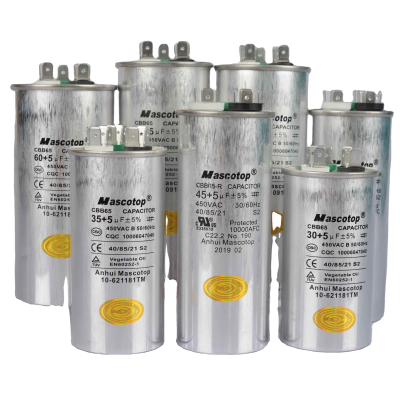
Find 30 Flame Retardant CBB60 Capacitor options suitable for air conditioners, motors, and fans. Compare specifications like capacitance, voltage ratings, and packaging types from verified manufacturers in China to identify the right component for your high-frequency or low-frequency applications.
Key considerations
Products List



Comprehensive Sourcing Guide
Strategic Sourcing Guide for Flame Retardant CBB60 Capacitors
Understanding the CBB60 Product Profile and Technical Variability
When sourcing a Flame Retardant CBB60 Capacitor, buyers must first navigate the complex landscape of product attributes, as the market presents a wide array of specifications that often overlap or contradict in public listings. The core product identity is defined by the model designation CBB60, which typically refers to a specific class of metallized polypropylene film capacitors. However, observed data indicates significant variability in how these components are categorized. While the primary material for many CBB60 units is polypropylene, some listings explicitly associate the CBB60 model with aluminum electrolytic structures or even variable capacitor configurations. This discrepancy highlights a critical need for verification before procurement.
The technical profile of the CBB60 capacitor generally centers on its application in motor starting and running circuits, particularly for air conditioners, fans, and general-purpose AC motors. The standard usage scenarios include high-frequency bypass, low-frequency bypass, filtering, tuning, and both high and low-frequency coupling. The capacitance ranges observed in the market are broad, spanning from 1-50 microfarads (µF) up to values exceeding 100 µF. Specific listings note ranges such as 2-100 µF and 50-100 µF, suggesting that the "CBB60" label may cover a family of values rather than a single fixed capacitance.
Furthermore, the structural description varies significantly across different supplier data points. Some entries describe the structure as a "Fixed Capacitor," which aligns with the standard CBB60 definition, while others list "Variable Capacitor" or "Aluminum Electrolytic Capacitor" under the same model number. This inconsistency suggests that buyers must treat the model number as a starting point for inquiry rather than a definitive specification. The dielectric material is predominantly polypropylene, yet some entries mention organic mediums or aluminum as the manufacturing material, likely referring to the casing or terminal composition rather than the dielectric film itself.
Compliance Verification and Certification Standards
Compliance is a paramount concern when sourcing components for safety-critical applications like air conditioning and automotive systems. The CBB60 capacitor is frequently required to meet rigorous safety standards due to its role in high-voltage environments. Based on available data, the relevant approval standards for these components include GB/T3667, UL810, and EN60252. These standards dictate the electrical safety, fire resistance, and environmental durability of the capacitor.
Buyers should explicitly verify that the supplier can provide documentation confirming adherence to these specific standards. The presence of CE and ISO9001 certifications is frequently observed in the product listings, indicating that the manufacturing facility adheres to international quality management systems and European safety directives. However, the mere mention of these certifications in a product title does not guarantee that every specific unit in a shipment is certified. The buyer must request the specific test reports or certificates of conformity that link the batch of capacitors to the GB/T3667 and UL810 standards.
Regarding flame retardancy, which is a core requirement of the search query, the data references specific climatic categories such as 40/70/21 and 40/85/21. These categories define the operating temperature range and humidity resistance, which are proxies for the component's ability to withstand thermal stress without degrading or igniting. While some background information mentions UL94, the primary standard for the capacitor itself is UL810. Buyers should not assume that a general "flame retardant" claim satisfies the specific UL810 requirement for motor capacitors. The verification process must involve checking the datasheet for the specific fire rating and ensuring that the "flame retardant" attribute is backed by the manufacturer's compliance with the cited standards.
Cost Drivers and Pricing Dynamics in the Market
The pricing structure for CBB60 capacitors is influenced by several dynamic factors, including material costs, production volume, and geographic origin. The observed price range in the market is quite narrow, typically falling between 0 and 10 USD per unit. This low price point is characteristic of high-volume commodity components, but it also implies that margins are thin and quality control is the primary differentiator.
The Minimum Order Quantity (MOQ) is a significant cost driver. Data indicates an MOQ range from 1 unit to 5,000 units. For small-scale procurement or prototyping, buyers may face higher per-unit costs or be forced to purchase larger quantities than immediately necessary. Conversely, bulk buyers can leverage the lower end of the price spectrum by meeting higher MOQ thresholds. The specific MOQ of 50 pieces is noted in several listings, suggesting a common entry point for small to medium enterprises.
Geographic origin also plays a role in cost and logistics. The primary manufacturing hubs identified are in Guangdong, Zhejiang, and Tongling City in Anhui Province, all within China (Mainland). These regions offer established supply chains for electronic components, which helps keep costs competitive. However, the "Export Method" is listed as "Various," meaning that shipping terms (FOB, CIF, EXW) can vary significantly between suppliers, directly impacting the landed cost. Buyers must factor in these logistics variables when comparing the 0-10 USD base price against the total cost of ownership.
Typical Applications and Operational Requirements
The CBB60 capacitor is engineered for a diverse range of applications, with a strong emphasis on motor-driven systems. The most common usage scenarios include air conditioners, fans, lighting systems, and general-purpose AC motors. The specific application data points to its use in high-voltage environments, making it suitable for industrial and residential cooling systems. The operational frequency is typically rated at 50/60 Hz, aligning with standard global power grid frequencies.
In terms of electrical performance, the capacitor is designed to handle specific voltage stresses. One critical specification observed is the "Between Terminals" rating of 2*Un(VAC)/5s, which refers to the dielectric strength test where the capacitor must withstand twice its rated voltage for five seconds without breakdown. This test is essential for ensuring the component's reliability in high-voltage applications.
The versatility of the CBB60 is further evidenced by its usage in both high-frequency and low-frequency coupling and bypass circuits. While its primary role is in motor starting and running, the filtering and tuning capabilities allow it to be used in broader electronic systems. Buyers should ensure that the specific capacitor selected matches the voltage and capacitance requirements of their specific motor or circuit. For instance, a unit with a capacitance of 1-50 µF may be suitable for smaller fans, while a unit exceeding 100 µF might be required for larger industrial compressors.
Supplier Evaluation and Geographic Considerations
Evaluating suppliers for CBB60 capacitors requires a focus on their location, production capacity, and export capabilities. The data identifies three primary manufacturing regions: Guangdong, Zhejiang, and Tongling City in Anhui Province. Each region may have different specializations or supply chain efficiencies. Guangdong is known for a dense electronics manufacturing ecosystem, while Zhejiang and Anhui offer strong industrial bases for component production.
When assessing a potential supplier, buyers should verify their "Export Method" and packaging standards. The observed packaging types include "Carton," "Standard Export Package," and "Standard Export Carton Package." These terms suggest that the suppliers are accustomed to international shipping, but the buyer must confirm that the packaging is robust enough to prevent damage during transit, especially for components with terminal structures.
The lead time is another critical factor in supplier evaluation. A typical delivery window is noted as 7-15 days after payment confirmation. This relatively short lead time indicates a mature supply chain capable of rapid fulfillment. However, buyers should be cautious of suppliers who do not specify lead times or who promise unrealistic delivery schedules. The ability to meet the MOQ of 50 pieces or higher without significant delays is a strong indicator of a reliable supplier.
Quality Control and Long-Term Procurement Strategy
Ensuring long-term reliability for CBB60 capacitors involves a robust quality control strategy. Given the variability in product attributes observed in the market, buyers must implement strict incoming inspection protocols. This includes verifying the physical structure (fixed vs. variable), the manufacturing material (polypropylene vs. aluminum), and the capacitance value against the order specifications.
The "Climatic Category" of 40/70/21 or 40/85/21 is a key quality metric. Buyers should test samples to ensure they can operate reliably within these temperature and humidity ranges, particularly for applications in harsh environments like outdoor air conditioning units. The "Rate Frequency" of 50/60 Hz must also be confirmed to prevent resonance issues or overheating in the target application.
For long-term procurement, establishing a relationship with a supplier who consistently meets the GB/T3667, UL810, and EN60252 standards is essential. Buyers should request periodic quality audits and maintain a clear record of test results for each batch received. The "Various" export methods suggest flexibility, but buyers should standardize their logistics requirements to ensure consistent quality and delivery performance. By focusing on suppliers with proven track records in the identified Chinese manufacturing hubs and demanding rigorous documentation, buyers can mitigate the risks associated with the observed product variability and ensure a steady supply of high-quality, flame-retardant CBB60 capacitors.
Comparative Analysis of Product Attributes
To assist in the decision-making process, the following table summarizes the key attributes observed in the market for CBB60 capacitors. This comparison highlights the variability that buyers must navigate.
| Attribute Category | Observed Values / Options | Verification Requirement |
|---|---|---|
| Structure | Fixed Capacitor, Variable Capacitor | Confirm "Fixed" for standard CBB60 |
| Manufacturing Material | Polypropylene, Aluminum | Verify dielectric is Polypropylene |
| Capacitance Range | 1-50 µF, 2-100 µF, >100 µF, 50-100 µF | Match specific motor requirements |
| Certifications | CE, ISO9001, UL810, GB/T3667 | Request specific batch certificates |
| Packaging Type | Surface Mount, Terminals, Carton | Ensure terminals match circuit board |
| Origin | Guangdong, Zhejiang, Tongling (Anhui) | Verify factory location for logistics |
| Lead Time | 7-15 Days | Confirm against production schedule |
| MOQ | 1, 50, up to 5000 | Negotiate based on volume needs |
This table underscores the necessity of detailed specification checks. The presence of "Surface Mount" and "Terminals" as packaging types suggests that the physical form factor varies, which could impact the assembly process. Similarly, the wide range of capacitance values means that a single order might require multiple part numbers. Buyers must clearly define their technical requirements before engaging with suppliers to avoid receiving components that do not fit their application.
Final Procurement Considerations
In conclusion, sourcing flame retardant CBB60 capacitors requires a disciplined approach that prioritizes verification over assumption. The market offers a competitive price range and a variety of suppliers across China, but the inconsistency in product descriptions demands rigorous due diligence. Buyers must focus on confirming the specific standards (GB/T3667, UL810), verifying the material composition (polypropylene dielectric), and ensuring the capacitance and voltage ratings align with their application needs. By maintaining a clear understanding of the observed data ranges and demanding transparent documentation, procurement professionals can secure reliable components that meet the safety and performance standards required for modern motor and air conditioning systems. The key to success lies in treating the product listings as a starting point for inquiry rather than a final specification, ensuring that every unit purchased meets the exact requirements of the end-use application.
FAQs
What certifications do flame retardant CBB60 capacitors typically have?
These capacitors commonly hold CE and ISO9001 certifications. They also adhere to approval standards such as GB/T3667, UL810, and EN60252 for safety and quality assurance in motor applications.
How is the capacitance range defined for CBB60 models?
The capacitance varies significantly across listings, ranging from 1 to 50 microfarads up to values exceeding 100 microfarads. Specific models may cover ranges like 2-100 microfarads or 50-100 microfarads depending on the manufacturer.
Which materials are used to manufacture CBB60 capacitors?
The primary manufacturing material is polypropylene, often described as metallized polypropylene film. Some listings also mention aluminum for casing or terminals, though the dielectric remains polypropylene.
Can these capacitors be customized for specific applications?
Yes, customization is available for these components. Buyers can request specific configurations for air conditioners, fans, or general-purpose motors while maintaining compliance with required safety standards.
What is the typical lead time for delivery after payment?
The standard delivery time is 7 to 15 days after payment confirmation. This timeframe applies to suppliers in regions like Guangdong, Zhejiang, and Tongling City in China.
Where are the main manufacturing origins for these capacitors?
Production originates primarily from Guangdong, Zhejiang, and Tongling City in Anhui Province, China. These locations serve as key hubs for exporting these electronic components globally.
How do suppliers package these capacitors for export?
Packaging types include cartons, standard export packages, and standard export carton packages. These methods ensure protection during transit while adhering to various export requirements.