Source Flange Mount SMA Female Connector for PCB, RF, and Microwave
Find and compare 30 Flange Mount SMA Female Connector options from verified manufacturers. Evaluate specifications such as 50ohm impedance, gold plating, and PCB mounting styles for RF, audio, and microwave applications.
Key considerations
Products List


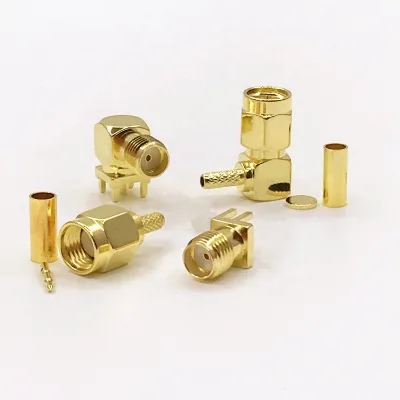


N Female to SMA Male 4 Hole Flange Mount Waterproof Straight RF Connector Adapter
$0.16 - $0.99
MOQ: 1 Pieces


Comprehensive Sourcing Guide
Flange Mount SMA Female Connector Sourcing Guide
Sourcing flange mount SMA female connectors requires a disciplined approach to technical verification and supplier qualification, as these components serve as critical interfaces in high-frequency signal transmission. The SMA (SubMiniature version A) interface is widely recognized for its reliability in maintaining signal integrity across microwave, RF, and PCB applications. When specifying a flange mount variant, buyers must ensure that the mechanical mounting style aligns with the chassis or panel thickness of the end equipment, while the electrical characteristics meet the stringent requirements of the operating frequency band. This guide provides a structured framework for evaluating listings, verifying technical parameters, and establishing robust commercial terms to mitigate procurement risk.
The procurement landscape for these connectors is characterized by a high volume of suppliers, particularly in manufacturing hubs such as Guangdong and Jiangsu provinces in China. Buyers often encounter a wide range of pricing and minimum order quantities (MOQs), which can complicate cost comparisons if not contextualized correctly. Understanding the distinction between generic listings and specific technical configurations is essential. This guide focuses on evidence-based verification steps, ensuring that every procurement decision is grounded in observable product attributes and trusted industry standards rather than unverified marketing claims.
Product Scope and Observed Listing Signals
The observed market data indicates a significant diversity in product listings, with prices ranging from approximately $0.05 to $17.56 USD and MOQs varying from 1 to 1,000 units. This wide variance suggests that listings may represent different material grades, plating thicknesses, or packaging configurations. Buyers should interpret these price points as indicative of the broader market spectrum rather than a fixed benchmark for a specific high-reliability component. The presence of low-cost options often correlates with standard brass bodies and basic gold plating, while higher price points may reflect specialized materials like stainless steel or enhanced durability features.
Listing signals also reveal variations in packaging and supply chain transparency. Some suppliers offer samples for testing, which is a positive indicator of confidence in product quality, while others provide bulk packaging details such as 100 pieces per bag or 1,000 pieces per case. The availability of customization and OEM services is frequently advertised, suggesting that many manufacturers are equipped to handle specific design requirements. However, buyers must verify whether these customization options apply to the flange dimensions, pin configurations, or only to branding and packaging. Clear identification of the product model, such as SMA-KFD03 or similar designations, helps in cross-referencing technical datasheets and ensuring compatibility with existing assembly lines.
Technical Specifications to Verify
The core electrical and mechanical specifications of an SMA female connector must be rigorously verified to ensure performance in the intended application. Key attributes include the coupling mechanism, which is typically threaded for secure connection, and the impedance, which is standardly 50 ohms for most RF and microwave applications. The orientation of the connector, whether straight or 180-degree, must match the PCB layout or panel design to prevent mechanical stress on the mating interface. Additionally, the VSWR (Voltage Standing Wave Ratio) is a critical performance metric; while some listings mention "Straight" in this context, buyers should request specific VSWR values, such as 1.25 or 1.3, to ensure signal integrity is maintained within acceptable limits for high-frequency operations.
Material composition and plating quality are equally vital for long-term reliability. The body material is commonly brass or zinc alloy, with some high-durability variants using stainless steel. The plating on the contact pins is typically gold (Au) to minimize oxidation and ensure low contact resistance, with some listings specifying gold plating on both the pin and the body. Buyers should verify the recommended mating cycles, which can range from 500 to 1,000 cycles depending on the construction quality. Furthermore, the operating and storage temperature ranges, often cited as -40°C to +125°C, must be confirmed to ensure the connector can withstand the environmental conditions of the end product. The medium pressure rating, sometimes listed as 500V, should also be checked against the system's voltage requirements.
Compliance and Safety Documentation
Regulatory compliance is a non-negotiable aspect of sourcing electronic components, particularly for products destined for global markets. The most common certification observed in listings is RoHS (Restriction of Hazardous Substances), which ensures that the connector is free from specific hazardous materials like lead, mercury, and cadmium. Buyers should request valid RoHS test reports from the supplier to verify that the materials used in the brass, zinc alloy, or stainless steel body, as well as the PTFE insulating material, meet current environmental standards. Additionally, some suppliers mention SGS certification, which can provide an extra layer of verification for material safety and quality management.
Beyond environmental compliance, buyers must ensure that the connectors meet relevant industry standards for performance and safety. While specific standards like ISO are occasionally mentioned, the primary technical standard for SMA connectors is defined by IEC 60169-15 or MIL-STD-348, depending on the application's criticality. Buyers should verify that the supplier adheres to these standards for dimensional accuracy, electrical performance, and mechanical durability. It is also important to confirm that the supplier has a documented quality management system, such as ISO 9001, which indicates a structured approach to manufacturing consistency and defect prevention. Without these certifications, the risk of receiving non-compliant or inconsistent batches increases significantly.
Cost Drivers and Commercial Terms
Understanding the factors that influence the cost of flange mount SMA female connectors is essential for effective budgeting and negotiation. The primary cost drivers include the base material (brass vs. stainless steel), the thickness and quality of the gold plating, and the complexity of the manufacturing process. Suppliers offering factory-direct sales may provide more competitive pricing by eliminating intermediary margins, but buyers should still compare total landed costs, including shipping and tariffs. The MOQ is another significant factor; higher volumes typically result in lower unit prices, but buyers must balance this with their inventory holding costs and cash flow constraints.
Commercial terms should be clearly defined in the purchase agreement to avoid disputes. Key terms to negotiate include the payment method, delivery schedule, and warranty provisions. Some suppliers offer flexible packaging options, such as trays or bags, which can impact handling efficiency and storage requirements. Buyers should also clarify the policy for defective units and the process for returning non-conforming goods. Additionally, the port of dispatch, whether it is Foshan, Dongguan, or Changzhou, can influence shipping costs and lead times. Establishing clear communication channels and confirming the supplier's ability to meet supply ability targets, such as 1,000,000 pieces per month, ensures that production schedules are not disrupted by supply chain bottlenecks.
Supplier Qualification and Quality Control
Supplier qualification is a critical step in mitigating procurement risk, especially when dealing with a large number of potential vendors. Buyers should conduct a thorough due diligence process, which includes verifying the supplier's business license, manufacturing capabilities, and export history. Suppliers located in established industrial clusters like Guangdong and Jiangsu often have access to a robust supply chain and skilled labor, but this does not guarantee quality. It is advisable to request samples for testing before placing a large order, allowing the procurement team to evaluate the connector's physical dimensions, plating quality, and electrical performance firsthand.
Quality control measures implemented by the supplier should be transparent and well-documented. Buyers should inquire about the supplier's incoming material inspection processes, in-line quality checks during manufacturing, and final random inspection protocols. A reliable supplier will have a clear procedure for handling non-conforming products and will provide traceability for each batch. Additionally, buyers should assess the supplier's responsiveness to technical queries and their willingness to provide detailed datasheets and test reports. Establishing a long-term relationship with a qualified supplier can lead to better pricing, priority production scheduling, and improved support for engineering changes or custom requirements.
Long-Term Procurement Checks
Long-term procurement success depends on continuous monitoring of supplier performance and market dynamics. Buyers should establish key performance indicators (KPIs) to track metrics such as on-time delivery, defect rates, and responsiveness to issues. Regular audits, whether virtual or on-site, can help ensure that the supplier maintains consistent quality standards and adheres to agreed-upon specifications. It is also important to stay informed about changes in industry standards and regulatory requirements, such as updates to RoHS or REACH regulations, to ensure ongoing compliance.
Supply chain resilience is another critical consideration for long-term procurement. Buyers should diversify their supplier base to reduce dependency on a single source, especially for critical components like SMA connectors. Maintaining a buffer stock of qualified connectors can help mitigate the risk of production delays due to supply disruptions. Additionally, buyers should regularly review pricing trends and negotiate volume discounts or long-term agreements to secure favorable terms. By proactively managing these aspects, organizations can ensure a stable and cost-effective supply of flange mount SMA female connectors, supporting the reliability and competitiveness of their end products.
FAQs
What is the impedance of SMA female connectors?
The impedance is 50 ohms. This standard value ensures optimal signal transmission for RF applications. It is suitable for microwave, audio, and video PCB connections. The design supports straight or 180-degree orientations. This specification is critical for maintaining signal integrity in high-frequency circuits.
Can these connectors be customized for specific needs?
Yes, customization is available for these components. Buyers can request specific configurations to match their circuit requirements. OEM services are welcome for tailored production runs. This flexibility allows for precise integration into various electronic devices. Contact suppliers directly to discuss specific customization parameters and feasibility.
What materials are used in the connector body?
The body material is typically brass or zinc alloy. The pin plating is gold to ensure reliable conductivity. Insulating materials often include PTFE for stability. Stainless steel may also be used for durability. These material choices support performance in operating temperatures from -40°C to +125°C.
What certifications do these connectors comply with?
These connectors are ROHS compliant and meet SGS standards. They also adhere to ISO certifications for quality management. These certifications ensure environmental safety and manufacturing consistency. Buyers can verify these standards when sourcing components. Compliance is essential for global market acceptance and regulatory adherence.
How are these connectors packaged for shipment?
Packaging typically involves 100 pieces in a tray, then 1000 pieces in a case. Some variants use 100 pieces per bag. Carton packaging is also common for bulk orders. This method protects components during transit. Buyers should confirm specific packaging details with suppliers to ensure safe delivery.
What is the mating cycle rating for these connectors?
The mating cycle rating is 500 cycles. This indicates the number of connect-disconnect operations before performance degradation. It is suitable for applications requiring moderate reusability. The recommended mating torque is 0.7-1.1 nm. Proper torque ensures reliable connections without damaging the threads.